The second part of “Big, Ambitious Novels by Twenty-First-Century Women,” a special issue of Genre: Forms of Discourse and Culture edited by James Zeigler and Courtney Jacobs, was just published. My essay, “‘Is an Archive Enough?’: Megatextual Debris in the Work of Rachel Blau DuPlessis” appeared in part 1 (more here).
American Literature
Links in the Time of Coronavirus, Vol. 20: October 16–November 15, 2021
Nuclear and Environmental (and Apocalyptic)
Alex Traub, “Sunao Tsuboi, 96, Dies; Hiroshima Victim Who Lived to Tell His Story.”
Abigail Curtis, “Every Year, They Hike to Remember the Day the Rapture Didn’t Happen.”
Coronavirus
Shane O’Neill, “Is It Just Us or Does Everyone Have a Cold Right Now?”
Politics and National Security State
Jim Tankersley, “Biden Signs Infrastructure Bill, Promoting Benefits for Americans.”
Carol Rosenberg, “US Military Jury Condemns Terrorist’s Torture and Urges Clemency.”
Dave Philipps and Eric Schmitt, “How the US Hid an Airstrike That Killed Dozens of Civilians in Syria.”
Katie Benner, “Steve Bannon Turns Himself in on Contempt of Congress Charges.”
Hyperarchival
Ian Bogost, “The Metaverse Is Bad.”
Links in the Time of Coronavirus, Vol. 19: September 16–October 15, 2021
Nuclear and Environmental
Min Hyoung Song, Climate Lyricism.
Coronavirus
Cary Funk and John Gramlich, “Ten Facts about Americans and Coronavirus Vaccines.”
Apoorva Mandavilli, “If You’ve Had COVID, Do You Need the Vaccine?”
Zeynep Tufekci, “The Unvaccinated May Not Be Who You Think.”
Politics and Economics
International Consortium of Investigative Journalists, “Pandora Papers.”
David Pegg and Dominic Rushe, “Pandora Papers Reveal South Dakota’s Role as $367bn Tax Haven.”
Raychel Gadson, “‘There’s No There There’: Keeanga-Yamahtta Taylor on the Future of the Left.”
Links in the Time of Coronavirus, Vol. 18: August 16–September 15, 2021
This past fall semester I was teaching three classes and, it seems that whenever I do that, I don’t have time for other things, so the links have fallen away. I will post the backlog over the next few days and hope to be back and current by the fifteenth of December.
Nuclear and Environmental
Jessica Hurley and Jeffrey Insko, “Introduction: The Infrastructure of Emergency” and ed. “The Infrastructure of Emergency,” special issue, American Literature.
Heather Murphy, “Will These Places Survive a Collapse? Don’t Bet on It, Skeptics Say.”
Christian Wessels, “The Garbage of Our Time.”
Dorothy Wickenden, “Kim Stanley Robinson on ‘Utopian’ Science Fiction.”
Coronavirus
New York Times, “COVID Updates: Biden Receives Preliminary Report on Virus Origin.”
Juliette Kayyem, “Vaccine Refusers Don’t Get to Dictate Terms Anymore.”
Review of Poetics for the More-Than-Human World
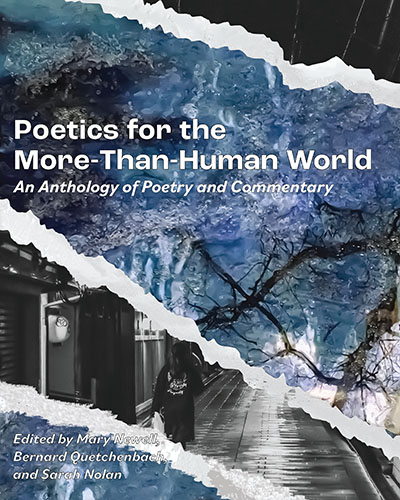
Camilla Nelson has written a thoughtful and incisive review of Poetics for the More-Than-Human World: An Anthology of Poetry and Commentary, edited by by Mary Newell, Bernard Quetchenbach, and Sarah Nolan, published last year by Spuyten Duyvil (and in which I have a couple poems). The review appeared in vol. 2, no. 1 of Ecocene: Cappadocia Journal of Environmental Humanities.
Fall Semester 2021: Syllabi
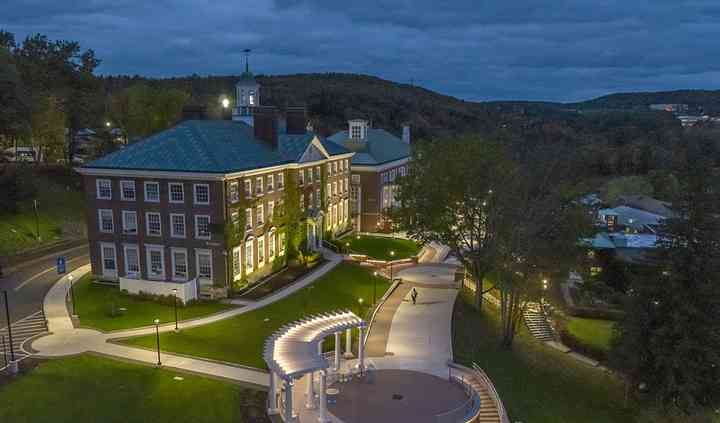
The start to this academic year is again unconventional, but feeling much closer to normal, especially owing to Hartwick College’s reopening plans. I’m again teaching two frequently taught creative writing courses and revisiting Poetry and Technology. The syllabi:
ENGL 213 Introduction to Creative Writing
Links in the Time of Coronavirus, Vol. 17: July 16–August 15, 2021
(A little late on this one, but August has been quite busy, both personally and professionally.)
Nuclear and Environmental
Brad Plumer and Henry Fountain, “A Hotter Future Is Certain, Climate Panel Warns. But How Hot Is Up to Us.”
Naomi Klein, “Stuck in the Smoke as Billionaires Blast Off.”
National Oceanic and Atmospheric Administration, “June 2021 Was the Hottest June on Record for the US.”
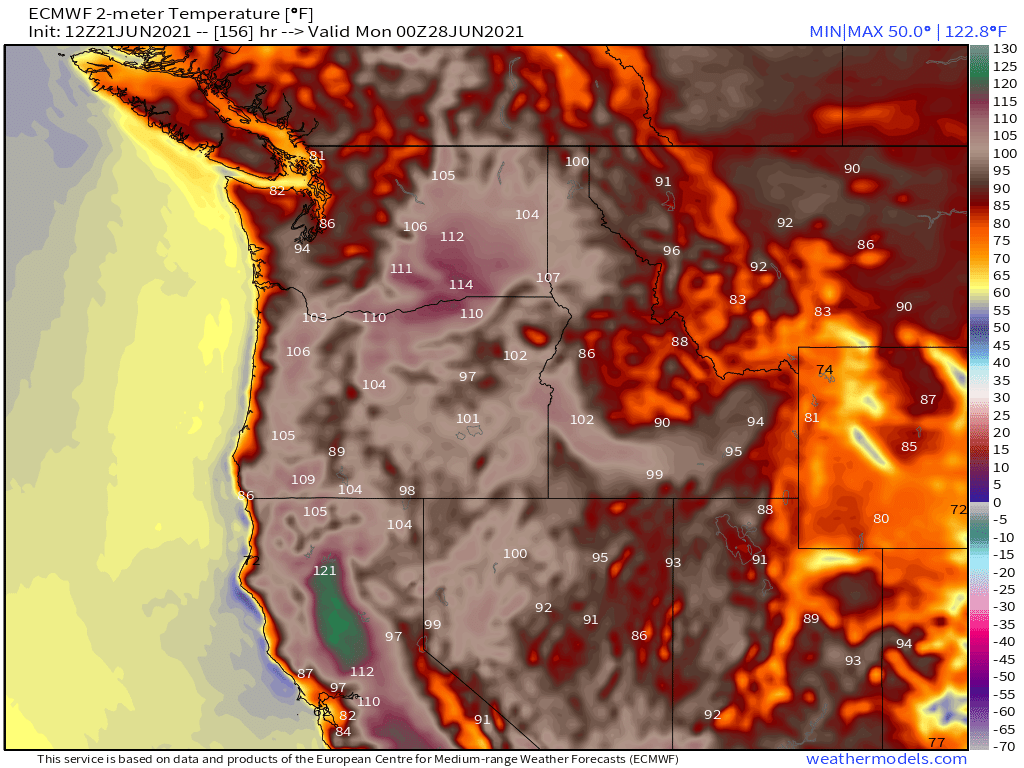
Oliver Milman, “US Set for Punishing Temperatures as Huge ‘Heat Dome’ to Settle over Country.”
Ezra Klein, “It Seems Odd That We Would Just Let the World Burn.”
Liza Featherstone, “How to Live in a Burning World without Losing Your Mind.”
Kat Aronoff, “Playing Nice With the Fossil Fuel Industry Is Climate Denial.”
Katy Lederer and Julian Brave Noisecat, “Infrastructure, Infrastructure! An Interview with Julia Brave NoiseCat.”
Deanna K. Kreisel, “A Deadly Fart That Will Kill Us All: On Climate Grief.”
Kim Stanley Robinson, “Remembering Climate Change . . . a Message from the Year 2071.”
Zach St. George, “He Wrote a Gardening Column. He Ended Up Documenting Climate Change.”
Jonathan Foley, “Seven Reasons Why Artificial Carbon Removal Is Overhyped.”
Links in the Time of Coronavirus, Vol. 16: June 16–July 15, 2021
Nuclear and Environmental
Kai Heron, “Extinction Isn’t the Worst That Can Happen.”
Christopher Flavelle and Kalen Goodluck, “Dispossessed, Again: Climate Change Hits Native Americans Especially Hard.”
Sarah Miller, “All the Right Words on Climate Have Already Been Said.”
Brad Plumer, Jack Healy, Winston Choi-Schagrin, and Henry Fountain, “Climate Change Batters the West before Summer Even Begins.”
Jeffrey Insko, “Line 5: Dismantling as World-Building” and “How to Dream beyond Oil.”
James Temple, “The Lurking Threat to Solar Power’s Growth.” Hmm.
Dan Egan, “The Climate Crisis Haunts Chicago’s Future: A Battle between a Great City and a Great Lake.”
Jacob Darwin Hamblin, The Wretched Atom: America’s Global Gamble with Peaceful Nuclear Technology.
Links in the Time of Coronavirus, Vol. 15: May 16–June 15, 2021
Nuclear and Environmental
Coral Davenport, “The Keystone XL Pipeline Project Has Been Terminated.”
Nadja Popovich, “How Severe Is the Western Drought? See For Yourself.”
Dan Sinykin, “The End of the World as We Know It.”
Clifford Krauss and Peter Eavis, “Climate Activists Defeat Exxon in Push for Clean Energy.”
Stanley Reed and Claire Moses, “A Dutch Court Rules That Shell Must Step Up Its Climate Change Efforts.”
Lisa Friedman, “Biden Administration Defends Huge Alaska Oil Drilling Project.”
Paquito Bernard, “It’s Time to Tackle Climate Change in all University Disciplines.”
Coronavirus
Morgan Meis, “Timothy Morton’s Hyper-Pandemic.”
The Editorial Board of the New York Times, “America Is Failing Its Moral Test on Vaccines.”
Michael D. Shear, Julian E. Barnes, Carl Zimmer and Benjamin Mueller, “Biden Orders Intelligence Inquiry into Origins of Virus.”
Zeynep Tufekci, “Checking Facts Even If One Can’t.”
Apoorva Mandavilli, “Immunity to the Coronavirus May Persist for Years, Scientists Find.”
And Alexa Lardieri, “Florida, Alabama No Longer Reporting Daily Coronavirus Data.”
Continue reading“‘Is an Archive Enough?’: Megatextual Debris in the Work of Rachel Blau DuPlessis” in Genre

Courtney Jacobs and James Zeigler, eds., “Big, Ambitious Novels by Twenty-First-Century Women, Part 1” special issue, Genre 54, no. 1 (April 2021).
My essay, “‘Is an Archive Enough?’: Megatextual Debris in the Work of Rachel Blau DuPlessis,” has been published in Genre: Forms of Discourse and Culture 54, no. 1 (April 2021): 139–65. This issue is the first of two special issues on “Big, Ambitious Novels by Twenty-First-Century Women,” edited by Courtney Jacobs and James Zeigler. The second issue will be released in July 2021. I also have an interview with DuPlessis forthcoming in boundary 2. I’ve included an abstract of my essay below, along with a table of contents.
I am particularly proud of this essay, as I wrote it predominantly during the summer of 2020–the height of lockdown–and during which we had no childcare and I couldn’t access the library nor my campus office, including its books. Lots of people to thank, consequently, but particularly Racheal Fest, Courtney Jacobs and James Zeigler for their hard work putting this together during an incredibly difficult year, Rachel Blau DuPlessis, and Dawn Baker, Hartwick’s interlibrary loan librarian. (There are more acknowledgments on the first page of my essay.) This essay is also the second published chapter from my work in progress, Too Big to Read: The Megatext in the Twenty-First-Century. For other related work on megatexts and hyperarchivalism, see:
“Coda: Writing Briefly about Really Big Things.”
“The Time of Megatexts: Dark Accumulation and Mark Z. Danielewski’s The Familiar.”
“The Megatext and Neoliberalism.”
Abstract
In the twenty-first century, digital technologies have made it possible for writers and artists to create massively unreadable works through computational and collaborative composition, what the author has elsewhere called megatexts. The ubiquity of texts appearing across media that are quite literally too big to read—from experimental novels to television, film, and video games—signals that the megatext is an emergent form native to the era of neoliberalism. But what happens to other long forms, such as the twentieth-century long poem, when written in an era of megatextuality? Rachel Blau DuPlessis’s work, including Drafts (1987–2013) and Traces, with Days (2017–), readily suggests itself as a case study for thinking through a megatextual impulse in the twenty-first-century long poem. Though her work is plainly indebted to its modernist precursors (H.D., Pound, Williams, etc.) while disavowing at every level of its composition a patriarchal will toward totality, DuPlessis’s various experiments in the long poem are also thoroughly contemporary and respond to the economic, military, political, and environmental transformations of the neoliberal era by drawing upon and producing fragmentary, megatextual debris. This essay positions DuPlessis’s work amidst a larger twenty-first-century media ecology, which includes both the megatext and the big, ambitious novel, and argues that rather than simply (and futilely) resist the neoliberal cultural logic of accumulation without end, DuPlessis hypertrophically uses the megatext’s phallogocentric form against itself in order to interrogate more broadly what it means—socially, culturally, economically—to write a long poem in the age of hyperarchival accumulation.
“Big, Ambitious Novels by Twenty-First-Century Women, Part 1,” Genre 54, no. 1 (April 2021).
James Zeigler, “Introduction: Big Novel Ambition without Apology.”
Maaheen Ahmed and Shiamin Kwa, “‘Kill the Monster!”: My Favorite Thing Is Monsters and the Big, Ambitious (Graphic) Novel.”
Patricia Stuelke, “Writing Refugee Crisis in the Age of Amazon: Lost Children Archive‘s Reenactment Play.”
Katarzyna Bartoszyńska, “Two Paths for the Big Book: Olga Tokarczuk’s Shifting Voice.”
Marjorie Worthington, “‘We’ll Make Magic’: Zen Writers and Autofictional Readers in A Tale for the Time Being.”
Siân White, “A ‘Hair-Trigger Society’ and the Woman Who Felt Something in Anna Burn’s Milkman.”
Bradley J. Fest, “‘Is an Archive Enough?’: Megatextual Debris in the Work of Rachel Blau DuPlessis.”

