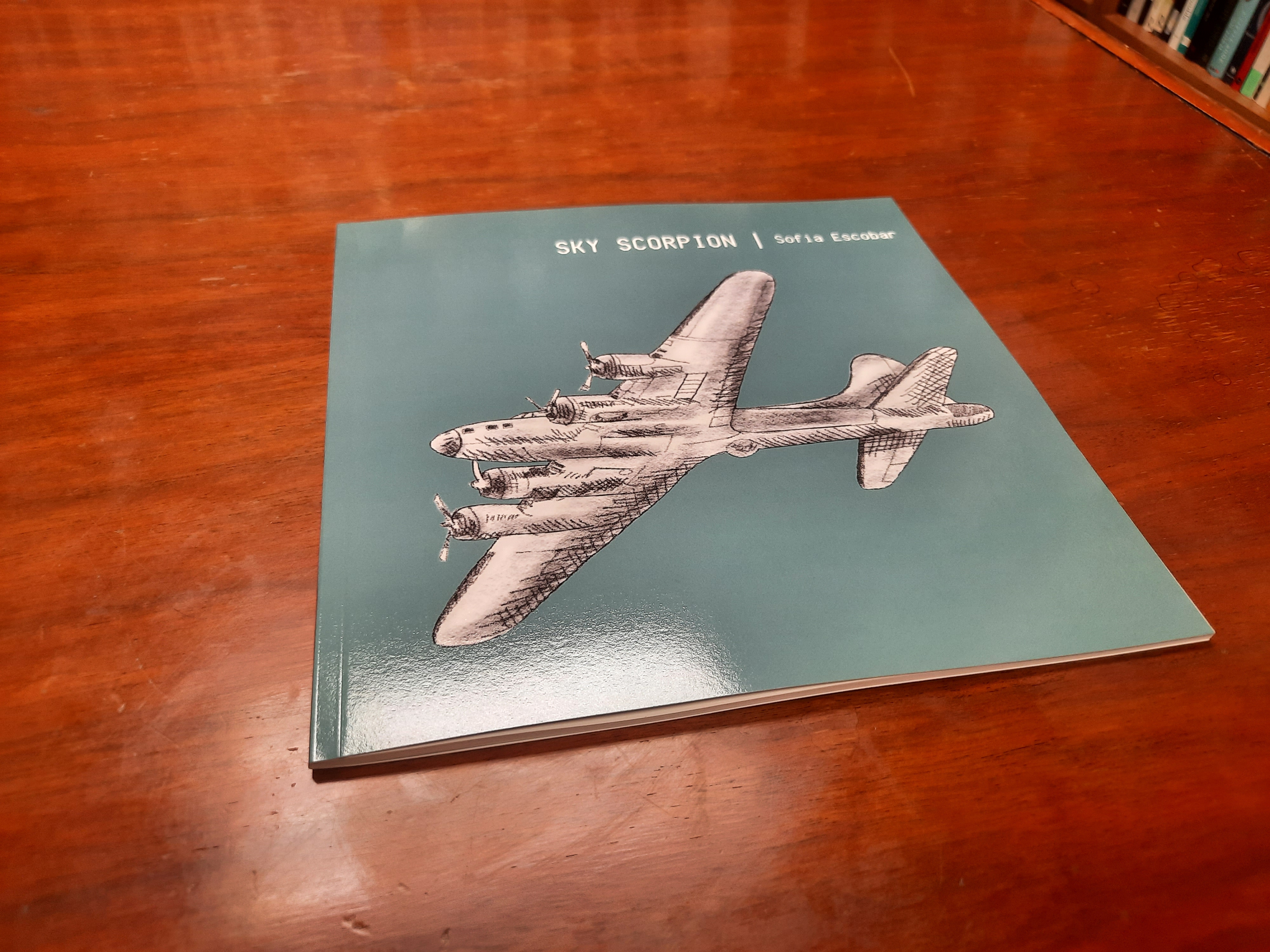
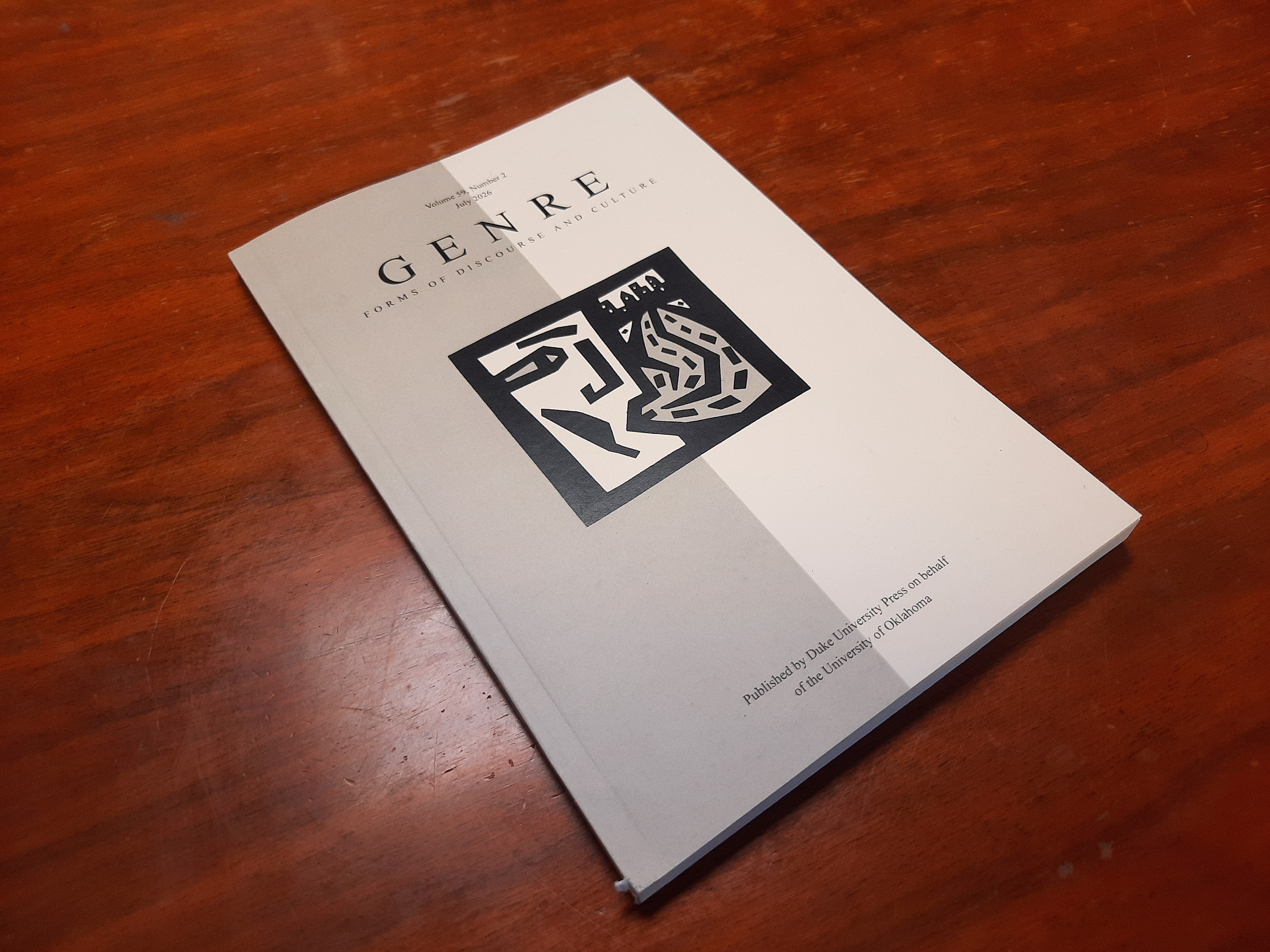
Spring Semester 2026: Syllabi and Teaching Without Computers


After a very productive and thoroughly refreshing sabbatical, I’m back at Hartwick College this spring teaching two courses (and two of my favorite to teach!). Here are the syllabi: ENGL 220 Introduction to Textual Analysis and ENGL 352 Critical Game Studies.

Most notably, after twenty years of teaching predominantly writing-intensive courses in which I assigned essays, poems, and stories to be composed outside of class, in response to the frustration the sheer amount of student work I have seen generated by artificial intelligence (AI) has caused me and the more general neofeudal edtechification of higher education, I made the decision this spring to make my courses (almost) completely analog in terms of assignments, materials, and expectations. Students write all their papers in class. Students are required to have print books, and I print out all PDFs for them to read and annotate. No one has a smart phone or a laptop anywhere in sight. It’s glorious, old school, amazingly analog. And it is working.[1]

I am calling this teaching without computers, and it has been revolutionary for my pedagogy and peace of mind, revitalizing the classroom as a space of human connection, energy, communication, thinking, and poiesis while also assuaging my own considerable frustrations with and despair about my job over the past few years, a job that at some point seemed destined to be little more than that of plagiarism detective. All my previous engagement with students’ ideas and their attempts to express those ideas were slowly and almost completely strained away over the past three-odd years with nothing left but policing, constantly on the lookout for evidence of now seemingly ubiquitous large-language model (LLM) use infecting and subverting the reading, writing, and thinking of our students, of an entire generation of young people, of, really, everyone, compromising our very humanity with its tepid, dumb slop. Though I am only six weeks into the semester, the transformation teaching without computers has wrought upon my classroom has been remarkable. My students have, to a large degree, embraced my new pedagogy, as I suspect it has given them back something that I perhaps only now realize had been lost in classrooms years before LLMs had emerged. I cannot recommend this (and other) kind(s) of AI-resistant pedagogy enough for other people teaching in the critical humanities. I am a convert. Fully. And I expect that, whatever comes next for me as a teacher, a big part of it will be proselytizing for the new good news: teaching and learning without computers.

For more resources on resisting AI in our teaching, see Anna Kornbluh, Eric Hayot, Krista Muratore, and Gina Stinnett’s Against AI.


[1] That said, there are still some digital elements in my classes. For example, obviously I still require that students play video games in ENGL 352 Critical Game Studies, and I do make available the online version of the Oxford English Dictionary and a thesaurus during in-class writing assignments. Of course, I also happily approve whatever digital accommodations students might need—they just need to ask (and regardless of whether or not they have any documented need for such accommodation).

“Grateful and Generous Reading: An Interview with Robert T. Tally Jr.” in boundary 2


I am really happy that my interview with Robert T. Tally Jr.—the first of two interviews I conducted in conjunction with The Babcock Lecture at Hartwick College, which I organized as Cora A. Babcock Chair in English from 2022–25—is now out in print. “Grateful and Generous Reading: An Interview with Robert T. Tally Jr.,” has just been published in the November 2025 issue of boundary 2 (vol. 52, no. 4).

It was a busy weekend—in the course of only a few days, Tally flew to Oneonta from Texas, delivered a lecture, sat down for an interview, and then moderated the final Zoom panel celebrating Fredric Jameson’s ninetieth birthday from my home office (all while he was in the middle of editing Verso’s “Jameson at 90” [2025] blog series)—and so I am deeply thankful to Tally for taking the time to come to Hartwick and chat.

Here’s an abstract of the interview:

This interview with literary critic Robert T. Tally Jr. was conducted on April 26, 2024, in conjunction with his delivery of the 2023–24 Babcock Lecture at Hartwick College. Tally is one of the premier critics presently working in the field of spatial literary studies and has published over a dozen books and over one hundred articles and book chapters on US and world literature, critical theory, and the history of criticism. Reflecting broadly on the trajectory of his career, Tally discusses the gratitude that has accompanied his scholarly writing, his interests in spatial literary studies, his relationship with the teaching and work of Jonathan Arac, Paul A. Bové, and Fredric Jameson, and the role of theory at the present time.

The second interview conducted in conjunction with the 2025 Babcock Lecture, my interview with Anna Kornbluh, will appear in the May 2026 issue of boundary 2.

And for previous interviews: “An Interview with Jonathan Arac,” “Something Worth Leaving in Shards: An Interview with Rachel Blau DuPlessis,” and “Isn’t It a Beautiful Day? An Interview with J. Hillis Miller.”

Author Expo 2025 in Oneonta, New York

I will have a table with my books for sale—2013–2017: Sonnets (LJMcD Communications, 2024) and perhaps one copy of The Rocking Chair (Blue Sketch, 2015)—at Author Expo 2025 in Oneonta, New York on Sunday, October 12 from 2:00–4:00 p.m. at the Foothills Performing Arts Center (24 Market St, Oneonta, NY 13820).

Author Expo 2025 is put on by the Writers Salon at the Community Arts Network of Oneonta and the Huntington Memorial Library.

MLA 2026 Panels: “Aesthetics, Politics, and Ecological Overshoot” and “Comics as Physical Objects”

At this year’s Modern Language Association Convention in Toronto, Ontario, Canada (January 8-11, 2026), I will be speaking on a roundtable Aesthetics, Politics, and Ecological Overshoot, and panel, Comics as Physical Objects. I have included the information and tentative abstracts for each paper below.

52. Comics as Physical Objects

Thursday, January 8, 2026, 1:45-3:00 p.m.

Presiding: Edward Whitley (Lehigh U)

Presentations:
1. “A Queer Print History of Comics,” Margaret Galvan (U of Florida)
2. “The Comics Megatext: Floppies, Trades, Marvel Unlimited, Podcasts, and The X-Men,” Bradley Fest (Hartwick C)
3. “Multimedia and Digital Materialities: The Blue Age of (Web) Comics and Fostering Multimodal Literacy,” Devon Harvey (Queen’s U)
4. “Framing Matter: Materiality and the Medium of Comics,” Christina Kraenzle (York U)

This panel has been arranged by the Society for the History of Authorship, Reading, and Publishing.


The Comics Megatext: Floppies, Trades, Marvel Unlimited, Podcasts, and The X-Men

As Douglas Wolk recently pointed out in his book about reading all of Marvel Comics, “The twenty-seven thousand or so superhero comic books that Marvel Comics has published since 1961 are the longest continuous, self-contained work of fiction ever created.”[1] Though a bit smaller, the over six thousand comics that constitute The X-Men (1963–) also makes it one of the longest narratives ever written. Both are what I call in my current book project megatexts: a massively unreadable twenty-first century form created through collaboration and digital technology to achieve a scale beyond what a single author could do alone and that requires incredibly nontrivial effort on the part of readers to completely traverse. In this talk, I will explore the emergence of comics as a megatextual object in the twenty-first century. In the age of floppies and trades, comics megatexts were largely inaccessible in their totality. With the emergence of platforms such as Marvel Unlimited and paratextual forms like podcasts such as Jay and Miles X-Plain “The X-Men” (2014–), we can now read comics megatexts as megatexts. For all intents and purposes, then, the comics megatext has newly emerged as an accessible and thus coherent form that, like other megatexts, also importantly calls forth collective and creative reading and criticism. Approached in this way, The X-Men in particular offers us a continuously transforming megatextual object that is also a beacon for collaboratively exploring how to build alternative communities and ways of thinking and being for an infowhelming world.


[1] Douglas Wolk, All the Marvels: A Journey to the End of the Biggest Story Ever Told (New York: Penguin, 2021), 1.


602. Aesthetics, Politics, and Ecological Overshoot

Sunday, January 11, 2026, 10:15-11:30 a.m.

Presiding: John Maerhofer (Rutgers U, New Brunswick)

Speakers: Federico Correa Pose (U of Southern California)
Bradley Fest (Hartwick C)
Christopher Gortmaker (U of Chicago)
Brenda Odria Loayza (U of Toronto)
Pedro Gabriel Soares Daher (Maine C of Art and Design)

Megatextual Eco-Utopia: Jonathan Hickman’s X-Men and Mutant Poiesis

[That was the talk’s original proposed title. After writing the talk, its title is now “The Megatext as Overshoot Form: The Krakoan Era of The X-Men and Mutant Poiesis,” and its content differs significantly from what is below. I am happy to email the talk to anyone interested. Edit added on January 12, 2026.]

In 2019, in one of the more audacious reboots of a long-running megatextual franchise, Jonathan Hickman reimagined the now decades-long political aspirations of Marvel Comics’ X-Men (1963–) franchise in explicitly eco-utopian terms. Rather than continuing to pursue his decades-long dream of mutant and human peaceful coexistence, in House of X/Powers of X (2019) Professor X creates a separatist sovereign nation on the sentient living island Krakoa, an achieved utopia for all mutants. Notable even in its genre for its exploration of alternative presents and various futures, The X-Men franchise’s subsequent five-year pivot fleshes out the politics of a separatist utopia where no mutant dies and the dead are reborn. Despite the ecologically harmonious, sustainable technologies the mutant nation develops and despite their offer to share their miraculous, life-saving drugs and technology with the rest of the world, humans nonetheless turn toward the genocidal destruction of what appears the last, best hope for the continued flourishing for organic life on the planet. As such, Hickman’s eco-utopia emerges not from the dreams of the 1960s but from the despair of the present, a somewhat reactionary imaginary attempting to respond to the slow violence of climate change and the rise and resurgence of far-right, ecocidal extremism in the United States and around the world. Ultimately, however, the mutant survivors of Krakoa discover that their story was not one of separatist paradise gained but historical subjectivity achieved without the yoke of human bigotry and hatred, enabling them to build their world with others, crafting its institutions and practices, its culture and its politics—in short, mutant poiesis—the swift, violent destruction of which should serve as a warning for us in this moment of political destituency.


For previous essays of mine on megatexts and unreadable texts, see:

“Toward a Theory of the Megatext: Speculative Criticism and Richard Grossman’s ‘Breeze Avenue Working Paper.’”

“‘Is an Archive Enough?’: Megatextual Debris in the Work of Rachel Blau DuPlessis.”

“Reading Now and Again: Hyperarchivalism and Democracy in Ranjan Ghosh and J. Hillis Miller’s Thinking Literature across Continents.”

“Writing Briefly about Really Big Things.”

“Postrock” in Always Crashing

I am beyond delighted to announce that my long poem, “Postrock,” which I composed between June 2021 and July 2022 and which was supported by the Cora A. Babcock Chair in English and a number of Faculty Research Grants, has (finally!) been published in Always Crashing. This is probably the piece of writing that I am the most proud of among everything I have ever published, and so I am just utterly thrilled to be able to bring it into the world. I am forever indebted to James Tadd Adcox and the other editors of Always Crashing for their ongoing support of my work.

“Postrock” is the concluding and last unpublished poem from an unpublished manuscript (also titled Postrock and seeking a publisher!) in which I endeavor to perform what I’m calling a weird phenomenology: seeing everyday objects anew by mediating their perception through lenses of poetic, environmental, and cultural influence. In particular, “Postrock” draws explicit inspiration from John Ashbery’s Three Poems (1972), is a sustained meditation on space, and, like all the poems from the manuscript, was composed while listening to postrock music. The poem is also in conversation with a large number of other texts, including books about space by Gaston Bachelard, Maurice Blanchot, Henri Lefebvre, and others, and it was composed using a variety of formal constraints, including being composed as an unbroken, nearly twenty-thousand-word paragraph.

The 2025–26 Visiting Writers Series at Hartwick College

With the departure of my amazing colleague Tessa Yang, and as I am on sabbatical this fall, no events will be held in the fall for the 2025–26 Visiting Writers Series at Hartwick College. The series will return in spring 2026 with the events below. Readings take place at 7:00 in the Eaton Lounge, Bresee Hall at Hartwick College in Oneonta, New York.


James Tadd Adcox will be reading, including from his newest book Denmark Variations (Hem Press, 2023), on Thursday, April 23, 2026.

For more information, visit the Visiting Writers Series webpage.

Hartwick College’s Faculty Lecture Series, Fall 2025

This spring, the Faculty Development Committee and the Office of Academic Affairs at Hartwick College will present three speakers in the annual Faculty Lecture Series.

All talks (unless noted) take place at during the common hour: 12:20–1:20 p.m. in Eaton Lounge, Bresee Hall at Hartwick College, Oneonta, New York.

The lectures are free and open to the public.


Inclusive Excellence 3 Team, “Growing the Inclusivity of STEM Through Faculty Development, Inclusive Curricula, and Student Empowerment,” Friday, September 12 in GOLISANO 203, 2025.

Meghan K. Sheehy, “A Book, an Article, and a Horn Choir,” Friday, November 14, 2025.

For more information, visit the Faculty Lecture Series webpage.

Cleaver Issue 49 Contributors Reading

To make up for missing the issue 48 Contributors Reading because I was sick, Cleaver has kindly asked me to read for their issue 49 Contributors Reading.

On Sunday, April 27, 2025 from 7:00–8:30 p.m. (EST) via Zoom, I’ll be reading “2023.32,” recently published in issue 48 of Cleaver, along with other contributors to issue 49: Sarah C. Baldwin, Brian Benson, Andrea Bishop, Lisa K. Buchanan, John Calderazzo, Jocelyn Jane Cox, Adam Doniger, Jeff Friedman, Vicki Mayk, Ess Pokornowski, Rachel Talbot, Matt Thomas, Gretta Trafficante, and Robyn Wheelock.

You can register for the reading here: https://us06web.zoom.us/meeting/register/r3sThAH-R7K8aLsV_SNYEw.

Update June 2, 2025

A recording of the reading is now available on YouTube. I’m the first reader: