February Links

It’s that time of year when I’m busy busy with all sorts of things. Combined with the miserable weather (it got down to -11° Fahrenheit in Pittsburgh last night), some links have been piling up.


Environment, Science, International, Disaster

Rebecca Solnit, “The Age of Capitalism Is Over.”

Noam Chomsky, “The World of Our Grandchildren.”

Graeme Wood, “What ISIS Really Wants.”

Raymond T. Pierrehumbert, “Climate Hacking Is Barking Mad.”

Sam Kriss, “Manifesto of the Committee to Abolish Outer Space.”

Cari Romm, “How Three People Can Make a Baby.”

Alan Taylor, “What Record-Breaking Snow Really Looks Like.”

Continue reading

Daylight Savings Time Links

The extra hour today means I have time to post some links. There are many, as it’s been a while.


Nuclear and Environment

“Lockheed Announces Breakthrough on Nuclear Fusion Energy.”

Matthew L. Wald, “Calls to Use Yucca Mountain as a Nuclear Waste Site, Now Deemed Safe.”

Rizwan Asghar, “Illicit Nuclear Trafficking.”

“Emergency Agencies Practice Response to Nuclear Explosion in Times Square.” (Didn’t DeLillo have something to say about this kind of thing . . . ?)

Jonathan Tirone, “U.S. Said to Join Russia in Blocking Nuclear Safety Moves.”

“Notice to Congress: Continuation of the National Emergency on Russian Fissile Material.”

Darren Boyle, “Inside China’s Top Secret Nuclear Bunker: Cold War Relic Built into a Mountain to Fend off Soviet Attack Is Now a Tourist Attraction.” (Thanks to Terrence Ross for a lot of the above links.)

“Asgard’s Fire,” on thorium reactors.

Ari Phillips, “New Study Details Alarming Acceleration in Sea Rise.”

Continue reading

Ferguson and Other Links

Ferguson

The running blog from Fergusons latest: Ben Mathis-Lilley and Elliot Hannon, “Officer Who Stopped Michael Brown Did Not Know He Was a Robbery Suspect.”

Photos from Ferguson.

Robert Stephens II, “In Defense of the Ferguson Riots.”

An open letter from David Simon.

Rembert Browne, “The Front Lines of Ferguson.”

“This Time, For Once, What It Is, It Is.”

Daniel Politti, “After a Day of Calm, Ferguson Reignites: Looting, Clashes with Police and Tear Gas.”

Jack Mirkinson, “Police Threaten to Shoot, Mace Reporters in Ferguson.”

Dylan Scott, “Mayor Defends Police: I Can’t Second-Guess These Officers.”

Jamelle Bouie, “The Militarization of the Police.”

The militarization of US Police.

Sahil Kapur, “House Democrat Unveils Bill to Demilitarize Local Police.”

Rand Paul, “We Must Demilitarize the Police.”

“There’s a Police Coup Going on Right Now in Ferguson, MO.”

Matthew Yglesias, “Enough is Enough in Ferguson.”

Mychal Denzel Smith, “The Death of Michael Brown and the Search for Justice in Black America.”

LaDoris Hazzard Cordell, “Policing the Police.”

Joe Coscorelli, “Obama Treads Lightly, Again, on Ferguson: ‘Listen and Heal,’ Don’t ‘Holler and Shout.'”

Kareem Abdul-Jabbar, “The Coming Race War Won’t Be About Race.”

And a must see: John Oliver on Ferguson.

Continue reading

David Foster Wallace and “The Long Thing”

David Foster Wallace and the Long Thing

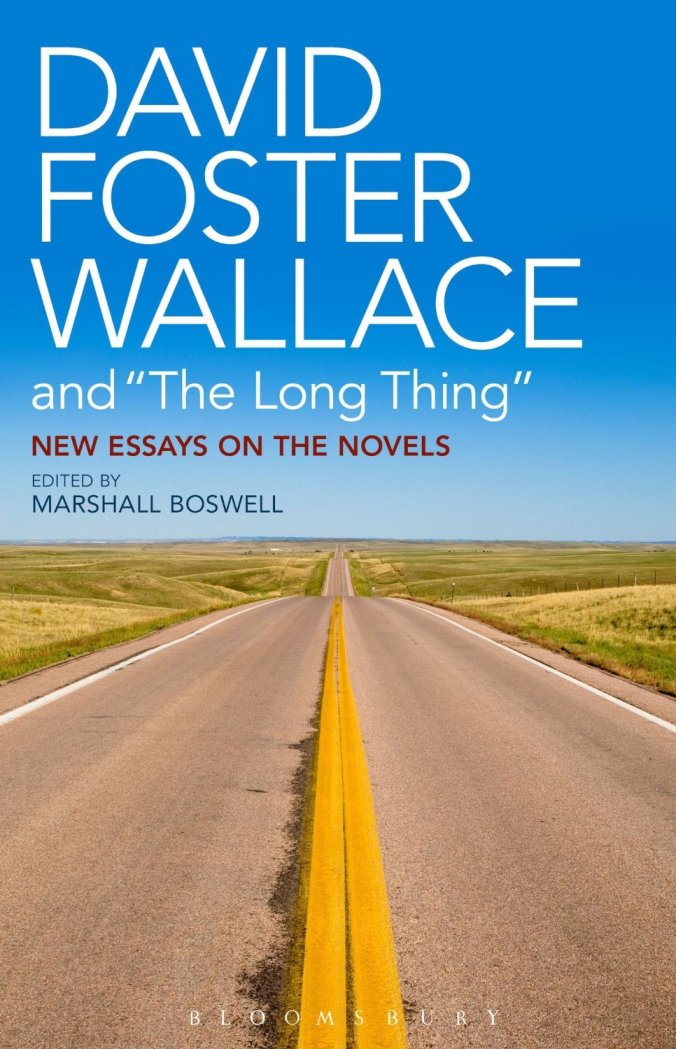
David Foster Wallace and “The Long Thing”: New Essays on the Novels, edited by Marshall Boswell, to which I have contributed an essay, “‘Then Out of the Rubble’: David Foster Wallace’s Early Fiction,” is set to appear 31 July 2014. This volume collects revised versions of essays from two special issues of Studies in the Novel from 2012 (44.3 and 44.4). I am delighted to be included in this excellent collection. See the blurbs at Bloomsbury’s site and read the first review from Publisher’s Weekly. It is reasonably priced right now, and Amazon has it listed in stock (before its release date . . .). Here is a description of the book:

Of the twelve books David Foster Wallace published both during his lifetime and posthumously, only three were novels. Nevertheless, Wallace always thought of himself primarily as a novelist. From his college years at Amherst, when he wrote his first novel as part of a creative honors thesis, to his final days, Wallace was buried in a novel project, which he often referred to as “the Long Thing.” Meanwhile, the short stories and journalistic assignments he worked on during those years he characterized as “playing hooky from a certain Larger Thing.” Wallace was also a specific kind of novelist, devoted to producing a specific kind of novel, namely the omnivorous, culture-consuming “encyclopedic” novel, as described in 1976 by Edward Mendelson in a ground-breaking essay on Thomas Pynchon’s Gravity’s Rainbow.

David Foster Wallace and “The Long Thing” is a state-of-the art guide through Wallace’s three major works, including the generation-defining Infinite Jest. These essays provide fresh new readings of each of Wallace’s novels as well as thematic essays that trace out patterns and connections across the three works. Most importantly, the collection includes six chapters on Wallace’s unfinished novel, The Pale King, which will prove to be foundational for future scholars of this important text.


Table of Contents:

Marshall Boswell, “Preface.”


Part I: Wallace as Novelist

Adam Kelly, “David Foster Wallace and the Novel of Ideas.”

Toon Staes, “Wallace and Empathy: A Narrative Approach.”

Allard den Dulk, “Boredom, Irony, and Anxiety: Wallace and the Kierkegaardian View of the Self.”

Andrew Warren, “Modeling Community and Narrative in Infinite Jest and The Pale King.”


Part II: The Novels

Bradley J. Fest, “‘Then Out of the Rubble’: David Foster Wallace’s Early Fiction.”

Philip Sayers, “Representing the Entertainment in Infinite Jest.”

David Letzler, “Encyclopedic Novels and the Cruft of Fiction: Infinite Jest‘s Endnotes.”

Stephen J. Burn, “‘A Paradigm for the Life of Consciousness’: The Pale King.”

Conley Wouters, “‘What Am I, a Machine?’: Humans and Information in The Pale King.”

Ralph Clare, “The Politics of Boredom and the Boredom of Politics in The Pale King.”

Marshall Boswell, “Trickle-Down Citizenship: Taxes and Civic Responsibility in The Pale King.”
Slow Learning and Other Links

Environment and Disaster

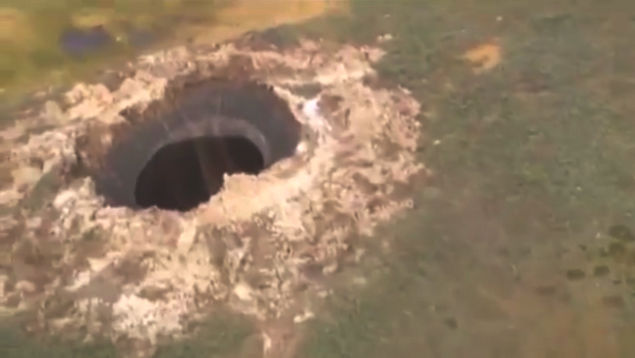
George Dvorsky, “A Dramatic 260 Foot Crater Has Mysteriously Appeared in Siberia.”

giant siberian crater


National Security State

Sue Halpern, “NSA Surveillance: What the Government Can’t See.”

Tom Engelhardt, “The New American Exceptionalism: An Imperial State Unable to Impose Its Will.” (This only shares a title with Donald E. Pease‘s excellent book of the same name, The New American Exceptionalism.)

H. Bruce Franklin, “America’s Memory of the Vietnam War in the Epoch of the Forever War.”

Jeffrey Frank, “Obama’s Unwritten History.”

Xeni Jardin, “NSA Sees Your Nude Pix ‘as Fringe Benefits of Surveillance Positions,’ Says Snowden.”

Continue reading

The West Antarctic Ice Sheet Collapse and Other Portents of Doom

Climate Change

The New York Times on the collapse of the West Antarctic Ice Sheet.

Paul Krugman, “Points of No Return.”

Eyder Peralta, “New Report Finds Climate Change Already Having Broad Impact.”

Gerry Canavan on “Dystopia, Anti-Utopia, and the End of the World.”

Peter Frase, “Adjusting to the Apocalypse.”

A very interesting piece at Jacobin reflecting on an analogy between abolitionists and environmentalists: Matt Karp, “A Second Civil War.”

Roger Peet, “A Radical Approach to the Climate Crisis.”

Martin Lukacs, “New, Privatized African City Heralds Climate Apartheid.”

Julie Beck on John Oliver’s “Statistically Representative Climate Change Debate.”

Saskia Sassen, “Countdown to Oblivion: The Real Reason We Can’t Stop Global Warming.”

Mike Wall, “To Combat Climate Change, Humanity Must Act Now, NASA Chief Says.”

Brad Plumer, “Five Horrifying Maps of America’s Massive Drought.”

And “Picture This: U.S. Cities Under 12 Feet of Sea Level Rise.” An example:

The Back Bay in Boston under 12 Feet of Sea Level Rise

The Back Bay in Boston under 12 Feet of Sea Level Rise

But don’t fret, “This Couple is Making Roads Out of Solar Panels, and They Actually Work.”

And Michelle Nijhuis, “How to Laugh at Climate Change.”

Continue reading

Science Fiction, Science Fact, and Other Links

Science Fiction, Science Fact

Claire Cain Miller and Chi Birmingham, “A Vision of the Future From Those Likely to Invent It” and Risa Marisa, “All the Time Science Fiction Became Science Fact in One Chart.”

Deobrah K. Fitzgerald, “At MIT, the Humanities Are Just as Important as STEM.”

Early Octavia Butler stories coming out soon.

Samuel R. Delany reviews Star Wars (1977).

Continue reading