Poetry, Metal, Irony, and Other Links

Converge

Michael Robbins has a great piece in this months Harper’s, “Destroy Your Safe and Happy Lives: A Poet’s Guide to Metal,” which, in the space of six pages, is able to reference John Milton, Rainer Maria Rilke, Black Sabbath, and Converge. I did not know that could be done. (Even R., who tends to abhor whenever anything loud and screamy even gets near our home’s turntable, enjoyed this piece.) Highlights of the short essay include: quoting a number of lines from William Blake’s “Proverbs of Hell” and commenting, “sounds pretty metal to me”; describing a Converge show where they “took over that space like a bellowing wooly rhino crashing into a Pleistocene clearing. . . . It’s war music” (a pretty accurate description); and some reflections on metal and capital: “Sometimes I wonder what metal would sound like after capitalism, or whether we would even need metal then. I wonder the same about poetry.”

More DFW stuff. Peter Finocchiaro, “What David Foster Wallace Got Wrong About Irony: Our Culture Doesn’t Have Nearly Enough of It,” which, strangely enough, is actually an interview with Jonathan Lear about irony (rather than an article specifically about DFW’s sense of irony). In my revised version of an essay that will appear in David Foster Wallace and “The Long Thing” (forthcoming July 2014), I make some similar points about the need for irony at the present time. That said, Lear seems to have a better handle on Wallace’s specific take on irony from the television essay than Finocchiaro, emphasizing that DFW was both a gifted ironist himself and that, in “E Unibus Pluram,” he is critiquing institutionalized irony, which I think all us post-ironists or new sincerity people would do well to heed, along with Lear’s acknowledgment that irony can actually be a from of earnestness: “There’s a very famous quote from Kierkegaard — or, I don’t know how famous it is, but it’s one of my favorites — where he said, it’s ‘only assistant professors’ who think irony can’t be a form of earnestness. Basically his claim is that irony when properly understood is a very high form of sincerity and earnestness, not its opposite. As he put it, it’s a real misunderstanding of what irony is to think it’s the opposite of earnestness toward commitment.” I feel the earnestness or “sincerity” of irony as it plays out in DFW’s work and thinking has been something that has been overlooked to the detriment of both our understanding of DFW and irony more generally.

Alex C. Madrigal and Adrienne LaFrance, “Net Neutrality: A Guide to (and History of) a Contested Idea.”

Dexter Filkins writes a letter from Iraq in The New Yorker, “What We Left Behind.”

And from the University of Pittsburgh’s great graduate student film blog, Kevin Flanagan on “Introduction to Applied Airport Studies.”

Digging Up the Archive

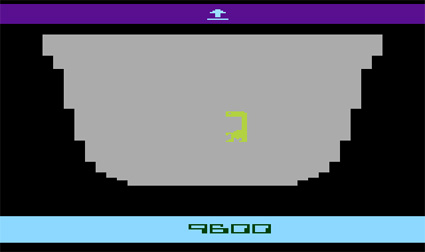
One of the biggest apocryphal tales in videogame history involves the reported burying of thousands of copies of E. T. the Extraterrestrial (Atari Inc., 1982) after its historic flop. The game, a poorly designed and nearly unplayable mess, such a mess that E. T. has become shorthand for many of the things wrong with the videogame industry now and then, was initially rushed to stores by the holiday shopping season to capitalize on the success of Spieleberg’s film by the same name. The sales of the game were so bad that supposedly Atari had nearly a million copies left unsold, which disappeared and rumors circulated that many of these unsold cartridges were buried. And they were! reports on Microsoft’s uncovering of these buried games in “30 Years Later, Microsoft Uncovers Buried E. T. Cartridges,” which has been done in coordination with making a documentary about the search for this buried archive. Next up, Microsoft will try to find Jimmy Hoffa.

ET-Well

The Dark Side of the Digital Humanities and Other Links

This winter’s special issue of differences, “In the Shadows of the Digital Humanities,” is looking like a must read for anyone interested in the subject. A number of important essays appear in the journal by a group of notable scholars, including an introduction by Wendy Hui Kyong Chun and Lisa Marie Rhody, and articles by Matthew Kirschenbaum, Richard Grusin, Adeline Koh, Alexander R. Galloway, David Golumbia, Patrick Jagoda, and many others.

And more on “relatable”: a very interesting piece by Lucy Ferriss, “I’m Relatable, You’re Relatable,” and an older one by Kit Nicholls, “The ‘Relatable’ Fallacy.”

The 2014 Hugo Awards have been announced, and Robert Jordan’s (and Brandon Sanderson’s) Wheel of Time got the nod. (I have a few brief words on the end of the series.) Note the exception to the Hugo rules that allow The Wheel of Time‘s nomination. . . .

Chay Close on Jazzpunk (Necrophone Games, 2014), “All Videogames Are a Joke.” Looks like I have something else to add to my summer indie game program.

More from the DFW-industry: Thorin Klosowski, “David Foster Wallace’s Best Productivity Tips.” Really?

Paul Barnwell, “My Students Don’t Know How to Have a Conversation.”

Tim Wu, “Goodbye, Net Neutrality; Hello, Net Discrimination,” and Kevin Drum, “Net Neutrality Finally Dies at Ripe Old Age of 45.”

Rebecca Schuman on student evaluations.

More End of Spring Semester 2014 Links

So because the semester is still winding down and I’m finding new oodles of time to post stuff, here’s some more links for the end of the semester.

Gabriel García Márquez

Since I posted last the world has seen the loss of one of its greatest writers, Gabriel García Márquez. In memoriam, some links.

Obituary at The New York Times. At The Huffington Post. A 1999 piece from The New Yorker. The New York Review of Books reviews One Hundred Years of Solitude in 1970.


National Security State

Vivian Salama, “Death From Above: How American Drone Strikes are Devastating Yemen.”

Edward Snowden discusses his conversation with Vladimir Putin.


Science

Earth twin found. And here.

Climate change is not natural.

A space elevator? . . . almost.

Continue reading

End of the Semester Links Spring 2014

It’s been a busy end of the semester and I haven’t been able to post anything for a bit. So, now that I have a bit of time before the semester wraps up, here’s a bunch of stuff that has been happening the last few weeks. My apologies if I’m a bit late on some of these things.

Nuclear and Disaster

Laura Miller reviews Craig Nelson’s The Age of Radiance: The Epic Rise and the Dramatic Fall of the Atomic Age.

John Metcalfe, “What Famous Old Paintings Can Tell Us About Climate Change.”

Only .02% of published research rejects global warming.

Adam Weinstein, “Arrest Climate Change Deniers.”

Continue reading

Big News in Science and Other Links

Science

The first evidence for cosmic inflation–i.e., the Big Bang–was discovered this week.

Megan Garber at The Atlantic, “What It’s Like to be Right About the Big Bang?”

The search for Flight MH370 is revealing one thing: the ocean is filled with garbage.

Kim Stanley Robinson alert: Paul Rosenfeld, “Would You Take a One-Way Ticket to Mars?”

And as part of his forthcoming 3 million page novel, Breeze Avenue (2015), Richard Grossman has buried a crystal ball deep inside of Princeton Mountain in Colorado. The ball, “made of synthetic sapphire, which is almost as indestructible as diamond,” has the Ten Commandments inscribed on it in Hebrew, and in “20 million years, as a result of natural forces carefully calculated by the geologists, the Torah Ball will emerge from its eroded resting place and bear the Ten Commandments down the mountain.” Hyperarchivalists of the deep future rejoice!

Richard Grossman, The Torah Ball (Synthetic Sapphire, Princeton Mountain, 20 Million Years of Erosion, 2011).

Richard Grossman, The Torah Ball (Synthetic Sapphire, Princeton Mountain, 20 Million Years of Erosion, 2011).

Continue reading