In a little over a week I start teaching three classes at the University of Pittsburgh that I am greatly looking forward to: two sections of Narrative and Technology (ENGLIT 0399; class blog here), and a brand new upper-division course that I designed for English Majors that fulfills an historical period requirement: Postmodern Literature (ENGLIT 1350). I am quite excited about both classes.
On the Death of Robin Williams and Other Links
Nuclear and Environment
Sarah Stillman, “Hiroshima and the Inheritance of Trauma.”
McKenzie Wark, “Critical Theory After the Anthropocene.”
International
Geoff Manaugh and Nicola Twilley, “Ebola and the Fiction of Quarantine.”
Leigh Phillips, “The Political Economy of Ebola.” “Ebola won’t be solved, because it isn’t profitable to do so.”
I’m Finally on Twitter! (and Other Links)
I’ve finally given in and created a Twitter account. You can follow me @BradleyFest.
In other news.
Nuclear
The diary of Mike Kirby, who worked with atomic weapons for years.
Iraq and International
“To the defense of Erbil: this was the main cause that drew President Obama back to combat in Iraq last week, two and a half years after he fulfilled a campaign pledge and pulled the last troops out” (Steve Coll, “Oil and Erbil”).
Rod Nordland and Helene Cooper, “Capitalizing on US Bombing, Kurds Retake Iraqi Towns.”
Conor Friedersdorf, “President Obama Risks Misleading Us Into War.”
Michael Tomasky, “Why Liberals Should Back Iraq Intervention.” Hmm.
On Putin’s current stance toward the US: David Remnick, “Watching the Eclipse.”
And boundary 2 has just made this fascinating article from their newest issue available: “Democracy: An Unfinished Project” by Susan Buck-Morss.
The Salaita Affair and Other Links (and New Involvement in Iraq)
There have been many responses by notable people to the Steven G. Salaita issue. Corey Robin has a ton of links on the issue, including a tweet by Glenn Greenwald, and a piece by Peter Schmidt in The Chronicle of Higher Education. Former president of the MLA, Michael Bérubé, has written an open letter to Chancellor of the University of Illinois at Urbana-Champaign, Phyllis Wise. Cary Nelson, former president of the American Association of University Professors, has written a piece defending Wise’s decision. Some background on Nelson. John K. Wilson has criticized UIUC in “Fighting the Twitter Police.” Sarah T. Roberts, “Steven Salaita: The University of Illinois is not an Island.” And here’s a recent piece by Salaita himself on academic freedom, “The Definition of Academic Freedom, for Many, Does Not Accommodate Dissent.”
In other news:
Dwight Garner seems to think that David Shafer’s Whiskey Tango Foxtrot may be the book of the summer in “Maybe There’s a Whole Other Internet.”
In hyperarchival news, Monte Reel reports on “The Brazilian Bus Magnate Who’s Buying Up All the World’s Vinyl Records.”
And I’m starting to get the itch for the new semester:
Joshua Rothman, “What College Can’t Do.”
“Rogeting: Why ‘Sinister Buttocks’ Are Creeping into Students’ Essays.”
And, just breaking, President Obama has announced that he has authorized airstrikes and humanitarian aid in Iraq. The Washington Post has a transcript of the announcement.
“Literally” Two-Thousand Fourteen Links
Nuclear and Environment
US War Department’s Archival Footage of the Bombing of Hiroshima.
H. Bruce Franklin, “Hiroshima, Nagasaki, American Militarism,” a review of Paul Ham‘s Hiroshima Nagasaki: The Real Story of the Atomic Bombings and Their Aftermath.
Mark Strauss, “Federal Employee Gets Fired After Writing an Article Criticizing Nukes.”
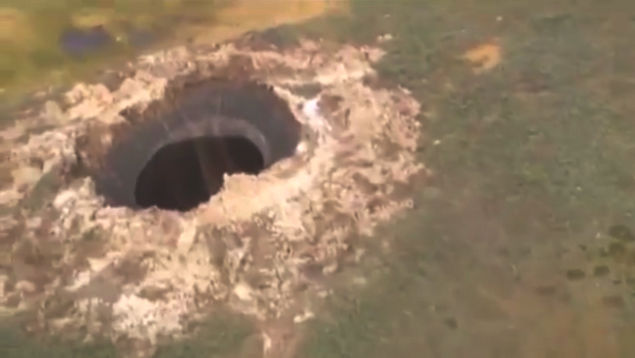
Lindsay Abrams, “Researchers: Warming Responsible for Siberia’s Mysterious Hole.”
August Links
Its been a couple weeks since I’ve posted any links, so there’s a bunch of stuff here.
Disaster, Nuclear, Environment, and Deep Futures
John Oliver on America’s Insecure Nuclear Arsenal.
Willie Osterweil, “The End of the World as We Know It.” On the reactionary politics in ancient apocalypse films.
Josh Marshall, “Disaster Porn, For Once for Real.”
Ross Andersen, “When We Peer Into the Fog of the Deep Future What Do We See–Human Extinction or a Future Among the Stars?”
Radical eco-nihilism. Wen Stephenson, “‘I Withdraw’: A Talk with Climate Defeatist Paul Kingsnorth.”
Paul Kingsnorth, “Confessions of a Recovering Environmentalist.”
Mark Strauss, “Space Junk Is Becoming a Serious Security Threat.”
Robert T. Gonzalez, “Bad News: Scientists Have Measured 16-Foot Waves in the Arctic Ocean.”
Nadia Prupis, “‘There Will Be No Water’ by 2040? Researchers Urge Global Energy Paradigm Shift.”
David Foster Wallace and “The Long Thing”
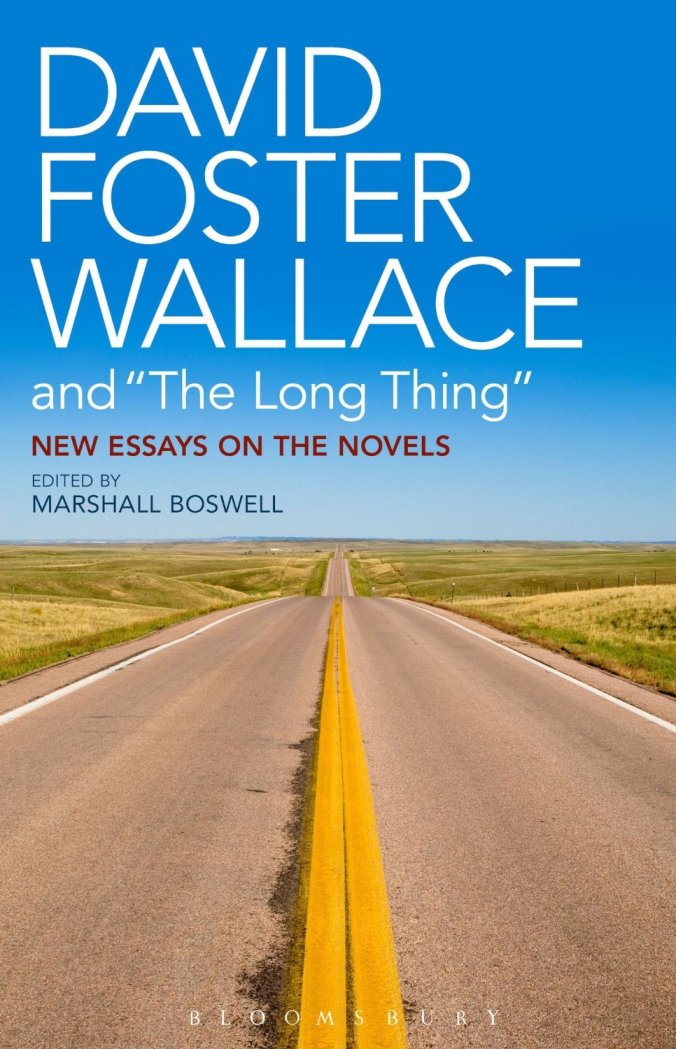
David Foster Wallace and “The Long Thing”: New Essays on the Novels, edited by Marshall Boswell, to which I have contributed an essay, “‘Then Out of the Rubble’: David Foster Wallace’s Early Fiction,” is set to appear 31 July 2014. This volume collects revised versions of essays from two special issues of Studies in the Novel from 2012 (44.3 and 44.4). I am delighted to be included in this excellent collection. See the blurbs at Bloomsbury’s site and read the first review from Publisher’s Weekly. It is reasonably priced right now, and Amazon has it listed in stock (before its release date . . .). Here is a description of the book:
Of the twelve books David Foster Wallace published both during his lifetime and posthumously, only three were novels. Nevertheless, Wallace always thought of himself primarily as a novelist. From his college years at Amherst, when he wrote his first novel as part of a creative honors thesis, to his final days, Wallace was buried in a novel project, which he often referred to as “the Long Thing.” Meanwhile, the short stories and journalistic assignments he worked on during those years he characterized as “playing hooky from a certain Larger Thing.” Wallace was also a specific kind of novelist, devoted to producing a specific kind of novel, namely the omnivorous, culture-consuming “encyclopedic” novel, as described in 1976 by Edward Mendelson in a ground-breaking essay on Thomas Pynchon’s Gravity’s Rainbow.
David Foster Wallace and “The Long Thing” is a state-of-the art guide through Wallace’s three major works, including the generation-defining Infinite Jest. These essays provide fresh new readings of each of Wallace’s novels as well as thematic essays that trace out patterns and connections across the three works. Most importantly, the collection includes six chapters on Wallace’s unfinished novel, The Pale King, which will prove to be foundational for future scholars of this important text.
Table of Contents:
Marshall Boswell, “Preface.”
Part I: Wallace as Novelist
Adam Kelly, “David Foster Wallace and the Novel of Ideas.”
Toon Staes, “Wallace and Empathy: A Narrative Approach.”
Allard den Dulk, “Boredom, Irony, and Anxiety: Wallace and the Kierkegaardian View of the Self.”
Andrew Warren, “Modeling Community and Narrative in Infinite Jest and The Pale King.”
Part II: The Novels
Bradley J. Fest, “‘Then Out of the Rubble’: David Foster Wallace’s Early Fiction.”
Philip Sayers, “Representing the Entertainment in Infinite Jest.”
David Letzler, “Encyclopedic Novels and the Cruft of Fiction: Infinite Jest‘s Endnotes.”
Stephen J. Burn, “‘A Paradigm for the Life of Consciousness’: The Pale King.”
Conley Wouters, “‘What Am I, a Machine?’: Humans and Information in The Pale King.”
Ralph Clare, “The Politics of Boredom and the Boredom of Politics in The Pale King.”
Marshall Boswell, “Trickle-Down Citizenship: Taxes and Civic Responsibility in The Pale King.”
Slow Learning and Other Links
Environment and Disaster
George Dvorsky, “A Dramatic 260 Foot Crater Has Mysteriously Appeared in Siberia.”
National Security State
Sue Halpern, “NSA Surveillance: What the Government Can’t See.”
Tom Engelhardt, “The New American Exceptionalism: An Imperial State Unable to Impose Its Will.” (This only shares a title with Donald E. Pease‘s excellent book of the same name, The New American Exceptionalism.)
H. Bruce Franklin, “America’s Memory of the Vietnam War in the Epoch of the Forever War.”
Jeffrey Frank, “Obama’s Unwritten History.”
Xeni Jardin, “NSA Sees Your Nude Pix ‘as Fringe Benefits of Surveillance Positions,’ Says Snowden.”
Slavoj Žižek Plagiarizes and Other Links
Environment and Disaster
Robin McKie, “Miami, the Great World City, Is Drowning While the Powers That Be Look Away.”
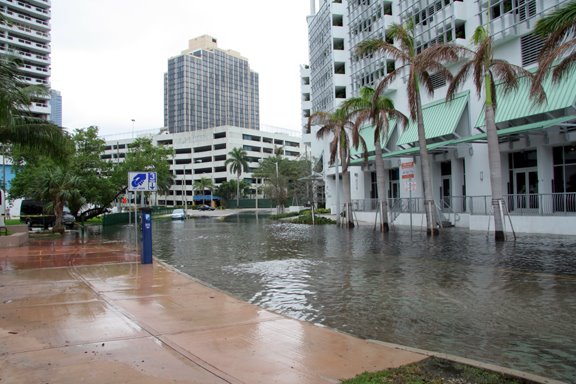
More on Miami: Jeff Goodell, “Goodbye, Miami.” (And there’s definitely a joke to be made about LeBron leaving Miami here. . . .)
And when it rains, it also might pour lava from the sky: Scott Kaufman, “Parts of Yellowstone National Park Close After Massive Supervolcano Beneath It Melts Roads.”
LeBron James Goes to the Cleveland Cavaliers
It has happened again. Even with the World Cup Final looming (specifically), a pretty hopeless present and future (generally), and the polar vortex headed for Western Pennsylvania and points Midwest again (locally!), there is nothing like a LeBron James Decision (2.0) to stall the free agency of the entire NBA, put the Internet on hold for a week, and then make it explode when he announces that he is going to take his talents (back) to Lake Erie. I am thrilled by this news.
But honestly, I would have been thrilled by the news that I get to watch James play basketball for another year no matter where he decided to go or how he announced his decision. He could have gone to Minnesota without Kevin Love and I would have watched him. I adore watching James play basketball. He has made May and June of the past many years something to look forward to. And to be hyperbolic . . . he makes me believe in things like “genius,” “talent,” “drive,” “desire,” “ambition,” “destiny,” “hope,” “belief,” “teamwork,” “empathy,” and a host of other such abstractions (that I pretty firmly do not think “exist” in any empirical way, esp. in the wake of my graduate education in English), and throatily discuss their authenticity in a host of Pittsburgh bars near and far. He has forced me to confront an essay by David Foster Wallace that I wouldn’t have otherwise been able to handle[1] (out of tennis ignorance) and think: yes, LeBron is Federer times . . . well, I don’t know yet. And neither does LeBron nor any of us. He, quite simply, hasn’t achieved his “peak” yet. I am absolutely captivated by him and look forward to being captivated for years to come. I’m gonna watch him until he hangs up his sneakers. And I cannot wait to see what he does in Cleveland.
James has been covered by the media in such excruciating, exhausting detail—evidenced by the past two weeks—that I have gotten to the point where I believe and disbelieve everything. It’s kinda glorious. There’s no rigor required. One can just give themselves over to the oceanic swath of attention his silence generates and luxuriate in the internet’s ridiculous shit. That is, until he says something and things become concrete. And then I’m just overwhelmed with my impoverished understanding of James, a figure that goes so far beyond my own puny little engagement with him as a basketball player, a celebrity, a cultural force, and an economic entity (let alone as a human being), that I’m just left kinda blabbering, wanting to read interesting essays about him by people with more authority and insight than myself.
For the most part, I tend not to allow this kind of thing to occur in my critical life and try to educate myself in the face of such extreme ignorance and bafflement so that I can speak even about stuff (i.e., texts) that is overwhelming, but I’ve just given up. He is, in Bill Simmons’s terms (see below), a “basketball genius,” and I don’t know anything at all. I know I don’t have anything really interesting to say about him. Sometime I suspect others do. Sometimes I know others do. Sometimes others have nothing whatsoever to add. His 2010 decision didn’t change that for me. People said many things. I just felt stupid. The next four seasons I happily watched James play for Pat Reilly and Eric Spoelstra. I adored watching the Miami Heat and guiltily rooting for them. I read everything I could get my hands on for and against James. But I really just kinda cheered. I wasn’t cynical. I wasn’t critical or hateful. I just enjoyed. And the best part, I kinda know that jubilant, youthful appreciation isn’t over by any means. Shucks. I grew up in the Jordan era.
I also adored watching Michael Jordan (who didn’t!?). My childhood and many who grew up in the 1980s-1990s were overdetermined by that skinny man from North Carolina. The last week I’ve been reading Roland Lazenby’s Micahel Jordan: The Life, (2014; here’s a decent review). Jordan was the greatest to play. Everyone knows this. I don’t think there will ever be better. But I think I enjoy watching James more because I am now an adult (if not “mature”) and understand what it means to watch him far more than I ever did Jordan. (He is also totally different than Jordan in a variety of ways.) MJ seemed like a force of nature. Something that just was. He overwhelmed athletics in the 1980s-1990s. He is still overwhelming athletics. Even sports he didn’t play. He was incredible. I was young, spoiled, and took him for granted. (Of course Michael Jordan exists! How could he not!?) I am trying valiantly not to take James for granted. And I can’t. His history in the NBA the last eight or nine years precludes me from doing so. He has just been so, well, special.
When I graduated from the University of Arizona, moved to Pittsburgh for graduate school, and (finally) started watching sports again, I immediately realized that, whatever nationally televised basketball I was watching, I wanted LeBron James to be playing (or the Phoenix Suns). And so I watched the Cleveland Cavaliers. Their playoffs pre-2010, though clearly disappointing, were wildly exciting, and James turned in some transcendent basketball.
When LeBron James went to Miami in 2010 I immediately and unapologetically became a “Heat fan” (as if such a thing exists), until earlier today. Self-consciously rooting for James these past few years has made me unpopular in a variety of ways and I have clearly understood why. How could I not? When I tell people that I just can’t help but root for James while he has played brilliantly for the Heat in four straight NBA Finals, most people have looked at me with at least significant disdain in their eye, and oftentimes concern, bafflement, scorn, and, on occasions hatred, ire, and detestation. (So on a day when I got my 1337 for WordPress) I really don’t care where LeBron has ended up because I am thrilled to be able to watch him continue to play basketball. Who knows how this will make me look to various people in the future. But I think that, whatever else has happened, James moving to Cleveland has now licensed many more people to watch him with such unabashed enthusiasm and appreciation as my own for the past many years, and that needing to temper that enthusiasm through tired stances of “fandom,” “irony,” or “loyalty” will be passé. He will just kind of overcome that stuff. Watch. He will. Going back to Cleveland. It’s smart.
And so, this is the whole point. The fact that he has returned to the Cleveland Cavaliers has occasioned a not unsurprising bevy of some of the smarter and well-written (single-day!) sports Internet commentary in recent memory. Here are some journalists responding to LeBron James going to play for the Cleveland Cavaliers on 11 July 2014 that I think everyone should read:
LeBron James himself being helped with an essay by Lee Jenkins announcing that he will be returning to Cleveland in “I’m Coming Home.” This has been quoted at length all day. I won’t quote it, but it really should be read. It is media-savvy in scary ways.
If you read anything else, read Bill Simmons on James in “God Loves Cleveland.”
But also Kaspian Kang, “LeBron Goes Home.”
And The New Yorker gets snarky.
But yeah. I think those four things sum it up. Read ‘em. And if Decision 2.0 isn’t your cup of tea, do not fret, we’ll be back to the regularly scheduled program soon. The world continues to be awful.
[1] Wallace’s 2006 essay on Roger Federer revolves in a Jamesian orbit. See David Foster Wallace, “Federer as Religious Experience,” New York Times (20 August 2006), http://www.nytimes.com/2006/08/20/sports/playmagazine/20federer.html?pagewanted=all&_r=0
 The Hyperarchival Parallax