Slow Learning and Other Links

Environment and Disaster

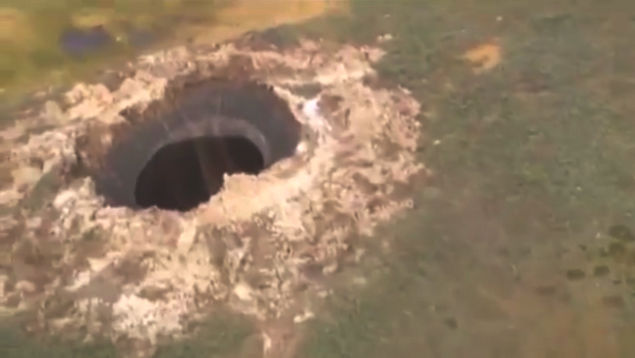
George Dvorsky, “A Dramatic 260 Foot Crater Has Mysteriously Appeared in Siberia.”

giant siberian crater


National Security State

Sue Halpern, “NSA Surveillance: What the Government Can’t See.”

Tom Engelhardt, “The New American Exceptionalism: An Imperial State Unable to Impose Its Will.” (This only shares a title with Donald E. Pease‘s excellent book of the same name, The New American Exceptionalism.)

H. Bruce Franklin, “America’s Memory of the Vietnam War in the Epoch of the Forever War.”

Jeffrey Frank, “Obama’s Unwritten History.”

Xeni Jardin, “NSA Sees Your Nude Pix ‘as Fringe Benefits of Surveillance Positions,’ Says Snowden.”

Continue reading

July Links

(It’s been a few weeks since I’ve posted links, so some of this is already pretty dated, but heck . . it’s also been a jam-packed couple of weeks in the news.)


Nuclear

Nina Strochlic, “Britain’s Nuke-Proof Underground City.”

Forthcoming book: Fabienne Colignon’s Rocket States: Atomic Weaponry and the Cultural Imagination.


Environment

Lindsay Abrams, “The Ocean Is Covered in a Lot Less Plastic Than We Thought–and That’s a Bad Thing.”

James West, “What You Need to Know About the Coming Jellyfish Apocalypse.”

Brad Plumer, “Oklahoma’s Earthquake Epidemic Linked to Wastewater Disposal.”

Continue reading

Atomurbia and Other Links

Environment

Bill McKibben, “Climate: Will We Lose the Endgame?”

Paul Krugman, “The Big Green Test: Conservatives and Climate Change.”


Science

What I’ve been speculating about for years now: physicists are saying consciousness is a state of matter.

The Hubble has seen a star eat another star.


Economics

Benjamin Kunkel’s long review of Thomas Piketty’s Capital in the Twenty-First Century.

Continue reading

Quantum Data Teleportation and Other Science Fictions (Links)

Hyperarchival

Adrienne LaFrance, “The US Army Says It Can Teleport Quantum Data Now, Too.”

Joe Veix, “Top Tweets from the CIA.”

Adrienne LaFrance, “The Promise of a New Internet” and “Facebook is Expanding the Way It Tracks You and Your Data.”

Robinson Meyer, “Google Owns a Satellite Now.”

According to Tim Parks, in “Reading: The Struggle,” it is really hard to read today. I wish someone would talk to me before making such claims. . . .

Andrew Leonard, “Andrew Ross Sorkin’s Vision of the Future is Terrifying.”

And some good news in hyperarchivalism: the entire Jade Tree catalog just became available for streaming. Avail, Cap’n Jazz, Denali, Jets to Brazil, Lifetime, Milemarker, Pedro the Lion, The Promise Ring, These Arms Are Snakes, The Turing Machine, et cetera. My youth in miniature.

Continue reading

Notes from the Anthropocene: Insuring the Apocalypse and Other Links

Nuclear

More adventures in nuclear incompetence: Lily Hay Newman, “Air Force Security Failed a Takeover Drill at a Nuclear Silo.”


Climate Change, Catastrophe, and the Anthropocene

We’re doomed. “A Galaxy Far, Far Away . . . Will Hit Ours.”

Lindsay Abrams, “Researchers: The Collapse of Greenland’s Ice Sheet Could Be a Bigger Disaster Than We Thought.”

Ari Phillips, “In Landmark Class Action, Farmers Insurance Sues Local Government for Ignoring Climate Change.” Is that what we need? For the insurance companies to get involved?

Yes. McKenzie Funk, “Insuring the Apocalypse.”

Paul Krugman, “Cutting Back on Carbon.”

On the flooding in the Balkans.

Everything is the worst: Ryan Koronowski, “House Votes to Deny Climate Science and Ties Pentagon’s Hands on Climate Change.”

And scientists agree, we should just start calling climate change “You will be burnt to a crisp and die.”

Continue reading

The West Antarctic Ice Sheet Collapse and Other Portents of Doom

Climate Change

The New York Times on the collapse of the West Antarctic Ice Sheet.

Paul Krugman, “Points of No Return.”

Eyder Peralta, “New Report Finds Climate Change Already Having Broad Impact.”

Gerry Canavan on “Dystopia, Anti-Utopia, and the End of the World.”

Peter Frase, “Adjusting to the Apocalypse.”

A very interesting piece at Jacobin reflecting on an analogy between abolitionists and environmentalists: Matt Karp, “A Second Civil War.”

Roger Peet, “A Radical Approach to the Climate Crisis.”

Martin Lukacs, “New, Privatized African City Heralds Climate Apartheid.”

Julie Beck on John Oliver’s “Statistically Representative Climate Change Debate.”

Saskia Sassen, “Countdown to Oblivion: The Real Reason We Can’t Stop Global Warming.”

Mike Wall, “To Combat Climate Change, Humanity Must Act Now, NASA Chief Says.”

Brad Plumer, “Five Horrifying Maps of America’s Massive Drought.”

And “Picture This: U.S. Cities Under 12 Feet of Sea Level Rise.” An example:

The Back Bay in Boston under 12 Feet of Sea Level Rise

The Back Bay in Boston under 12 Feet of Sea Level Rise

But don’t fret, “This Couple is Making Roads Out of Solar Panels, and They Actually Work.”

And Michelle Nijhuis, “How to Laugh at Climate Change.”

Continue reading

Spring Semester 2014

In two days I start a new semester teaching three classes I am very much looking forward to at the University of Pittsburgh: Reading Poetry (ENGLIT 0315), Narrative and Technology (ENGLIT 0399), and Introduction to Critical Reading (ENGLIT 0500). The links on the last two classes take you to the class blogs. I am especially excited for Introduction to Critical Reading, as I will be teaching Thomas Pynchon’s Gravity’s Rainbow (1973) for the first time. “A screaming comes across the sky.” I cannot wait.

Fall 2013

Here are .pdfs of syllabi for classes I will be teaching this fall at the University of Pittsburgh:

Reading Poetry (ENGLIT 0315)–“American Poeisis: Imagining the Twentieth Century”

Introduction to Critical Reading (ENGLIT 0500)–“Light and Darkness in the Twentieth Century”

Narrative and Technology (ENGLIT 0399)–“Narrating Nuclear, Information, and Biological Technology”

And my Narrative and Technology students will be keeping a class blog. Check it out here.

The Zombification of Academia and Blowing Up the Sun

Serena Golden has an interview at The Chronicle of Higher Education with the authors of Zombies in the Academy: Living Death of Higher Education, Andrew Whelan, Ruth Walker, and Christopher Moore. She writes:

The book’s contributors find zombies lurking around every corner: students concerned solely with getting through and making the grade; faculty members deadened by the corporatization of the university and the erosion of traditional faculty jobs; systems and processes within the university that have long since outlived their original purpose but that endlessly perpetuate themselves. What does it mean, the editors wonder, if the zombie apocalypse has already taken place, and we are living — or undead — within it?

And in the latest in eschatology from the scientific front, Alexander Bolonkin and Joseph Friedlander have published a paper, “Explosion of the Sun,” which details how you could blow up the sun. A link to the abstract here and a link to the full paper here. Here is the abstract of the paper, which really needs to be quoted in full:

The Sun contains ~74% hydrogen by weight. The isotope hydrogen-1 (99.985% of hydrogen in nature) is a usable fuel for fusion thermonuclear reactions. This reaction runs slowly within the Sun because its temperature is low (relative to the needs of nuclear reactions). If we create higher temperature and density in a limited region of the solar interior, we may be able to produce self-supporting detonation thermonuclear reactions that spread to the full solar volume. This is analogous to the triggering mechanisms in a thermonuclear bomb. Conditions within the bomb can be optimized in a small area to initiate ignition, then spread to a larger area, allowing producing a hydrogen bomb of any power. In the case of the Sun certain targeting practices may greatly increase the chances of an artificial explosion of the Sun. This explosion would annihilate the Earth and the Solar System, as we know them today. The reader naturally asks: Why even contemplate such a horrible scenario? It is necessary because as thermonuclear and space technology spreads to even the least powerful nations in the centuries ahead, a dying dictator having thermonuclear missile weapons can pro[duce] (with some considerable mobilization of his military/industrial complex) an artificial explosion of the Sun and take into his grave the whole of humanity. It might take tens of thousands of people to make and launch the hardware, but only a very few need know the final targeting data of what might be otherwise a weapon purely thought of (within the dictator’s defense industry) as being built for peaceful, deterrent use. Those concerned about Man’s future must know about this possibility and create some protective system—or ascertain on theoretical grounds that it is entirely impossi[ble]. Humanity has fears, justified to greater or lesser degrees, about asteroids, warming of Earthly climate, extinctions, etc. which have very small probability. But all these would leave survivors—nobody thinks that the terrible annihilation of the Solar System would leave a single person alive. That explosion appears possible at the present time. In this paper is derived the “AB-Criterion” which shows conditions wherein the artificial explosion of Sun is possible. The author urges detailed investigation and proving or disproving of this rather horrifying possibility, so that it may be dismissed from mind—or defended against.[1]

The keywords for the paper also need to be quoted: Artificial Explosion of Sun; Annihilation of Solar System; Criterion of Nuclear Detonation; Nuclear Detonation Wave; Detonate Sun; Artificial Supernova.[2]

Didn’t we already think of such silly things like blowing up heavenly bodies? This is absurd.


[1] Alexander Bolonkin and Joseph Friedlander, “Explosion of the Sun,” Computational Water, Energy, and Environmental Engineering 2 (July 2013): 83, emphases mine. . . . The reader will also note the many typos even in the first paragraph.

[2] Ibid.