I will be attending the annual Science Fiction Research Association Conference in Carefree, AZ, taking place between June 24th-26th. I will be delivering a paper from the abstract below on the 26th at 4:00. A link to the program. Hope to see you there.
“Tales of Archival Crisis: Stephenson’s Reimagining of the Post-Apocalyptic Frontier”
With the recent publication of his novel Anathem (2008), Neal Stephenson has coherently solidified the presence and importance of what may have been until this point an unnoticed tradition within Science Fiction: what I would like to call the tale of archival crisis. In labeling the novel as such, it finds clear forerunners in Walter M. Miller, Jr.’s A Canticle for Leibowitz (1960), Arthur C. Clarke’s Rendezvous with Rama (1973), and Larry Niven and Jerry Pournelle’s The Mote in God’s Eye (1974). In each of these works, an archive plays a central role in the narrative space. This space functions in two important ways. The tale of archival crisis is thoroughly eschatological. The archive is a site of both preserving something after the apocalypse, as well as a mode of bringing another catastrophe about. More importantly, perhaps, this space is also thoroughly liminal. Each of these narratives depends upon the archive’s location at some limit, situated on the frontier of the represented world. Not only does the tale of archival crisis complicate common representations of post-apocalyptic landscapes as a sort of neo-American West, it does so by drawing complex relationships between knowledge, space, destruction, and civilization, relationships whose importance Anathem brings to bear in exploding the very notions of liminality any eschatological narrative depends upon. This paper will explore the significance of Stephenson’s reimagining of temporality and spatiality both in terms of the tale of archival crisis and, more broadly, in the radical contribution he has made to post-apocalyptic Science Fiction.
In a quite busy part of Galakrond there is a toon[1] who appears from time to time. On her first day of existence, the following things happened to her:
She attempted to form a macro that said: “I would prefer. . . I would prefer. . . I would prefer,” and then, understanding that this macro worked, said, “I would prefer not to.” This, of course, was after she entered a vale full of aggressive elementals where she was wounded by one who had bested her blood-ally. “Her skill in defense rose to 4.” She discovered Azure Wash where a letter was waiting from a friend (though a friend she could never meet.) She went to the inn to ponder awhile her next action, for the letter contained 100 gold. After having taken a short nap, she re-emerged. On the road to somewhere, she was attacked by a giant fern; her defense increased to 5 and then she died; she was resurrected. To go to Odesyus’ Landing or to The Exodar?[2] She died afk; she was resurrected. There were horses loaded w/ supplies in an encampment walled by spiked logs. (She thought: “Power work is never over.”[3]) She “followed” him. She was on a boat; they danced. She told him to wait around, for he was about to see something he’d never seen before. He followed and didn’t leave for quite a while. . . . She arrived in Stormwind and went to the auction house to buy new clothes. Newly outfitted, she sat in the door of the AH[4] and said, many times, “I would prefer not to.”
For awhile there this draenei mage (lvl 1) remained. Wearing a beat-up hat, a rust-colored shirt, and what appeared to be Capri Pants, she kept saying the same thing over and over; no one would respond to her (in any meaningful way). Even her recent travelling companion got fed up and left. Soon after that, she disappeared. She has been spotted only occasionally and randomly since, but has not been observed to move nor say anything except, “I would prefer not to.”
The Scrivener in the Doorway: The Commentary
The brief narrative presented in “Thescrivener in the Doorway,” with a few emendations and a bit artistic-license on my part given to the recounting of events, well, actually happened. After an excellent conversation one evening w/ a good friend about the totalizing reification of the player/subject that takes place when one plays World of Warcraft, I came home eager to institute a literary—and recently politically celebrated—hack into the game. I wanted to exploit the very structure of being-in-the-game. And the “Thescrivener” is what resulted from this.
What is quite clear from playing WoW[5] for any amount of time is this: one is paying about $20 a month for the privilege of working. Though WoW can be fun, exciting, challenging, carnivalesque, etc.—pretty much like any really good (video) game—most often it really isn’t any of those things. Quite often, in fact, it can be quite boring. And, like a lot of really mindless jobs that lack any real skill, it is ridiculously, obscenely repetitive.
Scott Rettberg puts it nicely: “World of Warcraft is both a game and a simulation that reinforces the values of Western market-driven economies. The game offers its players a capitalist fairytale in which anyone who works hard and strives enough can rise through society’s ranks and acquire great wealth. Moreover, beyond simply representing capitalism as good, World of Warcraft serves as a tool to educate its players in a range of behaviors and skills specific to the situation of conducting business in an economy controlled by corporations. While it’s certainly true that some students are failing out of college, some marriages are falling apart, bodies are slipping into flabby obesity as a direct result of World of Warcraft addiction,[6] in a larger sense the game is training a generation of good corporate citizens not only to consume well and to pay their dues, but also to climb the corporate ladder, to lead projects, to achieve sales goals, to earn and save, to work hard for better possessions, to play the markets, to win respect from their peers and customers, to direct and encourage and cajole their underlings to outperform, and to become better employees and perhaps, eventually, effective future CEOs. Playing World of Warcraft serves as a form of corporate training.”[7]
What is really insidious about WoW, is that the game wholly depends upon what Rettberg so accurately calls a “capitalist fairytale.” The game requires players who are producers and consumers. W/o people actively pursuing their individual goals, their unique professions,[8] and exploiting their individual talents, the fabric of the game is entirely hollow. To really advance in the world, to make it into further “end game” content requires synergistic cooperation b/t many actors. Of course one can play WoW w/o interacting w/ others, but this greatly limits one’s experience and the possibilities presented w/in its world. The capitalist fairytale the game so wholly relies upon is that there is a kind of one-to-one relationship b/t time spent in the game and money made, w/o the interference from banking trusts, stock markets, unstable import and export taxes, union laws, governmently mandated hourly wage, etc. It is an Adam Smith wet-dream. B/c WoW purports an entirely circumscribed, self-enclosed and self-sufficient world, it presents the illusion of an economy totally divorced from “real” economies in the “real” world. And of course, nothing could be further from the truth. It is brilliant, really. Blizzard is ultimately playing on the most basic interpellations of the postmodern, late-capitalistic subject. To make money, they’ve structured an economy (more than even a game) that directly plays upon the subject’s position w/in that economy. To “enjoy” the game, one has to participate whole-hog in the economy: one has to be a productive, dedicated, not-easily-distractible worker. One has to act, to participate. Always.[9]
This constant imperative to act should not be surprising, either, as all video games rely on this imperative for the realization of their game-space and their unfolding. The quite distinct thing about WoW, however, is that in terms of narrative, the game is wholly non-teleological. Yes, there is a loose, flimsy framework of a narrative that structures one’s course through the game, and one is constantly interacting w/ narrative when one performs various tasks and quests. The fact, however, that one can kill the Lich King (or whatever) again and again and again, ad infinitum, provides no narrative closure to the game. Furthermore, the sudden appearance of your toon in the world, cannot really be said to constitute a “beginning” either. Where the “middle” is, where the moment of conflict or resolution is, can also be shown to be almost entirely lacking. Instead, Blizzard, by making the game primarily about one’s economic relationship to the world and its inhabitants, has effectively inserted the myth of capitalist teleology as the game’s goal—i.e. the “good” life, when one has all the goods one could want, and of course Blizzard has been very good about making this goal eminently unreachable.[10] There is always something more one could do, procure, purchase, achieve, etc.[11] You know, like “real” life.
Despite this totalizing imperative to act and participate that the game presents, WoW has also been a singular phenomenon in presenting chances for play and creation w/in the parameters of the game that the creators could not really have (easily) anticipated. There are many examples of this subversive or anti-gaming, machinima creations being perhaps the most notable (and interesting). (There are many of these, but I urge you to consider the following, as to document the sheer archival accumulation of WoW-related cultural production would be a dauntingly thankless task indeed.):
The thing about all the “alternate” ways of “playing” WoW, is that they are all wholly permitted, and oftentimes even sanctioned by both the game logic and Blizzard itself. B/c it is a World (something that I will assume here as a given, though not one I have the space to develop), a massive space w/ strictly defined rules of action, the possibilities for exploiting the game and its algorithm are equally massive (and, even now, probably mostly unexplored). In other words, b/c the game is so non-teleological and “infinite,” play can easily appear to step outside the imperative to act, and the imperative to act w/in the economy.
What should be immediately apparent about both these videos, however, is that they took a massive amount of time to put together and an incredible amount of logistical cooperation b/t participants. Yes, they are modes of play not strictly w/in the parameters of the game, but their sheer ubiquity and availability on the interwebs, how they further the appeal of this already addictively appealing game, and how they continue to reproduce Blizzard’s ideological project of presenting a World in which one can “do anything,” in which “anything is permitted” (as long as you play by the rules, which are both quite clear and completely hazy simultaneously)—all of this ultimately only reinforces this imperative to act. Even when one is playing the game in ways not defined by the game, one is still acting w/in the game, and, perhaps most importantly, contributing to the game’s economy (as well as Blizzard’s bottom line). In other words, there is, fairly strictly, no outside-the-game(’s economy). The only way to avoid the totalization the game imposes upon its reified participants, and many people have quit the game for precisely these reasons, is simply to not play. Yes or no. Act or not. Participate or not. These binaries all boil down to: either one is playing WoW or one isn’t.
If one grants me the preliminary claim that WoW does in fact constitute a World, then the analogue for the “real” world would be: one either is or isn’t. The only way not to play the world is to commit suicide. This would be equivalent to not playing WoW.
Though this may be a slightly hyperbolic and extreme analogy to draw, players who have quit the game have often done so by annihilating their character so as to make it less attractive to come back to the game for themselves. Once one is in the World of WoW, oftentimes the only way out is simulated suicide (deleting your character, giving away all your gold and possessions, etc.).[12] Yes, for many people, it is probably quite easy to simply stop playing, but because your character remains w/in Blizzard’s database (one suspects forever, or at least until WoW 2 comes out. . . .), there is always the possibility of coming back. One’s avatar is still a possibility w/in the game-space, even if one hasn’t played in years. Thus the self-annihilation that so often takes place: the fact of an avatar’s continued, or possibility of existence is too tempting. (Though I realize the analogue b/t deleting one’s character and suicide is perhaps a bit of a stretch, the biggest reason this analogue suggests itself is that one has to actively delete one’s character—it will never disappear on its own.)
Consequently, WoW presents a very curious “truth” (or aporia). In short: to be in the World is to act in the World. And of course this is something presented by any World. What makes WoW (perhaps) so interesting, is that it reveals not merely the potential impossibility of the political effectiveness of the Bartlebian stance w/in such a structured, controlled, networked, and totalized world such as WoW, but it simultaneously reveals what is so often overlooked in much of the recent commentary on “Bartleby, the Scrivener”: that the ultimate outcome of his stance is death.
In terms of WoW, we might understand this as the “30 minute Bartleby” problem. To understand this problem, first let me give you a bit of background on my thinking about Thescrivener.[13]
Initially I had it in mind that Thescrivener[14] could be rigged up to simply sit in front of the auction house, answering “I would prefer not to” to any request made of her. I quickly realized I had neither the time, patience, nor know-how[15] to make this happen, so instead I hardwired a macro to button 8 (quite easy to do) that would cause Thescrivener to “say”: “I would prefer not to” anytime I pushed it. The main reason for this is that it also became quickly apparent that I could not just leave her to sit “unattended”: it would log me out.
The implications of this last sentence are, of course, significant. If one could simply log into World of Warcraft and let their character just sit, not act, the servers could quickly jam. It would be an efficient, manageable hack to make—i.e. simply convincing so many people to log on at once that it would overload the system (I’ve been in Dalaran, I know what happens. . . ). People wouldn’t even have to do anything. They could log on and go to work for weeks. Furthermore, it would be totally w/in the parameters and rules of the game. So, to maintain optimum bandwidth efficiency, Blizzard automatically logs you out after a pre-determined length of inactivity, about 30 min. W/r/t my plan for a Bartlebian “hack,” this would ruin the basic fundamental idea of the toon: that it would only respond. Not addressed specifically, it would just sit there, in front of the auction house, robotically-(im-)mobile, but only for a short time, before disappearing (since ultimately, a low-lvl toon sitting in the auction house entrance is a thoroughly uninteresting thing, and not a lot of people would bother to address Thescrivener, esp. if she wasn’t bothering anyone).
Not feasibly and quickly being able to find or make what would ultimately make her a “bot,”[16] I realized that I could still make her say “I would prefer not to” quite easily, and so, if I ever “choose” to inhabit her on that particular server, I simply cause my character to sit there, saying “I would prefer not” to at my whim. This toon has a single purpose in the world, and it is to utter this phrase. Furthermore, since her active refusal to participate is not automated, she more clearly resembles her name-sake—i.e. Bartleby, though perhaps in- or non-human, is not presented as an automaton in “Bartleby.” She is what I affectionately call my “Bartleby alt.”
For those perhaps unfamiliar w/ Herman Melville’s short story “Bartleby, the Scrivener,” let me provide a (very) brief synopsis. Bartleby, a clerk, has recently been hired by the narrator. Over the course of the story Bartleby stops really acting at all, let alone doing the work he was hired to do, replying to all questions regarding his actions with his famous formula: “I (would) prefer not to.” This ultimately causes the narrator to leave his offices, since Bartleby has ceased to move from them. As a result, Bartleby is thrown in jail for not vacating the premises. In jail he ceases to eat and dies.
The “30 Minute Bartleby” problem might be understood as follows: b/c WoW logs a character off after 30 min. of inactivity, the entirety of “Bartleby, the Scrivener,” indeed, of Bartleby’s entire life is boiled down into a half-hour. The Bartlebian act of preferring not to act in the game[17] results in the player’s disappearance (though not death—you cannot really] die in WoW[18]). The stakes of this problem are many, but I would like to submit a somewhat lengthy reading of “Bartleby, the Scrivener” by Gilles Deleuze so as to also gesture toward all the other people who have chimed in on Bartleby:
“The formula I PREFER NOT TO excludes all alternatives, and devours what it claims to conserve no less than it distances itself from everything else. It implies that Bartleby stop copying, that is, that he stop reproducing words; it hollows out a zone of indetermination that renders words indistinguishable, that creates a vacuum within language [langage]. But it also stymies speech acts that a boss uses to command, that a kind friend uses to ask questions or a man of faith to make promises. If Bartleby had refused, he could still be seen as a rebel or insurrectionary, and as such would still have a social role. But the formula stymies all speech acts, and at the same time, it makes Bartleby a pure outsider [exclu] to whom no social position can be attributed. This is what the attorney glimpses with dread: all his hopes of bringing Bartleby back to reason are dashed because they rest on a logic of presuppositions according to which an employer “expects” to be obeyed, or a kind friend listened to, whereas Bartleby has invented a new logic, a logic of preference, which is enough to undermine the presuppositions of language as a whole.”[19]
The reason I call the “30 Minute Bartleby Problem” a problem, is b/c the effects of Bartleby’s formula are simply not possible in 30 min. The formula requires the persistence of its inflexibility to be repeated over and over again for it to begin to operate. Esp. if I decide that I will only say this into the game-space of WoW as a response, 30 min. simply isn’t enough time for someone to bother to interact w/ your sitting toon.[20]
Considering all the other reasons that Bartleby’s formula is inapplicable to true revolutionary inaction in WoW, the simple fact of the game logging you out is the most important. B/c of this aspect of the game, it (perhaps unlike the world) does not permit Bartleby—he is an impossible figure. Giorgio Agamben argues that Bartleby opens up a third option to Hamlet’s yes or no to being[21]; WoW, however, firmly removes this third option. To illustrate, I would now like to turn to a little self-reflexive exegesis of the narrative that began this discussion. The narrative presented is, more-or-less, a faithful representation of some of the actions that took place while I attempted to present Bartleby into WoW. It is austere, sure, but considering that the subject was Bartleby, I felt that austerity was of the essence. (See the beginning of this post for the tale.)
The first action, the forming of a macro, directly places us w/in gamic action. Sure, I could sit there and type “I would prefer not to” every time anyone addressed me, but automating this response stripped down Bartleby to a kind of pure action: hitting number 8. (This is perhaps similar to the manner WoW shares some of the basic structures of the real world, but they are like a pale shadow, where only their framework is necessary.) Pressing the 8 button on my keyboard was as close, easy, and repetitive of an action I could come up w/, since I cannot say (only “text”)[22] this response.
The narrative then immediately takes us to the fact that this macro was only formed after the fact of some action—i.e. it was not the ur-moment of Thescrivener’s experience of the game-world, in the same way Bartleby didn’t start off saying “I would prefer not to.” More to the point, however, is that I had to move in the world, travel to my intended location—the steps of the AH. I’m a Draenei mage, so this required getting on a boat, among other things.
The very next thing that happens is that Thescrivener gets attacked by an elemental. I did nothing to provoke this whatsoever, beyond getting w/in a certain radius of the elemental. Usually, sticking to the roads prevents random encounters, but this is not always the case. This reveals two things: 1) The world of WoW will accost you. No matter how much you remain inactive, at some point (I also have PvP[23] enabled), the world will impose an aggressive action upon you. 2) In the case of the specific aggressive action taken toward myself, the result of this, even w/o fighting back, is that your character’s stats will improve. My “defense rose to 4.” This is incredibly significant, b/c even when you’re not trying to improve or advance in the game, you cannot help not advancing.
Thescrivener then goes to a mailbox, where she has received, from Slothrop (my main toon), 100g. The reasons for my doing this are important. I wanted her to have a significant enough amount of money so that her lack of participation in the economy could at least have an effect: keeping 100g out of circulation. Also, ontologically, it is fascinating that you can send another version of yourself, an other (self), something immediately through the mail—a total non-diegetic act—but never the twain selves shall meet in the World. They are ontologically prevented from doing so. Also, to be sure, despite the “purity” of my Bartleby experiment, for an experiment is surely all that it really was, I wanted her to look the part. A mage in a robe a Bartleby does not make.
The next thing that happens, is that Thescrivener is attacked again, though this time she dies (one rule: she never, ever attacks anything). Here is where trying to draw an analogy b/t WoW and the real world hits really shaky ground. Yes, I could leave her dead, but if I did so long enough (a week) the game would resurrect me. The only way to truly die would be to delete her character, and that would of course be an action, and far closer to suicide than any other kind of death (suicide is a thoroughly non-Bartlebian action).
The next detail of the narrative is perhaps one I just felt to be amusing: “Odesysus’ Landing or Exodar.” One of the redeeming features of WoW to me is the sheer hyperarchival nature of the game’s content. Literary, pop-cultural, and other references abound.[24] So I couldn’t help but feel a bit like Odysseus here, carrying the oar of Bartleby into a land where it may be mistaken for a winnowing fan.
Nor is the insertion of the quote: “Power work is never over,” merely an insignificant detail. In all honesty, I was listening to Daft Punk’s Discovery at the time, and, from this simple detail it should be made obvious that, no matter what the experience of Thescrivener be for other characters, for “me,” it would always be one of mediation—things would be going on around me, acting would be occurring (in the real world).
And this insertion of Daft Punk’s tongue-in-cheek celebration of the capitalist work-ethic, even if those workers be robots, reveals the essential problem of the rest of the text.
In short, I had to get to Stormwind. To not act in what I felt was a particularly illustrative manner at the door of the AH—the very gate of the economy—required all this other stuff. A dude started hitting on me, which was interesting b/c I’d never really experience this as a male toon,[25] so I danced w/ him. He started blowing me kisses, I was my coy Bartleby self until—the controller me not able to help myself—I told him, follow me and I’ll show you something you’ve never seen before. He did. All the way to the door of the AH. He stuck around for a while, despite the fact that all I was doing was “spamming.”[26] But this is my last experience of anyone interacting w/ The Scrivener. She is invisible to others. Her preferring not to is completely impotent.
And this is where I understand the recent invocation of this act as the one politically necessary right now by the likes of Hardt and Negri, and Žižek: within WoW, for this action to have any real effect, many, many more people would have to actively not participate in this manner. Given enough people, it would clog the game. Its logic would be pushed to a breaking point. Perhaps, even at some point, Blizzard would have to take action despite the fact that sitting around doing nothing in the game is not only permitted e, it is at times necessary for the game to function at all, for example, waiting around for people. But, not to get utopian here, even a small group of people committed to Bartlebian play would have influence on the social network of people interacting (all over the world) with the game.
Now, the craziest part of Bartlebian play, is that one can make a “Bartleby alt” that would not significantly impact how one played the game in other ways. No one has to know that Thescrivener and Slothrop are related. Indeed, no one at the time of this writing does. I can play the Bartleby alt or not, but I have one. If I want to play big, mean,[27] active Slothrop, I can. And potentially, no one would be the wiser (except Blizzard).
What should be clear about Thescrivener is that, b/c I’ve chosen one method of play for her, she is immediately and clearly thrust into many of the basic structural, algorithmic, and formal aspects of the game which, used w/ some amount of collective direction, could result in real effects w/in the World of WoW. What these might in fact be, at the moment, remain unclear, for having a goal toward which such inaction is directed would defeat the whole purpose. The stance, however, even only taken when one feels like it (prefers to), remains a total one. It needs no goal. It justifies itself by its own radicality—to be simultaneously participating, even giving the perception that one would participate if they so preferred to, while actively not participating (rather than passively), neither saying no nor yes, but “I would prefer not to” (what. . . ?). Though in theory all games give us just this type of Bartlebian possibility, even games as simple as Pong or Super Mario Bros., WoW is a singular example in that it provides an environment to experiment w/ the very real possibilities of the gesture.
As with what might result in the game world from such a stance by necessity remains unclear, I will save how any of this affects or could affect the “real” world for another time, or else let someone else take up this question, for to fully precede with such an analysis would require more rigor than this forum affords, but suffice it to say, this stance intervenes directly into the apologia that began this essay, but has subsequently been removed. Simply put, the shame/nerdiness one feels from the many instances of cultural criticism about participating in such virtual action as WoW affords,[28] is radically upset and complicated by having a “Bartleby alt.”
On the one hand, one feels even nerdier and more embarrassed for realizing that they’re using this game for such a ridiculous pursuit (like trying to create a virtual Bartleby). On the other, it is mildly, to use a quotidian phrase, “empowering”; I feel like I am making criticism into an action w/in the game, and WoW gives me the chance to do this in a fairly large World (as opposed to other games). Though this ultimately may be more terror-inducing in regard to what is called, and for good reason in this context, a “control society”; and I might have to reassess the fact that I have to use the word “feels” in the previous sentence, for I am surely doing this virtually, even if it is still real; the Bartlebian stance does open a horizon for a clear, code-based exploit. WoW has squirreled away in it the very thing that might upset its smooth functioning (like its permissiveness re: add-ons); also, and this is of singular significance, no rules are broken.
Perhaps, if nothing else, the thing that is opened up by this discussion is simply the awareness that WoW, like so many time-sucking entertainments, jobs, families, social groups, etc., contains w/in it the possibility for a kind of criticism, and a kind of criticism unique to its formal aspects. Rather than immediately and unproblematically dismiss WoW upon its many glaring and obvious drawbacks, faults, and problems (which are myriad), what a game like WoW produces as an important site of cultural debate, revolves precisely around what is going on (or not) when we immerse ourselves into an online World. If many of the questions we ask are the same, and the stakes of problems posed remain equally significant, perhaps the question to ask is of a different, more clearly aesthetic nature: what happens when Entertainment becomes a World and vice versa? I will, however, refrain from answering this question in here, for various and complicated reasons, but let it be said that it will be answered one day. . . .
And of course all of this is to suggest, as this post is indeed titled “Prelude to Cataclsym,”–Cataclysm being the forthcoming expansion pack in which a major, apocalyptic-type event takes place in the world (simply unprecedented really. . .)–all this is to suggest that there are many more things to explore w/r/t Archivization and Apocalyptics in WoW. . . .
[1] Note: what follows will contain liberal use of a specific lexical lingo.
[2] This must have been where he brought the oar, for there are surely many men chopping trees.
[5] The common acronym for World of Warcraft (Blizzard Entertainment, 2004-10).
[6] Note Rettberg’s: “I am nearly certain that the term ‘addiction’ will be unpopular with my fellow players, because the popular media have used the term while terrifying us with stories of teenage World of Warcraft players (these stories are typically set in China, and like horror movies, the victims are always teens) literally dying because they forgot to eat while playing a MMORPG. While I’m sure that at least one of these stories is true, I doubt it’s a widespread phenomenon. Your child can and likely will survive World of Warcraft. Intelligent adults can spend hours a day play [sic] MMORPGs without becoming pale-faced, sunken-eyed, self-destructive shadows of their former selves. While playing World of Warcraft has the hallmarks of psychological addiction, it may in fact also be a kind of cure. Like MOOs, MUDs, and many other types of online activities, World of Warcraft is a social activity, a cure for the deadly human disease of loneliness. Nonetheless, we can crave human contact in a particular type of structured way just as much as we can crave a cigarette” (Scott Rettberg, “Corporate Ideology in World of Warcraf,” Digital Culture, Play, and Identity: A World of Warcraft Reader, eds. Hilde G. Corneliussen & Jill Walker Rettberg [Cambridge: The MIT Press, 2008], 34-5, n. 3.).
[8] Tailoring, hunting, leatherworking, mining, herbalism, alchemy, inscription, enchanting, engineering, and jewel-crafting. One can select two of these professions. Cooking, fishing, and first aid are available to all. (Archaeology is also forthcoming. . . .)
[9] Furthermore, the in-game economy has direct a relationship to the “real” economy, as in-game gold is bought and sold on the internet; there are the semi-mythical MMORPG farms in places like China; the individual unit currency (gold) even has real market value, and is, in fact, more valuable than some national units of currency in terms of real-world money! None of this is novel or striking to say, however, as these are fairly widely-known and well-documented in-game-to-real-world economic relations. My purposes here, as should be apparent, are differently directed.
[10] For instance, my quite reachable goal in the game, getting to 80, obviously presented itself as an illusory one at best, for certain aspects of the game are still unavailable to me until I get better gear, which translates into: I need to spend a lot more time working to be able to purchase or procure the necessary items to continue playing the game, to continue advancing along its pseudo-narrativistic lines. Anyone who wants to send me gear, w/o compensation, feel free, but realize that though this act may be slightly subversive to the in-game economy (something for nothing), you should concomitantly realize that whatever you send me is the result of many hours of your labor.
[11] For example, there is the supposedly accurate account of one player who has earned every single in-game achievement (see here), but this is really so fantastically impossible—i.e. it really would take a herculean amount of time spent playing the game, probably to the detriment of virtually anything else—that it stands out as a news item in something like Wired. It is remarkable that someone could achieve everything there is to in the game.
[12] See WoW Detox for firsthand accounts of such activity.
[13] The avatar I’ve created to enact a Bartlebian stance. Her name in the game is “Thescrivener.”
[14] See Herman Melville, “Bartleby, The Scrivener,”Piazza Tales (New York: Modern Library, 1996 [1856]), 21-68. Slavoj Žižek, Giorgio Agamben, Gilles Deleuze, Jacques Derrida, and Antonio Negri and Michael Hardt, among others; all have things to say about Bartleby, for those interested.
[16] A toon who has been given certain software commands to make it endlessly do one activity, like farming leather from wolves. This is also highly against the rules. Though I’m not sure Blizzard would really look down on my activity—they’re still making their 20 bucks. The problem would be, of course, if many, many more people started a “Bartleby alt” . . .
[17] Of course, a “pure” Bartlebian stance is not available if one is already paying for WoW, this goes unsaid—and also suggests something about the impossibility of a pure Bartlebian stance in any world.
[18] Another significant complication of the Bartlebian stance.
[19] Gilles Deleuze, “Bartleby; or, the Formula,” Essays Critical and Clinical, trans. Daniel W. Smith & Michael A. Greco (Minneapolis: University of Minnesota Press, 1997), 173. For another, slightly more extreme take, Giorgio Agamben says: “In the place of the Prince of Denmark’s boutade, which reduces every problem to the opposition between to be and not to be, Being and non-Being, the scrivener’s formula suggests a third-term that transcends both: the “rather” (or the “no more than”). This is the one lesson to which Bartleby always holds. And, as the man of the law seems to intuit at a certain point, the scrivener’s trial is the most extreme trial a creature can undergo” (“Bartleby, or On Contingency,” Potentialities: Collected Essays in Philosophy, trans. & ed. Daniel Heller-Roazen [Stanford: Stanford University Press, 1999], 259).
[20] One of the reasons for this is also that many inactive toons are the results of their controller being away from the computer—i.e. the Bartlebian stance in WoW, unlike in the real world—may imply there is no one there to respond at all.
[23] Player versus Player. I am on a PvE (Player versus Environment) server, where, if one so chooses, other characters cannot attack yours without you agreeing to a duel. This is also the default setting of this world. You can, if you so choose, turn off this restriction, and players from the opposing forces can slaughter you w/o compunction, esp. if you’re a lowly lvl 1 mage. (That said, since the AH is in a fairly populated area, w/o reinforcements it would be very difficult for someone to kill me w/o getting killed in turn by someone else.)
[24] For instance, the other day I played a quest called: “Crank it to 11. . . ,” or something like that.
[25] There are of course many interesting things to say about how gender is constructed in WoW.
[26] Writing stupid, senseless text over and over into the chat channels. It is my belief, however, that my kind of spamming is slightly more interesting/serious.
[27] Seriously, he’s killed so many animals he might as well be the entire U.S. whaling fleet b/t the years 1840-60.
[28] Btw, most of these critiques focus on the inaction, sitting at your computer for hours on end—like we don’t do that anyway. . . .
With what was probably a fairly predictable final image—Jack closing his eyes and dying—so ended last night one of the most ambitious television shows ever to appear on a network. I have been following Lost (Carlton Cuse & Damon Lindelof, 2004-10) fairly voraciously and adamantly for quite a while now, and have refrained up until this moment to comment upon it at all. The major reason for this is that the extremely large majority of any writing or thinking done about Lost has been mostly in the realm of speculation, conjecture, and theory. Though the show has wonderfully pointed toward, and at times even required these sorts of activities, I personally have never been very interested in predicting what would happen on the show. Perhaps this is merely the narrative scholar in me who is able to begin and end most narratives in a fairly short amount of time (i.e. less than 6 years) and consequently feels no reason at all to speculate (i.e. it is a futile and worthless endeavor); or perhaps it was the very strident statement by the show’s creators that they knew how the arc would play out, how it would end, and that they were writing toward it. Well, we now have that end, and I, for one, am quite disappointed.
What follows is in no way a referendum on the show. If anything, despite Cuse and Lindelof’s admission that they ended the show how they wanted to, I think the pressures of writing in such a massively popular medium such as network television (and who knows, the pressures from ABC or Disney executives) dictated the easily accessible, touchy-feely, fairly non-complex, overly-emotional ending we received.[1] To have the entire “sideways” world of season 6 be purgatory, and not just any purgatory, but one where all the characters had to come together so that they could move on to “heaven,” well. . . what more could we expect? This is television, after all, and not just any television, but network television. The recent trend w/ such slapdash shows like Flash Forward, V, and others—shows attempting to achieve Lost’s complexity and SF aspects—clearly demonstrates that the formal dictates of network television simply aren’t kind to this type of narrative. (In terms of SF, can anyone imagine Battlestar Galactica or the recent, and surprisingly good, Stargate Universe working on a network?) Needless to say, the creators of Lost gave a heroic, epic effort to attempt to make good network tv, and despite my qualms w/ the ending, they should be commended for this.
That doesn’t let them off the hook for the finale though. To paraphrase a contributor to one of the many comment-forums I was surfing through last night to see how people reacted,[2] the finale revealed that all the SF, physics, time-travel, weird twists and turns, etc. etc.—anyone who watches Lost knows what I’m talking about—all of that was a mere prop for what ultimately proved to be an emotional, character-driven soap opera. I don’t think I’m alone in saying I didn’t watch the show for its character development, let alone its acting. W/ the exception of Locke (Terry O’Quinn), Sayid (Naveen Andrews), and Ben (Michael Emerson), I think anyone would have to agree that the acting was pretty wretched on the show as a whole, at times bordering on the wholly melodramatic.[3] The characters were fairly “stock,” and were shallow enough, even w/ the massive effort put in to making them complex, that they felt like a prop to all the interesting mysterious stuff. Well, we should’ve known better. The whole format of the show—flashbacks, flashforwards, and flash-sideways—always privileged character development, so of course the show ends on this. I’m not surprised per se, just disappointed to realize that I’ve been invested in what I thought was a fascinating show, w/ massive intellectual ambition, only to discover that all that intellectual ambition was a mere prop, mere window dressing to a fairly normative narrative—i.e. redemption (gag).
Furthermore, this is not a rant about the “questions” that may or may not have been “answered.” No, what I am trying to suggest here, is that the appeal of Lost was always, I think for the majority of people—i.e. why people watched it rather than other dramas, be they doctor-related or not—an intellectual appeal. The show didn’t dumb itself down, but did the opposite. It asked its viewers to really strive at their mental limits in terms of narrative construction (see all the theorization and speculation). Though I wasn’t expecting a James-Bond-villian-type-explanation for all the mysteries of the island, it perhaps would have been more satisfying intellectually. They really could have used a page from detective fiction, noir, or even Sherlock Holmes on this one. But what last night’s finale so clearly emphasized, was that the show was never really about its intellectual aspects, at least to its writers, but rather about these poorly written, poorly constructed characters, who I always gave the benefit of the doubt to b/c of the show’s intellectual ambition. I, and most viewers—all the people who poured out complex theories, the cult of rabid fans, the Lostpedia, etc.—we were all duped. And I’d like to briefly suggest why this may have been so, though I’ll leave a more fully fleshed-out commentary for elsewhere (or later).
Basically, the appeal of Lost for, I would like to suggest, most of its really hardcore and even casual fans was an archival appeal. The show was probably the most reference-heavy popular artifact ever (?). Characters were unapologetically named after philosophers, literary figures, and scientists.[4] References to literature, film, music, science, math, politics, and pretty much anything one could think of were more than liberally inserted into the narrative; the show was inundated w/ them[5]; the show required its own wiki. And perhaps no other single popular document inspired as many searches through Wikipedia than Lost. And all this intellectual allusiveness was fun. If Lost was so popular, this was the reason. The show was hyperarchival par excellence.
What got really completely abandoned in the finale and the last season as a whole was the archival nature of the show. The plot boiled down to protecting some “light” (the source of life in the world) and a struggle b/t good and evil (sorta). All the intellectual, archival, referential, postmodern work the show did ended up being completely empty. I read recently somewhere that the relationship b/t Lost and its viewers was an unprecedented one, fostered by the internet like never before, and that this was adversely affecting the show. This is perhaps true, but what we surely didn’t receive last night was a gesture toward the fans (though it unapologetically was trying to do that, to thank the fans for watching). Rather, we got what should’ve been apparent the whole time. None of the intellectual stuff mattered. Cuse and Lindelof were interested in one thing, and one thing only. Telling a story. And this, if anything, is what should really be taken from the show.
Lost was a masterpiece in narrative form (even if it had horrible dialogue). For any aspiring writer, Lost would be a good place to start w/ investigating all that is possible w/ narrative. The show’s writers really pulled almost every narrative trick out of the hat—seriously, time travel, flashbacks and forward, fragmentary narrative, cliffhangers, near perfect narrative arcs, etc.—and they did so w/ a clear end in mind. In terms of narrative, the show is incredible. That is, except for the fact that the entirety of the show, and esp. season 5, was shown to be ultimately unimportant. The show was always, and still was w/ last night’s finale, about its teleology. The purposes of characters, their “destiny,” what the island in fact is (or was)—these were the things, intimately linked w/ the Lost’s hyperarchival nature, that drove the show. To end in the afterlife on a gooey note of camaraderie and community simply departs from the show’s narrative thrust. The ending was not faithful to what had been constructed. And I mean this statement formally.
For example, all of season 5 boiled down to whether to detonate the nuke or not,[6] whether destiny, time, etc. could be changed, whether eschatology was written in stone. And w/ the opening of season 6, we thought that it wasn’t: that we were given two worlds: one in which the bomb did its work, one in which it didn’t. B/c of the need to end, however, the bomb had to not work (sorta). So much effort was put into getting the characters where they were at the beginning of this season, but ultimately, so little of it was necessary. Did the narrative really require going back in time? No. Did it require leaving the island? Not really. Lost perhaps went through more gymnastic narrative contortions than any other network television show ever, only to end in the most simple manner. And I have to look at this as a failure.
Lost was an incredible opportunity to really do something quite amazing w/r/t narrative, archivization, and eschatology, and it totally balked at all three, taking the most normative, cliché, redemptive way out possible. The show could have proven that not only are most viewers far more intelligent than the networks would have us believe (seriously, one more cop show and I’m going on a tv hiatus), but that most tv viewers are starved for intellectual stimulation, and thus perhaps a more rigorous ending could have shown a new path to tv execs for making shows. In short, I don’t think we can lay the blame for the ending of Lost at the feet of the show’s creators, but rather the very popular culture it is so stridently situated in. It was an impossible show to begin w/, and the ending only reveals the failure of its impossible ambition. Given two options, between Entertainment that sublimates our own individual “emotions” and a rigorous, intellectually demanding, narrative experiment, network television will always choose option one. It sells. Consequently, Lost is entertainment plain and simple. Extremely well-made and captivating, yes. (I refuse to write off the whole show b/c of this end, btw.) But it provides what we want: that there is “meaning” to life, that everything will turn out “okay” even though we all die, that our relationships w/ people matter in the grand cosmic picture, that our own individual struggles and qualms really are important. Lost had a chance to take tv into the realm of art, and it failed, and this was ultimately an archival failure. We should not bemoan this. We should simply perhaps learn the lesson that ends are far more difficult to do well than virtually anything else in narrative, esp. when those ends are coming for so long and so ambitiously. The one thing everyone wanted that watched the show, what drove the whole damn thing, was “how is it gonna end?” Well, now we know, and perhaps if the show really achieved anything, it is the revelation that we should collectively stop caring about ends so much, any ends. Whether it be the end of the world or the end of a beloved television show, we need to be more archival and become non-eschatological. And if Lost is able to show this through its ultimate failure, then hats off.
[1] Let me also include the words sappy, cliché, heart-string-pulling, safe, easy, and perhaps even lazy.
[2] For the most part, even the people who appreciated the ending, don’t really have that much to say. The people who were slamming it, mostly didn’t even really watch the show, or were hyperbolic like: “Lost has wasted the last 6 years of my life.” Yikes. Like all the other disappointing cultural crap they were imbibing wasn’t just as worthless?
[3] For instance, Harold Perrineau’s performance as Michael was particularly awful. If I never hear “WALT!” again it will be too soon. Perrineau is esp. interesting w/r/t acting b/c he was excellent on OZ (Tom Fontana, 1997-2003), as was Adewale Akinnuoye-Agbaje who played Mr. Eco on Lost.
[4] Though I did appreciate Kate’s “really!?” when learning Christian Shepherd’s name.
[5] Even if these references were most often of the “pop” variety. For instance, the scene of Benjamin Linus reading Ulysses on the plane. Of course Ben is reading Joyce. . . .
[6] Important for this here blog, but I will refrain. . . .
Everyone and their mother needs to read this article: “Kerr Finally has Suns in Right Place.” It was provided to me by one Charles Engebretson on some social networking service. If they go up 3-0 tonight, I think a massive amount of jaw-hitting-the-floor-in-that-I-“expected”-this-years-ago-but-gave-up-and-am-finally-seeing-what-I-always-knew-was-possible-but-didn’t-believe-would-ever-happen-joy will be occurring. Go Los Suns!
Another great quote from Lee Konstantinou’s Pop Apocalypse:
“Given the strategic interests of the Freedom Coalition, and the total certainty of the Foresight System’s battle scenario analysis and forecast, we have concluded that you, the peoples of the TransArabian Caliphate and the Federation of Imamates, have two objective choices in this geopolitical situation. Please select one of the following two options.
“If you would like the Dome of the Rock to be fully bulldozed and the Third Temple built in its place, please phone: +234343 3432 09232.
“If you would like your civilization destroyed and the radioactive moonscape of your remaining lands occupied by an army of infidel invaders, please phone: +234343 3432 09233” (249).
Perhaps the best part, is how close the phone numbers are. . . .
I’ll probably be writing something up about Lee Konstantinou’s recent Pop Apocalypse(New York: Ecco, 2009), but I cannot pass up posting this fantastic passage, in all of it’s self-conscious Bond-villain glory:
“Stan seems suddenly bored with Eliot. ‘Well, okay, I don’t have a lot of time, but here’s the elevator-talk version. Given the current geopolitical situation, the Apocalypse I just outlined to you will happen, one way or another. This year, next year, whenever. Take that as a given. If it happens by accident or is initiated by people who do not claim their intellectual property rights, then the world will just get nuked and no one will make a cent off the whole thing. Now, if some person or group figures out that there’s money to be made off the destruction of the world, then that person or group will be within reach of an unprecedented business opportunity. Again, given the geopolitics of the matter, this is really low-hanging fruit.
“‘It is, therefore, immoral not to take advantage of this knowledge, because if the end of the world doesn’t come about by accident, then some other, more malicious group will take advantage of this knowledge. On behalf of our investors, we’re obligated to take every step we can to ensure that we corner the Apocalypse market before anyone else does. And we’re prepared to use part of our profit, after dividends are paid out, in a very charitable way. We’re not only going to be the most profitable corporation in history but also the greatest philanthropists the world has ever known. As good corporate citizens, we have an obligation to the whole world community. We’ll help rebuild things, pick up the pieces of our sad and broken world. Make sure these kinds of unstable geopolitical situations can’t happen again'” (180).
I picked up Jonathan Lethem’s newest novel, Chronic City (2009) for perhaps two reasons: 1) it had an interesting dust jacket,[1] and 2) his name is one of those vaguely familiar ones I’ve heard bandied about for awhile now so figured it was about time I read something of his. W/r/t many of the concerns of this blog, there are a number of interesting things about Lethem’s most recent effort, but for the purposes of brevity I’ll focus on one particular aspect: the hero as culture vulture.
In my mind, Chronic City is perhaps singular and original in casting its protagonist, though not its narrator, as, for lack of a better term, a “culture vulture.”[2] What I mean by this term (and I, of course, am not the first to use it[3]), is a person who (sorta) mercilessly picks at the refuse and detritus of culture for their own ends, literally a cultural scavenger.[4] The “culture vulture” picks apart culture, finding it where and when they can (if at all. . .), filling themselves, gorging themselves on “culture,” and, after some amount of digestion, shits something out that combines everything digested. Unlike other definitions of “culture vulture” (see note 3), I make no distinction whatsoever b/t “high” and “low” culture here. Everything is on the table, from—to allude to my titular parenthetical—Wagner to “I Can’t Believe it’s Not Butter.”[5] Again, w/r/t to my titular parenthetical, perhaps one of the best formulations of (perhaps) what I mean by “culture vulture” is given by Slavoj Žižek in his “Preface” to Looking Awry:
“Walter Benjamin commended as a theoretically productive and subversive procedure the reading of the highest spiritual products of a culture alongside its common, prosaic, worldly products. What he had in mind specifically was a reading of the sublime ideal of the love couple represented in Mozart’s Magic Flute together with the definition of marriage found in Immanuel Kant (Mozart’s contemporary), a definition that caused much indignation within moralistic circles. Marriage, Kant wrote, is ‘a contract between two adult persons of the opposite sex on the mutual use of their sexual organs.’ It is something of the same order that has been put to work in [Looking Awry]: a reading of the most sublime theoretical motifs of Jacque Lacan together with and through exemplary cases of contemporary mass culture: not only Alfred Hitchcock, about whom there is now general agreement that he was, after all, a ‘serious artist,’ but also film noir, science fiction, detective novels, sentimental kitsch, and up—or down—to Stephen King. We thus apply to Lacan himself his own famous formula ‘Kant with Sade,’ i.e., his reading of Kantian ethics through the eyes of Sadian [sic] perversion. What the reader will find in this book is a whole series of ‘Lacan with. . .’: Alfred Hitchcock, Fritz Lang, Ruth Rendell, Patricia Highsmith, Colleen McCullough, Stephen King, etc. (If, now and then, the book also mentions ‘great’ names like Shakespeare and Kafka, the reader need not be uneasy: they are read strictly as kitsch authors, on the same level as McCullough and King.)”[6]
Lacan’s formula—which Žižek exploits so mercilessly (though not ineffectively) it might be put over the doorway of all his work—“Kant avec Sade”[7] might describe the limits of what I mean here by “culture vulture”—i.e. there are few, and the boundaries which are present spread out so widely as to be Nietzschean horizons rather than limits at all (or maybe “Foucauldian limits” . . .).
Another way of looking at how a culture vulture might operate is to recall the excellent Japanese video game: Katmari Damacy (2004).[8][9] The point of the game is simple: roll your “katamari” (a ball) around, running into things. Anything you run into that is smaller than yourself will attach to your katamari, thereby making it bigger and it becomes subsequently possible to pick up bigger and bigger things. Basically, by mercilessly, gratuitously, and non-selectively rolling around, you will pick everything up, becoming, w/in the game’s logic, bigger than the earth-/solar-system-/galaxy-/universe-/etc.-/itself. After this is done, you have two options: 1) hoist this katamari into space to make something new (planet, nebula, constellation, etc.), or 2) explode the katamari into star-dust. Either way, the random accumulation of objects—all sorts of objects (really, play the game and try to think of objects they don’t include. . .[10])—is directed toward the end of becoming something else. The objects are merely consumed, absorbed, and “rolled-up” so that the stars that have fallen down[11] can be reconstituted; in other words, new forms of “meaning” can again be introduced into the universe.[12] (I also am aware of how much I harp on this game, but hey, it takes one to know one. . . .) Basically, this is a “pure” sorta “culture vulturing.” Nothing is off-limits; everything can be combined. And Lethem’s creation of Perkus Tooth in Chronic City is a representation of a culture vulture par excellence.
Perkus smokes massive amounts of marijuana,[13] imbibes a constant stream of coffee, and basically never leaves his house except for the daily necessity of eating.[14] He is an out-of-work rock critic who, for reasons that are left (mostly) unexplained in the book, basically just sits around and absorbs culture all day, every day. And all kinds of culture: film, music, literature, “art,” celebrity, political-stuff—you name it, it is part of Perkus’ cognitive mapping of the world. More to the point, he is fascinating. He talks. He absorbs and talks. Eats and Regurgitates. Scavenges and shits. Best of all, Lethem only gives us fragments and moments of these talks, allowing “us,” through the narrator, to merely get a sense, an atmosphere of what he is talking about. Everything he says seems important, the result of a deep engagement w/ contemporaneity, and a fluid, dynamic, and quick intellect that, through constructing various networks b/t cultural products, is also eminently creative. (Suffice it to say, he is a living, breathing archive who produces more entries into the archive.) For anyone familiar w/ Žižek’s work or his public persona,[15] it is quite possible that Lethem constructed Perkus on the model of ole’ Slavoj. A lengthy passage from the very early in the novel I think displays all this quite well:
“So if I had a secret, it was that I had conspired to forget my secret. Perkus eyed me slyly. Perhaps it was his policy to make this announcement to any new acquaintance, to see what they’d blurt out. ‘Keep your eyes and ears open,’ he told me now. ‘You’re in a position to learn things.’ What things? Before I could ask, we were off again. Perkus’ spiel encompassed Monte Hellman, Semina Culture, Greil Marcus’ Lipstick Traces, the Mafia’s blackmailing of J. Edgar Hoover over erotic secrets (resulting in the bogus amplification of Cold War fear and therefore the whole of our contemporary landscape), Vladimir Mayakovsky and the futurists, Chet Baker, Nothingism, the ruination Giuliani’s administration had brought to the sacred squalor of Times Square, the genius of The Gnuppet[16]Show, Frederick Exley, Jacques Rivette’s impossible-to-see-twelve-hour movie Out 1, corruption of the arts by commerce generally, Slavoj Zizek [sic] on Hitchcock, Franz Marplot on G.K. Chesterton,[17] Norman Mailer on Muhammad Ali, Norman Mailer on graffiti and the space program, Brando as dissident icon, Brando as sexual saint, Brando as Napoleon in exile. Names I knew and didn’t. Others I’d heard once and never troubled to wonder about. Mailer, again and again, and Brando even more often—Perkus Tooth’s primary idols seemed to be this robust and treacherous pair, which only made Perkus seem frailer and more harmless by contrast, without ballast in his pencil-legged suit. Maybe he at Jackson Hole burgers in an attempt to burgeon himself, seeking girth in hopes of attracting the attention of Norman and Marlon, his chosen peers.”[18]
A series of fairly random quotations from Žižek should make clear the affinities here (I literally just sorta opened the book to any page):
“At some point, Alcoholics Anonymous meets Pascal: ‘Fake it until you make it.’”[19] “So the idea was formulated that, just as people sign a form giving permission for their organs to be used for medical purposes in the event of their sudden death, one should also allow them to sign a form for their bodies to be given to necrophiliacs to play with. . . . Is not this proposal the perfect illustration of how the PC [politically correct] stance realizes Kierkegaard’s insight into how the only good neighbor is a dead neighbor? A dead neighbor—a corpse—is the ideal sexual partner for a ‘tolerant’ subject trying to avoid harassment: by definition, a corpse cannot be harassed.”[20] “A kind of musical equivalent [Schumann] to the Heidegger-Derrida ‘crossed-out.’ Being.”[21]
Though again, there are many things about Perkus (esp. w/r/t the fact that he may be Lethem’s fictional Žižek) which are interesting, one thing stands out (perhaps) the most: Perkus feels like a kind of “perfect” postmodern subject/character. He is at the center of the narrative while never being clear—i.e. he is a thoroughly opaque character who always seems to exist in a kind of pure present. He absorbs everyone—esp. the narrator—into his circle; and the entire novel becomes simply how the other characters orbit within this circle—i.e. the narrator, despite being a fairly famous ex-child-actor, is very clearly a kind of Everyman who is also thoroughly opaque, kinda dumb, and just as fascinated by Perkus as the reader is. Most importantly, the only thing that really makes him interesting, gives him any kind of “fictional roundness” or complexity. . . the only thing that makes him a character at all is that he is a vast reservoir of cultural knowledge and production. If Žižek is one of the most famous, fun, and widely read theorists right now (for [whatever/good] reason), then this simulation of him into a fictional form completes the (parallactic) circle of Žižek’s project. In other words, Perkus, though being himself a product of (ridiculous) cultural production, a node where various cultural products meet and are clarified in their relationship, and (of course) a commentary on the position of the postmodern subject in a hyper-mediated cultural space—despite all this, there is something weirdly, disturbingly, and comfortingly familiar about him. We all have a friend like Perkus, if in fact we are all not Perkus himself. Our encyclopedic desire to consume culture, to culture vulture everything, is not only expressed in Perkus, it is expressed sympathetically and tragically. Yes, of course he is a symptom, but he is a parasitic symptom, a figure who is simultaneously both the cure and the disease. (And don’t think the narrator’s many musings on the subject of Perkus are so off w/ my own. . . .)
Furthermore, he dies offstage. We get no answer of how to get “rid” of this symptom/disease/cure, nor, and this is most important, is it really so important that he dies at all. In other words, because of his ambiguous and ultimately meaning-less/ful death, there is something eminently tragic about this figure disappearing. We don’t know how or why, don’t know what forces could possibly get together to make such a thing happen. The book (sorta) suggests it is some kind of conspiracy, that amid Perkus’ myriad cultural re-in-digestion he has happened upon the “truth” and that the forces that be cannot abide such insights; but really, and this is kinda the point, he “cannot be killed,” for he is himself endemic, and his death is really not symbolic of anything whatsoever. We both “need” Perkus and we “need” him to die. But his death cannot be seen to be at the hands of anything (except his own internal workings and hemorrhagings). The clear Baudrillardian simulation-stuff[22] in the novel perhaps call into question if Perkus ever indeed existed at all, that he was a kind of pure simulacrum, a simulated product of what is already a simulation, but I think this is perhaps a bit too easy.
Ultimately, what Lethem has done, as said before, and I do think this is a fairly singular and emergent expression,[23] is to make the culture vulture into a hero. The massive, hyperarchival over-accumulation of (the) “culture” (industry) combined w/ (perhaps) the failure of cultural studies has made anyone attempting to confront it always already into a kind of Perkus. His Sisyphean task to understand, well. . . anything merely through what we “have” (i.e. culture), to “read” texts, to “find connections,” etc. etc. etc., and then to employ all that shit in any sort of meaningful way to our own specific historico-cultural moment is doomed to fail; and not only doomed to fail, but it will fail offstage, no one having heard what the cause of the failure was, nor the voice when it was speaking and alive. Perkus functions as a kind of perfect allegory for the grad student/academic right now. We know there is something incredibly important about, say, Norman Mailer and Marlon Brando. . . but what? We’ve written stuff up, published it, other people have responded, etc.—but that doesn’t mean we still don’t die offstage. This might be a little corny, and perhaps ridiculously politically irresponsible, but Lethem has constructed the grad student/academic[24] into a tragic hero. But the tragedy here lies not in the hero’s death, nor even the hero’s quest, but in the very fact that it is now possible to imagine this type of figure as a hero! Perkus has no great antagonist, no great struggle, no great conflict. His conflict is Bartlebian (at best). And it is this that is tragic and why I think that Lethem’s novel is so interesting for, though I will refrain from going into it here, he truly does attempt to understand what the antagonist of this type of figure may be. And though I think Lethem ultimately fails (and knows it), the amount of nodes he introduces as possible sites, even if they are feedback loops operating w/in the totality of a system w/o origin or end, draw the rolling katamari forward, but this time, perhaps w/ some sense of direction.
[1] Seriously, I’m a sucker for a pretty book w/ interesting blurbs, and now totally disagree w/ the ole’ “don’t judge a book by its cover” cliché. In this day-and-age of even small and university presses producing ridiculously attractive books, I’m beginning to think perhaps the only way we can judge a book is by its cover. This contentious observation, however, will have to wait to another time for anything resembling full-development (that is, if I ever remember I said this or get around to it). A corollary of this is that we might refuse to judge books w/o covers—i.e. e-texts; but again, for another time.
[2] I’m sure it’s not, but nothing is readily suggesting itself to me at this moment. I’d be interested to hear of other, as singular, examples.
[3] For instance, the “free dictionary” (.com), says it is an idiomatic expression meaning: “someone whom one considers to be excessively interested in the (classical) arts. ‘She won’t go to a funny film. She’s a real culture vulture. They watch only highbrow television. They’re culture vultures.’” This definition is (perhaps) supported by http://www.culturevulture.net/. That said, I would like to use this term in a far more inclusive (and perhaps even more exclusive) manner. See above.
[4] Btw, it is in no way lost on me that I am a culture vulture (so is virtually everyone I know to some degree or another). In other words, I don’t necessarily mean this term in a derogatory manner, but rather in the sense of: I don’t know how it’s possible to be a “postmodern subject” and not be a culture vulture in some way.
[5] See Slavoj Žižek, “Why is Wagner Worth Saving?”Journal of Philosophy & Scripture 2.1 (Fall 2004): 18-30, and Welcome to the Desert of the Real: Five Essays on September 11 and Related Dates (New York: Verso, 2002), respectively.
[6] Žižek, Looking Awry: An Introduction to Jacque Lacan through Popular Culture (Cambridge: MIT Press, 1991, vii).
[7] Žižek, in his classical reversal, develops this formula more fully in The Parallax View (Cambridge: MIT Press, 2006): “This is also why we should reverse the standard reading of ‘Kant with Sade’ according to which the Sadeian perversion is the ‘truth’ of Kant, more ‘radical’ than Kant; that it draws out the consequences Kant himself did not have the courage to confront. It is not in this sense that Sade is the truth of Kant; on the contrary, the Sadeian perversion emerges as the result of the Kantian compromise, of Kant’s avoiding the consequences of his breakthrough. Sade is the symptom of Kant: while it is true that Kant retreated from drawing all the consequences of his ethical revolution, the space for the figure of Sade is opened up by this compromise of Kant, by his unwillingness to go to the end, to retain the full fidelity to his philosophical breakthrough. Far from being simply and directly ‘the truth of Kant,’ Sade is the symptom of how Kant betrayed the truth of his own discovery—the obscene Sadeian jouisseur is a stigma bearing witness to Kant’s ethical compromise; the apparent ‘radicality’ of this figure (the Sadeian hero’s willingness to go to the end in his Will-to-Enjoy) is a mask of its exact opposite” (94).
[8] Which, according to Wikipedia translates as “clump spirit,” though I have also heard “dung-beetle of love,” which I very, very much prefer.
[9] I also don’t think this is the first—nor will it be the last—allusion to this game I make.
[10] Well of course they can’t include everything (which is also kinda the point. . .), but the sheer amount of things they do include is staggering. The game even contains an in-game-archive of all the objects you’ve collected. Try to collect them all! for a sense of virtual accomplishment (and genocidal mayhem).
[11] The metaphorical and allegorical gravitas of this should not be underestimated. (Also see Theodor Adorno’s book, The Stars Down to Earth).
[12] That said, try getting any “meaning” out of the conversations b/t the Prince and the King (or pretty much anything in the game, and this is, again, sorta the point); Hamlet had a better time than your little avatar.
[13] Thus part of the “chronic” in Chronic City. I know, it’s kinda dumb, but the book saves itself on this one for “chronic” becoming other things as well. . . .
[14] Do not think it is lost upon this author, btw, how this, minus the marijuana, resembles himself. . . .
[16] I think it is very important that throughout Chronic City, the Muppets are constantly referred to but, for what I presume are copyright reasons, they are always the “Gnuppets.”
[17] Žižek also writes on Chesterton: see The Puppet and the Dwarf: The Perverse Core of Christianity (Cambridge: MIT Press, 2003).
[18] Jonathan Lethem, Chronic City (New York: Doubleday, 2009), 13, my emphases. Though Žižek is a bit buried here, I think it is very clear that one of the figures Lethem is modeling Perkus on is the “Giant from Ljubljana” himself.
(So first off I’ll fail to apologize for only now realizing that I have not posted anything on here for over a month, and that my continual engagement w/ Otis Nixon should not have perhaps been heading this page for as long as it has—which is to say, hopefully there will be a slight flurry of activity re: this blog on my part in the near future, as I hope to have posts on a bunch of new work from people of some eminence: Jonathan Lethem’s Chronic City, Don DeLillo’s Point Omega, John Ashbery’s Planisphere, and perhaps a piece on a short story from the March edition of Harper’s, “The History of The History of Death.” But for all that, I thought I’d start w/ a film I saw recently that legitimately surprised me in more ways than one.) (Also, like all my posts, there will be spoilers galore.)
I in no way intended to see Repo Men (Miguel Sapochnik, 2010). Like many other things in my life recently, I’ve inexplicably taken a break from my frequent and unapologetically saccharine foray into commercial cinema. So a few days ago I realized I desperately needed, for whatever indefensible and inexplicable reason, to see Hot Tub Time Machine (I did, btw, but snuck in after Repo Men).[1] The reasons for this are probably more complex or simple than I would like to pursue, but suffice it to say, the film was peculiarly suggesting itself to me.[2] I also very much wanted to see Scorsese’s new effort, which was playing ten minutes after Time Machine. Due to an inexplicable lane closure for construction that was nowhere apparent as being done, there was a familiar intensity of traffic over the Homestead High-Level Bridge and I arrived, of course, too late to see the beginning of either film. Not wanting to wait around, my only chance for immediate darkness infused cinematic bliss was Repo Men, and even though I’d thought little-to-nothing good about the previews, I decided—hell, why not; it couldn’t be worse than Hot Tub Time Machine. And I was right.
I should’ve known better than to dismiss this film so off-handedly as just another vehicle for Jude Law’s increasingly weird and inconsequential career (which I’m tempted to say isn’t inconsequential at all). I mean, Forest Whitaker is in it for christ’s sake.[3] From the previews it appeared to be yet another Fahrenheit 451 rehash: agent of the oppressive dystopian police force turned resistance sympathizer, etc. Don’t get me wrong, it is that. And it very easily could have been very little but that, despite the interesting and complex friendship b/t Forest and Jude, the commentary it is so obviously making on our current economic crisis, and its portrayal of late-capitalistic posthuman cyborgicity. Basically, I should’ve known better b/c of the fact that many recent SF films have been deceptively incisive and captivating despite their mundane genre trappings and crappy trailers. In other words, unlike, say “comedies,” or even Hot Tub Time Machine specifically, in which all the best, funniest, most worthwhile moments are portrayed in their trailers, this type of film is fairly exemplary of putting none of why it may be interesting in the trailer. The typical contemporary comedy often feels simply like a device shuttling you from one recollected moment of the trailer to the next. We’ve already seen many of these films, for like most jokes you hear twice, they simply aren’t as funny on the second go-round. At first glance, Repo Men appears to be doing just this. It’s political, social, aesthetic, and economic stakes are clear: a 451 for the cyborg generation. It looks exciting, action-packed, violent, bloody, and perhaps just complex enough w/o being too difficult to garner some mild amount of attention.[4] And of course it is these things. But why Repo Men is worthy of some attention is for completely different reasons. (Say, in the same way Steven Shaviro finds Gamer interesting.)
For my own purposes, the readily suggestive reading of the film is an obvious one, but the film’s specific archival engagement is only grounded upon this blatancy. Basically, the premise of the film,
is that a massive corporation—sterile, all-encompassing, and totally ruthless in its pursuit of the bottom-line[5]—has cornered the market on artificial organs, enabling them to charge extravagant prices for them. As a majority of these organs are vital [sic] for the customer’s continued existence, of course. . . they pay, and they pay w/ credit. Inevitably, they miss a few payments, at which time the repo men repossess these organs, often killing the customer in the process.[6] There are clear things at stake here: 1) an engagement w/ our current mode of late capital and a critique of consumer debt; 2) a surveillance society in which the body is literally marked w/ its own potential death; and 3) a clear engagement w/ the (hopefully soon to be) aftermath of the wars of the early 21st C.[7] If this were all the film did, I believe it would still be worthwhile as, even though it is grossly heavy handed, it raises some important questions about the role of capital w/r/t the body in both the future and the present. But ultimately it would be so heavy handed as to be eminently dismissible—yet another dystopian, paranoid speculation on an idea taken to its obscene limits.
Repo Men avoids simply being another generic entry into SF’s archive for two reasons: 1) the important, yet obvious twist that occurs in the film; and 2) the frankly incredible scene at the heart [sic] of the Union corporation: its organ reclamation center. And, for reasons that will soon become apparent, I’ll address the second of these first.
The film (of course) culminates in an all-out-assault on the Union Corporation’s headquarters, w/ all the necessary Matrix-esque action, gunplay, and some pretty gruesome (actually) knife-wielding by a small band of people to topple the very structure that makes the Corporation run. At the heart of Union, behind an (appropriately) pink door, is the database of all the people w/ artificial organs and, if one were to delete the database, everyone who currently had an organ would be “free” to “enjoy” it w/o worrying about paying or missing a payment. Like so many of these films, Law’s character has descended into the underground—that of course gets brutally wiped out[8]—and the only recourse to possibly getting off the grid is attempting a last-ditch desperate effort to destroy the corporation which manufactures the very thing keeping him alive.[9] But none of this is the point.
The point is that when Law and his girlfriend make it behind the pink door, sealing themselves inside, there is no keyboard. Instead, all there is is yet another sterile white room w/ scanners to literally scan the barcodes of the organs into the database. In other words, there is no way to delete the archive. The basic thing Law and his girlfriend confront in this scene, is not only that humanity has become totally and utterly archived, at the most bodily, vital level, but this archive’s logic is impenetrable: it can’t be burned (i.e. deleted w/ a keyboard). The body throughout the film is always at the mercy of the most brutal of archival processes. Your specific, numbered organ’s “time is up,” it must be put back into archival circulation to be repossessed again and again, and all through this process human bodies are piling up. This, in many ways, is more sinister than everyone being implanted w/ RFID tags or barcodes.[10] The very thing that marks and distinguishes these bodies, that archives them in the state’s (or capital’s) panoptic gaze is absolutely essential to the continual existence of the lives of those bodies. What appears clearly at stake w/in the context of the film is an extension (and perhaps complication) of Giorgio Agamben’s comment on the notion of survival w/r/t biopower:
“the most specific trait of twentieth-century biopolitics: no longer either to make die or to make live, but to make survive. The decisive activity of biopower in our time consists in the production not of life or death, but rather of a mutable and virtually infinite survival.”[11]
Agamben says this mostly w/r/t Auschwitz, but I think it is equally applicable here. This making survive is in capital’s best interest, in the case of the film, as it will funnel the last available resources out of the subject trying to survive. They will go into debt so deep it causes death—the final logic of capital. Most importantly, this making survive takes the form of placing directly into the body the very limits of its survival. The artificial organ simultaneously makes survive and when biopower no longer has use for this survival, reclaims it to begin the process over. As long as you are surviving and paying exorbitant amounts of money to survive, the corporation will let you. Once you cease to do this, biopower no longer has any interest in continual survival.
The archived nature of this survival, however, I think slightly extends or complicates Agamben’s notion of survival. Survival here is wholly dependent upon being w/in the systemic archive (i.e. making one’s payments) or else going off the archive’s grid (not making payments and “running.”) Either way, however, when Law enters this room and realizes there is no way to ultimately delete one’s presence in this archive of survival, something is made very clear. When the very processes of the body become the site of archival logic and the interest of biopower in survival, there is (virtually) no recourse. The archive and survival become synonymous. Nothing is outside the logic here and everything is caught w/in the camp. Consequently, and this is what is so important about this film, for all Law’s Matrix-esque shenanigans, there is nothing to be done.
Sorta. And what Law and his girlfriend do, and what director Sapochnik portrays so well, is an alternative. Law has an artificial heart, his girlfriend some ten (or so) artificial organs, including lungs and kidneys. Obviously they cannot simply cut these organs out and scan them, for their very survival would be compromised. Instead, Law sees that the only recourse they have, the only way to get off the grid, to get out of the archive, is to cut into each other’s bodies and scan the organs while they’re still operating, while they’re still alive! (And furthermore, this is perhaps one of the most erotic scenes I’ve ever seen in any film.[12]) Anesthetizing each other while making out, Law’s girlfriend, actress Alice Braga, cuts into his chest, inserting her hand all the way to his heart to scan it, to take him out of the survival archive. This ultimate act of love, freeing the other from biopolitical control, however, requires this ultimate penetration of the body (and it is, of course, important here that it is the female penetrating the male body, and not just anywhere, but precisely at that point [the heart] where it is most vulnerable). Then it is Law’s turn to “scan” Braga: her eyes, her ears, her throat (he pushes his hand to the back of her throat), her knees, and ultimately her lungs and kidneys, mirroring and complicating her own penetration of himself. Blood is flowing everywhere, their bodies intertwined, “passionate kisses,”[13] etc. And, less it be unclear, this act is neither sadistic nor masochistic. The only power over the body that is expressed by either sexual party is the act of getting rid of power over the body. No pleasure is taken in the inflicting or receiving of pain, but rather in liberating the other’s body. No genital sex takes place here, and this weirdly pure, violent, horrific, gruesome act of lovemaking may very well be what Gilles Deleuze had in mind when he talked of “non-genital sex.”
The point this scene seems to be making w/r/t the film as a whole is that, though the very survival of the body may be inscribed into the archive in totality, the body’s sexual role w/in this constellation defeats this reification through what I would like to call “archival erotics.” The act of deleting one another from the archive, is the erotic act par excellence. This is not sex as: two people simply masturbating w/ each other. Rather, sex here becomes a liberatory, vital act of not only survival, of emancipation, but of escaping a totalizing archival logic. And most importantly, there is no other option available w/in the space of the film. The “way out” is only available through a radical re-imagining of two bodies relationship to each other at the most primal level. Bodies interacting ceases to be procreative and becomes liberatory. Sex (w/o genitals) becomes a mode of escape.
But of course, and this is why this film is so interesting, that is not the end of the story. Whitaker bursts through the door to perceive Braga and Law in post-(non-genital)-coital bliss, revealing he has a bomb. Since Braga and Law have entered their organs into the archive, the machine is asking for those organs to be placed into a receptacle. Conveniently, Whitaker’s bomb is placed in this receptacle, which is then taken into the archive where it explodes, deleting the archive. The characters then sit back against the door, laughing. And it is this laughter that is so captivating.
If they had just let Whitaker in a few moments earlier, this entire erotic scene would have been unnecessary. Perhaps they are laughing at the absurdity of what they were forced to do. Or perhaps they’re laughing at something else. What I would like to suggest is that they are laughing at the absurdity that it is only after such a violent and poignant moment where biopower’s control over them is displayed so keenly that it becomes possible to literally penetrate the archive and delete it through, of course, technology. In the space of the film, the laughter is important. It not only signals that something is (perhaps) slightly amiss w/ this whole spectacle we’ve just witnessed, but that this act has been procreative. The technology (of the bomb) was produced in this act. What Law and Braga have given birth to is the very technological tool w/ which to delete the archive. And this is fucking hilarious. But it is hilarious because it is ultimately false. Pain is funny, and the pain we’ve just seen was ultimately for no reason whatsoever.
And this brings me to my first point of why this film is interesting. Long before the scene I just described, there is a “final showdown/confrontation” b/t Law and Whitaker during which Whitaker hits Law over the head w/ a chain(-thingy). Immediately after this, the screen goes blank (evoking Law’s voice-over of “being knocked out”), and then Law’s life flashes before his eyes. The twist at the end of the film is clearly perceptible here. Throughout the film, a system that would preserve consciousness in the case of catatonia is repeatedly referred to, and it was at this moment I realized that Law “died” and that everything that was to follow in the film was taking place in his catatonic-consciousness.[14] And, as the film closes, this is precisely what is revealed: the twist. Everything we’ve seen b/t this moment and now was pure simulation. The whole moment of archival erotics was simply a projection of Law’s (un)consciousness. Consequently, his badassness in killing virtually everyone while storming the castle is revealed as pure fantasy. In other words, the laughter following the amazing, erotic scene is nothing but the acknowledgment that this sort of narrative, poignant and incredible though it may be, is impossible w/in the system all the characters are inhabiting. And this is why Sapochnik’s first feature-length is so incredible. He simultaneously gives us an incredible, gorgeous, brutal “answer” to the whole problem while acknowledging that this answer, this “way out” is complete fantasy. Furthermore, it occurs in a kind of hyperarchival [sic] mode. Law has become totally subject to the survival archive. His very consciousness only persists w/in its logic. This “survival” will now only be maintained by Whitaker continuing to repo organs (i.e. this life-after-life is very expensive). Whitaker asks: can we know what he’s thinking, and of course the answer is no. Survival here, and indeed consciousness itself, becomes only a function of the dominating totality of the archival logic. Not only is there “no way out,” but there are further ways in. Consequently, the entire amazing, incredible scene b/t Law and Braga becomes merely how archival erotics themselves get absorbed into the system. Something posited as a way out only is possible by being more thoroughly w/in the system than one ever was before. Love and sex are merely (hyper)archival expressions.
And this is why Sapochnik’s vision is so much more terrifying than merely a rehash of 451. There is no alternative here. The only, quite provocative alternative is ultimately presented as part of the whole damn thing. Even resistance is a function of archivization. And if this is terrifying, it should be, for it presents us w/ the truly terrifying prospect of the only solution being a fantasmatic one that can only come as a result of being so thoroughly plugged into the machine that we cannot survive w/o it.
[1]This is also of course to suggest that part of my unapologetic enjoyment of commercial cinema is seeing multiple movies for the price of one.
[2]I also have absolutely nothing to say about it.
[3]Also of impressive note, is that Repo Men is director Miguel Sapochnik’s first feature-length film. How he got Forest and Jude, I presume, would be an intriguing back-room Hollywood story if I cared to do any research.
[4] For how little attention it may have indeed garnered, however, it need be noted that I was the only person present in the fairly major cineplex during its screening—something I always thoroughly enjoy b/c it affords me the opportunity to smoke cigarettes and see the smoke rising in the light of the projector. Mild crimes like these are strangely enjoyable.
[5] I.e. the film goes as far as to suggest that the company desires people to have their organs foreclosed upon as it insures that the Union company can re-sell that specific organ to someone else. The fantastic scene in the seemingly endless, sterile, white manufacturing center of Union also appears to suggest that this company is doing very well indeed. (On a side note, the Repo Men also give a semi-hilarious twist to the notion of the body w/o organs. In the case of the debtor, their bodies are w/o organs b/c they’ve quite literally been removed. A tangent to this is that in the opening scene Jude Law is, by law, required to ask the “patient” whether or not they want a doctor or ambulance present. This is totally absurd, as Law’s character clearly perceives, b/c he asks this of the “patient” after he has been stunned unconscious, of course implying that a body w/o an organ, in this scene the liver, clearly will very soon have no need of a doctor nor an ambulance.)
[6] It also need be noted that there is no affinity whatsoever b/t this film and the fantastic punk classic, Repo Man (1984).
[7] Law and Whitaker are both veterans of (presumably) the Iraq (or some other) war. They are highly trained soldiers who have found the perfect venue for their training, and b/c their actions are clearly sanctioned by the state, they can approach it as “just a job.” One of the most important parts of the film is that both Law and Whitaker are portrayed as not terribly intelligent; indeed, there is a quite hilarious flashback where they are shown to be specifically bodily suited for operating a tank: they have large heads and small brains, the better to prevent concussion. They’re just dumb, “normal” guys who are violently carrying out the whim of capital.
[8] The aftermath of this scene is actually quite affective as Law’s character walks over piles of corpses. The resonance w/ other genocides is quite clear here.
[9] Oh, btw, predictably, Law’s heart fails and has to get an artificial one. He of course misses the payments now that he can empathize w/ his victims and subsequently doesn’t make any money. (Also of note, how weird is it that these dudes work off commission, like some sort of used-car salesman death squad.)
[10] I distinctly remember one techno-industrial-kid who worked at my local zia in t-town, AZ who had a barcode printed on the back of his neck—the “subversive” irony of this I thought was dumb then, and I surely do now, btw, if you’re interested.
[11] Giorgio Agamben, Remnants of Auschwitz: The Witness and the Archive, trans. Daniel Heller-Roazen (New York: Zone Books, 2002), 155.
[12] W/ the exception of Marina de Van’s Dans ma peau (In My Skin, 2002).
[13] Mary Chapin Carter had no idea her “Passionate Kisses” may ever have been used in such a manner.
[14] Thus the penultimate scene on the beach is obviously a pure dream-construction.
A poem of mine, “Nothingness Introduced into the Heart of the Image,” just appeared in the Open Thread Regional Review Vol. 2, a very handsome volume indeed. Check Open Thread out here, and purchase this beautiful book here.
So there is no possible way I could have predicted that when I wrote: “A node. Nothing more” slightly over a year ago that I would one day feel obliged to comment further on the figure/phenomenon that can only come under the heading “Otis Nixon” (see “Repackaging the Archive, Part I”). Since that time his name has never been terribly far from my digital reality. Without fail, no matter the day or time of year, if I deign to check my “blog stats,” a search for his name has inevitably turned up this here blog in some distant galaxy far to the right of the many google “Os”; furthermore, wordpress does its due diligence to let me know that someone has searched for Otis Nixon and that it very well may have led them here. Nothing, and I mean nothing and no one has caused as many “hits” on this site as has Otis Nixon.[1] In fact, there may be a good chance that you yourself are reading this post b/c you’ve entered “otis nixon” into your google search bar and, after scrolling through umpteen-pp., have finally arrived here, and for that I thank you, for you prove my point. This is not about Otis Nixon the baseball player, the very good lead-off hitter, his fantastic catch robbing Van Slyke of a homerun, his cocaine/crack addiction, nor the way he turned his life around toward god, started a ministry, and is doing, well. . . you can see for yourself. No this is about “Otis Nixon” the baseball card. Otis Nixon the archival phenomenon. The networked-Being of the emergent singularity that, for lack of a better term, we will call: Otis Nixon. (Otis Nixon, “otis nixon,” “otis” “nixon.”)[2]
To be clear, I suppose the fact of Otis Nixon’s near archival ubiquity here, his ability to form a significant node linking so many disparate things together (for everything here is always already under the sway of Otis Nixon first and foremost), is ultimately a result of the sports figure who also goes by the name Otis Nixon—that, no matter how popular post-apocalyptic stuff may be nor how in demand ridiculous archival theory, sport, in terms of archivization, perhaps lends itself more easily to producing such networked-Beings (think Vince Carter). That said, however, it is significant that it is “Otis Nixon” that I am designating as the proper name of this networked-Being. It isn’t Michael Jordan, Peyton Manning, Tiger Woods, or Venus Williams.[3] No, it is Otis Nixon who most clearly articulates an existence that is wholly and exclusively archival. This is not the Otis Nixon whose book is Keeping it Real. This is the Otis Nixon who needs no book, for it is always already Keeping it Hyperreal. This is an Otis Nixon who has, for a great many years now, been the most visible emergence of the archive organizing itself into higher orders. “He” is a singularity. And Otis Nixon is becoming ubiquitous. Furthermore, there is no reason this phenomenon need be Otis Nixon, but that is the point of archival organization: it is dependent upon both chaos and order working profoundly together to create, well, Otis Nixon. If a post-singularity is even remotely on the horizon, it will be called Otis Nixon. And for those of you searching for that “other” Otis Nixon, well here you go.
[1] Btw, I’m going to be using his proper name about as much as I can to foster this phenomenon. For those of you who may be interested, you can visit his website. His book, significantly for my purposes, is called Keeping it Real. It is seemingly only available through his website (though understandably, I only checked amazon).
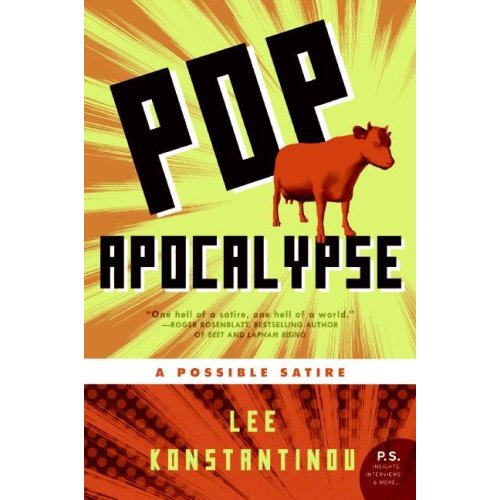
 The Hyperarchival Parallax