Apocalyptexts 02: Makers by Cory Doctorow and Freedom (TM) by Daniel Suarez

(This, like all my posts, will contain spoilers of the entire work(s), so deal.)

Though neither of these new novels by Cory Doctorow and Daniel Suarez (aka Leinad Zeraus) are overtly apocalyptic,[1] their mutual involvement in and speculation of both the demise of capital-as-we-know-it and the virtual disappearance of middle-class life in the U.S. easily suggests what has already become a genre in-and-of-itself in the past couple years: apocalypse as economic disaster.  This, of course, is nothing new.

As we perhaps all well recall, Walter Benjamin in his “Theses on the Philosophy of History” clearly and critically considered dialectical (or historical) materialism in terms of a messianic impulse,[2] and it is difficult to read The Communist Manifesto as not tarrying w/ messianism or apocalypticism.  But it is curious that it has taken the complete digitization of capital, capital divorced from “human nature,”[3] pushed to its ultimate logic by the absolutely hyperreal speed of the postmodern market for the contemporary instantiation of this teleological inevitability—or at least the imaginative speculation of it. . . (i.e. money circulates so quickly and freely, w/ such algorithmic “precision” and “logic” that it is only a convenient and soothing fiction that we are able to “blame” CEOs of companies like Goldman Sachs for economic disaster).[4] If we are comfortable w/ calling economic disaster messianic or at least teleological, we can only have recourse to some “ghost in the machine” explanation (or better yet, a dwarf inside Deep Blue[5]).  And yet, central to both Makers (one can read it online) and FreedomTM is the projected inevitability of the breakdown of capital—its parasitic logic, sped up w/ a globalized, digital, networked economy, is eschatological (or at least disastrous).  And significantly, as both of these authors are so involved in various other e-endeavors,[6] esp. Suarez’s own involvement in the weirdness of late-capital, we should note the temporal nearness of these fictions.  The worlds and economies they imagine are clearly speculative (and perhaps “science fictional”), but they resemble our own world w/ only a few minor extensions of the present projected into the future.  As everyone is telling us everywhere, economic disaster, the apocalyptic threat of it, Greenspan’s “once in a century tsunami” (see my addendum to the post on 2012), has happened, is happening, and will happen (unless we do something to stop it, which “we” aren’t).  Lo and behold: economic disaster is the apocalypse, the only one that actually makes any “sense,” the finally achieved end of whatever.  This should not surprise us.

But, as said above, neither of these novels could really be called apocalyptic at all.  Makers presents a world in which the US economy is pretty much destroyed, w/ shanty-towns springing up everywhere,[7] massive job loss, a New Deal type economic revolution called “New Work” that dramatically fails. . . but ultimately, capital, in the form of Disney Imagineering[8] (mostly) keeps on a’rollin’, and the novel ends pretty much in the no-space of narrative “giving-up-ness,” the utopian projects having all failed, capital having not collapsed, and its protagonists getting old and imminently dying (from side-effects from the “fatkins” treatment[9]).  FreedomTM, on similar terms, imagines a “Cybergeddon”: a coup staged by the economic elite-of-the-elite to wipe out virtually all global financial assets but their own, but of course this fails, thwarted by the weak-AI or “Daemon” presented in the first novel of this series, Daemon.[10] This is done in a world where gasoline has risen to $17.87 a gallon, unemployment is at 32.3% in the US, the US dollar is virtually worthless, and gold is at $4,189/oz.[11] And of course the novel ends on a mildly-messianic, hero-having-overcome-obstacles-and-reached-the-end-of-his-quest-narrative, w/ a twist that might set up a third book in the series (which I, for one, would like to see).

So of course the question is: why are either of these novels—even depicting significant, nigh apocalyptic economic “downturns” as they do—apocalyptic?  Well, in quite simple terms, the manner in which both Doctorow and Suarez structure both economic disaster as well as the utopian possibilities both novels present is archival.  Yes, I said it, no surprise (of course), but they are, and they are to a fairly ridiculous degree.[12]

I’ll begin w/ Makers (mostly b/c I read it first).  Though this isn’t a sequel to Doctorow’s teen-fiction Little Brother—a fascinating and kinda brilliant novel that explores surveillance and what Deleuze would call a “control society” in a pretty interesting post-Orwellian way (thus the title. . .)[13]—it definitely is in the same near-future speculative space, and shows Doctorow putting his finger on the pulse of America very well in a similar fashion.[14] (I will also most assuredly give Little Brother to my kids [after 1984, of course] when they get to the appropriate age [that is, if they materialize.])  The first third-or-so of Makers is perhaps the most interesting, but archival themes are present throughout.[15]

Separating the novel as I am into thirds (first third, and last two thirds), each presents an archivalism, both in terms of accumulation and destruction.  The first third posits a venture capitalist purchasing and merging EastmanKodak and Duracell—two thoroughly obsolete companies in this digital age (for obvious reasons)—and creating “Kodacell.”  The goal of this action is to radically redefine how entrepreneurial capitalism works.  Basically, Kodacell will leverage its massive assets toward investing in small, collective entrepreneurial endeavors, “synergizing”[16] them w/ other such endeavors in the company, all to promote creativity, emergence, inventiveness, and un-exploited profit-making opportunities.  This model quickly comes to be known as “New Work.”  Its principal figures are two techno-geek-engineers who basically simply use the detritus and waste of late-capital to make new, creative, inventive products (they’re actually pretty cool ideas. . .).  Though there are many ideas to talk about, this first third culminates in the “3D Printer”: basically a “printer” which can print any three dimensional object one would want, and, furthermore, the printer is able to print itself.[17] These are mobilized primarily as a virtually-free machine geared toward homeless, dispossessed, and third-world inhabitants/people as a cheap, limitless supply of object-making (i.e. the logic here is: how do we exploit the untapped market of those w/o any economic resources whatsoever [and, of course, “help” them]. . .).  What should be clear, is this “alternative” to late-capitalism—collective, emergent, networked, fluid, small, etc. etc.—ultimately produces, w/in the space of the narrative, an object-relationship that is archival.  This 3D printer can make anything.  It is literally an object-archive, in which any object capable of being archived can be reproduced.

The second-two-thirds of the novel is devoted to “The Ride”: an emergent, interactive archive which makes use of the logic of 3D printers to create a space which is constantly and archivally redefining itself.  The logic of this ride is that one gets on, goes through this museum-archive, clicking approve or disapprove on any object one sees, and it constantly re-updates itself, using little robots and 3D printers on steroids.  This ride, of course, gets globally networked and set up in multiple localities, and a “narrative” or “story” starts to emerge—some sort of collective experience of history, the past, nostalgia, etc. that people get ridiculously invested in (one kid, named “Death Waits” gets pummeled to the point of traction for this investment).  One can bring any object they want to be included in the ride, and the collective, nigh utopian endeavor of riding the ride creates an archival space that is supposed to represent some sort of collective unconscious of its participants—and it is emotionally, organically (somehow), fulfilling.  And of course Disney gets involved, lawyers, new modes of litigation, copyright infringement, and all sorts of narrative-pushing shit which is ultimately kinda boring.

What Makers makes (sic) so clear, is that any post-capitalist model (utopian or otherwise) will have to necessarily involve an archival creative commons to hope to overcome the abuses of globalism.  Not only is every text archivally at one’s fingertips, but so is any consumer product, any object whatsoever.  Furthermore, humanity’s relationship to objects becomes an archival question; the relationship to Things (in the best/worst Heideggerian sense) is translated into an emergent property of culture expressing itself—the archive accumulates simply b/c it’s there; and all of this is represented as an alternative to capital.  Though the novel is an obvious narrative failure on pretty much every point, it absolutely succeeds in making quite clear that archivalism is both apocalyptic and utopian, destructive and creative.  For instance:

“Welcome to the Cabinet of Wonders.[18] There was a time when America held out the promise of a new way of living and working.  The New Work boom of the teens was a period of unparalleled invention, a Cambrian explosion of creativity not seen since the time of Edison—and unlike Edison, the people who invented the New Work revolution weren’t rip-off artists and frauds.  their marvelous inventions emerged at the rate of five or six per week.  Some danced, some sang, some were help-meets and some were mere jesters.  Today, nearly all of these wonderful things have vanished with the collapse of New Work.  They’ve ended up back in the trash heaps that inspired them.  Here in the Cabinet of Wonders, we are preserving these last remnants of the Golden Age, a single beacon of light in a time of darkness.  As you move through the ridespace, please remain seated.  However, you may pause your vehicle to get a closer look by moving the joystick toward yourself.  Pull the joystick up to cue narration about any object.  Move the joystick to the left, toward the minus-one, if you think an item is ugly, unworthy, or misplaced.  Move the joystick to the right, toward the plus-one, if you think an item is particularly pleasing.  Your feedback will be factored into the continuous rearrangement of the Cabinet, which takes place on a minute-by-minute basis, driven by the robots you may see crawling around the floor of the Cabinet.  The ride lasts between ten minutes and an hour, depending on how often you pause.  Please enjoy yourself, and remember when we were golden.”[19]

“Culture” here become whatever one chooses to bring to the table.  One can look at it, change it, accept it or deny it, interact w/ it, passively observe, actively participate, or choose an endless stance of destruction; even a Bartlebian stance is possible.  The Ride is the archive par excellence.  It mobilizes all the Derridean logic of archives, while maintaining a weird sense of populism and political potential.  It also clearly interacts w/ markets, and is easily absorbed into the totality of late-capital.  If Doctorow has done nothing else w/ Makers, he’s staked out the terms of archival logic as we go forward, and if the economy contains w/in itself the seeds of its own demise, or conversely, its transcendence into some new model, it will be realized, parallactically, w/in the archive (at least w/in the speculative imagination).

FreedomTM on the other hand gives us something slightly different.  The novel, as said above, is a sequel to Daemon, whose premise was that a “genius” game-designer set off a “virus” upon the moment of his death appearing in the obituaries, which basically inscribes the World of Warcraft (hereafter WoW) upon reality.[20] The virus takes a hold of pretty much every major corporation, infects GPS and all the other surveillance capacities of the police-state, is able to affect material reality itself (through controlling pretty-much-everything), and offers, perhaps most significantly, an alternative economy to the quickly declining US model.  In short, it is a weak AI singularity in the sense we have become accustomed to.  Two things about this novel are notable for myself.

First, for anyone who has played, knows about, has heard of, or even seen the appropriate South Park episode, it should be clear that WoW is archivism inscribed upon (a virtual) reality (in the case of the novel, it ain’t virtual).  What I mean by this is that WoW documents, inscribes, catalogues, inventories, and measures everything.  The entire makeup of its World (and I do mean all the Heideggerian implications of this word) is archival.  One’s very Being in this world is archival.  I’m a lvl so and so, class so and so, race so and so; and though this configuration will change its parameters, it will never stop being true.  I’m a series of numbers stored on a database in some distant land (presumably the Pacific Northwest) whose interaction w/ the “World” is dependent upon those numbers changingEvery single interaction I have w/ this world (in the best late-capitalist sense) is a slight adjustment to my archival being w/in the economy of WoW.  In other words, if I want to “do” anything, I must enter the economy—there ain’t no alternative.[21]

Basically, the gist of FreedomTM is that this model is somehow more “democratic” than our current system.[22] For one, it has clear, teleological goals, something wholly lacking from any model of interacting w/ late capital as a plebe does now.[23] One can enter into[24] the WoW economy, and it is one that makes far more sense than our own.  To be able to interact w/ it, one has to do, idk, stuff—not simply trade futures and fictional assets, but create.  Yes, there are plenty of people that are able to exploit this system, but it ain’t posthuman—it’s practically feudal.  You spend enough time: you become “rich.”[25] And what FreedomTM does is present this economy as alternative to our own.

I can’t help but think, considering my own panoptic time[26] in WoW, that the model Suarez outlines in FreedomTM is in fact fairly prescient and promising.  (Furthermore it evokes, perhaps unconsciously, all the “good” things about Economy 2.0 that Stross outlines in Accelerando; actually, not only that, it resembles more concretely a weirdly [T] Rooseveltian populism than anything that has been broached recently, and for that, I commend him.)  That said, however, his fiction depends upon so many cognitive leaps that even the possibility of its utopian realization has to confront the brutality of late-capital and its ability to totalize, reify, and absorb pretty-much-everything.  In short, he makes it quite clear that even the possibility of this type of emergent, post-capital economy will have to confront capital-as-it-is—i.e. in all its brutal logic.

And this bring me to the second reason why this novel is notable.  I might be totally wrong about this, but I think this is the first novel that truly imagines in a “real” way what the destruction of our current archive would look like.  The real danger of our postmodernity is that everything will be “deleted.”  And this is precisely what the villains of FreedomTM try to bring about: Cybergeddon.  Delete the archive.  All of it.  All the money, digital affects, and flows of global capital: gone.  This is our current apocalyptic scenario par excellence.  The novel posits a conspiracy of just this type of endeavor[27]: to leave capital, and perhaps more importantly, information, in the hands of even fewer people than it resides w/ today.  (This is what the internet is for, btw: to continue informatic (and capital) flow after nukes destroy shit.)  The utopian nature of this novel is that WoW can solve this dilemma.  (Btw, it can’t.  You ever talk to the dumbasses which inhabit that world !?  Shit.)

So I feel at this point tired and that I’ve confronted the major issues of these respective Apocalyptexts, so will leave off.  But basically, if these novels do nothing else, they recast the “economic downturn” in far more interesting ways than simple old-style apocalypticism would, and, though these novels aren’t apocalyptic per se,[28] they still are compelling for all sorts of reasons, the least of which are archival.

In other words: delete the archive, make the archive into an economy, a ride, a (self-replicating) machine, or what-have-you, the nuclear logic of archival accumulation or destruction is still the dominant trope of our fictions.  And btw, Obama may have called what is happening in my current reality “Snowmageddon,” but I prefer my roommate’s words: “Snowbliteration.”  Cheers brothers and sisters.


[1] This isn’t quite true in the case of Suarez and the “Cybergeddon” he introduces.  See Daniel Suarez, FreedomTM (New York: Dutton, 2010), 370-2.  More on this later.  (Seriously, btw, that’s twice in a little over a week that I’ve encountered the suffix “-geddon” applied to things that perhaps do not deserve it.  I’m looking at you Obama, and your “snowmageddon.”  If you really want to get a taste of snowmageddon, read Robinson’s Science in the Capital trilogy.)

[2] “Our coming was expected on earth.  Like every generation that preceded us, we have been endowed with a weak messianic power, a power to which the past has a claim.  That claim cannot be settled cheaply.  Historical materialists are aware of that” (Walter Benjamin, “Theses on the Philosophy of History,” Illuminations, trans. Harry Zohn, ed. Hannah Arendt [New York: Schocken Books, 1968], 254).

[3] Whatever the hell that is. . . .

[4] I also can’t help but coin a phrase here.  Perhaps we should call tales of apocalyptically destructive economic disaster: Capitalgeddon?  W/ a British accent: “that is a capital [sic] idea!”  Or perhaps we’d be better off getting rid of geddons altogether.  (Geddongeddon?  Yeesh.)

[5] Recall Benjamin’s famous first thesis: “The story is told of an automaton constructed in such a way that it could play a winning game of chess, answering each move of an opponent with a countermove.  A puppet in Turkish attire and with a hookah in its mouth sat before a chessboard placed on a large table.  A system of mirrors created the illusion that this table was transparent from all sides.  Actually, a little hunchback who was an expert chess player sat inside and guided the puppet’s hand by means of strings.  One can imagine a philosophical counterpart to this device.  The puppet called ‘historical materialism’ is to win all the time.  It can easily be a match for anyone if it enlists the services of theology, which, today, as we know, is wizened to and has to keep out of sight” (Benjamin, 253).

[6] Suarez is, according to the book-jacket “an independent systems consultant to Fortune 1000 companies.  He has designed and developed enterprise software for the defense, finance, and entertainment industries.”  And of course I would assume Doctorow’s own work in the blogosphere (Boing Boing) is relatively familiar to most.

[7] A particularly arresting passage: “Off the turnpike [between Orlando and Hollywood, Florida], it was even worse.  The shantytowns multiplied and multiplied.  Laundry lines stretched out in the parking lots of former strip malls.  Every traffic light clogged with aggressive techno-tchotchke vendors, the squeegee bums of the twenty-first century, with their pornographic animatronic dollies and infinitely varied robot dogs.  Disney World still sucked in a fair number of tourists (though not nearly so many as in its golden day) [Lewis Mumford anyone?], but they were staying away from Miami in droves.  The snowbirds had died off in a great demographic spasm over the past decade, and their children lacked the financial wherewithal to even think of overwintering in their parents’ now derelict condos.  The area around the dead Wal-Mart was particularly awful.  The shanties here rose three, even four stories into the air, clustered together to make medieval street mazes.  Broward County had long since stopped enforcing the property claims of the bankruptcy courts that managed the real-estate interests of the former owners of the fields and malls that had been turned into the new towns” (Cory Doctorow, Makers [New York: Tom Doherty Associates, 2009], 121).

[8] Doctorow imagines that Disney as we know it splits form Disney Theme Parks (“Imagineering”), becoming two separate companies, and allowing the Imagineering arm of it to take on licenses outside of the Disney purview, say, Universal, Fox, etc.

[9] A gray-market genetic treatment one has to go to Russia to receive, which basically wipes away all body fat, but b/c Americans are stupid, they go whole hog for perfect bodies and have to eat 10,000 calories a day, which basically ruins every single system in their bodies in terrible ways.  Yes, ridiculous, but so is this novel. . . (this is not meant in a derogatory fashion).

[10] This novel was published under the penname “Leinad Zeraus” in 2006 by Verdugo Press (basically a vanity press).  Its massive success caused Dutton, an imprint of Penguin, to re-release the novel under Suarez’s actual name in early 2009.  FreedomTM is the sequel to Daemon.

[11] Suarez, 227.

[12] Of course there is much more to talk about w/r/t these novels, but I’ll leave that to someone else.

[13] Thanks need to be given, btw, for much of this post to J. James Bono, as he directed my attention to virtually everything in it.  Seriously, why didn’t I mention this earlier, Jamie is perhaps the most “with-it” person I know when it comes to, idk, pretty much anything (esp. computery stuff).

[14] To paraphrase the Liars (“Grown Men Don’t Fall in the River, Just Like That,” They Threw Us All in a Trench and Stuck a Monument on Top [Mute Records, 2001]).

[15] Its last 2/3 get fairly bogged down in “character development” and far too much interest in theme parks and Disney.

[16] God I hate this word and other variations of it.

[17] Hyperarchivalism if I’ve ever seen it.

[18] I’ve done away w/ paragraph breaks in this quotation for formatting and readability reasons.  If this offends anyone, get in touch.

[19] Doctorow, 124.

[20] Btw, for those who’re interested, I’m “Slothrop” (yes this is a Gravity’s Rainbow reference) or “Wyattgwyon” (a Gaddis [The Recognitions] reference) in “Galakrond.”

[21] Well, of course there is—i.e. I can just run around talking to people, but this action doesn’t preclude that whomever I’m talking to immediately “judges” me based upon my archival makeup.  The transgressive and alternative possibilities of the game are still w/in the game itself.

[22] And I’m inclined to agree w/ Suarez, for whatever reasons.

[23] This is to ignore the clear goals late-capital has for itself, of course.  See Naomi Klein, The Shock Doctrine (New York: Picador Books, 2007).  This is also to give an imperative to Obama: provide some fucking goals!

[24] As opposed to being perpetually outside of or tangential to it, as we all are now.

[25] Btw, I ain’t in this economy.  I just don’t have the time, inclination, drive, nor OCD necessary to succeed in this economy; and most importantly, I don’t care.

[26] And I do mean this w/ all the appropriate disciplinary connotations.

[27] Against which, of course, our intrepid WoWians are fighting.

[28] Seriously, I think that’s the third time I’ve used this here.  oops.

Fallout: New Vegas

For anyone who recognizes the banner to this here blog. . . they’ll understand why I’m posting this.  But anyway, a new Fallout game set in Las Vegas has been announced, and though I don’t think a single detail has been released, we get yet another post-apocalyptic, freakout-wasteland to explore in the near future.  Thank Abaddon for video games that give us post-nuclear scenarios–I can convince myself I’m doing work when I’m really just wasting time.  Can’t wait.

“Snowmageddon”

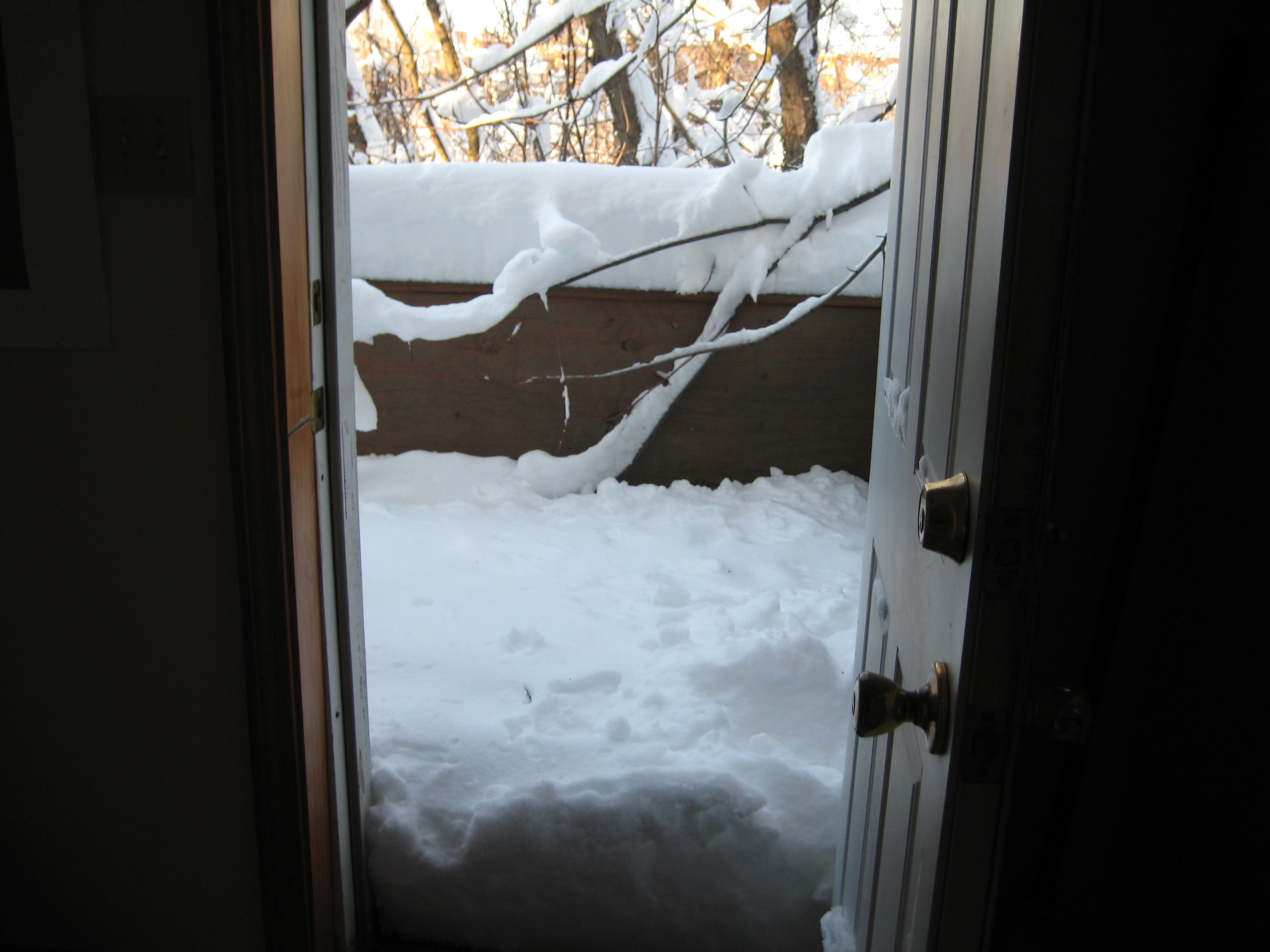
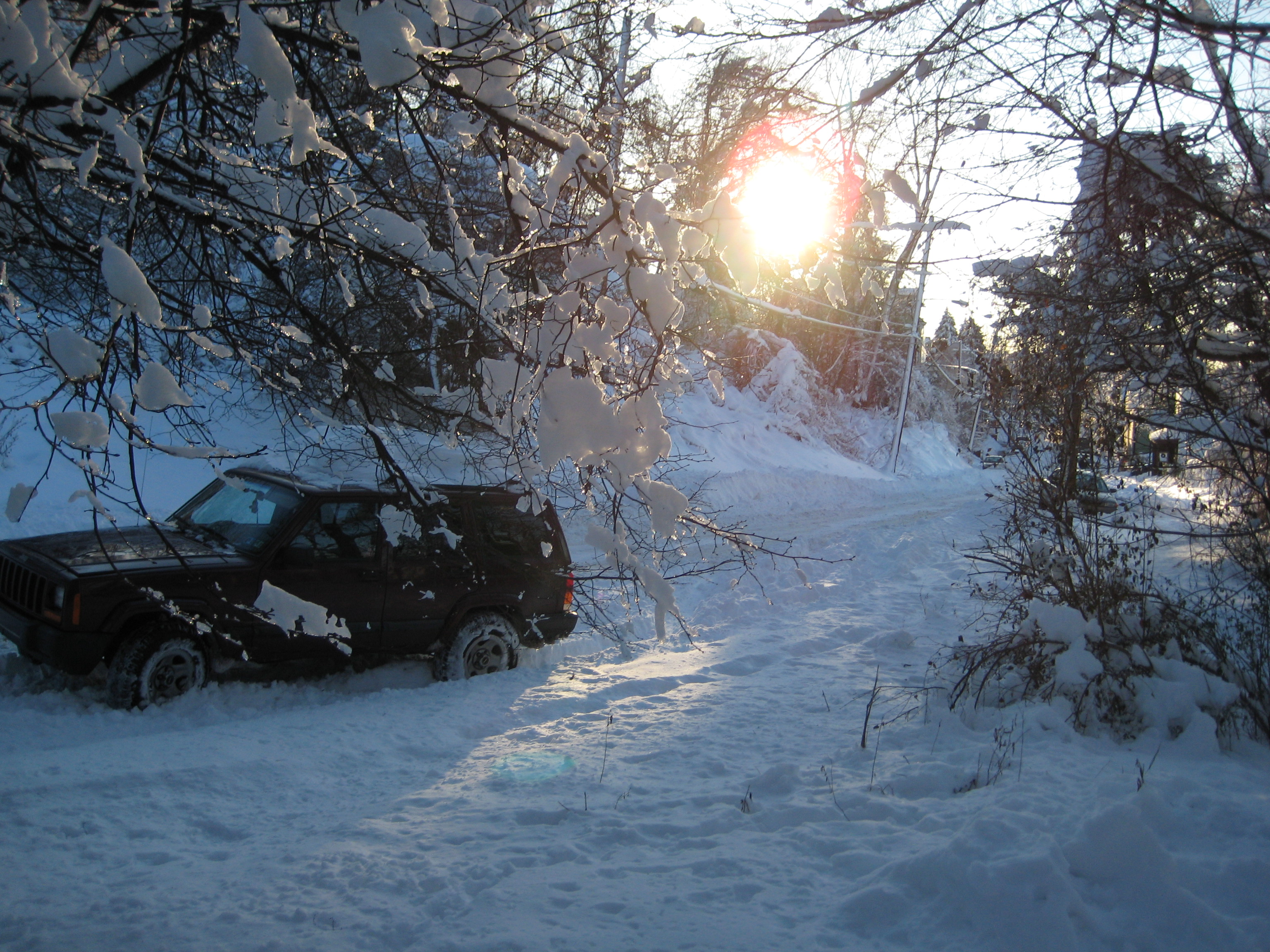
Today I experienced my first ever “snow day,” as my Reading Poetry class along w/ the rest of the University of Pittsburgh’s classes got canceled; and to commemorate it I thought I’d add a couple more “Apocalyptexts”: basically things I’ve read recently during a bout of mild yet much deserved academic irresponsibility.  For someone who grew up in Tucson, Arizona, a snow day is completely novel.  The closest I ever came to anything resembling a snow day was school being canceled b/c of floods, but that really isn’t the same thing at all, for the rains, when they come—even when they are torrential and flood the streets w/ feet of water—are a blessing: they slake the perpetual thirst of the desert.   For this snow day, however, it isn’t even snowing (it’s actually sunny and quite nice, if cold, outside).  The nearly 2 feet of snow that got dumped on the ‘burgh b/t Friday evening and Saturday morning is basically still on the ground, and doesn’t look like it’s going anywhere anytime soon (there’s another 3-6 inches expected Wed.).  The storm that hit the mid-atlantic states this past weekend dumped the most snow pittsburgh has seen since 1992, and is one of the 4 worst snow storms in terms of inches since they started keeping track of this stuff.  Basically, it’s kinda epic.  (Though the pics below don’t quite do it justice, esp. since things have “melted” a bit in the past couple of days.)  Wandering around the city has been surreal.  I haven’t been driving b/c my back-wheel drive pickup truck would not get very far—esp. w/o the sandbags in the back I’ve been procrastinating putting there all winter—though I do have a large amount of respect for the many inhabitants I’ve seen valiantly digging their cars out and spinning their wheels down streets it looks like no one has even tried to plow.  There has been an infectious sense of joy amidst what they are still calling a “state of emergency” (or maybe it’s just me, whose current life is such as to be minimally effected by this type of inclement weather).  More people are walking around the streets than I’ve ever seen before, and people are generally smiling and cordial, esp. those brave souls who have gone to work, opened much needed services and stores, and basically kept the whole capitalist train running.  My thanks.  But I am sitting at  home, warm and happy, pouring hot water down my pipes to unfreeze them (they weren’t that frozen thankfully) so I could do some much-needed laundry.  So what better way to spend a snow day, to endure what Barack Obama called “snowmageddon” (no fooling), to do some apocalyptic blogging?  My thoughts precisely.  On to some Apocalyptexts.

Also, someone has recently pointed me toward this delightful apocalyptic flash video, check it out.

Some pics (though they aren’t as apocalyptic as could be, as I just stepped outside to do them, rather than, as I shoulda, taken my camera when I was wandering around the city earlier):

wait, that tree limb isn't supposed to be there. . . .

Yep, that tree limb has definitely decided to come hang out on the porch. there's also a grill, a table, and some chairs out here somewhere. . . .

I'm not going anywhere.

holy nuclear winter batman!

tree, please don't fall on our house.

I’ll try to be more prescient and try to take my camera elsewhere, but not today.  cheers.

In the Words of Daft Punk, the Archive Won’t Stop, Can’t Stop; or, Why The Book of Eli Makes me Feel Good About My Choices in Life Even if it is a Terrible Film

I have to admit that the recently released The Book of Eli (The Hughes Brothers, 2010)[1] constitutes a moment of personal gratification for myself and my recently completed PhD project in that it only serves to further cement the work I did there.[2] In short, a bulk of my project constituted a revivification of the now long dead and mostly forgotten practice of “nuclear criticism,” a theoretical framework  most explicitly laid out in Jacques Derrida’s “No Apocalypse, Not Now (Full Speed Ahead, Seven Missiles, Seven Missives),” which he delivered in1984 at a colloquium on nuclear criticism at Cornell University.  At the time, Derrida argued that all literature is marked by the nuclear epoch in that the historical and literary archive is that which is most threatened by nuclear war.  What The Book of Eli represents so dramatically is exactly this logic: whatever else may be going on in its world, the real stakes of the post-apocalyptic wasteland Denzel Washington (Eli) traverses throughout the film are ultimately archival ones.

Disregarding for a moment the conflicted and confusing Christian ideology which infects the film like an out-of-control tumor, as well as the film’s problematic geography, weak characterization, the presence of Mila Kunis,[3] and its overall ridiculous premise, this film is about a book, and not just any book, it is about the Christian Bible.[4] Denzel has been told by a voice (Christian God) to carry the only remaining Bible west, and that he would not only be protected during this journey,[5] he would “know” when he arrived where he needed to be.[6] Threatening his progress is Gary Oldman’s character, who is desperately seeking a Bible for its powers of populace-manipulation (think Nietzsche’s Genealogy of Morals).  There is also a pretty great scene when a bunch of books are plopped down on Oldman’s desk, right after he was reading a biography (?) of Mussolini; he of course instructs his underlings to burn these books (archival destruction!).

The real crux of the film for myself is the reason it gives for there being only one Bible remaining.  Basically, after what appears to be global nuclear war, the survivors got together and burned all the Bibles in the world, blaming this text for the devastation.  (This also implies that this was a religiously motivated war, like b/t Islamic States and Christian ones, rather than a good ole’ ideological nuclear war.)  Denzel’s ultimate task is to bring this Bible, which he memorizes—so doesn’t need the actual object (memory as archive. . .)—to Alcatraz, where a printing press and archive has been set up to rebuild civilization.  The film ends with the Christian Bible being placed on a rack of books including the Torah and the Qur’an, as well as a host of other religious texts.[7]

In all of this, The Book of Eli is a deeply confused film.  It simultaneously acknowledges the really insidious, destructive aspects of religion while attempting to uphold the importance of the Bible’s teaching—namely “faith.”  Denzel-as-blind-prophet directly communicating w/ God as signaling the importance of the restoration of the New Testament (one would assume the Old Testament was present on that shelf already. . . .) runs directly into the Bible as “just another book” in the last scene.  The Apocalypse portrayed is simultaneously one caused archivally (by religion) and one that can be lived-through afterward only archivally (by, again, religion).  (Need I mention that if the nuclear war wasn’t the Apocalypse of Revelations, it is, in Derrida’s phrase, “still to come” in the space of the film. . . .)[8] The film, ultimately, has no idea what it is trying to communicate, no idea where it stands, no idea what Christianity really has to do w/ anything, other than being a convenient trope for an apocalyptic film.

And, at day’s end, this is what is so impressive about the film.  Its archivally apocalyptic logic overwhelms it, takes center-stage, and demonstrates that the archive’s destruction (or restoration) is the limit of the nuclear.  Once one invokes such a post-apocalyptic landscape, all questions become archival.  The visual presentation of the film is at times breathtaking—man I love what CGI enables w/r/t post-apocalyptic landscapes—but in every case, the visuals are simply archival markers of what has been destroyed: the Golden Gate Bridge, Nuclear Power Stations, Freeways, old burned-out automobiles, gigantic craters, and of course the presence of “Western” towns run by a malignant “boss” (Oldman’s character is unsubtly named “Carnegie”).  The main object Denzel carries around as a marker of the “good” of humanity, the Bible aside, is in-and-of-itself an archive: an old beat-up iPod (man he loves listening to that iPod).

Basically, the Bible in The Book of Eli is merely a stand-in for archival maintenance or restoration.  It doesn’t really matter what book it is in the space of the film, only that the Bible is perhaps the most manipulatively affective sign of this restoration[9] and that it allows all sorts of other heavy-handed bullshit to enter the narrative space.[10] In short, The Book of Eli is yet another marker of the reliance of aesthetics upon imagining the archive as both producing apocalyptic destruction and saving the world from that very same destruction.  This is nothing new, of course, but the overt manner in which this happens throughout the film combined w/ the work I just completed, makes it a singularly interesting (for me at least) instance of this, and one which shouldn’t be ignored just b/c the film is so awful.


[1] This is actually a slightly odd entry into the Hughes oeuvre, as they had previously made films like From Hell (2001), American Pimp (1999), Dead Presidents (1995), and Menace II Society (1993).

[2] In other words, during my written project exams I referred to its imminent release, and while we were waiting to get started with my oral exams, my committee and I had a brief conversation about it.  Needless to say, if The Book of Eli proves anything, it is that I will always have a career talking about archivally apocalyptic films. . . .

[3] And how “hot” she looks in a world where pretty much all the other characters look like irradiated mutants, i.e. Tom Waits’ cameo (though he does look alright).

[4] Btw, I’m going to spoil this movie all over the place here, so don’t read on if you care about such things.  (I’m going to spoil it in 3, 2, 1. . . .)  That said, it wouldn’t really hurt you knowing whatever it is I’m going to say b/c you already know what is going to more-or-less happen the minute the film opens—i.e. both my friend Adri and I kinda knew Eli was blind pretty early on, and just sorta forgot this fact as the film progressed, making the big “reveal” or “plot twist” pretty funny/not surprising at all (that he was blind the whole time and, lo and behold, the book he was carrying around was in brail!)—poor Gary Oldman.

[5] Consequently, ridiculous action scenes ensue where Denzel is pretty much a badass.

[6] For those of you looking for a clear analogue b/t Denzel and the biblical Elijah, there is none.  The closest it gets is Malachi 4:1-5: “See, the day is coming, burning like an oven, when all the arrogant and all the evil-doers will be stubble; the day that comes shall burn them up, says the Lord of hosts, so that it will leave them neither root nor branch.  But for you who revere my name the sun of righteousness shall rise, with healing in its wings.  You shall go out leaping like calves from the stall.  And you shall tread down the wicked, for they will be ashes under the soles of your feet, on the day when I act, says the Lord of the hosts. . . . Lo, I will send you the prophet Elijah before the great and terrible day of the Lord comes.  He will turn the hearts of parents to their children and the hearts of children to their parents, so that I will not come and strike the land with a curse.”  (Note: this is taken from The New Oxford Annotated Bible.  Other Bibles place this as Malachi 3:19-24.)If indeed Elijah-as-prophet-of-messiah-and-eschaton is the reference for Denzel, then the film botches this quite badly—i.e. the burning has already happened.  The film makes a point of stressing how humans (not God) caused this destruction, however, so within the theological-eschatological space of the film, perhaps all this means is that the messiah and “real” burning (the landscape of the film looks pretty burned though. . .) is in the future—the apocalypse hasn’t “happened” yet.  Kunis’ character, Solara, also seems to be an analogue for the biblical figure Elisha, but again, the Christian or Old Testament themes are pretty damn loose everywhere here, so reading the film in such a way doesn’t really generate much (or so I believe).

[7] There is also something to be said about this being a “‘New’ King James Bible,” rather than a translation from the Hebrew or Greek.  English gets privileged as the language of God in a very real way, which, the more I think about it, is deeply disturbing.  (To say nothing about the textual inaccuracies of the King James Bible. . . .)

[8] This is also to say nothing about the cannibals, George and Martha (Washington) and the shootout which occurs at their (little) house (on the apocalyptically devastated prairie—i.e. also see my entry on apocalyptic Westerns w/r/t The Road).

[9] Furthermore, the film doesn’t even address the glaring fact that the Bible is the best-selling book of all time, and to destroy every copy but one is ludicrous, no matter how fanatical the Firemen or Tetragrammaton Clerics may be.

[10] In that, it really isn’t much better than something like the Left Behind series, and may in fact be more insidious b/c of the presence of Denzel rather than, say, Kirk Cameron.

This is Just to Say

That today I passed my PhD exams with distinction. Onward to dissertating and further apocalyptics. If academia is anything, it is a confirmation that there is no such thing as an end. Hopefully I will get a few more posts up here in the near future now that I’m not going crazy w/ other things. Look forward to something on the Book of Eli, which hits theaters this Friday.

Apocalyptexts 01: The Chronicles of Riddick

Apocalyptexts[1] #01: The Chronicles of Riddick[2]

The Chronicles of Riddick (David Twohy, 2004) is w/o a doubt one of the smarter movies made in the aughts.[3] (And no, I don’t mean in terms dialogue, for it is wretched where that is concerned. . . .)  In the words of others mixed w/ myself: it’s like Dirty Harry meets Han Solo, Shakespeare, the second Iraq War, Messianic (neo-evangelical) Christianity, video games, postmodern irony,[4] and Hitler.[5] For instance, a thought experiment:

how many other films begin w/ an obviously world-ending (and purely) evil force bent on “conversion “ for its “POV”—literally injecting willing applicants into its military program—and then jump to a Hoth-on-steroids-Vin-Diesel-running-amok middle, ending w/ said anti-hero sitting on that selfsame evil throne?  (Answer: none.)

I remember Ted Gerstle[6] dragged my ass to this film, and, even though we walked in about ten minutes late, it was still astounding.  Twohy had done something no one else had ever done before (kidding): make an amazing SF film that no one saw.  Of course it didn’t hurt that Pitch Black was incredible, but TCoR[7]did something no other SF “action” film had done before: make me recall 2001.[8]

Sure, the fact that the ebullient choral tracks accompanied the equivalent of monoliths “falling from the sky to destroy a helpless population” helped, but it seemed to be an updated Arthur C. Clarke-vision of the future, a LeBron for an MJ[9] (if you will. . .), a “what would happen if Vinge made a horror film”-type scenario.

I cannot help but argue that it has been one of the greater crimes of this decade that no one let Twohy[10] make a sequel to this film—further, a sequel that was so obviously and gratuitously needed![11] (TCoR is something I might in fact put in my top 20 [meaning #1] of my sequel worthy films.  Wtf would he have done?  He had no Lynchian escape hatch [see: all Lynch’s films since the mid-90s]).  He would’ve had to actually write something, which, of course, was something he had built his career on refusing to do.  And this is ultimately the tragedy of TCoR: it far more represented Twohy’s orgasm than it did foreplay for something greater—i.e. there will never be a TCoR sequel. . . .

And that’s sad really.  (It is like if Milemarker hadn’t released Anaesthetic after Frigid Forms Sell.[12] All that setup, no payoff?)

In other words. . . this is all to say. . . Avatar bores me.  So yes: 1)  I cannot help but feel like it is a piece of abstract expressionism to which analysis is forever denied; 2) the narrative is boring, sucky, and downright contrived; and 3) I’m gonna miss the early aughts, in which CGI only counted for, like, 50% of the movie rather than, idk, all of it.

TCoR took its apocalypticism seriously—as in: if you can’t break off the knife after stabbing the dictator in the head, why bother type way.  Riddick ain’t a bad Bartleby figure, so if we can’t see how it would be if he ran an “Evil Empire,” then we’re all, collectively, fucked.  Please Twohy, make a sequel.


[1] Sorry, couldn’t help myself.

[2] So seriously, I’ve decided to start a new portion of this here thing (don’t worry, “Repackaging the Archive Part IV” is coming. . .).  Apocalyptexts: where the world blows up and I feel like talking about it.

[3] viz. the last decade.  (I’m committed to using this term, so if it doesn’t catch on, I’m screwed.  [This is also an attempt to not conceal the fact that David Twohy is perhaps a gigantic douchebag.])

[4] Otis Nixon.

[5] And did I mention that the dialogue is horrible, w/ the exception of: “I’ll kill you w/ my teacup.”

[6] Excuse me on the spelling of this Ted, the googles turned up a bunch of fat guys quick, who obviously aren’t you.  (Why aren’t you more easily locatable—i.e. I refuse to use facebook. . . .)

[7] I think I might be pretty into using this acronym for the remainder of anytime I talk about this heaping pile of gold-plated dung.

[8] Of course I’m lying here.  Solaris is w/o a doubt the best exemplar of post-2001 filmmaking.

[9] Sorry, I’ve been reading Bill Simons’ excellent The Book of Basketball (New York: Ballantine Books, 2009) recently (i.e. since 24 hours ago [I haven’t slept it was that interesting. . .]) and cannot help at this moment but relate everything to my favorite, and the world’s most interesting (I will stand behind this to the death) sport.

[10] No matter how much of a douchebag he is.

[11] Unlike, idk, so many others.

[12] Ik.  u have no idea.  look it up.

Excerpt from “The Inverted Nuke in the Garden”

So I’ve just finished drafts of my project papers, and as they address some of the concerns of this blog, I thought I would post a short excerpt from the second one, titled “The Inverted Nuke in the Garden”:

That this total destruction of the archive immediately opens a field for the production of more literature, that clearing away the ground will inevitably make way for subsequent archival accumulation, makes [Hawthorne’s “The Earth’s Holocaust”] parable speak equally to the logic of archives themselves and of the anagogic phase of literature.  For Hawthorne’s speaker does indeed receive an answer to his query about whether or not “everything” was consumed from a “grave friend”: “Come hither tomorrow morning—or whenever the combustible portion of the pile shall be quite burnt out—and you will find amongst the ashes everything really valuable that you have seen cast into the flames.  Trust me; the world of tomorrow will again enrich itself with the gold and diamonds, which have been cast off by the world to-day.  Not a truth is destroyed—nor buried so deep among the ashes, but it will be raked up at last.”[1] Though the parable ultimately ends on a discussion of the human “Heart,” of “the little, yet boundless sphere, wherein existed the original wrong”[2]—that it is this which cannot be destroyed by all the burning Alexandrias one can imagine—the real anagogic lesson of Hawthorne’s tale resides in those very ashes.  In articulating its destructive encyclopedic logic, Hawthorne makes quite clear that one can never totally destroy the archive.  In the very manner that Whitman’s poetry cannot archivally accumulate itself infinitely but must leave off somewhere, Hawthorne’s text makes clear that something will remain, that even the dust and ashes are archival.  If we recall Derrida’s two fantasmatic limits of the text, the infinite book and the destruction of the archive, both Whitman and Hawthorne point to the fantastic nature of these limits.  They cannot be experienced.  As the nuclear cannot be experienced, its material possibility marks the limits of anagogy, both in terms of destruction and accumulation.


[1] Nathaniel Hawthorne, “Earth’s Holocaust,”  Nathaniel Hawthorne: Tales and Sketches (New York: The Library of America, 1982), 904, emphases mine.

[2] ibid., 906.