N+1 has a pretty good article on the slew of realist fiction that’s been appearing influenced by or in conversation w/ “theory,” written by Nicholas Dames.
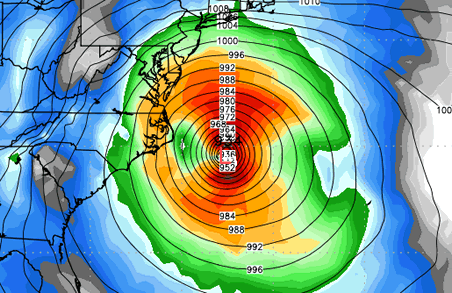
Hurricane Sandy is “Unprecedented”
As The Washington Post is reporting, analyses suggest this storm may be unlike anything the region has ever experienced,” and “a very prominent and respected National Weather Service meteorologist wrote on Facebook last night, ‘I’ve never seen anything like this and I’m at a loss for expletives to describe what this storm could do.'”
Oh How Things Have Changed in the Second Nuclear Age
Unsurprisingly, last night’s final Presidential Debate on foreign policy seemed to show Romney concerned w/ only one thing: not letting Iran produce a nuclear weapon (and how many nuclear weapons Pakistan already has). This makes how nuclear policy was discussed in 1984 and 1988 all the more striking in contrast. Heck, thought I’d post the whole weird thing below. (Also, I think Mark Shields’s observation that neither candidate mentioned, Idk, Europe, or India, or Africa, or really anywhere else . . . must give one pause.)
Some Pynchon Articles
A new journal on Thomas Pynchon, Orbit: Writing Around Pynchon, just released its second issue, and it contains some interesting essays, and also includes David Letzler’s review of Theophilus Savvas’s Postmodernist Fiction and the Past.
In More Contemporary Nuclear News (and Other Stuff)
Helene Cooper and Mark Landler reported in The New York Times yesterday that, “The United States and Iran have agreed in principle for the first time to one-on-one negotiations over Iran’s nuclear program, according to Obama administration officials, setting the stage for what could be a last-ditch diplomatic effort to avert a military strike on Iran.” Pretty interesting, esp. coming right before the debate, and that “Iranian officials have insisted that the talks wait until after the presidential election [. . .] telling their American counterparts that they want to know with whom they would be negotiating.” Yet another chink of armor for President Obama’s foreign policy CV? A cynical move for tomorrow night’s debate? Very, very interesting.
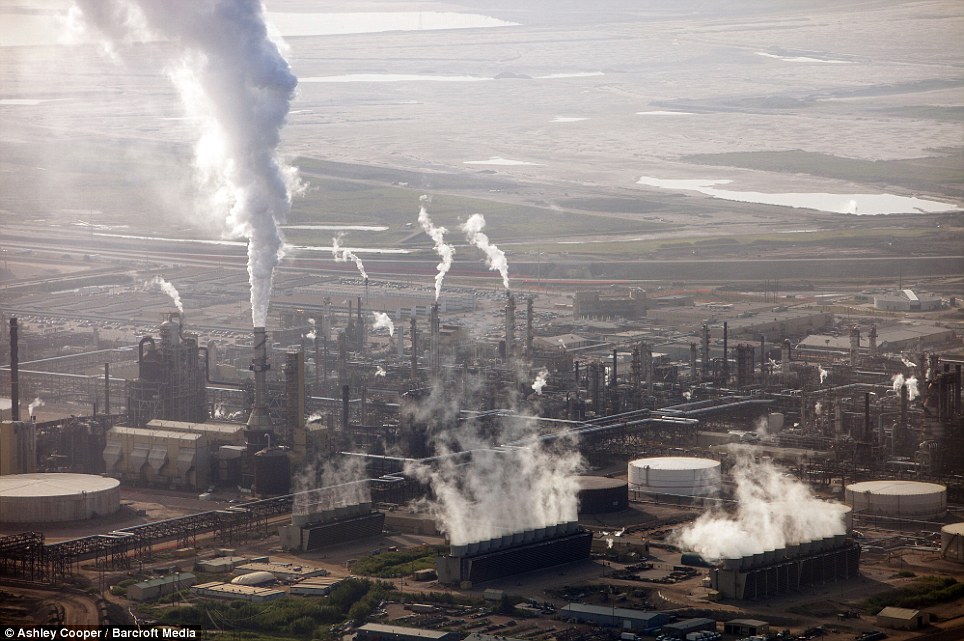
A truly horrifying group of images from the strip mining of Canada’s Tar Sands. A sample:
And a whole class being taught on David Foster Wallace at the John Adams Institute in Amsterdam. (Also, thought I’d relink to this class on DFW taught by Kathleen Fitzpatrick at Pomona College in the Spring of 2009.)
Nuclear Presidential Debates
I caught the 1984 Reagan v. Mondale foreign policy debate on CSPAN tonight, and was floored by the nuke-speak. I was too young to see this originally, and it is quite interesting, esp. w/ the hindsight of 28 years. The 1988 debate is also pretty fascinating w/r/t nuclear policy.
Forthcoming Publications on David Foster Wallace
Two articles I’ve written on David Foster Wallace should be published any day now:
“The Inverted Nuke in the Garden: Archival Emergence and Anti-Eschatology in David Foster Wallace’s Infinite Jest,” boundary 2 39.3 (Fall 2012), was just announced along w/ the rest of the Table of Contents over at boundary 2‘s blog.
And my article, “‘Then Out of the Rubble’: The Apocalypse in David Foster Wallace’s Early Fiction,” Studies in the Novel 44.3 (Fall 2012): 284-303, was just announced on Studies in the Novel‘s website. The abstracts for all the articles of this special issue on Wallace, edited by Marshall Boswell, were also posted.
I’m pretty excited about both of these, and each issue looks to contain some pretty interesting work that I’m eager to read. I will provide links to my articles’ electronic/Project Muse versions when they become available.
Academic Labor
My good friend Josh Zelesnick has been written about quite admirably in Moshe Z. Marvit’s “Many Be Called, But Few Chosen: Duquesne University Adjuncts’ Fight to Organize.” Josh is doing some of the most interesting and important work of anyone I know.
More Geeking Out On Usage
My good friend Adriana Ramirez just put up a pretty interesting post, “Can Grammar Solve Politics?” on grammar, the second Presidential Debate, and the Benghazi attacks over at her blog. Check it.
 The Hyperarchival Parallax