End of the Semester Links Spring 2014

It’s been a busy end of the semester and I haven’t been able to post anything for a bit. So, now that I have a bit of time before the semester wraps up, here’s a bunch of stuff that has been happening the last few weeks. My apologies if I’m a bit late on some of these things.

Nuclear and Disaster

Laura Miller reviews Craig Nelson’s The Age of Radiance: The Epic Rise and the Dramatic Fall of the Atomic Age.

John Metcalfe, “What Famous Old Paintings Can Tell Us About Climate Change.”

Only .02% of published research rejects global warming.

Adam Weinstein, “Arrest Climate Change Deniers.”

Continue reading

Big News in Science and Other Links

Science

The first evidence for cosmic inflation–i.e., the Big Bang–was discovered this week.

Megan Garber at The Atlantic, “What It’s Like to be Right About the Big Bang?”

The search for Flight MH370 is revealing one thing: the ocean is filled with garbage.

Kim Stanley Robinson alert: Paul Rosenfeld, “Would You Take a One-Way Ticket to Mars?”

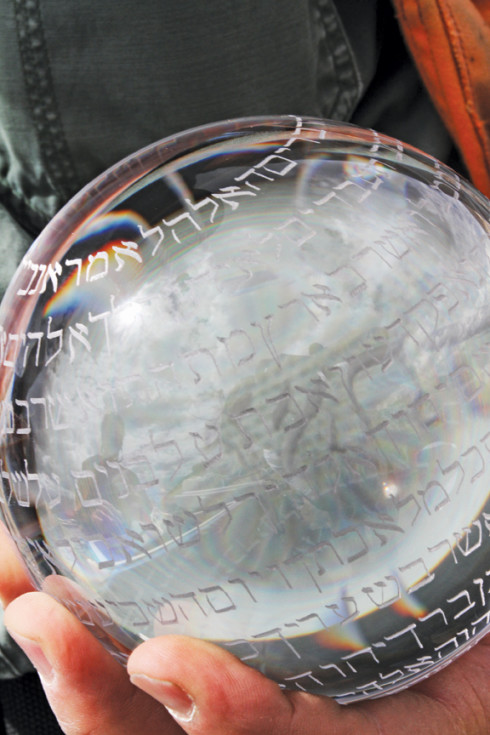
And as part of his forthcoming 3 million page novel, Breeze Avenue (2015), Richard Grossman has buried a crystal ball deep inside of Princeton Mountain in Colorado. The ball, “made of synthetic sapphire, which is almost as indestructible as diamond,” has the Ten Commandments inscribed on it in Hebrew, and in “20 million years, as a result of natural forces carefully calculated by the geologists, the Torah Ball will emerge from its eroded resting place and bear the Ten Commandments down the mountain.” Hyperarchivalists of the deep future rejoice!

Richard Grossman, The Torah Ball (Synthetic Sapphire, Princeton Mountain, 20 Million Years of Erosion, 2011).

Richard Grossman, The Torah Ball (Synthetic Sapphire, Princeton Mountain, 20 Million Years of Erosion, 2011).

Continue reading

Ukraine, US Nuclear Policy, Etc.

With the incursion of Russia into the Ukraine, a lot of stuff is going on.

Peter Baker in The New York Times, “Pressure Rising as Obama Works to Rein in Russia.”

“Ukraine, Putin, and the West” at n+1.

Peter Beinart for The Atlantic: “The Ukraine: Is This How the War on Terror Ends?”

Dominic Tierney for The Atlantic: “Putin’s Improv Act.”

David Rhode for The Atlantic: “Crimea: The Greatest Challenge to Geopolitics Since the Cold War.”

“Kerry Condemns Russia’s ‘Incredible Act of Aggression’ in the Ukraine.”

And a critique of The New York Times‘ coverage of Kerry.


Nuclear

“Aim Points in the US Nuclear Arsenal.”

Hans M. Kristensen, Director of the Nuclear Information Project, has authored an article for the Federation of American Scientists, “Obama and the Nuclear War Plan.”


Other

Noam Chomsky, “America’s Apocalyptic Imperial Strategy.”

Noam Chomsky, “The Death of American Universities.”

On Fredric Jameson.

boundary 2‘s latest entry into its Great American Author Series, “A Political Companion to Walt Whitman” by Kerry Larson.

Ezra Klein, “The Real Reason Nobody Reads Academics.”

And Ian Bogost on Flappy Bird.

Elaine Scarry Has a New Book on Nukes, and Other Links

The Chronicle of Higher Education has a discussion of Elaine Scarry‘s new book, Thermonuclear Monarchy: Choosing Between Democracy and Doom (2014). Nathan Schneider has written an extensive review of Thermonuclear Monarchy, “A Literary Scholar’s Voice in the Wilderness: Elaine Scarry Fights American Complacency About Nuclear Arms.” Scarry is also the author of the monumentally important, The Body in Pain: The Making and Unmaking of the World (1987).

“Melting Ice Makes the Arctic A Much Worse Heat-Magnet than Scientists Feared.”

January was actually one of the warmest months on record.

And more disastrous weather to come.

Lennard Davis and Walter Benn Michaels writing for Jacobin on the University Illinois-Chicago faculty strike.

Davis and Michaels explaining why they’re striking at The Chronicle of Higher Education.

“Noam Chomsky: Zombies are the New Indians and Slave in White America’s Collective Nightmare.”

“David Foster Wallace, Mathematician.”

Samuel Cohen on Wallace, “Future Tense.”

My friend David Letzler reviews Thomas Pynchon’s Bleeding Edge (2013).

On Dead Poets Society (1989) and the humanities.

“Feminism, Depravity, and Power in House of Cards.” I just finished watching the fairly incredible second season last night.

More Doomy Doom and Less Doomy Doom

More Doomy

Brad Plummer has an interview with author of The Sixth Extinction Event, Elizabeth Kolbert (who was also on The Daily Show the  other night) at The Washington Post.

“The NSA and Climate Change: What We Know So Far,” by Joshua Eaton.

“How Iowa Flattened Literature,” or rather, the CIA and the Writer’s Workshop.

NASA is going to turn the moon into computronium, ur, I mean give licenses to mine it.

Less Doomy

David Foster Wallace’s letter to his editor.

Dragonlance should be the next fantasy movie franchise. I agree, esp. if it means they make the Legends series into films.

A new anthology of post-apocalyptic fiction, Wastelands 2, edited by John Joseph Adams.

A pretty scathing review of Matthew Barney’s River of Fundament (2014) that actually makes me want to see it more.

And a book I had an essay appear in last year, The Silence of Fallout: Nuclear Criticism in a Post-Cold War World, was just selected as one of Zer0 Books‘ best books of 2013.

Power, Privacy, and the Internet

The New York Review of Books just put up the audio for a conference it held on “Power, Privacy, and the Internet.” The conference was held 30-31 October 2013 in New York City, and there are some significant people that took part. (I also note that the image they used for the page is the same as the cover of Thomas Pynchon’s Bleeding Edge [2013].) Here is Simon Head addressing the themes of the conference:

The Internet is a transformative technology of our times and it is changing our lives as perhaps nothing else has done since the coming of the telephone, the telegraph, and the mass production automobile a century and more ago. Where the Internet surpasses these earlier technologies is in the speed with which its reach is expanding—in our contacts with one another through Twitter and Facebook, in what we read, hear, and buy; in our dealings with business, government, colleges and schools, and they in their dealings with us. Whether we like it or not we are caught up in these flows of technology and as we are carried along by the flows, some barely visible to us, it becomes increasingly difficult to stand back and distinguish between what is good about these innovations and what is not.

I am especially interested in listening to the panel on “The Internet, the Book, and the University Library,” with Robert Darnton and Anthony Grafton. (Among Grafton’s many other accomplishments, he is also the author of The Footnote: A Curious History [Cambridge, MA: Harvard University Press, 1997], a surprisingly fascinating history of the footnote that I read a few years ago to help me think about David Foster Wallace’s use of footnotes, something I never really ended up working on. . . .)
Super Bowl Sunday Links

Nuclear

Eric Schlosser, author of Fast Food Nation: The Dark Side of the All-American Meal (2000) and the recent Command and Control: Nuclear Weapons, the Damascus Incident, and the Illusion of Safety (2013, a book that is on my shortlist of things to read right now), has a couple of interesting things in The New Yorker on Dr. Strangelove: “Almost Everything in Dr. Strangelove Was True,”  “Deconstructing Dr. Strangelove,” and Kubrick’s alternative titles to the film.

In other hard-to-believe nuclear news, Josh Harkinson reports in Mother Jones that a “Nun Faces up to 30 Years for Breaking Into Weapons Complex, Embarrassing Feds.”

Torpedoes and the military industrial complex.


NSA

Angry Birds and ‘Leaky’ Phone Apps Targeted by NSA and GCHQ for User Data.”

The Blackphone. “A Phone for the Age of Snowden.”[1]

And an older op-ed piece from The New York Times on “Edward Snowden, Whistleblower.”


Environment and Disaster

Another disaster in the Gulf of Mexico.

The Atlanta snow “storm,” and the devastating effects of two inches of snow when coupled with suburban sprawl:

More than any event I’ve witnessed in two decades of living in and writing about this city, this snowstorm underscores the horrible history of suburban sprawl in the United States and the bad political decisions that drive it. It tells us something not just about what’s wrong with one city in America today but what can happen when disaster strikes many places across the country. As with famines in foreign lands, it’s important to understand: It’s not an act of nature or God—this fiasco is manmade from start to finish. But to truly get what’s wrong with Atlanta today, you have to look at these four factors, decades in the making.

“Climate Change is Already Causing Mass Human Migration.”

And an interview with Fredric Jameson on capitalism, the infernal machine.

And a journey to the end of a world that may have no end.


Humanities and Higher Ed

“What STEM Shortage? Electrical Engineering Lost 35,000 Jobs Last Year.”


[1] It’s also of note that we are in the “Age of Snowden” (rather than the age of the NSA, or control, or surveillance, or whatever).

January 2014 Links

It’s been a busy month, both in the news and in the world. Here’s a few things I’ve almost had time to read.


Nuclear and Disaster

“Almost Everything in Dr. Strangelove Was True,” Eric Schlosser, The New Yorker.

The DSM-5 is the worst.

So are polar vortexes.

The state of emergency in West Virginia and its long term effects.

Literary destruction.

XKCD on the weather.


The NSA

NSA has a backdoor into your computer and to your iPhone.

Everything we know the NSA can do.

Continue reading

End of the Year Links

As I have been lax in posting things, yesterday I posted a bunch of links on recent stories regarding the NSA. Today I’m posting links of more general interest. I’ve tried to organize them by category.


Iran

The biggest story I have not had time to address were the diplomatic talks regarding Iran’s nuclear program. So here are some links to that.

On 5 November 2013 Reuters reported that Iran, Israel, and Middle East countries “took part in a meeting two weeks ago about prospects for an international conference on banning nuclear weapons in the Middle East.”

Temporary nuclear pact.

UN nuclear inspectors in Iran.

“Iran, from Enemy to Ally.”

Right on the verge of a nuclear agreement, perhaps the biggest event in nuclear nonproliferation in my lifetime, Bob Mendez fights Obama on imposing new sanctions on Iran, as do fifteen other democrats. More here.

Though from today: progress in nuclear talks.

Continue reading

Paranoia and Conspiracy: 2013 Style

So, amidst the nearly daily revelations of the NSA, Scott Shane for The New York Times reports that “No Morsel Too Miniscule for All-Consuming NSA”:

From thousands of classified documents, the National Security Agency emerges as an electronic omnivore of staggering capabilities, eavesdropping and hacking its way around the world to strip governments and other targets of their secrets, all the while enforcing the utmost secrecy about its own operations. It spies routinely on friends as well as foes, as has become obvious in recent weeks; the agency’s official mission list includes using its surveillance powers to achieve “diplomatic advantage” over such allies as France and Germany and “economic advantage” over Japan and Brazil, among other countries.

I am tempted to say that the NSA represents something like the capital T Truth of our global, hyperarchival reality.

And in still paranoid, but less frightening news, Carolyn Kellogg, friend and writer for The Los Angeles Times, appears on a podcast discussing Thomas Pynchon’s Bleeding Edge at Three Percent.