(It’s been a few weeks since I’ve posted links, so some of this is already pretty dated, but heck . . it’s also been a jam-packed couple of weeks in the news.)
And some good news in hyperarchivalism: the entire Jade Tree catalog just became available for streaming. Avail, Cap’n Jazz, Denali, Jets to Brazil, Lifetime, Milemarker, Pedro the Lion, The Promise Ring, These Arms Are Snakes, The Turing Machine, et cetera. My youth in miniature.
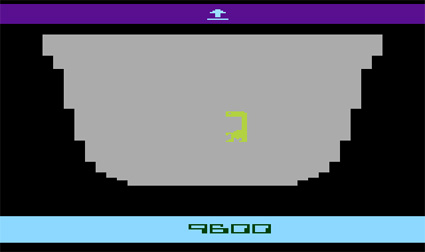
One of the biggest apocryphal tales in videogame history involves the reported burying of thousands of copies of E. T. the Extraterrestrial (Atari Inc., 1982) after its historic flop. The game, a poorly designed and nearly unplayable mess, such a mess that E. T. has become shorthand for many of the things wrong with the videogame industry now and then, was initially rushed to stores by the holiday shopping season to capitalize on the success of Spieleberg’s film by the same name. The sales of the game were so bad that supposedly Atari had nearly a million copies left unsold, which disappeared and rumors circulated that many of these unsold cartridges were buried. And they were! Malik Forté reports on Microsoft’s uncovering of these buried games in “30 Years Later, Microsoft Uncovers Buried E. T. Cartridges,” which has been done in coordination with making a documentary about the search for this buried archive. Next up, Microsoft will try to find Jimmy Hoffa.
And as part of his forthcoming 3 million page novel, Breeze Avenue (2015), Richard Grossman has buried a crystal ball deep inside of Princeton Mountain in Colorado. The ball, “made of synthetic sapphire, which is almost as indestructible as diamond,” has the Ten Commandments inscribed on it in Hebrew, and in “20 million years, as a result of natural forces carefully calculated by the geologists, the Torah Ball will emerge from its eroded resting place and bear the Ten Commandments down the mountain.” Hyperarchivalists of the deep future rejoice!
Richard Grossman, The Torah Ball (Synthetic Sapphire, Princeton Mountain, 20 Million Years of Erosion, 2011).
Surveillance, consent, networks, numbers, the hyperarchival condition of the contemporary: Natasha Lennard writes “Of Being Numerous” for The New Inquiry.
“A Game is Being Beaten” by Leigh Alexander at The New Inquiry: “The trend in video game design is to comment on violence by asking players to perform violence. But could there be pleasure in performing consent?”
And sad news in hyperarchival realism. Google is redoing its Street View for many places in Pittsburgh, and thus Ben Kinsley and Robin Hewlett’s wonderful Street With a View is going away. (Right now it goes from a marching band in the rain to a deserted, sunny street. Uncanny.) Ah, the transitory internet–perhaps it isn’t an archive at all, for really, how do we archive the present in the present. . . .


 The Hyperarchival Parallax