Some wonderfully bleak things I’ve run across this week: Margaret Ronda’s, “Mourning and Melancholia in the Anthropocene,” in Post45; and I am eagerly waiting for Liam Sprod‘s Nuclear Futurism: The Work of Art in the Age of Remainderless Destruction (Zer0 Books, 2013) to arrive in the mail. Post45 also has a fairly interesting piece from October on Thomas Pynchon: David J. Alworth, “Pynchon’s Malta,” Post45.
Thomas Pynchon
Pynchon’s Bleeding Edge
So it looks like my first speculation about when this novel was going to be set has turned out to be true: the 1990s and/or 2000s, thereby completing his epic of the 20th c. The New York Times reports that Thomas Pynchon’s novel, Bleeding Edge will be out Sept. 17, and is “set in 2001, [and] takes place in ‘the lull between the collapse of the dot-com boom and the terrible events of September 11.’” Wow. 2001 seems close enough for me to feel like my speculation was accurate. Who would’ve thunk that maybe the best 9.11.01 novel might be Pynchon’s . . . .
New Pynchon Novel
As has often been the case recently, my mother is more up on things than I am, so I was quite happy to get a link from her this morning letting me know that a new Thomas Pynchon novel has been announced. It will be titled The Bleeding Edge.
Some Pynchon Articles
A new journal on Thomas Pynchon, Orbit: Writing Around Pynchon, just released its second issue, and it contains some interesting essays, and also includes David Letzler’s review of Theophilus Savvas’s Postmodernist Fiction and the Past.
“Cyber-Pearl Harbor” and a Thomas Pynchon Talk
Reported today in The New York Times, “Defense Secretary Leon E. Panetta warned Thursday that the United States was facing the possibility of a ‘cyber-Pearl Harbor’ and was increasingly vulnerable to foreign computer hackers who could dismantle the nation’s power grid, transportation system, financial networks and government.”
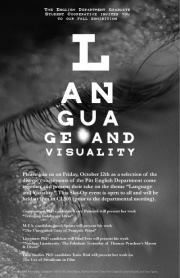
Also, today I will be giving a (hopefully quite) short talk entitled “Nuclear Luminosity: The Fabulous Metahistorical Textuality of Thomas Pynchon’s Mason & Dixon” for the Univ. of Pittsburgh English Grad Student Scholarship Collective Fall Symposium, Language & Visuality. The event will be taking place in CL 501 @ 1pm. In addition, Kerry Banazek-PhD in Comp/Rhet, Jacob Spears-MFA, and Katie Bird-Phd in Film will be speaking.
Perhaps We’re Not Bound to Our Solar System After All
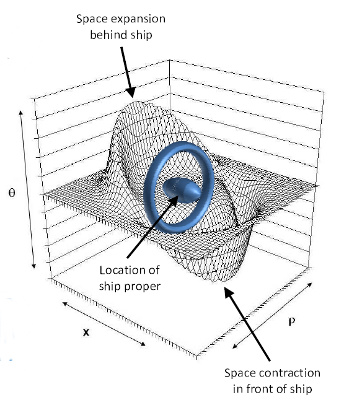
So, Matt Peckham in Time Magazine has reported that NASA is “Actually Working on a Faster-Than-Light Warp Drive.” No, really. And it’s brilliant:
“By placing a spheroid object between two regions of space-time — one expanding, the other contracting — Alcubierre theorized you could create a “warp bubble” that moves space-time around the object, effectively re-positioning it. In essence, you’d have the end result of faster-than-light travel without the object itself having to move (with respect to its local frame of reference) at light-speed or faster.”
Basically, rather than accelerate an object, this method simply changes the very fabric space-time (wow). And it doesn’t violate Einstein’s special theory of relativity. And they’re gonna start lab experiments too. The assured extinction of the species when the Sun goes Red Giant on us, now looks less eschatological. Alpha Centauri or bust by 2100.
Also, this is weirdly reminiscent of the last few pages of Thomas Pynchon’s, Against the Day [2006], in which the Chums of Chance skyship, the Inconvenience, becomes capable of time travel:
Inconvenience herself is constantly having her engineering updated. As a result of advances in relativity theory, light is incorporated as a source of motive power–though not exactly fuel–and as a carrying medium–though not exactly a vehicle–occupying, rather, a relation to the skyship much like that of the ocean to a surfer on a surfboard–a design principle borrowed from the Æther units that carry the girls to and fro on missions whose details they do not always share fully with “High Command.” (1084)
Pynchon’s “Acceptance Speech” for the National Book Award, 1974
This is amazing:
Thomas Pynchon Narrates Promo Video for Inherent Vice
This is pretty cool:
Excerpt: Pynchon on the Bomb
From one of the rare moments Pynchon addresses his own work:
My reading at the time also included many Victorians, allowing World War I in my imagination to assume the shape of that attractive nuisance so dear to adolescent minds, the apocalyptic showdown.
I don’t mean to make light of this. Our common nightmare The Bomb [note the capitalization] is in there too. It was bad enough in ’59 and is much worse now, as the level of danger has continued to grow. There was never anything subliminal about it, then or now. Except for that succession of the criminally insane who have enjoyed power since 1945, including the power to do something about it, most of the rest of us poor sheep [the preterite] have always been stuck with simple, standard fear. I think we all have tried to deal with this slow escalation of our helplessness and terror in the few ways open to us, from not thinking about it to going crazy from it. Somewhere on this spectrum of impotence is writing fiction about it–occasionally, as here, offset to a more colorful time and place. (Thomas Pynchon, “Introduction” in Slow Learner [New York: Little, Brown & Co., 1984], 18-19.)
An Excerpt from Gravity’s Rainbow. . .
“‘And sometimes I dream of discovering the edge of the World. Finding that there is an end. My mountain gentian always knew. But it has cost me so much.
‘America was the edge of the World. A message for Europe, continent-sized, inescapable. Europe had found the site for its Kingdom of Death, that special Death the West had invented. Savages had their waste regions, Kalaharis, lakes so misty they could not see the other side. But Europe had gone deeper–into obsession, addiction, away from all the savage innocences. America was a gift from the invisible powers, a way of returning. But Europe refused it. It wasn’t Europe’s Original Sin–the latest name for that is Modern Analysis–but it happens that Subsequent Sin is harder to atone for.
‘In Africa, Asia, Amerindia, Oceania, Europe came and established its order of Analysis and Death. What it could not use, it killed or altered. In time the death-colonies grew strong enough to break away. But the impulse to empire, the mission to propagate death, the structure of it, kept on. Now we are in the last phase. American Death has come to occupy Europe. It has learned empire from its old metropolis. But now we have only the structure left us, none of the great rainbow plumes, no fittings of gold, no epic marches over alkali seas. The savages of other continents, corrupted but still resisting in the name of life, have gone on despite everything. . . while Death and Europe are separate as ever, their love still unconsummated. Death only rules here. It has never, in love, become one with. . . ” (Thomas Pynchon, Gravity’s Rainbow [New York: Viking Press, 1973], 722-3).
 The Hyperarchival Parallax