Spring Semester 2026: Syllabi and Teaching Without Computers


After a very productive and thoroughly refreshing sabbatical, I’m back at Hartwick College this spring teaching two courses (and two of my favorite to teach!). Here are the syllabi: ENGL 220 Introduction to Textual Analysis and ENGL 352 Critical Game Studies.

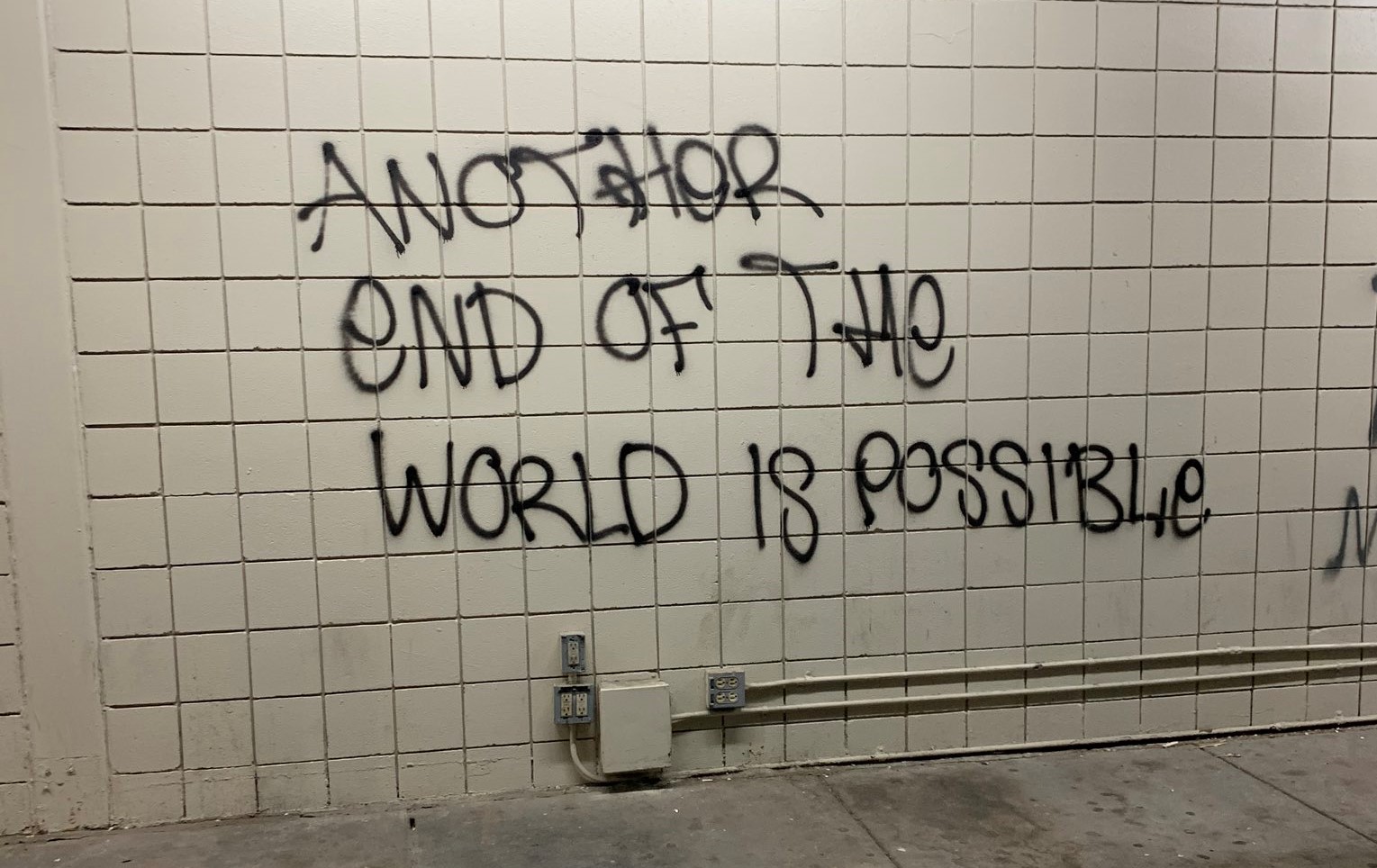
Most notably, after twenty years of teaching predominantly writing-intensive courses in which I assigned essays, poems, and stories to be composed outside of class, in response to the frustration the sheer amount of student work I have seen generated by artificial intelligence (AI) has caused me and the more general neofeudal edtechification of higher education, I made the decision this spring to make my courses (almost) completely analog in terms of assignments, materials, and expectations. Students write all their papers in class. Students are required to have print books, and I print out all PDFs for them to read and annotate. No one has a smart phone or a laptop anywhere in sight. It’s glorious, old school, amazingly analog. And it is working.[1]

I am calling this teaching without computers, and it has been revolutionary for my pedagogy and peace of mind, revitalizing the classroom as a space of human connection, energy, communication, thinking, and poiesis while also assuaging my own considerable frustrations with and despair about my job over the past few years, a job that at some point seemed destined to be little more than that of plagiarism detective. All my previous engagement with students’ ideas and their attempts to express those ideas were slowly and almost completely strained away over the past three-odd years with nothing left but policing, constantly on the lookout for evidence of now seemingly ubiquitous large-language model (LLM) use infecting and subverting the reading, writing, and thinking of our students, of an entire generation of young people, of, really, everyone, compromising our very humanity with its tepid, dumb slop. Though I am only six weeks into the semester, the transformation teaching without computers has wrought upon my classroom has been remarkable. My students have, to a large degree, embraced my new pedagogy, as I suspect it has given them back something that I perhaps only now realize had been lost in classrooms years before LLMs had emerged. I cannot recommend this (and other) kind(s) of AI-resistant pedagogy enough for other people teaching in the critical humanities. I am a convert. Fully. And I expect that, whatever comes next for me as a teacher, a big part of it will be proselytizing for the new good news: teaching and learning without computers.

For more resources on resisting AI in our teaching, see Anna Kornbluh, Eric Hayot, Krista Muratore, and Gina Stinnett’s Against AI.


[1] That said, there are still some digital elements in my classes. For example, obviously I still require that students play video games in ENGL 352 Critical Game Studies, and I do make available the online version of the Oxford English Dictionary and a thesaurus during in-class writing assignments. Of course, I also happily approve whatever digital accommodations students might need—they just need to ask (and regardless of whether or not they have any documented need for such accommodation).
Links in the Time of Coronavirus, Vol. 5: July 16–August 15, 2020

Black Lives Matter

Ishmael Reed, “America’s Criminal Justice System and Me.”

Anthony Bogues, “Black Lives Matter and the Moment of the Now.”

Colin Dayan, “Police Power and Can’t Breathe.”

Dwight Garner, “Isabel Wilkerson’s Caste Is an ‘Instant American Classic’ about Our Abiding Sin.”

Jane Hu, “The Second Act of Social-Media Activism.”

Jonathan Levinson and Conrad Wilson, “Federal Law Enforcement Use Unmarked Vehicles to Grab Protesters off Portland Streets.”

Shane Harris, “DHS Compiled ‘Intelligence Reports’ on Journalists Who Published Leaked Documents.”

Ken Klippenstein, “The Border Patrol Was Responsible for an Arrest in Portland.”

Katie Shepherd and Mark Berman, “‘It Was Like Being Preyed upon’: Portland Protesters Say Federal Officers in Unmarked Vans Are Detaining Them.”

Charlie Warzel, “50 Nights of Unrest in Portland.”

Conrad Wilson, Dirk Vanderhart, and Suzanne Nuyen, “Oregon Sues Federal Agencies for Grabbing up Protesters off the Streets.”

Gillian Flaccus, “Judge Blocks US Agents from Arresting Observers in Portland.”

Richard Read, “Out of Portland Tear Gas, an Apparition Emerges, Capturing the Imagination of Protesters.”

Continue reading

Links in the Time of Coronavirus, Vol. 1: March 11–April 15, 2020

I originally intended in late May 2020, when the spring semester was finally over and I had some time to finish “Spring 2020 Links (Pre-COVID-19),” to post one big link dump for coronavirus-related things. But the hyperarchival barrage of news over the past three months, including everything that has happened in the United States the past three weeks (combined with how little time I still have . . .), has made it clear that it would be better to divide posts into smaller, more manageable bits. So here is everything I came across from March 11-April 15, 2020. More to come soon.

Sheri Fink and Mike Baker, “‘It’s Just Everywhere Already’: How Delays in Testing Set Back the US Coronavirus Response.”

The New York Times, “Coronavirus Map: Tracking the Global Outbreak,” “Coronavirus in the US: Latest Map and Case Count” and “Coronavirus Tips, Advice and Answers to Your New Questions.”

IHME, “COVID-19 Projections.”

Katie Zezima, Joel Achenbach, Tim Craig, and Lena H. Sun, “Coronavirus Is Shutting Down American Life as States Try to Battle Outbreak.”


Coronavirus Think Pieces (General)

Laurie Penny, “This Is Not the Apocalypse You Were Looking For.”

Naomi Klein, “Coronavirus Capitalism–and How to Beat It.”

Frank Pasquale, “Two Timelines of COVID Crisis.”

Ian Bogost, “Now Is the Time to Overreact.”

Arundhati Roy, “The Pandemic Is a Portal.”

Anne Applebaum, “The Coronavirus Called America’s Bluff.”

Dan Kois, “America Is a Sham.”

Continue reading

Critical Game Studies Syllabus

With the aid of a Course Development Grant from the Office of Undergraduate Studies, this past year I had the chance to develop a new course at the University of Pittsburgh, ENGLIT 1002 Critical Game Studies. As I may not likely get to teach this course anytime soon, I thought I would share the syllabus.

The course’s reading includes Tom Bissel’s Extra Lives (2010), Alexander R. Galloway’s Gaming (2006), Jesper Juul’s The Art of Failure (2013), McKenzie Wark’s Gamer Theory (2007), and many interesting critical essays on play, narratology v. ludology, gender, empire, countergaming, and other related concerns. The majority of games on the syllabus are quite recent, and indie games in particular dominate, including (but not limited to): Between (2008), Braid (2008), Depression Quest (2013), Goat Simulator (2014), Papers, Please (2014), Sunset (2015), and The Stanley Parable (2013).

Ferguson and Other Links

Ferguson

The running blog from Fergusons latest: Ben Mathis-Lilley and Elliot Hannon, “Officer Who Stopped Michael Brown Did Not Know He Was a Robbery Suspect.”

Photos from Ferguson.

Robert Stephens II, “In Defense of the Ferguson Riots.”

An open letter from David Simon.

Rembert Browne, “The Front Lines of Ferguson.”

“This Time, For Once, What It Is, It Is.”

Daniel Politti, “After a Day of Calm, Ferguson Reignites: Looting, Clashes with Police and Tear Gas.”

Jack Mirkinson, “Police Threaten to Shoot, Mace Reporters in Ferguson.”

Dylan Scott, “Mayor Defends Police: I Can’t Second-Guess These Officers.”

Jamelle Bouie, “The Militarization of the Police.”

The militarization of US Police.

Sahil Kapur, “House Democrat Unveils Bill to Demilitarize Local Police.”

Rand Paul, “We Must Demilitarize the Police.”

“There’s a Police Coup Going on Right Now in Ferguson, MO.”

Matthew Yglesias, “Enough is Enough in Ferguson.”

Mychal Denzel Smith, “The Death of Michael Brown and the Search for Justice in Black America.”

LaDoris Hazzard Cordell, “Policing the Police.”

Joe Coscorelli, “Obama Treads Lightly, Again, on Ferguson: ‘Listen and Heal,’ Don’t ‘Holler and Shout.'”

Kareem Abdul-Jabbar, “The Coming Race War Won’t Be About Race.”

And a must see: John Oliver on Ferguson.

Continue reading

“Literally” Two-Thousand Fourteen Links

Nuclear and Environment

US War Department’s Archival Footage of the Bombing of Hiroshima.


H. Bruce Franklin, “Hiroshima, Nagasaki, American Militarism,” a review of Paul Ham‘s Hiroshima Nagasaki: The Real Story of the Atomic Bombings and Their Aftermath.

Mark Strauss, “Federal Employee Gets Fired After Writing an Article Criticizing Nukes.”

Lindsay Abrams, “Researchers: Warming Responsible for Siberia’s Mysterious Hole.”

Continue reading

Link Dump: Nuclear, Archival, and Other

My apologies, it’s been a busy few weeks and I haven’t had time to add anything new. So here’s couple things I’ve stumbled across recently.

In nuclear news, Craig Whitlock reports for The Washington Post that “the Air Force on Friday fired the general in charge of all land-based nuclear missiles, the second time in a week that a senior commander of the country’s nuclear arsenal has been let go for allegations of personal misconduct.” (I wonder if his misconduct had anything to do with precious bodily fluids.)

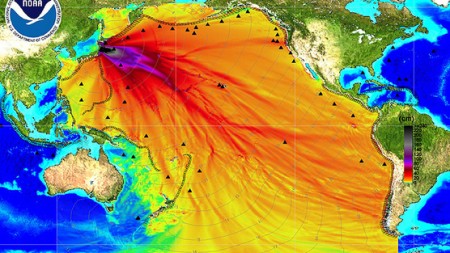
Three things from Fukushima: Mari Yamaguchi asks, “Japan’s Water Leaks: How Dangerous?” for the AP. The Sleuth Journal reports that “Radioactive Water From Fukushima Is Systematically Poisoning the Entire Pacific Ocean.”

radioactive-water

And if that weren’t bad enough, Andrew Breiner for Think Progress writes how a “Once-A-Decade Typhoon Threatens Already Leaking Fukushima Nuclear Plant.”

And though I think I’ve reported on this/posted a picture of this before, Flickr has an arresting series of images of archival decay from the abandoned Mark Twain Branch Library in Detroit.

SONY DSC

Continue reading

Fall 2013

Here are .pdfs of syllabi for classes I will be teaching this fall at the University of Pittsburgh:

Reading Poetry (ENGLIT 0315)–“American Poeisis: Imagining the Twentieth Century”

Introduction to Critical Reading (ENGLIT 0500)–“Light and Darkness in the Twentieth Century”

Narrative and Technology (ENGLIT 0399)–“Narrating Nuclear, Information, and Biological Technology”

And my Narrative and Technology students will be keeping a class blog. Check it out here.