Beginning of the Semester Links, Spring 2017

Nuclear and Environment

Stephen Hawking, “This Is the Most Dangerous Time for Our Planet.”

Andrew Bast, “Unpredictable,” review of Nuclear Politics: The Strategic Causes of Nuclear Proliferation, by By Nuno P. Monteiro and Alexandre Debs.

Joe Romm, “Priebus Confirms That Climate Denial Will Be the Official Policy of Trump’s Administration.”

Natasha Geiling, “Wisconsin Department of Natural Resources Deletes Accurate Climate Science from Agency Webpage.”

Madeline Conway, “Trump Threatens to Upend US Nuclear Weapons Policy.”

Sam Stein, “Trump Releases Letter From Putin Amid Talk Of Nuclear Arms Race.”

Robinson Meyer, “Human Extinction Isn’t That Unlikely.”

Continue reading

“The Megatext and Neoliberalism” and “Metaproceduralism: The Stanley Parable and the Legacies of Postmodern Metafiction”

I’ll be giving two talks in Pittsburgh over the next two months on May 13 and June 22, 2016.


1. Friday, May 13, 2016 — 2:30 – 4:30. Part of a panel on “The Novel in or against Neoliberalism” at the 2016 Studies in the Novel Conference, The Novel in or against World Literature, Wyndham University Center – Oakland Room II.

Chair: Jen Fleissner, Indiana University

“The Megatext and Neoliberalism,” Bradley J. Fest, University of Pittsburgh

“The Novel in India and Neoliberalism,” H. Kalpana, Pondicherry University

“The Novel and Neoliberal Empathy,” Alissa G. Karl, The College at Brockport-SUNY

“Immanent Value in The Golden Bowl,” Paul Stasi, University at Albany-SUNY


The Megatext and Neoliberalism

With the steadily increasing storage capacity and processing power of contemporary information technology, enormously large texts are beginning to emerge that rival the books and libraries once imagined by Jorge Luis Borges. For instance, at some point in the near future, poet and novelist Richard Grossman will install Breeze Avenue—a five thousand volume, three million page “novel”—as a reading room in Los Angeles, and will also make this text available online in a fluid version that will change roughly every seven minutes for a century. Grossman’s text is, quite simply, too big to read; it is a megatext. This paper will consider the appearance of the unreadably massive novel as an emergent form native to the neoliberal era.

The writing, publication, and distribution of megatexts are impossible without the informatic, technological, and economic transformations of neoliberal globalization. For instance, the composition of Breeze Avenue would be inconceivable without big data and algorithmically generated text, without significant funding and personal wealth (Grossman was a high-level executive for a multinational financial firm in the 1970s), and without transforming the labor of the author from writing to managing. Mark Z. Danielewski’s twenty-seven volume meganovel-in-progress, The Familiar (2015-    ), takes full advantage of contemporary digital composition and production to create a work deeply enmeshed in the digital present by self-reflexively remediating the new media forms made possible by the distributed networks and posthuman technologies of the twenty-first century—including electronic literature, premier serial television, social media, videogames, and YouTube. And Mark Leach’s seventeen volume, ten thousand page, open source, digitally generated meganovel, Marienbad My Love (2008), takes advantage of crowd-sourced, collective authorship, reflecting the always-on unpaid digital microlabor that has come to characterize work in the overdeveloped world. Understanding such texts as unique outgrowths of and important critical reflections upon the age of neoliberalism allows us to explore important questions about the role of the novel in the twenty-first century and the possibilities for responding to the nonhuman logics of contemporaneity.


2. Wednesday, June 22, 2016, 1:30 – 3:00, I’ve organized a panel on “Videogame Adaptation” with Jedd Hakimi and Kevin M. Flanagan, colleagues in the Film Studies Program at the University of Pittsburgh, for the Keystone DH 2016 Conference, Hillman Library, University of Pittsburgh. (A schedule of the conference.)


Videogame Adaptation
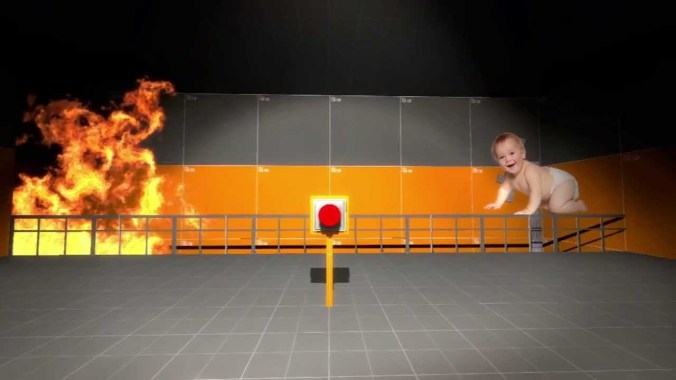
baby

As videogames continue to emerge as a dominant twenty-first-century form, it is becoming clearer that they have complex relationships to other media. This panel, part of a larger collaborative project, will address issues of adaptation and videogames from a transmedia perspective, drawing particularly on the resources provided by film and literary studies.


Videogame Adaptation: Some Experiments in Method
Kevin M. Flanagan, University of Pittsburgh

This paper outlines the concerns and conceptual practices of videogame adaptation, noting the many ways in which videogames shape, or are shaped by, ideas, narratives, and mechanics from other media. In situating videogames into the discourses of textual transformation that animate current work in adaptation studies, I argue that traditional approaches to adaptation in English departments (which privilege novel-to-film adaptation in a one-to-one correspondence) have a lot to learn from games, which function as adaptations at all stages of their production and consumption. I also demonstrate how adaptation studies challenges claims to medium specificity that form a foundational conceit of videogame studies.


Metaproceduralism: The Stanley Parable and the Legacies of Postmodern Metafiction
Bradley J. Fest, University of Pittsburgh

Most critics of contemporary literature have reached a consensus that what was once called “postmodernism” is over and that its signature modes—metafiction and irony—are on the wane. This is not the case, however, with videogames. In recent years, a number of self-reflexive games have appeared, exemplified by Davey Wreden’s The Stanley Parable (2013), an ironic game about games. When self-awareness migrates form print to screen, however, something happens. If metafiction can be characterized by how it draws attention to language and representation, this paper will argue how self-reflexivity in videogames is best understood in terms of action and procedure, as metaproceduralism.


Playing Los Angeles Itself: Experiencing the Digital Documentary Environment in LA Noire
Jedd Hakimi, University of Pittsburgh

Almost everything about the predominantly faithful depiction of 1947 Los Angeles in the recent, police-procedural videogame LA Noire (2011) was based on archival material, including period maps, photography, and film footage. And while scholars have thought extensively about how film spectators experience mediated depictions of real-world cities, the videogame player’s parallel experience has been relatively unexplored. Accordingly, I take LA Noire’s simulacrum as an opportunity to reflect on what happens when a real-world environment is adapted into the setting for a videogame. Specifically, I position LA Noire in the tradition of the “city-symphony” film and a particular sub-set of Film Noir known as the “semi-documentary” to make the case LA Noire contains crucial aspects of the documentary image. Consequently, LA Noire is not so much creating a fictional, diegetic world, as it is presenting our own world back to us in a manner that changes the way we experience the world in which we live.

Panel Abstract: Utopian Geologies

I just got word that a panel I organized was accepted for the 2015 Society for Utopian Studies Conference in Pittsburgh, Pennsylvania, taking place November 5-8. I have included the general abstract for the panel, and the abstracts for each individual paper.

The panel will take place on Saturday, 7 November 2015, 8:30 -10:45 am.


Utopian Geologies

Panelists: Racheal Forlow, Dan Malinowski, and Bradley J. Fest

In the twenty-first century, the Anthropocene has emerged as an important concept for understanding the impact of human life on the planet. As activists, journalists, and scholars attempt to respond to the challenges this new epoch presents, many invoke deep time as a significant mode of thinking. This panel will take up the question of how the utopian imagination, long a site for speculating about the future, might contend with such geologic timescales. Responding to the conference topic of “global flows” by discussing things that flow at very, very slow paces, each paper will consider an important literary encounter with utopian geology. From Walt Whitman’s emergent poesis, to Kim Stanley Robinson’s posthuman environmental ethics, to the emphasis on human finitude in recent speculative thinking, these papers all signal a desperate need to reinvest in the imagination in the face of observable climate change.


Walt Whitman’s Geologic Imagination and the Future

Racheal Forlow, University of Pittsburgh

Western utopian traditions imagine how human activities might create better futures. Today, those who pursue projects of this kind confront a singular set of challenges. Scientists argue climate change and a range of other environmental emergencies threaten the future of the species. Because most agree the activities a tradition of Enlightenment thinking privileges produced these threats, the present seems to demand we conceive anew the ways we hope to project and build better worlds. Some artists, intellectuals, and activists committed to this work therefore suggest we abandon anthropocentric views of the universe and autonomous views of human individuals for more broadly materialist accounts. In this paper, I argue a tradition of American poetry Walt Whitman originates offers projects of this kind historical and conceptual resources. Whitman treats the human faculties contemporary projects require—among these imagination, reason, and feeling—in thoroughly material terms. In “Song of Myself” (1855), he imagines human creative power is an evolutionary force that emerges out of deep, geologic history. So conceived, the human is not a powerful, autonomous agent that dominates what is not identical to it. Instead, the species participates in a broader set of transformative processes. I believe recognizing US traditions offer this alternative vision of the human might serve attempts to project and build futures in the novel ways contemporary crises compel.


Should We Eat the Dirt? Kim Stanley Robinson’s Mars Trilogy, Geology, and New Materialism

Dan Malinowski, Rutgers University

No matter where humanity goes, it will shape and be shaped by its environment. In this talk, I will explore the ways in which Kim Stanley Robinson’s Mars Trilogy (1994-96), through the long time-spans in which it occurs, allows us to follow the flow of human society on literally untouched land, providing a useful thought experiment for exploring the ethics of the relationship of humanity to geological features. I will examine the debates surrounding terraforming enacted within these novels, highlighting their central aporia: namely, how a utopian society can (or cannot) coexist with a posthuman ethics towards the natural landscape. I will show how the recent work in the New Materialism can articulate this problem more productively than the Heideggerian model of geological ethics proposed by Fredric Jameson in his essay on the trilogy. In doing so, this paper will articulate a view of the world in which the interactions of the “dead” world and its new inhabitants flow back and forth in an ongoing and multi-directional process, a consideration inseparable from any utopian possibility whether here on Earth or there on Mars.


Speculative Criticism, Black Metal Theory, and Utopia: Richard Grossman’s “Torah Ball”

Bradley J. Fest, University of Pittsburgh

In recent years, invoking Fredric Jameson’s famous quip about it being easier to imagine the end of the world than the end of capitalism has become something of a cliché. Given the realities of observable climate change and the seeming inability for human institutions to make the broad, sweeping changes necessary for responding to life in the Anthropocene, one might find it difficult to disagree with claims about the foreclosure of the utopian imagination. So it is perhaps surprising that a variety of thinkers, emerging from the school of Speculative Realism (or New Materialism), have been emphasizing species finitude, particularly with regard to deep, geologic timescales. Rather than explore possible utopian futures, writers like Ray Brassier, Nicola Masciandaro, Reza Negarestani, Eugene Thacker, McKenzie Wark, Evan Calder Williams, and others, often writing under the heading of “Black Metal Theory,” frequently invoke the utter inevitability of human extinction. As part of a larger project of articulating what I am calling “speculative criticism,” this paper will explore what such dark geologies might offer for both the study of literary works massively extended in space and time and the pressing need to reconceive and reinvest in the utopian imagination in the twenty-first century.

The Seventieth Anniversary of the Bombings of Hiroshima and Nagasaki, and Other Links

Nuclear and Environmental

Thomas Powers, “Was It Right?”

Jonah Walters, “A Guide to the Hiroshima and Nagasaki Attacks.”

Colin Wilson, “The Slaughter of Hiroshima.”

The New York Times, “Anniversary of Hiroshima and Nagasaki Revives Debate Over the Atomic Bomb.”

Christian Appy, “The Indefensible Hiroshima Revisionism that Haunts America to This Day.”

Rebecca J. Rosen, “Rare Photo of the Mushroom Cloud Over Hiroshima Discovered in a Former Japanese Elementary School.”

Paul Ham, “The Bureaucrats Who Singled Out Hiroshima for Destruction.”

Continue reading

July 2015 Links

In addition to the release of The Rocking Chair by Blue Sketch Press on 1 August 2015, and “Poetics of Control,” my recent review of Alexander R. Galloway’s The Interface Effect (2012), I’ve completed a number of exciting projects over the last three months, so be on the lookout for a couple essays, another review, an interview, and more poems in 2015 and 2016. For now, however, some links have been piling up over this historic month.


US Politics

Adam Liptak, “Supreme Court Ruling Makes Same-Sex Marriage a Right Nationwide.”

David M. Perry, “A New Right Grounded in the Long History of Marriage.”

Transcript: Obama delivers eulogy for Charleston pastor, the Rev. Clementa Pinckney.

Claudia Rankine, “‘The Condition of Black Life Is One of Mourning.'”

Emma Green, “Black Churches Are Burning Again in America.”

The Editorial Board of The New York Times, “Take Down the Confederate Flag, Symbol of Hatred.”

Continue reading

More June 2015 Links

Environmental, Nuclear, and Disaster

Stephanie Kirchgaessner and John Hooper, “Pope Francis Warns of Destruction of Earth’s Ecosystem in Leaked Encyclical.”

Andrew Hoberek, “The Post-Apocalyptic Present.”

Matt Langione, “Will Art Save Our Descendants from Nuclear Waste?”

Tim McDonnell, “Here’s Why Obama Is Cracking Down on Airplane Pollution.”

“Atomic Explosion Tourism.”

Eric Markowitz, “Poison Prison: Is Toxic Dust Sickening Inmates Locked Up in Coal Country?”

Christopher Daley, “On Nuclear Criticism.”

Margaret DeMarco, “Details of Malmstrom Missile Officer’s Court-Martial.”

Continue reading

May Links

It’s been a busy month, and a there’s a bunch of stuff to catch up on, so links:


Disaster and Environment

David Roberts, “The Awful Truth about Climate Change No One Wants to Admit.”

Sarah Resnick, “A Note on the Long Tomorrow.”

Phil Plait, “Jovian Armageddon +20.”

Jamie Lauren Keiles, “Millennial Revenge Fantasy.”

“Texas Governor Signs Law to Prohibit Local Fracking Bans.”

Maureen McHugh, David Rieff, Benjamin Kunkel, Joseph McElroy, Srikanth Reddy, and Ted Nelson: “Speculations Archive: Overextending Ourselves.”

Continue reading

The Trailer for Paul Thomas Anderson’s Adaptation of Pynchon’s Inherent Vice and Other Links

Life has been quite busy, so I don’t even have that big of a backlog of links, but there’s been some interesting things afoot and I’m way behind on some of this stuff. So, without further ado. . . .

The trailer to Paul Thomas Anderson’s forthcoming adaptation of Thomas Pynchon’s Inherent Vice (2009) should be required viewing:


Logan Hill, “Pynchon’s Cameo, and Other Surrealities: Paul Thomas Anderson Films Inherent Vice.”

And a reflection on the trailer from some of the people at Grantland.

Continue reading

Many September Links

As predicted, I have been quite busy indeed and have not had a chance to post anything over the past couple of weeks. A bunch of fascinating stuff has been happening, a bunch of interesting books are coming out, etc., so I’m sad that I’ve been remiss in my duties. Hopefully this large batch of links will make up for that.


Apocalypse and After

George Dvorsky, “Have Humans Already Conquered the Threat of Extinction?”

Or not. Graham Turner and Cathy Alexander, “Limits to Growth Was Right: New Research Shows We’re Nearing Collapse.”

One of the first reviews of Naomi Klein’s new book, This Changes Everything: Capitalism vs. the Climate.

Jessica Corbett and Ethan Corey, “5 Crucial Lessons for the Left from Naomi Klein’s New Book.”

Eric Holthaus, “New Study Links Polar Vortex to Climate Change.”

Eugene Thacker on Radiolab.

And who knows where to put this one: Alison Flood, “Margaret Atwood’s New Work Will Remain Unseen for a Century.”

Continue reading