This year, Hartwick College and the Department of Literature, Media, and Writing will present four readings in the 2022–23 Visiting Writers Series. Readings take place at 7:00 or 7:30 p.m. in Eaton Lounge, Bresee Hall at Hartwick College in Oneonta, New York.
All campus visitors, including attendees at campus-based public events, must have up to date vaccinations for COVID-19. The College reserves the right to require masks on an event-by-event basis.
Poet Raena Shirali will read on Thursday, October 27, 2022 at 7:30 p.m., including from her new book summonings (Black Lawrence, forthcoming 2022).
Fiction writer Tessa Yangwill read from her brand new collection, The Runaway Restaurant (7.13, forthcoming October 2022) on Wednesday, November 16, 2022 at 7:00 p.m.
Fiction writer, poet, and game designer Julian K. Jarboe will read from their work on Wednesday, March 15, 2023 at 7:00 p.m.
And poet and nonfiction writer Sten Carlson will read from his work on Friday, April 28, 2023 at 7:00 p.m.
For more information, visit the Visiting Writers Series webpage.
This fall, the Faculty Development Committee and the Office of Academic Affairs at Hartwick College will present three speakers in the annual Faculty Lecture Series.
All talks take place at during the common hour: 12:20–1:20 p.m. in Eaton Lounge, Bresee Hall at Hartwick College, Oneonta, New York.
Admission to the readings is free and the events are open to the public. Attendees and all campus visitors must be vaccinated for COVID-19 and will be required to provide either their vaccination card or the New York State Excelsior Pass. Any visitor requiring an exception to this requirement must complete this form and receive prior approval from the College.
Parker Troischt, “How Big Is Big? Using the Most Powerful Explosions in the Universe to
Improve Distance Determinations in Extragalactic Astronomy,” Friday, September 9, 2022.
Cheryl L. Johnson, “Third Culture and Identity: How Much Do I Need until I Am ‘Enough’?,” Friday, October 14, 2022.
Meghan Sheehy, “Investigating the Research-to-Practice Gap in Music Education: Results and Roadblocks,” Friday, November 11, 2022.
For more information, visit the Faculty Lecture Series webpage.
This spring, Hartwick College and the Department of English will present the last two readings of the 2021-22 Visiting Writers Series. All readings take place at 7 p.m. in Eaton Lounge, Bresee Hall at Hartwick College in Oneonta, New York.
Admission to the readings is free and the events are open to the public. Attendees and all campus visitors must be vaccinated for COVID-19 and will be required to provide either their vaccination card or the New York State Excelsior Pass. Any visitor requiring an exception to this requirement must complete this form and receive prior approval from the College. Masks are required in all College buildings.
Krys Malcolm Belc will read on Wednesday, March 2, 2022.
The start to this academic year is again unconventional, but feeling much closer to normal, especially owing to Hartwick College’s reopening plans. I’m again teaching two frequently taught creative writing courses and revisiting Poetry and Technology. The syllabi:
I am particularly proud of this essay, as I wrote it predominantly during the summer of 2020–the height of lockdown–and during which we had no childcare and I couldn’t access the library nor my campus office, including its books. Lots of people to thank, consequently, but particularly Racheal Fest, Courtney Jacobs and James Zeigler for their hard work putting this together during an incredibly difficult year, Rachel Blau DuPlessis, and Dawn Baker, Hartwick’s interlibrary loan librarian. (There are more acknowledgments on the first page of my essay.) This essay is also the second published chapter from my work in progress, Too Big to Read: The Megatext in the Twenty-First-Century. For other related work on megatexts and hyperarchivalism, see:
In the twenty-first century, digital technologies have made it possible for writers and artists to create massively unreadable works through computational and collaborative composition, what the author has elsewhere called megatexts. The ubiquity of texts appearing across media that are quite literally too big to read—from experimental novels to television, film, and video games—signals that the megatext is an emergent form native to the era of neoliberalism. But what happens to other long forms, such as the twentieth-century long poem, when written in an era of megatextuality? Rachel Blau DuPlessis’s work, including Drafts (1987–2013) and Traces, with Days (2017–), readily suggests itself as a case study for thinking through a megatextual impulse in the twenty-first-century long poem. Though her work is plainly indebted to its modernist precursors (H.D., Pound, Williams, etc.) while disavowing at every level of its composition a patriarchal will toward totality, DuPlessis’s various experiments in the long poem are also thoroughly contemporary and respond to the economic, military, political, and environmental transformations of the neoliberal era by drawing upon and producing fragmentary, megatextual debris. This essay positions DuPlessis’s work amidst a larger twenty-first-century media ecology, which includes both the megatext and the big, ambitious novel, and argues that rather than simply (and futilely) resist the neoliberal cultural logic of accumulation without end, DuPlessis hypertrophically uses the megatext’s phallogocentric form against itself in order to interrogate more broadly what it means—socially, culturally, economically—to write a long poem in the age of hyperarchival accumulation.
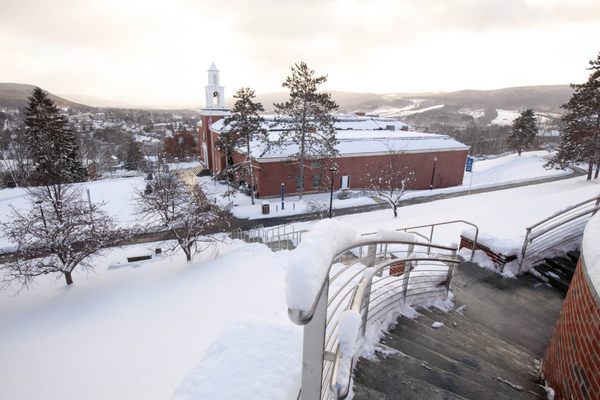 Hartwick College’s unique January Term (J-Term; my first!) is again starting off unconventionally, but I’m excited to be teaching an intensive month-long course on feminist poetry and poetics. The syllabus: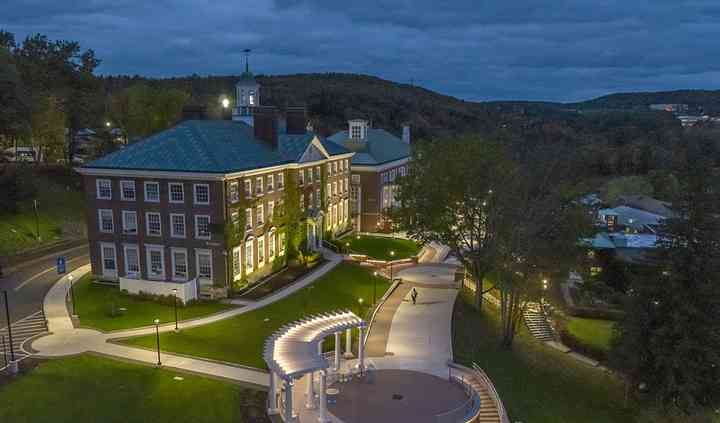



 The Hyperarchival Parallax