End of the Semester Links Spring 2014

It’s been a busy end of the semester and I haven’t been able to post anything for a bit. So, now that I have a bit of time before the semester wraps up, here’s a bunch of stuff that has been happening the last few weeks. My apologies if I’m a bit late on some of these things.

Nuclear and Disaster

Laura Miller reviews Craig Nelson’s The Age of Radiance: The Epic Rise and the Dramatic Fall of the Atomic Age.

John Metcalfe, “What Famous Old Paintings Can Tell Us About Climate Change.”

Only .02% of published research rejects global warming.

Adam Weinstein, “Arrest Climate Change Deniers.”

Continue reading

Big News in Science and Other Links

Science

The first evidence for cosmic inflation–i.e., the Big Bang–was discovered this week.

Megan Garber at The Atlantic, “What It’s Like to be Right About the Big Bang?”

The search for Flight MH370 is revealing one thing: the ocean is filled with garbage.

Kim Stanley Robinson alert: Paul Rosenfeld, “Would You Take a One-Way Ticket to Mars?”

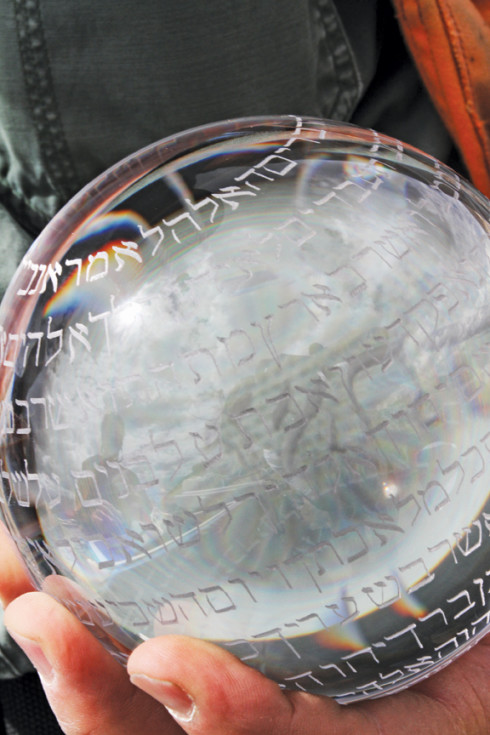
And as part of his forthcoming 3 million page novel, Breeze Avenue (2015), Richard Grossman has buried a crystal ball deep inside of Princeton Mountain in Colorado. The ball, “made of synthetic sapphire, which is almost as indestructible as diamond,” has the Ten Commandments inscribed on it in Hebrew, and in “20 million years, as a result of natural forces carefully calculated by the geologists, the Torah Ball will emerge from its eroded resting place and bear the Ten Commandments down the mountain.” Hyperarchivalists of the deep future rejoice!

Richard Grossman, The Torah Ball (Synthetic Sapphire, Princeton Mountain, 20 Million Years of Erosion, 2011).

Richard Grossman, The Torah Ball (Synthetic Sapphire, Princeton Mountain, 20 Million Years of Erosion, 2011).

Continue reading

A Miscellaneous Group of Not Very Doomy Links

Surveillance, consent, networks, numbers, the hyperarchival condition of the contemporary: Natasha Lennard writes “Of Being Numerous” for The New Inquiry.

This doesn’t seem like reading at all: the new “speed reading app.”

Rebecca Stoner in The Daily Sophist: “What’s Love Got to Do with Anything? DFW Biographer D.T. Max Speaks on Campus.”

“A Game is Being Beaten” by Leigh Alexander at The New Inquiry: “The trend in video game design is to comment on violence by asking players to perform violence. But could there be pleasure in performing consent?”

“How Benjamin Kunkel Went from Novelist to Marxist Public Intellectual” by David Wallace-Wells at Vulture.

Between Two Ferns: The Selling of the President, 2014.”

A very interesting forthcoming issue of Critical Inquiry.

A(nother) soundtrack for the apocalypse. Track 1 seems especially doomy. (Thanks Michael.)

My good friend Ryan Pierson on The Lego Movie: “On the Nonessential Beauty of Legos.”

And because I saw it yesterday and enjoyed it (though I am a bit confounded by this fact), another: Andrew O’hehir for Salon: The Lego Movie: Plastic Blocks Fight for Freedom!”

German philosophers play Monopoly. (I wonder what would happen if they got a game of Risk [The Game of Ruining Friendships] going.)

And sad news in hyperarchival realism. Google is redoing its Street View for many places in Pittsburgh, and thus Ben Kinsley and Robin Hewlett’s wonderful Street With a View is going away. (Right now it goes from a marching band in the rain to a deserted, sunny street. Uncanny.) Ah, the transitory internet–perhaps it isn’t an archive at all, for really, how do we archive the present in the present. . . .

A short film on Street With a View:

Russia Sends Troops into the Ukraine and Other Links

Things are happening very quickly in the Ukraine. David Remnick reports on the most recent events for The New Yorker in “Putin Goes to War.” He writes:

Vladimir Putin, the Russian President and autocrat, had a plan for the winter of 2014: to reassert his country’s power a generation after the collapse of the Soviet Union. He thought that he would achieve this by building an Olympic wonderland on the Black Sea for fifty-one billion dollars and putting on a dazzling television show. It turns out that he will finish the season in a more ruthless fashion, by invading a peninsula on the Black Sea and putting on quite a different show—a demonstration war that could splinter a sovereign country and turn very bloody, very quickly.

In other news, Luke O’Neil has a piece in Esquire: “The Year We Broke the Internet: An Explanation, an Apology, a Plea.”

From my old neck of the woods, “Say Goodbye to Phoenix–And the American West.”

And a blast from the past. A video for The Faint‘s new single, “Help in the Head,” from their forthcoming album Doom Abuse. I cannot help but see this video as a paranoid reflection on the total surveillance of contemporaneity.

More Doomy Doom and Less Doomy Doom

More Doomy

Brad Plummer has an interview with author of The Sixth Extinction Event, Elizabeth Kolbert (who was also on The Daily Show the  other night) at The Washington Post.

“The NSA and Climate Change: What We Know So Far,” by Joshua Eaton.

“How Iowa Flattened Literature,” or rather, the CIA and the Writer’s Workshop.

NASA is going to turn the moon into computronium, ur, I mean give licenses to mine it.

Less Doomy

David Foster Wallace’s letter to his editor.

Dragonlance should be the next fantasy movie franchise. I agree, esp. if it means they make the Legends series into films.

A new anthology of post-apocalyptic fiction, Wastelands 2, edited by John Joseph Adams.

A pretty scathing review of Matthew Barney’s River of Fundament (2014) that actually makes me want to see it more.

And a book I had an essay appear in last year, The Silence of Fallout: Nuclear Criticism in a Post-Cold War World, was just selected as one of Zer0 Books‘ best books of 2013.

Super Bowl Sunday Links

Nuclear

Eric Schlosser, author of Fast Food Nation: The Dark Side of the All-American Meal (2000) and the recent Command and Control: Nuclear Weapons, the Damascus Incident, and the Illusion of Safety (2013, a book that is on my shortlist of things to read right now), has a couple of interesting things in The New Yorker on Dr. Strangelove: “Almost Everything in Dr. Strangelove Was True,”  “Deconstructing Dr. Strangelove,” and Kubrick’s alternative titles to the film.

In other hard-to-believe nuclear news, Josh Harkinson reports in Mother Jones that a “Nun Faces up to 30 Years for Breaking Into Weapons Complex, Embarrassing Feds.”

Torpedoes and the military industrial complex.


NSA

Angry Birds and ‘Leaky’ Phone Apps Targeted by NSA and GCHQ for User Data.”

The Blackphone. “A Phone for the Age of Snowden.”[1]

And an older op-ed piece from The New York Times on “Edward Snowden, Whistleblower.”


Environment and Disaster

Another disaster in the Gulf of Mexico.

The Atlanta snow “storm,” and the devastating effects of two inches of snow when coupled with suburban sprawl:

More than any event I’ve witnessed in two decades of living in and writing about this city, this snowstorm underscores the horrible history of suburban sprawl in the United States and the bad political decisions that drive it. It tells us something not just about what’s wrong with one city in America today but what can happen when disaster strikes many places across the country. As with famines in foreign lands, it’s important to understand: It’s not an act of nature or God—this fiasco is manmade from start to finish. But to truly get what’s wrong with Atlanta today, you have to look at these four factors, decades in the making.

“Climate Change is Already Causing Mass Human Migration.”

And an interview with Fredric Jameson on capitalism, the infernal machine.

And a journey to the end of a world that may have no end.


Humanities and Higher Ed

“What STEM Shortage? Electrical Engineering Lost 35,000 Jobs Last Year.”


[1] It’s also of note that we are in the “Age of Snowden” (rather than the age of the NSA, or control, or surveillance, or whatever).

January 2014 Links

It’s been a busy month, both in the news and in the world. Here’s a few things I’ve almost had time to read.


Nuclear and Disaster

“Almost Everything in Dr. Strangelove Was True,” Eric Schlosser, The New Yorker.

The DSM-5 is the worst.

So are polar vortexes.

The state of emergency in West Virginia and its long term effects.

Literary destruction.

XKCD on the weather.


The NSA

NSA has a backdoor into your computer and to your iPhone.

Everything we know the NSA can do.

Continue reading

NSA Related Stuff From Late-2013

I have been relatively inactive on the blog the past few months, and a number of interesting things have happened or been reported. So to celebrate the end of 2013—what I think could easily be called the Year of the National Security Agency, a year that saw perhaps a decisive shift toward the world Dave Eggers recently imagined in The Circle (2013)[1]—I have posted a number of links on recent stories involving the NSA and the national security state below. To address other stories I have neglected over the past few months, I will be posting more general links tomorrow.

A few days ago, Adam Liptak and Michael S. Schmidt reported for The New York Times that, “A federal judge [William H. Pauley III . . .] ruled that a National Security Agency program that collects enormous troves of phone records is legal, making the latest contribution to an extraordinary debate among courts and a presidential review group about how to balance security and privacy in the era of big data.” This comes only eleven days after a ruling issued on 16 December 2013 “by Judge Richard J. Leon in Washington, who ruled that the program was ‘almost Orwellian’ and probably unconstitutional.” This latter story was reported by Ellen Nakashima and Ann E. Marimow on 16 December 2013 in The Washington Post. Amy Davidson has written two fairly interesting and incisive pieces for The New Yorker analyzing each ruling: “Judge Pauley to the NSA: Go Big” and “The Domino’s Hypothetical: Judge Leon Vs. the NSA.” (The New Yorker actually has a number of articles addressing the NSA.)

In August the White House commissioned an independent report on the National Security Agency’s activities, and the report, Liberty and Security in a Changing World: Report and Recommendations of the President’s Review Group on Intelligence and Communications Technologies (the link is to the actual 304-page report), was issued on 12 December 2013. Michael Morell, one of the report’s authors, has written an opinion piece in The Washington Post, “Correcting the Record on the NSA Report.” And John Cassidy has an article in The New Yorker on the report, “Inside the White House NSA Report: The Good and the Bad.”

Continue reading

Paranoia and Conspiracy: 2013 Style

So, amidst the nearly daily revelations of the NSA, Scott Shane for The New York Times reports that “No Morsel Too Miniscule for All-Consuming NSA”:

From thousands of classified documents, the National Security Agency emerges as an electronic omnivore of staggering capabilities, eavesdropping and hacking its way around the world to strip governments and other targets of their secrets, all the while enforcing the utmost secrecy about its own operations. It spies routinely on friends as well as foes, as has become obvious in recent weeks; the agency’s official mission list includes using its surveillance powers to achieve “diplomatic advantage” over such allies as France and Germany and “economic advantage” over Japan and Brazil, among other countries.

I am tempted to say that the NSA represents something like the capital T Truth of our global, hyperarchival reality.
And in still paranoid, but less frightening news, Carolyn Kellogg, friend and writer for The Los Angeles Times, appears on a podcast discussing Thomas Pynchon’s Bleeding Edge at Three Percent.

Link Dump: Nuclear, Archival, and Other

My apologies, it’s been a busy few weeks and I haven’t had time to add anything new. So here’s couple things I’ve stumbled across recently.

In nuclear news, Craig Whitlock reports for The Washington Post that “the Air Force on Friday fired the general in charge of all land-based nuclear missiles, the second time in a week that a senior commander of the country’s nuclear arsenal has been let go for allegations of personal misconduct.” (I wonder if his misconduct had anything to do with precious bodily fluids.)

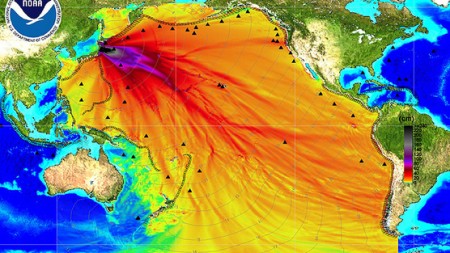
Three things from Fukushima: Mari Yamaguchi asks, “Japan’s Water Leaks: How Dangerous?” for the AP. The Sleuth Journal reports that “Radioactive Water From Fukushima Is Systematically Poisoning the Entire Pacific Ocean.”

radioactive-water

And if that weren’t bad enough, Andrew Breiner for Think Progress writes how a “Once-A-Decade Typhoon Threatens Already Leaking Fukushima Nuclear Plant.”

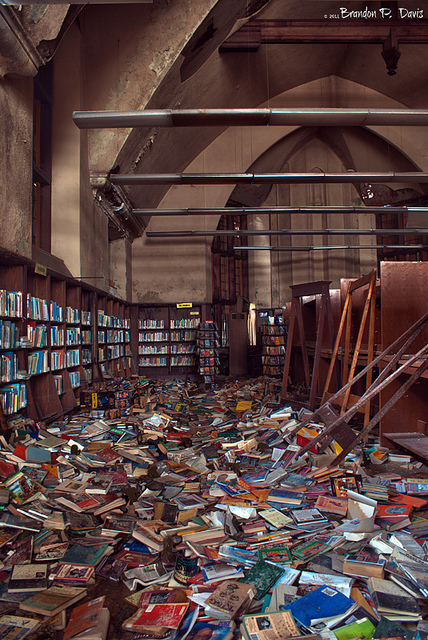
And though I think I’ve reported on this/posted a picture of this before, Flickr has an arresting series of images of archival decay from the abandoned Mark Twain Branch Library in Detroit.

SONY DSC

Continue reading