Labor Day Links

Lois Weiner has a very interesting piece in Jacobin, “This Labor Day, Thank a Teacher,” on how teacher’s unions are revitalizing the labor movement.

The levels of radiation leaking out of Fukushima are considerably higher than was previously reported.

And there may be a bigger surveillance system then PRISM, as reported on in The New York Times by Scott Shane and Colin Moynihan in “Drug Agents Use Vast Phone Trove, Eclipsing the N.S.A.’s.”

Accumulating Ruin and a Pleasant Apocalypse

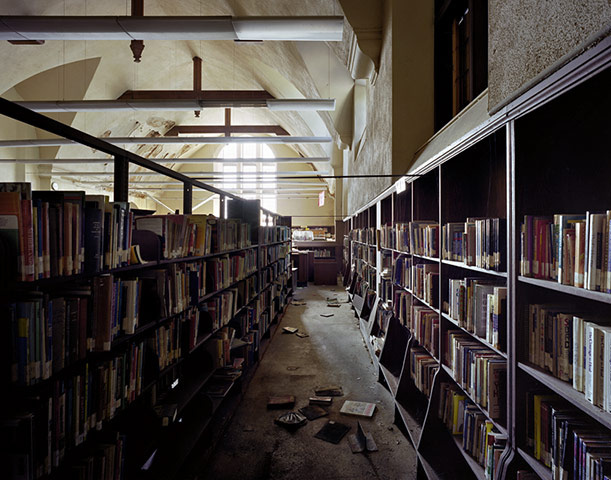
Adam Rothstein has a pretty interesting little essay for The State, titled “The Accumulation of Ruin-Space.” In it he asks,

But the question for these ruin-spaces is, how long will the[y] exist? We seem to have an attraction to ruins—we want them and seek them out, though never with the same functional desire with which we seek out current structures. What will we do in the future as these ruin-spaces pile up, unable to be destroyed because of their enforced temporality as preserved agedness? The earth is becoming a solid mass of scar tissue, as the tracks of human endeavor scour crosshatching into its surface.

Is the earth becoming a hyperarchive of ruins?

And also at The State, Asher Kohn writes about Central Asia as a post-apocalyptic space in “A Pleasant Post-Apocalypse.” He suggests that “[t]he history of Central Asia is in many ways a history of eschatologies; not a graveyard of empires but perhaps a graveyard of belief systems.” While “eschatological” might be a bit extreme to describe the history he traces, nonetheless, his description of the landscape of post-Soviet Russia bears considering:

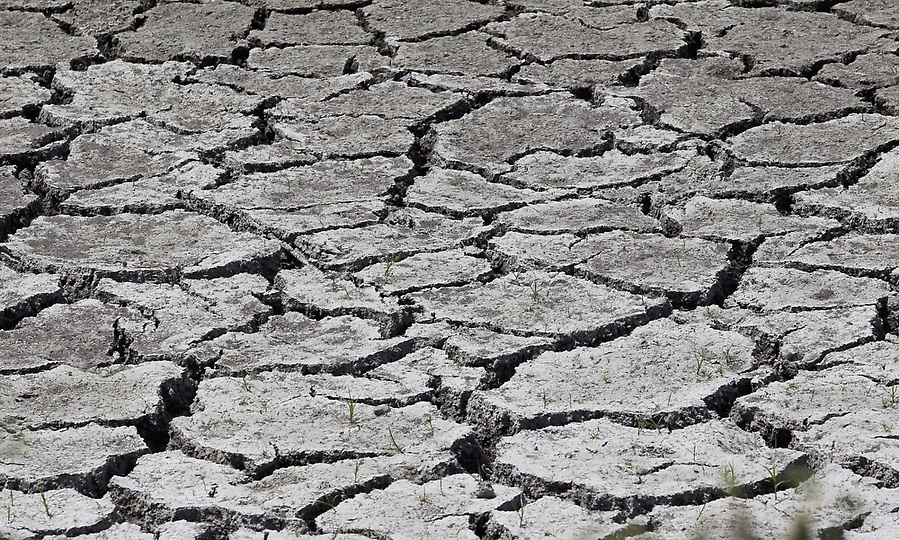
It is truly very difficult to explain how Soviet geoforming was such a disaster. Whole seas were turned into steppe. Whole steppes were turned into blast zones. Whole blast zones were restructured to focus on an alien frontier. There is no real way to overestimate the effect this must have on the people who live in the region. Pastoralism is an artifact, not an economy. Islam was tortured by Soviet hubris. Language changes made it impossible for a grandson to communicate with his grandmother. And the land, the very essence of life itself, the only connection a person might have with the folkways of the parents, grandparents, and ancestors of their society, is turned to factory farms and dust and ash. In the 21st century, Central Asia is a post-apocalyptic world.

The article also has some wonderful pictures.

https://i0.wp.com/www.thestate.ae/wp-content/uploads/2013/04/Picture-39.png

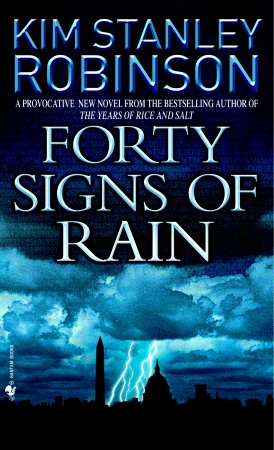
Excerpt: Kim Stanley Robinson and Disaster Projection

From Kim Stanley Robinson’s novel, Forty Signs of Rain (2004), from his Science in the Capital Trilogy:

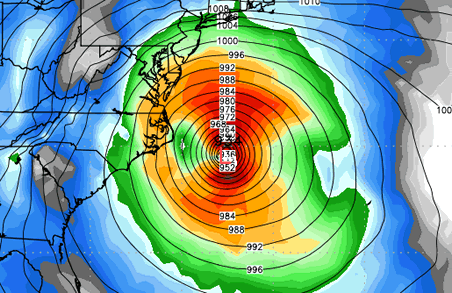
The second day of the storm passed as a kind of suspended moment, everything continuing as it had the day before, everyone in the area living through it, enduring, waiting for conditions to change. The rain was not as torrential, but so much of it had fallen in the previous twenty-four hours that it was still sheeting off the land into the flooded areas and keeping them flooded. The clouds continued to crash together overhead, and the tides were still higher than normal, so that the whole Piedmont region surrounding Chesapeake Bay was inundated. Except for immediate acts of a lifesaving nature, nothing could be done except endure. All transport was drowned. The phones remained down, and power losses left hundreds of thousands without electricity. Escapes from drowning took precedence even over journalism (almost), and even though reporters from all over the world were converging on the capital to report on this most spectacular story–the capital of the hyperpower, drowned and smashed–most of them could only get as close as the edge of the storm, or the flood; inside that it was an ongoing state of emergency, and everyone involved with rescues, relocations, and escapes of various kinds. The National Guard was out, all helicopters were enlisted into the effort; the video and digital imagery generated for the world to see was still incidental to other things; that in itself meant ordinary law had been suspended, and there was pressure to bring things back to all-spectacle all-the-time. Part of the National Guard found itself posted on the roads outside the region, to keep people from flooding the area as the water had. (Kim Stanley Robinson, Forty Signs of Rain [New York: Bantam Books, 2004], 345-6.)

In More Contemporary Nuclear News (and Other Stuff)

Helene Cooper and Mark Landler reported in The New York Times yesterday that, “The United States and Iran have agreed in principle for the first time to one-on-one negotiations over Iran’s nuclear program, according to Obama administration officials, setting the stage for what could be a last-ditch diplomatic effort to avert a military strike on Iran.” Pretty interesting, esp. coming right before the debate, and that “Iranian officials have insisted that the talks wait until after the presidential election [. . .] telling their American counterparts that they want to know with whom they would be negotiating.” Yet another chink of armor for President Obama’s foreign policy CV? A cynical move for tomorrow night’s debate? Very, very interesting.

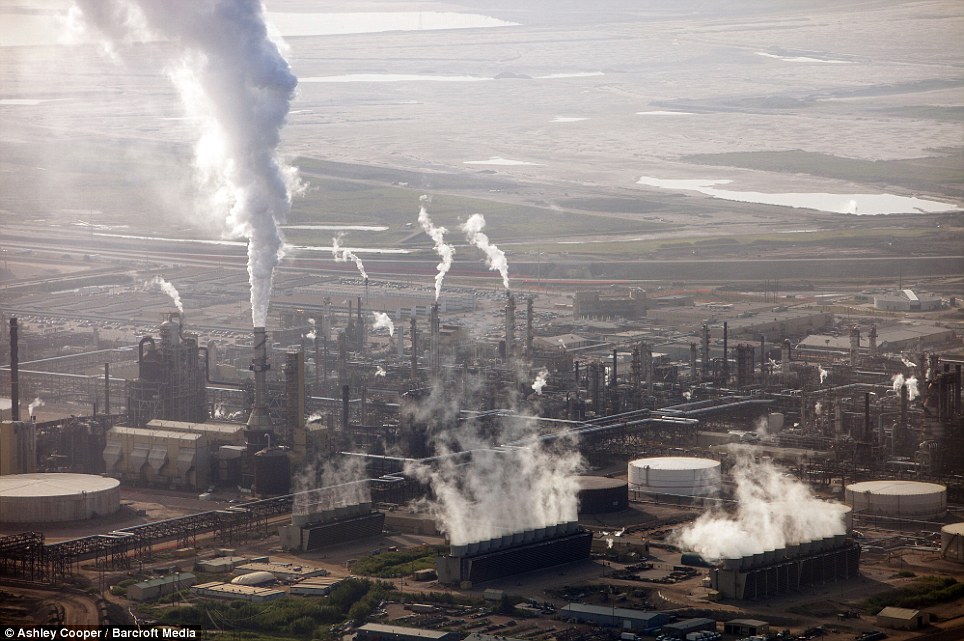
A truly horrifying group of images from the strip mining of Canada’s Tar Sands. A sample:

And a whole class being taught on David Foster Wallace at the John Adams Institute in Amsterdam. (Also, thought I’d relink to this class on DFW taught by Kathleen Fitzpatrick at Pomona College in the Spring of 2009.)