Reading of “Symphony of the Great Transnational”

Last night I was the featured writer at the monthly Writers’ Salon at the Center for the Arts Network of Oneonta in Oneonta, New York. Among other poems, I read “Symphony of the Great Transnational,” a long poem from my first book, The Rocking Chair (Blue Sketch, 2015). Here is a link to the recording; a slightly different version of the poem was originally published in Spork in 2007.

“Reading Now and Again” in CounterText

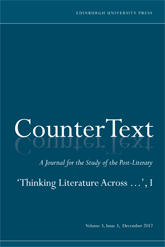
Publication CoverMy essay, “Reading Now and Again: Hyperarchivalism and Democracy in Ranjan Ghosh and J. Hillis Miller’s Thinking Literature across Continents,” has been published in CounterText: A Journal for the Study of the Post-Literary in the the second of two special issues devoted to Ghosh and Miller’s book. The first issue is available here, and the second has an interview with Miller available from behind the paywall. I’ve included an abstract of my essay below, along with a table of contents.

Abstract:  This review essay approaches Ranjan Ghosh and J. Hillis Miller’s Thinking Literature across Continents (Duke UP, 2016) from a set of questions about what it means to read in the age of hyperarchival accumulation. Written against the background of events in the United States and elsewhere during the fall of 2017, the essay tracks and assesses Ghosh and Miller’s differing methods for approaching literary study in the twenty-first century: undiscriminating catholicity and rhetorical reading, respectively. Through emblematic readings of David Foster Wallace’s novel The Pale King (2011), the videogame Katamari Damacy (2004), and Amy Hungerford’s Making Literature Now (2016), this essay argues that Thinking Literature across Continents self-reflexively models and performs the interested, situated reading practices necessary for continuing the never-ending project of encountering, sharing, accounting for, learning from, and contending with others and their divergent readings, practices that, though many may have lost sight of them today, are fundamental to the project of democracy itself.


“Thinking Literature Across . . . II,” special issue, CounterText, table of contents:

Ivan Callus and James Corby, “Editorial.”

J. Hillis Miller, Ivan Callus, and James Corby, “The CounterText Interview: J. Hillis Miller.”

Bradley J. Fest, “Reading Now and Again: Hyperarchivalism and Democracy in Ranjan Ghosh and J. Hillis Miller’s Thinking Literature across Continents.”

Simona Sawhney, “Boatmen, Wastrels, and Demons: Figures of Literature.”

Jakob Lothe, “The Author’s Ethical Responsibility and the Ethics of Reading.”

Jonathan Locke Hart, “Ideas of Poetics and the Close Reading of Poetry.”

Shaobo Xie, “Does Literature Matter Today? Thoughts of the Outside.”

Kirk Kenny and James Corby, “Screens of Fortune: A Photo-Essay.”

Timothy Mathews, “The Many Hands of Thick Time: William Kentridge at the Whitechapel Gallery.”

Reading at the Community Arts Network of Oneonta

I will be a featured writer at the monthly Writer’s Salon held by the Community Arts Network of Oneonta (CANO) on Thursday, May 17, 2018 from 7:30 – 9:00 pm. CANO is in the Wilber Mansion at 11 Ford Ave. in Oneonta, NY. There will be an open mic, followed by a roughly forty-five minute reading of my work and a Q & A.

I will be reading selections from my first two books, The Rocking Chair (Blue Sketch, 2015) and The Shape of Things (Salò, 2017), along with poems from my sequence, 2013-2016: Sonnets, and new poems from an untitled project.

“Too Big to Read: The Megatext in the Twenty-First Century,” Lecture at Hartwick College

As part of Hartwick’s Faculty Lecture Series, I will be giving a talk on May 2, 2018 at 12:20 pm in the Eaton Lounge of Bresee Hall at Hartwick College in Oneonta, New York. The title of my lecture is “Too Big to Read: The Megatext in the Twenty-First Century,” and I will be presenting preliminary chapter from my work in progress of the same name.

In this new project, I am investigating the impact of massive textual accumulation on contemporary literary production and reception. With the increasing space made available by digital technology, texts are being created that are simply gigantic, unthinkably large compared to the previous century’s storage capacities. For instance, conceptual artist Michael Mandiberg recently printed out the entirety of Wikipedia in over seven thousand bound volumes, at some point in the near future Richard Grossman will publish a three-million-page “novel,” Breeze Avenue, and 2016 saw the appearance of No Man’s Sky, a videogame containing eighteen quintillion planets. I argue that with the appearance of such massively unreadable cultural artifacts—texts that are, quite literally, too big to read—the digital age has seen the emergence of a new transmedia form: what I call the megatext. I define megatexts as unreadably large yet concrete aesthetic and rhetorical objects that are produced and conceived as singular works and that depend upon digital technology and collaborative authorship for their production. Using the working paper for Grossman’s forthcoming Breeze Avenue as a case study, this lecture will present a theory of speculative criticism for approaching these massive texts. Drawing upon Timothy Morton’s concept of the hyperobject and suggesting that megatexts have roots in literary postmodernism, this talk will explore some of the ways that megatexts respond to the conditions of the Anthropocene and open up new spaces for imaginative reading, creation, and understanding in contemporaneity.


For a (longer) published version of this lecture, see “Toward a Theory of the Megatext: Speculative Criticism and Richard Grossman’s ‘Breeze Avenue Working Paper,” in Scale in Literature and Culture, ed. Michael Tavel Clarke and David Wittenberg (New York: Palgrave Macmillan, 2017), 253-80.

For other parts of this work in progress, see “The Megatext and Neoliberalism” and “The Time of Megatexts: Dark Accumulation and Mark Z. Danielewski’s The Familiar,” both available on my academia.edu page. I also have a forthcoming short essay discussing this project: “Writing Briefly about Really Big Things,” in Begging the Question: Chauceriana, Book History, and Humanistic Inquiry (Mythodologies II), by Joseph A. Dane (Los Angeles: Marymount Institute Press, forthcoming 2018).

Keyword Seminar on Length at the 2018 Society for Novel Studies Conference

I will be leading a keyword seminar on length at the 2018 Society for Novel Studies Conference, May 31-June 2 at Cornell University. I have included a description of the seminar and the names of the other presenters below. Other keyword seminars can be found here.


Keyword Seminar on Length at 2018 Society for Novel Studies Conference

Bradley J. Fest with Alex Creighton, Alley Edlebi, Andrew FergusonJason Potts, Robert Ryan, and Aaron Vieth

Description

From multi-season serial television, to cinematic universes, to immense videogames, narratives across media appear to have gotten longer in the digital age. Can the same be said of the novel? On the one hand, authors have written lengthy novels throughout the form’s history. On the other, the issue of novelistic length seems newly pressing now that digital technologies have given writers the capacity to author books that are unreadably massive (e.g., Richard Grossman’s forthcoming three-million-page Breeze Avenue or Mark Leach’s seventeen-million-word Marienbad My Love). This seminar invites its participants to take up questions about length with regard to the role and status of the novel historically and at present. How does the history of print narrative influence how we think about novel length in the twenty-first century? Are there upper and lower limits to how long a novel can be (and why would such limits matter)? What is the relationship between the novel and other transmedia meganarratives? What is the legacy of the twentieth century’s “big, ambitious novel”? And, going forward, how do scholars study print and digital texts that are too big to read?

Special Issues of CounterText on Ranjan Ghosh and J. Hillis Miller’s Thinking Literature across Continents

I have written an essay, “Reading Now and Again:  Hyperarchivalism and Democracy in Ranjan Ghosh and J. Hillis Miller’s Thinking Literature across Continents,” which will appear in the spring issue of CounterText: A Journal for the Study of the Post-Literary, the second of two special issues devoted to Thinking Literature across Continents (Duke UP, 2016). I’ll provide more information about this essay at a later date.

In the meantime, the first issue of CounterText addressing Ghosh and Miller‘s book (vol. 3, no. 3) is now available. Additionally, a conversation between Marjorie Perloff, Charles Bernstein, and the two authors opening the special issue is available from behind the journal’s paywall.


“Thinking Literature Across . . .,” special issue, CounterText, table of contents:

Marjorie Perloff, J. Hillis Miller, Charles Bernstein. and Ranjan Ghosh, “The CounterText Conversation: Thinking Literature. . . .”

Maria Margaroni, “Dialogics, Diacritics, Diasporics: Ranjan Ghosh, J. Hillis Miller, and the Becoming-Now of Theory.”

Georges Van Den Abbeele, “Literary Intransigence: Between J. Hillis Miller and Ranjan Ghosh.”

Claire Colebrook, “Crossing Continents.”

Steven Yao, “How Many Ways of Thinking Literature across Continents?”

Pramod K. Nayar, “Literature/Ethics/Reading.”

Susana Onega, “Thinking English Literature and Criticism under the Transmodern Paradigm.”

Lene M. Johannessen, “Poetics of Peril.”

Adrian Grima and Ivan Callus, “Irreverent and Inventive Mamo.”

Juann Mamo, Nanna Venut’s Children in America: Two Chapters from the First English Translation,” trans. Albert Gatt.

Ivan Callus, “Literature, Journalism, and the Countertextual: Daphne Caruana Galizia, 1964–2017.”

Mario Aquilina, review of Essayism and the Return of the Essay, by Brian Dillon.

Review of David Foster Wallace and “The Long Thing”

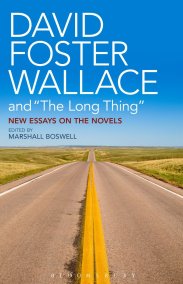
I just found a review by Mathias Nilges, published earlier this year, of David Foster Wallace and “The Long Thing”: New Essays on the Novels (Bloomsbury, 2014), edited by Marshall Boswell. Nilges discusses at some length my contribution to the volume, “‘Then Out of the Rubble’: David Foster Wallace’s Early Fiction.” The review was published in the American Literary History Online Review, series ix, January 2017.

Mark Z. Danielewski on Facebook Live and “The Time of Megatexts”

Note: it appears that Danielewski had to postpone the Facebook Live event due to technical difficulties. I’ll be posting again when it has been rescheduled.

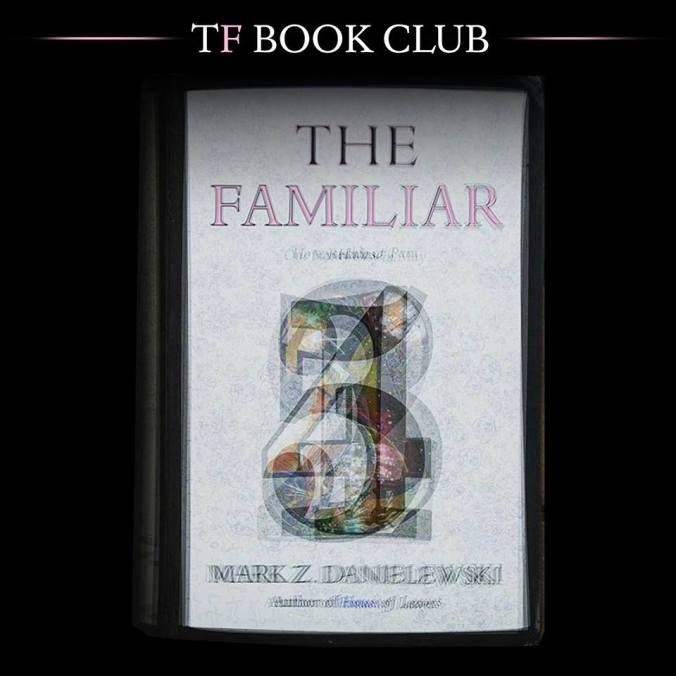
Mark Z. Danielewski will be appearing on Facebook Live to talk with the members of The Familiar (Volume 1-5) Book Club about his remarkable novel, The Familiar (2015-). He has distributed my recent conference paper, “The Time of Megatexts: Dark Accumulation and Mark Z. Danielewski’s The Familiar,” in advance. I invite you to read my essay and join in what should be an interesting conversation.

End of the Semester Links, Fall 2017

It’s been a fun, eventful, interesting, and, of course, busy first semester at Hartwick College. Everything else, however, is quite dark. Some links.

Nuclear and Environmental

US Global Change Research Program, “Climate Science Special Report.”

Tim Collins, “The Chance of ‘Catastrophic’ Climate Change Completely Wiping Out Humanity by 2100 Is Now 1-in-20.”

Damian Carrington, “Warning of ‘Ecological Armageddon’ after Dramatic Plunge in Insect Numbers.”

Ariel Norfman, “Nuclear Apocalypse Now?”

Elizabeth Kolbert, “Going Negative: Can Carbon-Dioxide Removal Save the World?”

Mike Davis, “Nuclear Imperialism and Extended Deterrence.”

Neena Satija,  Kiah Collier, Al Shaw, and Jeff Larson, “Hell or High Water.”

Democracy Now, “As Catastrophic Flooding Hits Houston, Fears Grow of Pollution from Oil Refineries & Superfund Sites.”

Continue reading