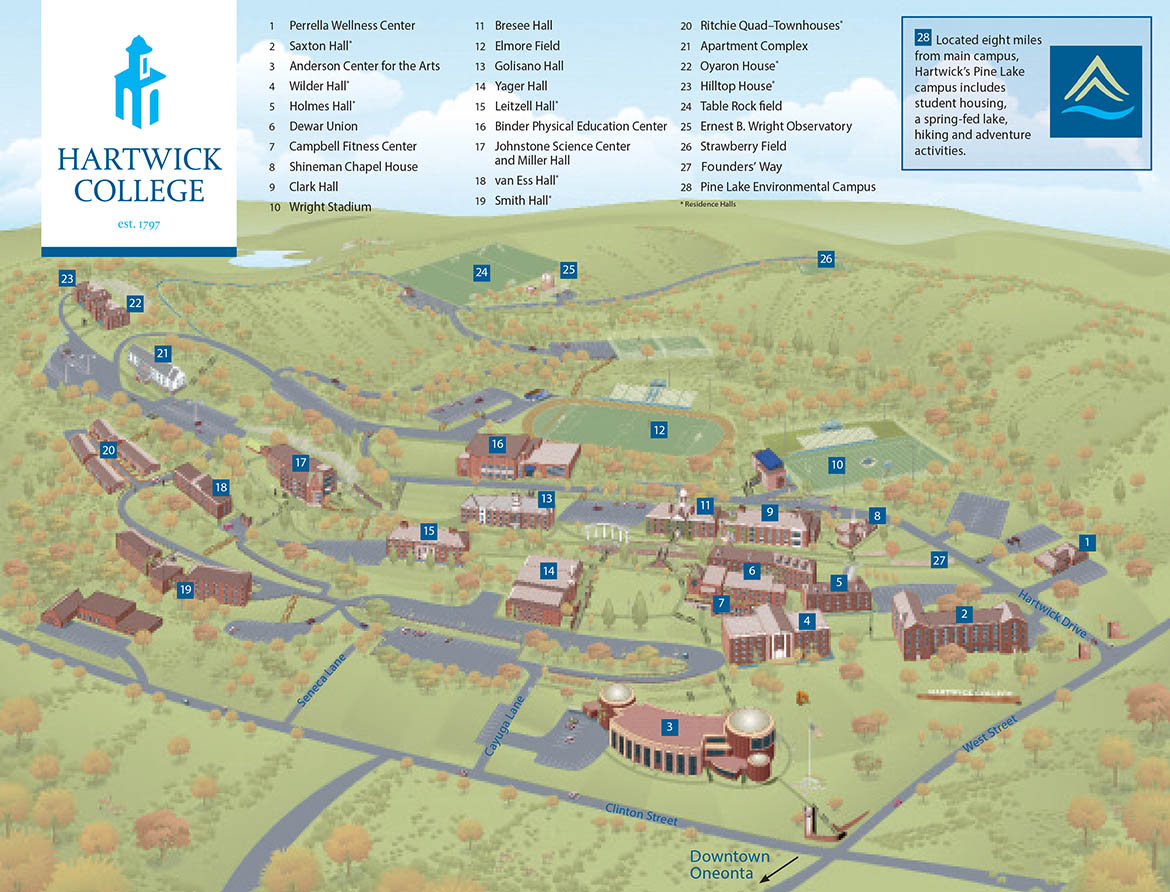
I will be giving a talk, “Teaching Without Computers,” twice over the next month at the State University of New York, Oneonta and at Hartwick College in Oneonta, New York. This talk grows out of my experience eliminating technology from my classroom and moving all writing to in-class assignments during the spring 2026 semester.
In this session, faculty from the humanities and social sciences at SUNY Oneonta and Hartwick College will share approaches to preserving student learning in the age of AI. Strategies include developing in-class assessment practices, updating assignments to include critical AI literacy, creating an analog classroom to better foster discussion and knowledge co-construction, and inviting students to reflect on the nature and purpose of higher education and of writing as a practice. Presenters will share assignments from different disciplinary contexts and facilitate a conversation about recent challenges and successes.
And then I will be delivering a full version of “Teaching Without Computers” for a Teaching Table at Hartwick College on Friday, September 18, 2026. I hope to be publishing a version of this talk around this time as well. (I will update when I know more.)
Most notably, after twenty years of teaching predominantly writing-intensive courses in which I assigned essays, poems, and stories to be composed outside of class, in response to the frustration the sheer amount of student work I have seen generated by artificial intelligence (AI) has caused me and the more general neofeudal edtechification of higher education, I made the decision this spring to make my courses (almost) completely analog in terms of assignments, materials, and expectations. Students write all their papers in class. Students are required to have print books, and I print out all PDFs for them to read and annotate. No one has a smart phone or a laptop anywhere in sight. It’s glorious, old school, amazingly analog. And it is working.[1]
I am calling this teaching without computers, and it has been revolutionary for my pedagogy and peace of mind, revitalizing the classroom as a space of human connection, energy, communication, thinking, and poiesis while also assuaging my own considerable frustrations with and despair about my job over the past few years, a job that at some point seemed destined to be little more than that of plagiarism detective. All my previous engagement with students’ ideas and their attempts to express those ideas were slowly and almost completely strained away over the past three-odd years with nothing left but policing, constantly on the lookout for evidence of now seemingly ubiquitous large-language model (LLM) use infecting and subverting the reading, writing, and thinking of our students, of an entire generation of young people, of, really, everyone, compromising our very humanity with its tepid, dumb slop. Though I am only six weeks into the semester, the transformation teaching without computers has wrought upon my classroom has been remarkable. My students have, to a large degree, embraced my new pedagogy, as I suspect it has given them back something that I perhaps only now realize had been lost in classrooms years before LLMs had emerged. I cannot recommend this (and other) kind(s) of AI-resistant pedagogy enough for other people teaching in the critical humanities. I am a convert. Fully. And I expect that, whatever comes next for me as a teacher, a big part of it will be proselytizing for the new good news: teaching and learning without computers.
For more resources on resisting AI in our teaching, see Anna Kornbluh, Eric Hayot, Krista Muratore, and Gina Stinnett’s Against AI.
[1] That said, there are still some digital elements in my classes. For example, obviously I still require that students play video games in ENGL 352 Critical Game Studies, and I do make available the online version of the Oxford English Dictionary and a thesaurus during in-class writing assignments. Of course, I also happily approve whatever digital accommodations students might need—they just need to ask (and regardless of whether or not they have any documented need for such accommodation).
 The Hyperarchival Parallax