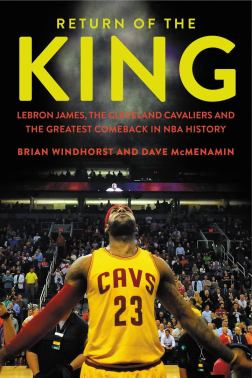
 I made another appearance on The Jabsteps podcast filling in for Salvatore Pane in episode 57:“Jabsteps Book Review with Dr. Brad Fest! Return of the King (LeBron not Tolkien).” Geoff Peck and I talk about the 2017 NBA Finals and review Brian Windhorst and Dave McMenamin’s book, Return of the King: LeBron James, the Cleveland Cavaliers and the Greatest Comeback in NBA History (New York: Grand Central, 2017).
New Position at Hartwick College
 I am delighted to announce that I have accepted the position of Assistant Professor of English at Hartwick College in Oneonta, New York, where I will be teaching creative writing, poetry, and twentieth- and twenty-first-century United States literature and culture. I will be joining Hartwick’s English Department this fall and will be teaching three classes: Introduction to Creative Writing (ENGL 213), Reading Modern Poetry (ENGL 250), and Creative Writing: Poetry (ENGL 312). I am really excited about this new chapter in my life and career. Thanks to all those–too numerous to name–who have supported me along the way; your indefatigable encouragement has meant so much.
Photos of Recent Readings
I’ve given a couple of readings in Pittsburgh of late, and a few people took photographs (thanks Mike and Racheal), so here they are. The first is from my reading at the Bonfire Reading Series on March 4, 2017, where I read some sonnets from my ongoing series; the second two photographs are from last night at the release party for The After Happy Hour Review, no. 7, put on by the Hour After Happy Hour Writing Workshop. To mark the ten year anniversary of my first publication, last night I also read “Symphony of the Great Transnational” (2007), which originally was published in Spork and appears in The Rocking Chair (2015). It’s been a pleasure to get back to reading my poetry in public.
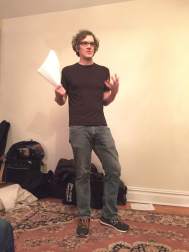
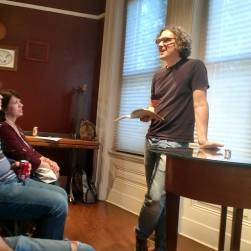
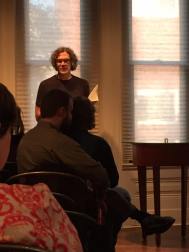
I’ll be giving another reading in Pittsburgh for Hemingway’s Summer Poetry Series on June 13, 2017 at 8:00 pm at Hemingway’s Cafe in Oakland. I’ll be reading from my forthcoming book, The Shape of Things (Salò Press, 2017).
Guest Appearance on The Jabsteps
 I had the great pleasure to be a guest on The Jabsteps, a podcast about the NBA hosted by Geoff Peck and Salvatore Pane. I appear in episode 55, “Zaza Sullies the WCF but Kristaps Saves MSG (and Harden’s Still MIA),” where we talk about a lot of things, including Pane’s new videogame. It also looks like I’ll be filling in on another episode or two in the coming weeks, and expect Peck and I to talk about Brian
 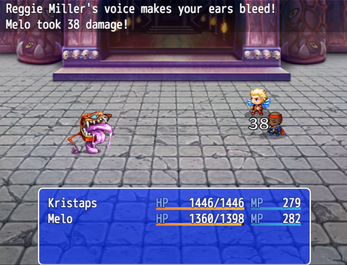 Windhorst and Dave McMenamin’s new book, Return of the King: LeBron James, the Cleveland Cavaliers, and the Greatest Comeback in NBA History (2017), and, of course, the inevitable telos of this NBA season, Cavs v. Warriors III.
End of the Semester Links, Spring 2017
It’s been a long year, long for many reasons, but here’s a backlog of some links. (Some very good news is imminent. . . .)
Nuclear and Environmental
New York Times Editorial Board, “The Finger on the Nuclear Button.”
Rebecca Savranksy, “US May Launch Strike if North Korea Moves to Test Nuclear Weapon.”
Kaveh Waddell, “What Happens if a Nuclear Bomb Goes Off in Manhattan.”
Radiolab, “Nukes.”
Laurel Wamsley, “Digitization Unearths New Data From Cold War-Era Nuclear Test Films.”
Michael Biesecker and John Flesher, “President Trump Institutes Media Blackout at EPA.”
Brian Kahn, “The EPA Has Started to Remove Obama-Era Information.”
Zoë Schlanger, “Hackers Downloaded US Government Climate Data and Stored It on European Servers as Trump Was Being Inaugurated.”
Cass R. Sunstein, “Making Sense of Trump’s Order on Climate Change.”
Laurie Penny, “The Slow Confiscation of Everything.”
“2015.13,” “2015.16,” “2015.25,” and “2015.27” in Grain
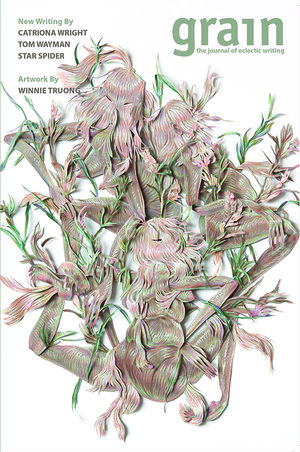
Four more sonnets from my ongoing sequence were just published in vol. 44, no. 3, of Grain: The Journal of Eclectic Writing. The issue is titled “Relativity of Zen,” is edited by Adam Pottle, and can be purchased here.
Upcoming Readings on May 18 and June 13
I will be giving two poetry readings in Pittsburgh over the next couple months.
On May 18, 2017 I will be reading at Piccolo Forno at 7:00 pm to accompany the release of issue 7 of the After Happy Hour Review. Also reading will be Bob Hartley, Daniel Parme, Celine Roberts, and Daniel M. Shapiro.
On June 13, 2017 I will be reading at the Hemingway’s Summer Poetry Series. Also reading will be Nikki Allen, Jennifer Jackson Berry, Jason Irwin, Sharon Fagan McDermott, and Kayla Sargeson.
“Toward a Theory of the Megatext” Forthcoming in Scale in Literature and Culture
“Toward a Theory of the Megatext: Speculative Criticism and Richard Grossman’s ‘Breeze Avenue Working Paper,'” the first essay from a new project on what I have been calling megatexts, will appear in Scale in Literature and Culture, edited by Michael Tavel Clarke and David Wittenberg. The collection of essays will be published by Palgrave Macmillan and will hopefully come out later this year. More information to come.
Reading at The Bonfire Reading Series with Dan Thomas-Glass on March 4, 2017 in Pittsburgh
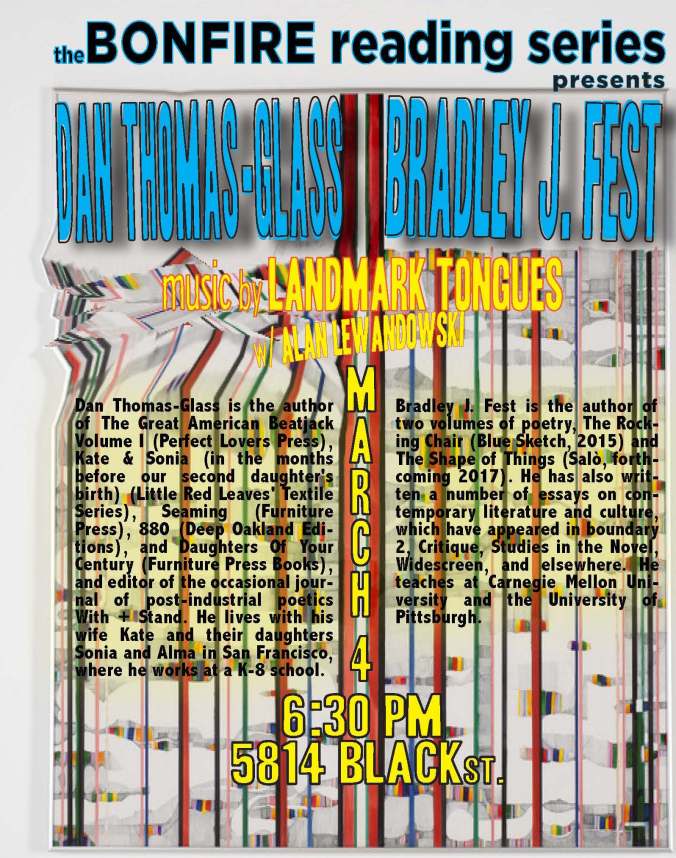 I will be reading at The Bonfire Reading Series with Dan Thomas-Glass on March 4, 2017 in Pittsburgh, PA. For more on the series, check out Guillermo Parra’s article and interview with the Bonfire Collective on The Best American Poetry blog. Landmark Tongues with Alan Lewandowski will also be performing.
The Shape of Things, Forthcoming from Salò Press
I am happy to announce that my second volume of poetry, The Shape of Things, will be published this summer by Salò Press. More details to come.

