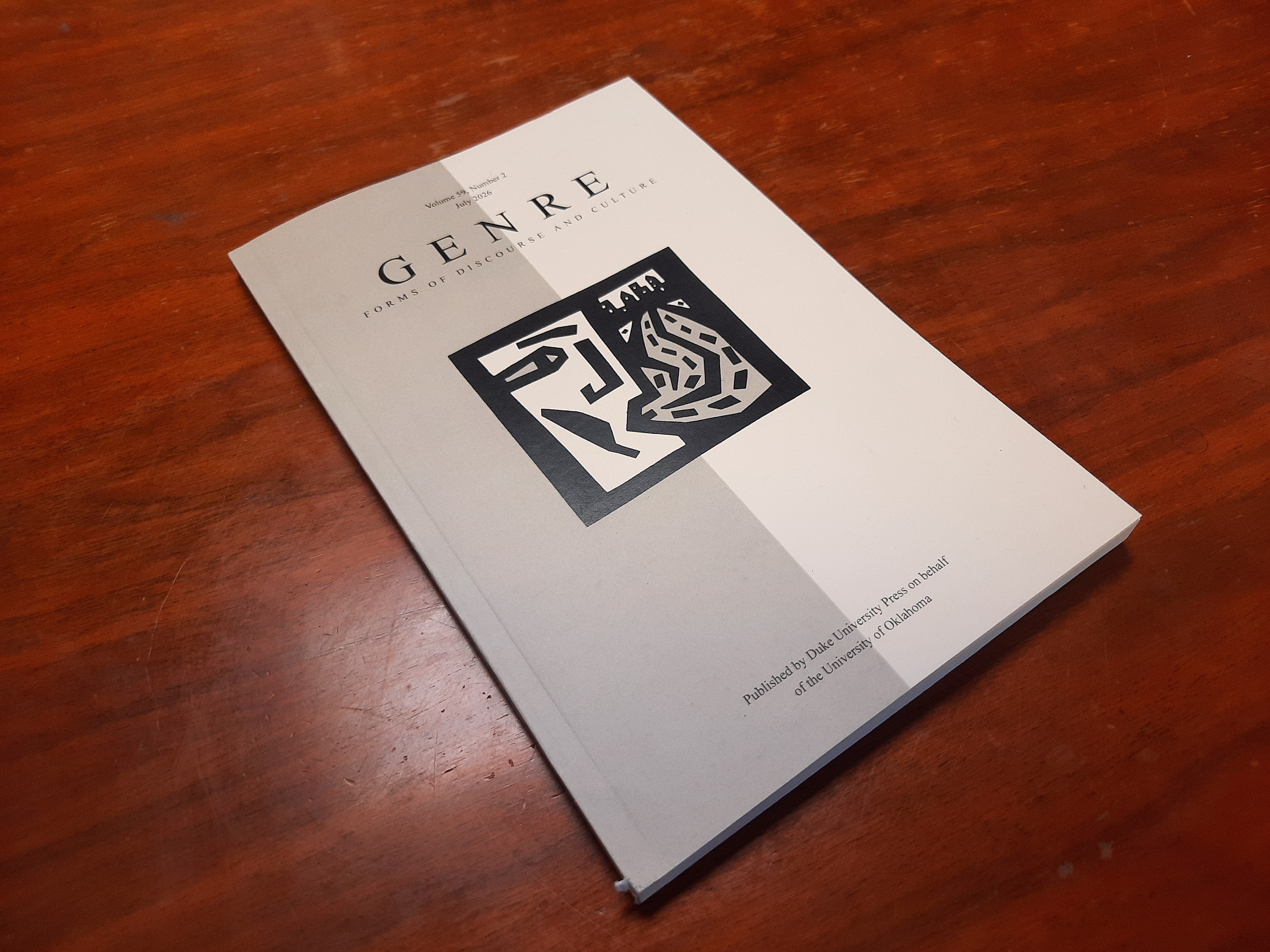
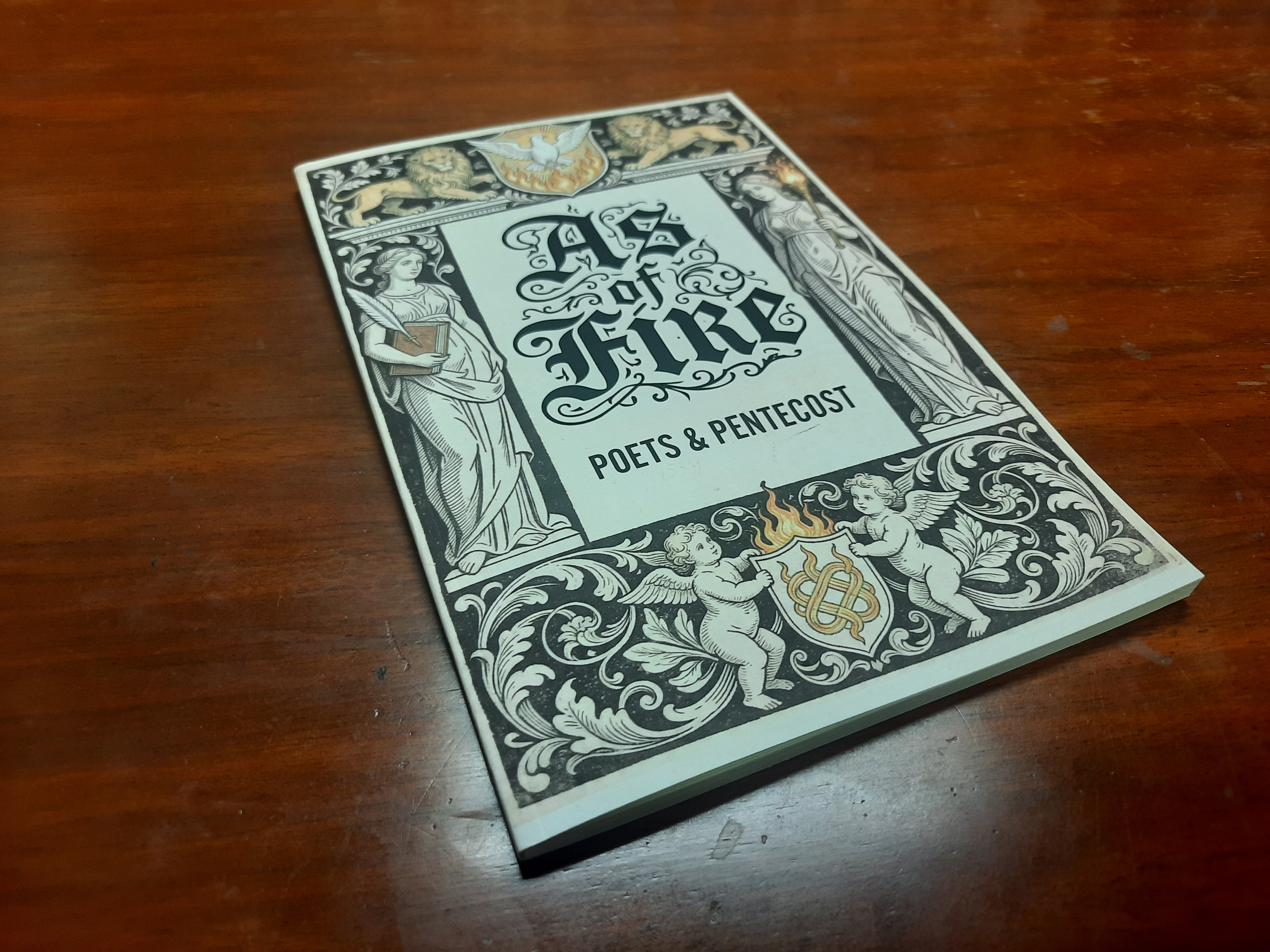
“2025.02,” “2025.04,” “2025.05–06,” “2025.07,” and “2025.11” in Other Rooms Press

And lo, today is one of those great good days in which I have two publications. “2025.02,” “2025.04,” “2025.05–06” (p. 2), “2025.07,” and “2025.11,” some of my most recent sonnets that most directly comment on this moment we find ourselves living through, just came out in Other Rooms Press. Here‘s a page that gathers the poems together (and then right click the images and open them into new tab so you can zoom in) or else click on the individual poem links above.

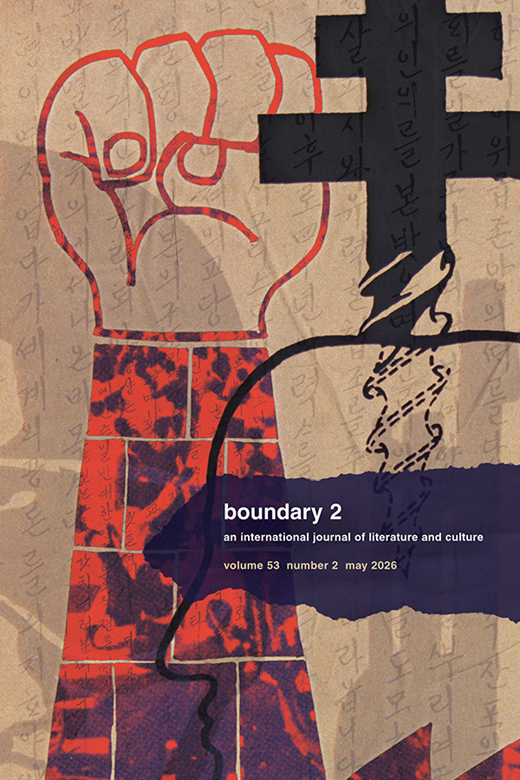
“Art Is for Everybody: An Interview with Anna Kornbluh” in boundary 2

I increasingly think that Anna Kornbluh is one of our most important critics, and so I was overwhelmingly delighted to be able to bring her to Hartwick College to deliver the 2024–25 Babcock Lecture during the 2024 Oneonta Literary Festival. I was also extremely honored that she agreed to sit down with me the next day to discuss her work and career. That interview has now been published as “Art Is for Everybody: An Interview with Anna Kornbluh” in boundary 2 (vol. 53, no. 2; the link to the interivew should work for three months.)


Here’s an abstract of the interview:

This interview with literary critic Anna Kornbluh was conducted on October 18, 2024, in conjunction with her delivery of the 2024–25 Babcock Lecture at Hartwick College. With her most recent book, Immediacy; or, The Style of Too Late Capitalism (2024), Kornbluh has established herself as one of the most insightful and important critics of contemporary culture. In this conversation, she reflects on how she came to literary studies, the strangeness of realism, dialectical reading, and the role of style in literary criticism. Kornbluh also discusses political formalism and the value of institutions, the term neoliberalism, social media, the relationship between organizing and literary study, recent projects on climate counteraesthetics and middlebrow aesthetics, and the political realities of late 2024.

In further interview news, I have conducted and am currently transcribing and editing an interview with Paul A. Bové.

And for previous interviews: “An Interview with Jonathan Arac,” “Grateful and Generous Reading: An Interview with Robert T. Tally Jr.,” “Something Worth Leaving in Shards: An Interview with Rachel Blau DuPlessis,” and “Isn’t It a Beautiful Day? An Interview with J. Hillis Miller.”

“Grateful and Generous Reading: An Interview with Robert T. Tally Jr.” in boundary 2


I am really happy that my interview with Robert T. Tally Jr.—the first of two interviews I conducted in conjunction with The Babcock Lecture at Hartwick College, which I organized as Cora A. Babcock Chair in English from 2022–25—is now out in print. “Grateful and Generous Reading: An Interview with Robert T. Tally Jr.,” has just been published in the November 2025 issue of boundary 2 (vol. 52, no. 4).

It was a busy weekend—in the course of only a few days, Tally flew to Oneonta from Texas, delivered a lecture, sat down for an interview, and then moderated the final Zoom panel celebrating Fredric Jameson’s ninetieth birthday from my home office (all while he was in the middle of editing Verso’s “Jameson at 90” [2025] blog series)—and so I am deeply thankful to Tally for taking the time to come to Hartwick and chat.

Here’s an abstract of the interview:

This interview with literary critic Robert T. Tally Jr. was conducted on April 26, 2024, in conjunction with his delivery of the 2023–24 Babcock Lecture at Hartwick College. Tally is one of the premier critics presently working in the field of spatial literary studies and has published over a dozen books and over one hundred articles and book chapters on US and world literature, critical theory, and the history of criticism. Reflecting broadly on the trajectory of his career, Tally discusses the gratitude that has accompanied his scholarly writing, his interests in spatial literary studies, his relationship with the teaching and work of Jonathan Arac, Paul A. Bové, and Fredric Jameson, and the role of theory at the present time.

The second interview conducted in conjunction with the 2025 Babcock Lecture, my interview with Anna Kornbluh, will appear in the May 2026 issue of boundary 2.

And for previous interviews: “An Interview with Jonathan Arac,” “Something Worth Leaving in Shards: An Interview with Rachel Blau DuPlessis,” and “Isn’t It a Beautiful Day? An Interview with J. Hillis Miller.”

“Postrock” in Always Crashing

I am beyond delighted to announce that my long poem, “Postrock,” which I composed between June 2021 and July 2022 and which was supported by the Cora A. Babcock Chair in English and a number of Faculty Research Grants, has (finally!) been published in Always Crashing. This is probably the piece of writing that I am the most proud of among everything I have ever published, and so I am just utterly thrilled to be able to bring it into the world. I am forever indebted to James Tadd Adcox and the other editors of Always Crashing for their ongoing support of my work.

“Postrock” is the concluding and last unpublished poem from an unpublished manuscript (also titled Postrock and seeking a publisher!) in which I endeavor to perform what I’m calling a weird phenomenology: seeing everyday objects anew by mediating their perception through lenses of poetic, environmental, and cultural influence. In particular, “Postrock” draws explicit inspiration from John Ashbery’s Three Poems (1972), is a sustained meditation on space, and, like all the poems from the manuscript, was composed while listening to postrock music. The poem is also in conversation with a large number of other texts, including books about space by Gaston Bachelard, Maurice Blanchot, Henri Lefebvre, and others, and it was composed using a variety of formal constraints, including being composed as an unbroken, nearly twenty-thousand-word paragraph.

Reading at CANO’s Writers Salon

I recently published a book, 2013–2017: Sonnets (LJMcD Communications, 2024), the first in an ongoing sonnet sequence. I have written the next book in the sequence, 2018–2024: Sonnets, and I’ve started the third, 2024–20XX: Sonnets, and I will be reading poems from these two most recent projects at 7:30 p.m. on Thursday, November 21, 2024 at the Community Arts Network of Oneonta (CANO)’s Writers Salon at the Wilber Mansion on 11 Ford Ave. I promise a poem about the election (writing it right now).