My good friend and writer of some repute, David James Keaton, just started a new blog. Check it out here.
My good friend and writer of some repute, David James Keaton, just started a new blog. Check it out here.
So I just got back from an excellent meeting of the Society for Literature Science and the Arts (SLSA), in Kitchener, Ontario (a surprisingly good city for a conference), and though I’m vibrating about a host of things, feel completely intellectually and academically reinvigorated, and had a great time w/ my colleagues and c0-panelists Robin Clarke and Sten Carlson, perhaps the thing I most took away from the conference (in terms of this blog) were Patrick Jagoda and N. Katherine Hayles discussing the indie-game, Braid (Jonathan Blow, 2009)–a game I kinda can’t believe I didn’t know about (oops). Sadly, I feel I cannot really spoil why it belongs on this here blog (but maybe I will after I finish playing it), but suffice it to say, it very much deserves some hyperarchivally parallactic attention. Also, it’s available on X-Box Live and is downloadable for like 10 bucks online. It’s totally worth it. So, until I finish playing it and feel like spoiling the ending, here’s a trailer.
Thanks again to Dave Keaton for telling me about this awesome Decemberists, Infinite-Jest-inspired-video for “Calamity Song.” Escaton is alive and kicking. There’s also a NY Times article on it here. Watch it.
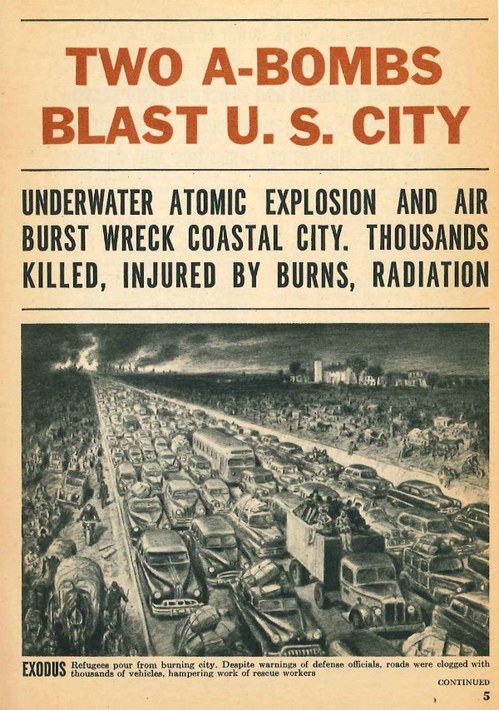
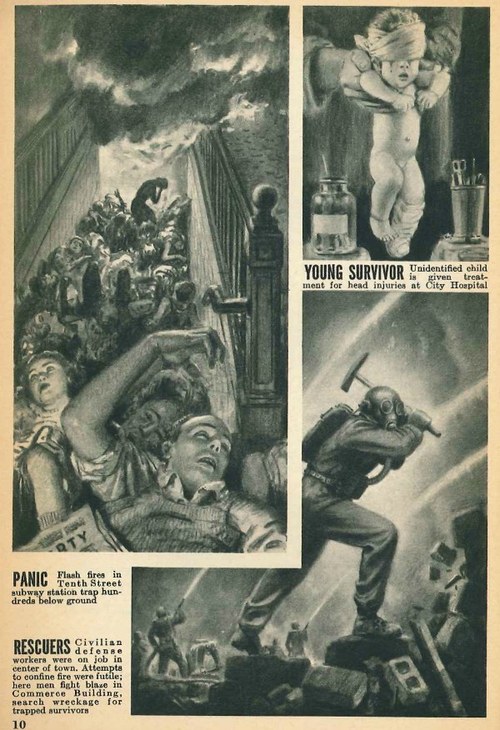
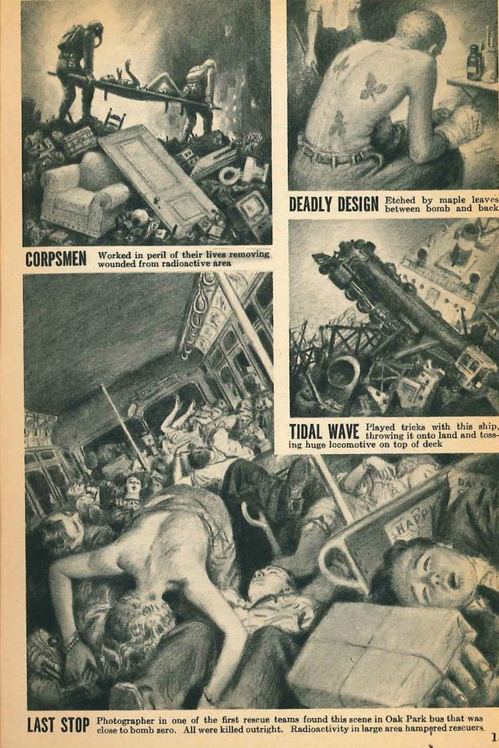
2 interesting links: The first is a look at Pageant magazine, an old rag that seemed obsessed w/ two things, disaster and misogyny (cover text like: “American women are lousy wives). The second is Slavoj Žižek’s take on the recent riots in the UK.

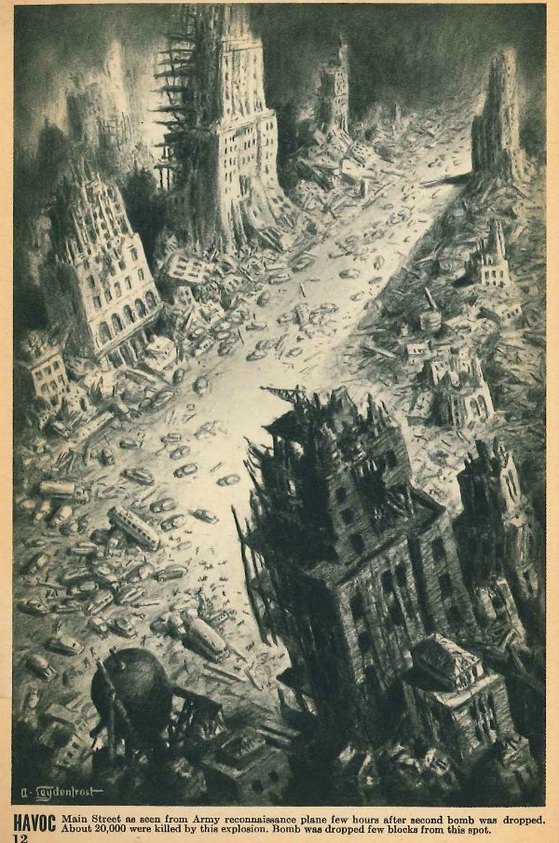
A nice little article on the Smithsonian’s Andrew Robison, and his 30 year project to protect art after a catastrophe. The fact that the boxes are all labeled WW3, and that the project not only assumes some sort of disaster, but that all the works included are, in some way, already post-apocalyptic, probably deserves some commentary.
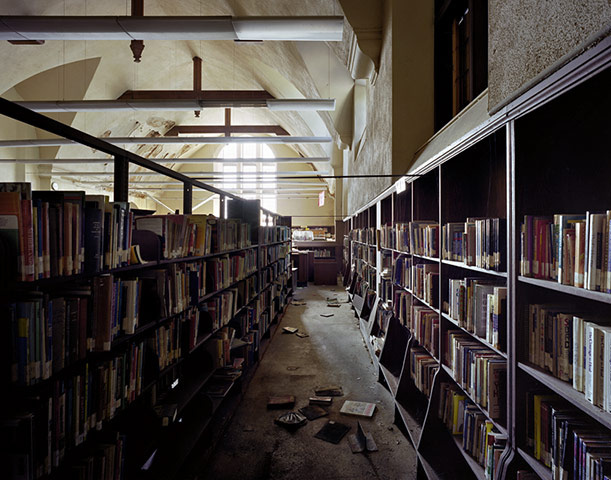
My good friends Sten and Emily Carlson are featured in this article from the Pittsburgh Post-Gazette on one of the urban renewal/co-housing projects going on in the ‘burgh right now. Now, if I can only get off my lazy (but productively writing) butt and go help them tear walls down and such. . . .

So, I’ve been moving for a week and haven’t really had a chance to post much here (nor do anything else), but my new library in my new residence is fully assembled. I finally have a proper office. I’ve been dreaming about this since I was a little boy. (The best part, I finally have all my shelves in one place, and b/c of that, I can’t even fit all my books in the shot.)
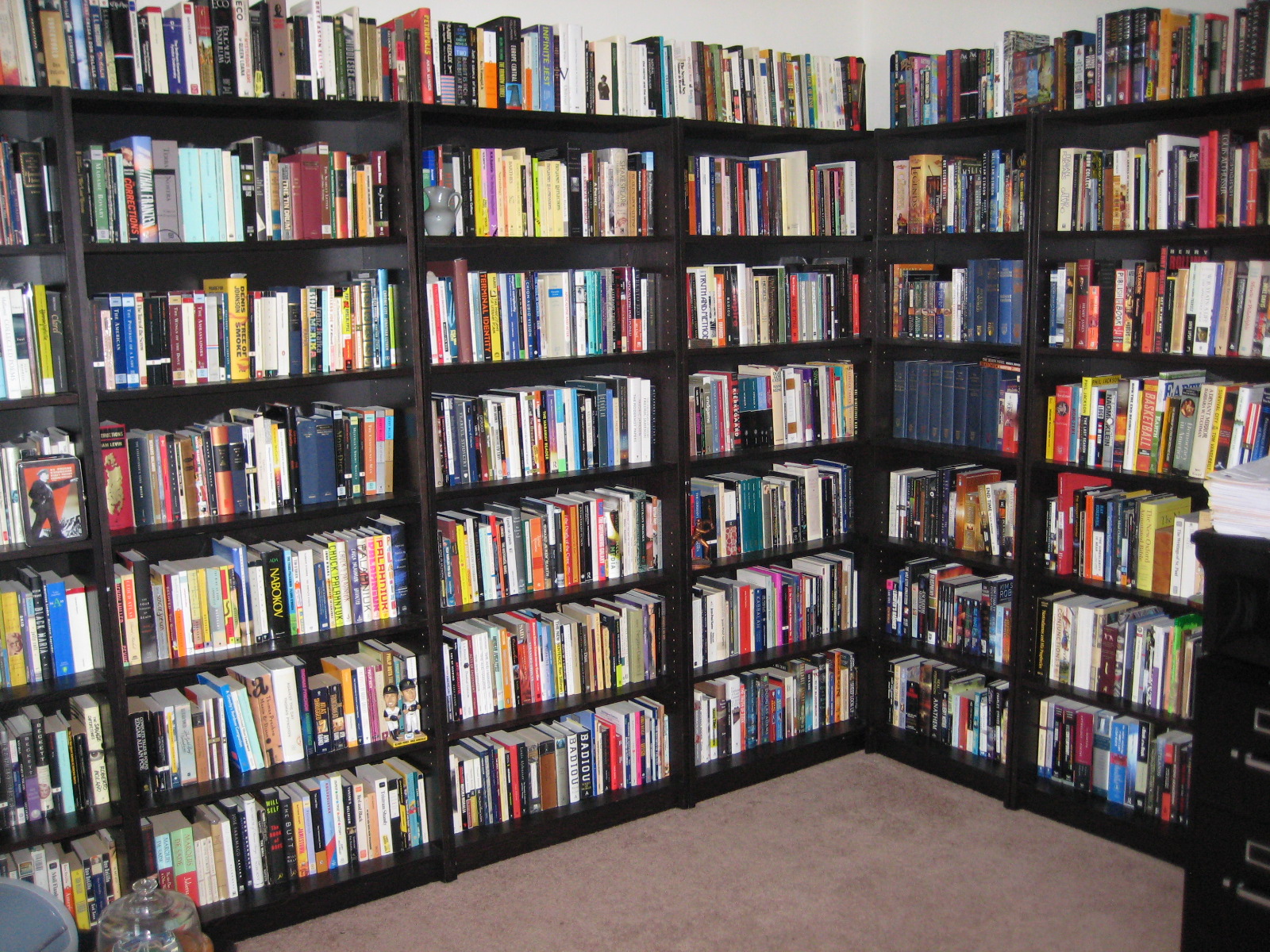
Hyperarchive August 2011
So, in commemoration of today’s 100th post on this blog (i.e. the last post), I’d like to provide a LINK to my name now officially being on Wikipedia. This is for an award I received in Poland this last weekend at the 2011 SFRA Conference that I sadly could not attend. It was a Student Paper Award given for my paper, “Tales of Archival Crisis: Stephenson’s Reimagining of the Post-Apocalyptic Frontier,” which I delivered at the 2010 SFRA Conference.
Here is an abstract for a paper I will be delivering at the 2011 Society for Utopian Studies Conference, “Archiving Utopia–Utopia as Archive,” in State College, Pennsylvania. The conference goes from October 20-23.
The Apocalypse Archive: Reconsidering Nuclear Criticism
There has been a curious trend toward a reconsideration of the apocalyptic as a valid category for utopian possibility in some recent Marxist thought, perhaps best exemplified in the recent work of Slavoj Žižek. Responding to the economic crisis in First as Tragedy, Then as Farce,Žižek tells us that, “paradoxically, the only way to prevent the disaster is to accept it as inevitable.” It is precisely against such retrograde apocalypticism that this paper would like to propose the necessity for reconsidering nuclear criticism. Quite provocatively, in the founding document of this critical practice, Jacques Derrida informs us that nuclear war—and consequently any contemporary apocalyptic formulation—“is fabulously textual.” What this claim allows Derrida to explore is the literary archive’s relationship to disaster, that the archive is simultaneously the object of destruction as well as its agent. Though with the end of the Cold War nuclear criticism all but disappeared after 1993, I claim that, to think through the utopian possibilities contained within and around the archive, especially in light of the burgeoning new technologies of archivization attending the information age, we must take very seriously a return to a critical practice capable of not only watching over the archive of disaster—whether in terms of destruction or accumulation—but imagining the archive of possibility. It is precisely through a reconsideration of nuclear criticism as anti-eschatological, as against apocalypse in all its forms, rhetorical, messianic, or otherwise, that a path through and toward the utopian archive may be found.
It makes total sense that some of the work being done in AI right now is in the realm of video games–i.e. a computer teaching itself English to win at Civilization.
One of my favorite posthuman-SF writers, Charles Stross, on why the singularity won’t happen.
On how X-Men: First Class misreads the historical archive.
How China is making prisoners do what millions of other people do voluntarily: play World of Warcraft.
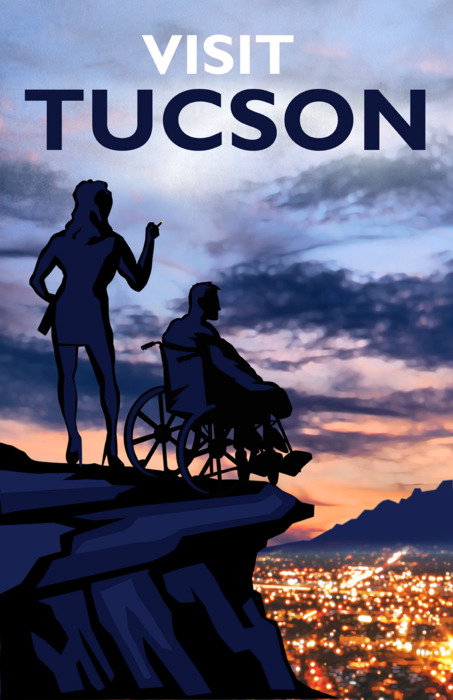
And from Poor Yorick Entertainment, a front page for Infinite Jest and a great tourism poster for my good ole hometown, Tucson:
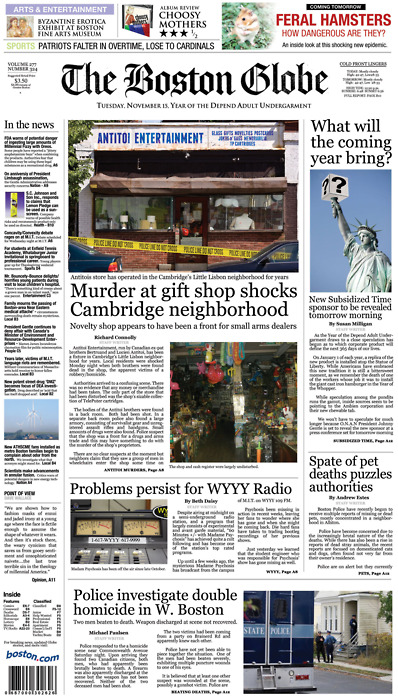
 The Hyperarchival Parallax