Science Fiction, Science Fact, and Other Links

Science Fiction, Science Fact

Claire Cain Miller and Chi Birmingham, “A Vision of the Future From Those Likely to Invent It” and Risa Marisa, “All the Time Science Fiction Became Science Fact in One Chart.”

Deobrah K. Fitzgerald, “At MIT, the Humanities Are Just as Important as STEM.”

Early Octavia Butler stories coming out soon.

Samuel R. Delany reviews Star Wars (1977).

Continue reading

May Links

Digital Culture

Conor Friedersdorf, “The Strangest Interview Yet With the Outgoing Head of the NSA.”

And here’s John Oliver’s interview with General Keith Alexander, outgoing head of the NSA.

Adam Kirsch, “Technology is Taking Over English Departments: The False Promise of the Digital Humanities.”

Nilay Patel, “The Internet is Fucked.”

Mark Sample on torture in videogames, “Sites of Pain and Telling.”

An interview with Brian Tomasik, who thinks killing videogame characters is immoral.

On work in videogames: Steven Poole, “Working for the Man.”

Rey Junco, “Beyond ‘Screen Time’: What Minecraft Teaches Kids.”

Continue reading

More End of Spring Semester 2014 Links

So because the semester is still winding down and I’m finding new oodles of time to post stuff, here’s some more links for the end of the semester.

Gabriel García Márquez

Since I posted last the world has seen the loss of one of its greatest writers, Gabriel García Márquez. In memoriam, some links.

Obituary at The New York Times. At The Huffington Post. A 1999 piece from The New Yorker. The New York Review of Books reviews One Hundred Years of Solitude in 1970.


National Security State

Vivian Salama, “Death From Above: How American Drone Strikes are Devastating Yemen.”

Edward Snowden discusses his conversation with Vladimir Putin.


Science

Earth twin found. And here.

Climate change is not natural.

A space elevator? . . . almost.

Continue reading

End of the Semester Links Spring 2014

It’s been a busy end of the semester and I haven’t been able to post anything for a bit. So, now that I have a bit of time before the semester wraps up, here’s a bunch of stuff that has been happening the last few weeks. My apologies if I’m a bit late on some of these things.

Nuclear and Disaster

Laura Miller reviews Craig Nelson’s The Age of Radiance: The Epic Rise and the Dramatic Fall of the Atomic Age.

John Metcalfe, “What Famous Old Paintings Can Tell Us About Climate Change.”

Only .02% of published research rejects global warming.

Adam Weinstein, “Arrest Climate Change Deniers.”

Continue reading

Big News in Science and Other Links

Science

The first evidence for cosmic inflation–i.e., the Big Bang–was discovered this week.

Megan Garber at The Atlantic, “What It’s Like to be Right About the Big Bang?”

The search for Flight MH370 is revealing one thing: the ocean is filled with garbage.

Kim Stanley Robinson alert: Paul Rosenfeld, “Would You Take a One-Way Ticket to Mars?”

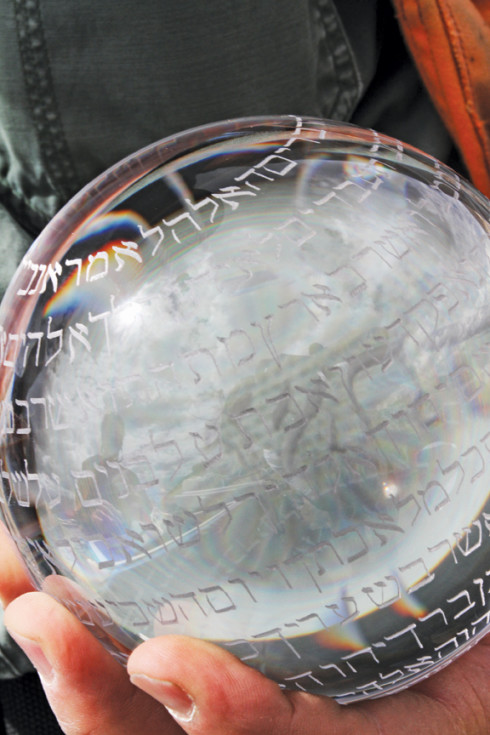
And as part of his forthcoming 3 million page novel, Breeze Avenue (2015), Richard Grossman has buried a crystal ball deep inside of Princeton Mountain in Colorado. The ball, “made of synthetic sapphire, which is almost as indestructible as diamond,” has the Ten Commandments inscribed on it in Hebrew, and in “20 million years, as a result of natural forces carefully calculated by the geologists, the Torah Ball will emerge from its eroded resting place and bear the Ten Commandments down the mountain.” Hyperarchivalists of the deep future rejoice!

Richard Grossman, The Torah Ball (Synthetic Sapphire, Princeton Mountain, 20 Million Years of Erosion, 2011).

Richard Grossman, The Torah Ball (Synthetic Sapphire, Princeton Mountain, 20 Million Years of Erosion, 2011).

Continue reading

A Miscellaneous Group of Not Very Doomy Links

Surveillance, consent, networks, numbers, the hyperarchival condition of the contemporary: Natasha Lennard writes “Of Being Numerous” for The New Inquiry.

This doesn’t seem like reading at all: the new “speed reading app.”

Rebecca Stoner in The Daily Sophist: “What’s Love Got to Do with Anything? DFW Biographer D.T. Max Speaks on Campus.”

“A Game is Being Beaten” by Leigh Alexander at The New Inquiry: “The trend in video game design is to comment on violence by asking players to perform violence. But could there be pleasure in performing consent?”

“How Benjamin Kunkel Went from Novelist to Marxist Public Intellectual” by David Wallace-Wells at Vulture.

Between Two Ferns: The Selling of the President, 2014.”

A very interesting forthcoming issue of Critical Inquiry.

A(nother) soundtrack for the apocalypse. Track 1 seems especially doomy. (Thanks Michael.)

My good friend Ryan Pierson on The Lego Movie: “On the Nonessential Beauty of Legos.”

And because I saw it yesterday and enjoyed it (though I am a bit confounded by this fact), another: Andrew O’hehir for Salon: The Lego Movie: Plastic Blocks Fight for Freedom!”

German philosophers play Monopoly. (I wonder what would happen if they got a game of Risk [The Game of Ruining Friendships] going.)

And sad news in hyperarchival realism. Google is redoing its Street View for many places in Pittsburgh, and thus Ben Kinsley and Robin Hewlett’s wonderful Street With a View is going away. (Right now it goes from a marching band in the rain to a deserted, sunny street. Uncanny.) Ah, the transitory internet–perhaps it isn’t an archive at all, for really, how do we archive the present in the present. . . .

A short film on Street With a View:

Ukraine, US Nuclear Policy, Etc.

With the incursion of Russia into the Ukraine, a lot of stuff is going on.

Peter Baker in The New York Times, “Pressure Rising as Obama Works to Rein in Russia.”

“Ukraine, Putin, and the West” at n+1.

Peter Beinart for The Atlantic: “The Ukraine: Is This How the War on Terror Ends?”

Dominic Tierney for The Atlantic: “Putin’s Improv Act.”

David Rhode for The Atlantic: “Crimea: The Greatest Challenge to Geopolitics Since the Cold War.”

“Kerry Condemns Russia’s ‘Incredible Act of Aggression’ in the Ukraine.”

And a critique of The New York Times‘ coverage of Kerry.


Nuclear

“Aim Points in the US Nuclear Arsenal.”

Hans M. Kristensen, Director of the Nuclear Information Project, has authored an article for the Federation of American Scientists, “Obama and the Nuclear War Plan.”


Other

Noam Chomsky, “America’s Apocalyptic Imperial Strategy.”

Noam Chomsky, “The Death of American Universities.”

On Fredric Jameson.

boundary 2‘s latest entry into its Great American Author Series, “A Political Companion to Walt Whitman” by Kerry Larson.

Ezra Klein, “The Real Reason Nobody Reads Academics.”

And Ian Bogost on Flappy Bird.

Russia Sends Troops into the Ukraine and Other Links

Things are happening very quickly in the Ukraine. David Remnick reports on the most recent events for The New Yorker in “Putin Goes to War.” He writes:

Vladimir Putin, the Russian President and autocrat, had a plan for the winter of 2014: to reassert his country’s power a generation after the collapse of the Soviet Union. He thought that he would achieve this by building an Olympic wonderland on the Black Sea for fifty-one billion dollars and putting on a dazzling television show. It turns out that he will finish the season in a more ruthless fashion, by invading a peninsula on the Black Sea and putting on quite a different show—a demonstration war that could splinter a sovereign country and turn very bloody, very quickly.

In other news, Luke O’Neil has a piece in Esquire: “The Year We Broke the Internet: An Explanation, an Apology, a Plea.”

From my old neck of the woods, “Say Goodbye to Phoenix–And the American West.”

And a blast from the past. A video for The Faint‘s new single, “Help in the Head,” from their forthcoming album Doom Abuse. I cannot help but see this video as a paranoid reflection on the total surveillance of contemporaneity.

More Doomy Doom and Less Doomy Doom

More Doomy

Brad Plummer has an interview with author of The Sixth Extinction Event, Elizabeth Kolbert (who was also on The Daily Show the  other night) at The Washington Post.

“The NSA and Climate Change: What We Know So Far,” by Joshua Eaton.

“How Iowa Flattened Literature,” or rather, the CIA and the Writer’s Workshop.

NASA is going to turn the moon into computronium, ur, I mean give licenses to mine it.

Less Doomy

David Foster Wallace’s letter to his editor.

Dragonlance should be the next fantasy movie franchise. I agree, esp. if it means they make the Legends series into films.

A new anthology of post-apocalyptic fiction, Wastelands 2, edited by John Joseph Adams.

A pretty scathing review of Matthew Barney’s River of Fundament (2014) that actually makes me want to see it more.

And a book I had an essay appear in last year, The Silence of Fallout: Nuclear Criticism in a Post-Cold War World, was just selected as one of Zer0 Books‘ best books of 2013.

Power, Privacy, and the Internet

The New York Review of Books just put up the audio for a conference it held on “Power, Privacy, and the Internet.” The conference was held 30-31 October 2013 in New York City, and there are some significant people that took part. (I also note that the image they used for the page is the same as the cover of Thomas Pynchon’s Bleeding Edge [2013].) Here is Simon Head addressing the themes of the conference:

The Internet is a transformative technology of our times and it is changing our lives as perhaps nothing else has done since the coming of the telephone, the telegraph, and the mass production automobile a century and more ago. Where the Internet surpasses these earlier technologies is in the speed with which its reach is expanding—in our contacts with one another through Twitter and Facebook, in what we read, hear, and buy; in our dealings with business, government, colleges and schools, and they in their dealings with us. Whether we like it or not we are caught up in these flows of technology and as we are carried along by the flows, some barely visible to us, it becomes increasingly difficult to stand back and distinguish between what is good about these innovations and what is not.

I am especially interested in listening to the panel on “The Internet, the Book, and the University Library,” with Robert Darnton and Anthony Grafton. (Among Grafton’s many other accomplishments, he is also the author of The Footnote: A Curious History [Cambridge, MA: Harvard University Press, 1997], a surprisingly fascinating history of the footnote that I read a few years ago to help me think about David Foster Wallace’s use of footnotes, something I never really ended up working on. . . .)