Robert T. Tally Jr. to Deliver the 2023–24 Babcock Lecture at Hartwick College: “Mapping and Monsters: Critical Theory in the Teratocene”

Robert T. Tally Jr. will deliver the 2023–24 Babcock Lecture at 7:00 p.m. on Thursday, April 25, 2024 in the Eaton Lounge of Bresee Hall at Hartwick College.


“Mapping and Monsters: Critical Theory in the Teratocene” Dystopian visions in our time are complemented by, and subsumed within, a broader sense of the monstrous world system, which increasingly seems to involve the presence of actual monsters. Indeed, ours is a veritable teratocene or “age of monsters.” As the processes of globalization become more starkly experienced, monsters are increasingly rendered invisible or unknowable, as we find ourselves subject to an immense array of forces beyond our control. In the 2023–24 Babcock Lecture, starting with an oft-quoted, if misquoted, observation by Antonio Gramsci—i.e., “[t]he old world is dying, and the new world struggles to be born: now is the time of monsters,” which has circulated in recent years as almost a truism regarding our own historical moment—Robert Tally will discuss the ways in which this misquote (e.g., the more literal translation: “in this interregnum a great variety of morbid symptoms appear”) stands as a motto for our era nonetheless. Monsters and monstrosity have developed into critical embodiments of unnamed terrors in postmodernity, symbolizing aspects of globalization, thus making them exemplary figures of late capitalist dread. Drawing upon recent critical theory, Tally examines the “dialectic of fear” in connection with ideologies of the undead, among other monstrosities of our time.


tally-robert-t-jr-author-photoRobert T. Tally Jr. is professor of English at Texas State University. He is the author of a dozen books, including The Fiction of Dread: Dystopia, Monstrosity, and Apocalypse (Bloomsbury, 2024), Representing Middle-earth: Tolkien, Form, and Ideology (McFarland, 2024), The Critical Situation: Vexed Perspectives in Postmodern Literary Studies (Anthem, 2023), For a Ruthless Critique of All That Exists: Literature in an Age of Capitalist Realism (Zer0, 2022), and Topophrenia: Place, Narrative, and the Spatial Imagination (Indiana University Press, 2019). He has also edited more than a dozen books and special issues, including Spatial Literary Studies (Routledge, 2020), Teaching Space, Place, and Literature (Routledge, 2018), and The Routledge Handbook of Literature and Space (Routledge, 2017).

Summer and Fall 2023 Links

The links have really gotten away from me. This summer, I was prioritizing finishing up a chapter for Too Big to Read, and this fall the semester just hammered me; I basically haven’t had a single free moment. So, better late than never, huh? Over six months of links. Enjoy.


Nuclear and Environmental

Apocalyptica, a new journal.

Jeff VanderMeer, “Florida’s Environmental Failures Are a Warning for the Rest of the US.”

Lydia Millet, “Biden’s Green Energy Money Is Sugar on a Poison Pill.”

Tina Cordova, “What Oppenheimer Doesn’t Tell You about the Trinity Test.”

Brad Plumer and Elena Shao, “Heat Records Are Broken Around the Globe as Earth Warms, Fast.”

Alexis Pauline Gumbs, “Heat Is Not a Metaphor.”

David Gelles, “Climate Disasters Daily? Welcome to the ‘New Normal.’”

Tom Engelhardt, “Humanity Has Created Too Many Ways of Destroying Itself.”

Kim Tingley, “‘Forever Chemicals’ Are Everywhere. What Are They Doing to Us?”

Azby Brown, “Just Like That, Tons of Radioactive Waste Is Heading for the Ocean.”

Raymond Zhong, “Something Was Messing With Earth’s Axis. The Answer Has to Do With Us.”

Damian Carrington, “Canadian Lake Chosen to Represent Start of Anthropocene.”

Ralph Vartabedian, “A Poisonous Cold War Legacy That Defies a Solution.”

The Washington Post, “Where Dangerous Heat Is Surging.”

Michael Levenson, “Heat Wave and Blackout Would Send Half of Phoenix to ER, Study Says.”

Jessica Hurley, “The Irradiated Body as Postcolonial Lost Edge.”

Hoyt Long and Aarthi Vadde, “We Want Our Catastrophe TV.”

Continue reading

MLA 2024: Twenty-First-Century Forms

For this year’s Modern Language Association Convention, to be held January 4–7, 2024 in Philadelphia, Pennsylvania, I organized and will be moderating a roundtable on Twenty-First-Century Forms, featuring the following speakers: Andrew Ferguson, Aislinn McDougall, Élika Ortega, Kimberly Southwick-Thompson, Kaushik Tekur, Anna Torres Cacoullos, and Zach Wagner. I have included the information about the panel and, below that, full abstracts from each speaker.

119. Twenty-First-Century Forms

Thursday, January 4, 2024, 5:15–6:30 p.m. (EST)

If one might argue that the novel and lyric poem have become residual forms, what literary forms are emerging in contemporaneity? Panelists explore emergent literary forms of the twenty-first century and their relationship with, instantiation in, or remediation by other (digital) media: Internet writing, social media, print-digital books, film, television, and other hybrid and multimodal narrative and poetic forms.

Speakers
Andrew Ferguson (U of Virginia)
Aislinn McDougall (U of Regina)
Élika Ortega (U of Colorado, Boulder)
Kimberly Southwick-Thompson (Jacksonville State U)
Kaushik Tekur (Binghamton U, State U of New York)
Anna Torres Cacoullos (U of Illinois, Urbana-Champaign)
Zach Wagner (Binghamton U, State U of New York)

Presiding
Bradley J. Fest (Hartwick C)

Continue reading

“Something Worth Leaving in Shards: An Interview with Rachel Blau DuPlessis” in boundary 2

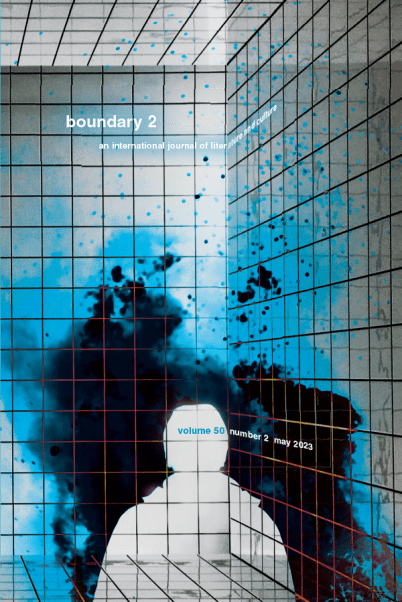
boundary 2, vol 50, no 2, cover image I am honored to say that my interview with the great poet and critic Rachel Blau DuPlessis, “Something Worth Leaving in Shards: An Interview with Rachel Blau DuPlessis,” has just been published in the most recent issue of boundary 2. (This link should provide access for three months.) I am deeply grateful to DuPlessis for corresponding with me during the summer of 2020. In lockdown with no childcare, corresponding with DuPlessis via email to conduct this interview (when I had a spare moment or two to do so) played a large part in keeping me sane during that difficult time. A huge thanks also to Racheal and Aviva, who were right there every day along with me while this interview was being conducted.

Here’s an abstract of the interview:

This interview with poet, essayist, literary critic, and collagist Rachel Blau DuPlessis was conducted via email correspondence between June 11 and August 29, 2020. Author of over a dozen volumes of poetry and half a dozen books in modernist studies, poetics, and feminist criticism, DuPlessis reflects broadly on her career in this interview. She discusses the ongoing role of feminism in her writing and thought, the forms of the fold and the fragment, the relationship between her poetry and criticism, her work in and on the long poem, and her post‐Drafts poetry, including her (at the time) most recent book, Late Work (2020). The interview concludes with a conversation about the relationship between poetry and theorizing practices and a meditation on writing during a global pandemic.

For my writing on DuPlessis: “‘Is an Archive Enough?’: Megatextual Debris in the Work of Rachel Blau DuPlessis.”

And for previous interviews: “Isn’t It a Beautiful Day? An Interview with J. Hillis Miller” and “An Interview with Jonathan Arac.”

Spring 2023 Links

Nuclear and Environmental

Herman Kahn, On Thermonuclear War (1960).

Raymond Zhnog, “For Planet Earth, This Might Be the Start of a New Age.”

Nicholas Kristof, “Cheer Up! The World Is Better Off Than You Think.”

Rebecca Solnit, “What If Climate Change Meant Not Doom–But Abundance?”

Elizabeth Kolbert, “It’s Earth Day—and the News Isn’t Good.”

David Wallace-Wells, “Greta Thunberg: ‘The World Is Getting More Grim by the Day.'”

Mark O’Connell, “Our Way of Life Is Poisoning Us.”

Simon Schama, “Simon Schama on the Broken Relationship between Humans and Nature: ‘The Joke’s on Us. Things Are Amiss.'”

Continue reading

2013–2017: Sonnets Will Be Published by LJMcD Communications in July 2024

Fest, Bradley J--Cover for 2013-2017--600 resolution--coverI am absolutely thrilled to announce that 2013–2017: Sonnets, the first volume of my ongoing sonnet sequence, will be published by LJMcD Communications in July 2024. I’ll update this page with more information when I have it, but for now, here’s a description of the book:

2013–2017: Sonnets is the first volume in Bradley J. Fest’s ongoing sequence of American sonnets, a project concerned with how the distributed networks of the twenty-first century construct and filter time. Continuing the program of poetic assemblage explored in his first two books, these poems were composed consecutively as emergent temporal snapshots documenting certain experiences of what it was like to live precariously in the overdeveloped world between 2013 and 2017. Over the past decade, this ongoing experimental sonnet sequence has become: a complex encounter with time and its twenty-first-century rhythms; a document of artistic maturation; a personal archive of occasions, moments, days; a continually refreshed confrontation with the global computational hyperarchive; a discography of popular music; an extended reflection on contemporary literature, art, and culture; an increasingly multiplex meditation on the sonnet; an historical record of the troubling national situation in the United States; and a work of mourning for a world disappearing into climate emergency. The second volume, currently in progress, begins in 2018.

Also, thanks much to my very good friend Taylor Baldwin for the amazing cover image: The Interpreter (2010).

Paul Benzon to Deliver the 2022–23 Babcock Lecture at Hartwick College: “The Poetics and Politics of the Paralegible”

Paul Benzon will deliver the 2022–23 Babcock Lecture at 7:00 p.m. on Wednesday, April 5, 2023 in the Eaton Lounge of Bresee Hall at Hartwick College.


“The Poetics and Politics of the Paralegible”

What are the politics of writing—not at the level of language and discourse, but rather at the level of materiality and of the inscriptive mark itself? What might approaching writing as a material, visual practice have to tell us about issues of cultural identity, history, and power.

In the 2022–23 Babcock Lecture, Paul Benzon will explore these questions through a discussion of a mode of experimental writing he calls the paralegible. As the term suggests, the paralegible exists in the liminal space between the legible and the illegible, troubling the relations between the mark and the letter, the visible and the invisible. Simultaneously conjuring the desire to read and refusing that desire, it foregrounds questions of writing, authorship, and the textual trace. Turning to recent work by three artists—Renee Gladman, Hương Ngô, and Shirin Salehi—Benzon will show how the paralegible activates the political potentialities of writing that is at odds with language.
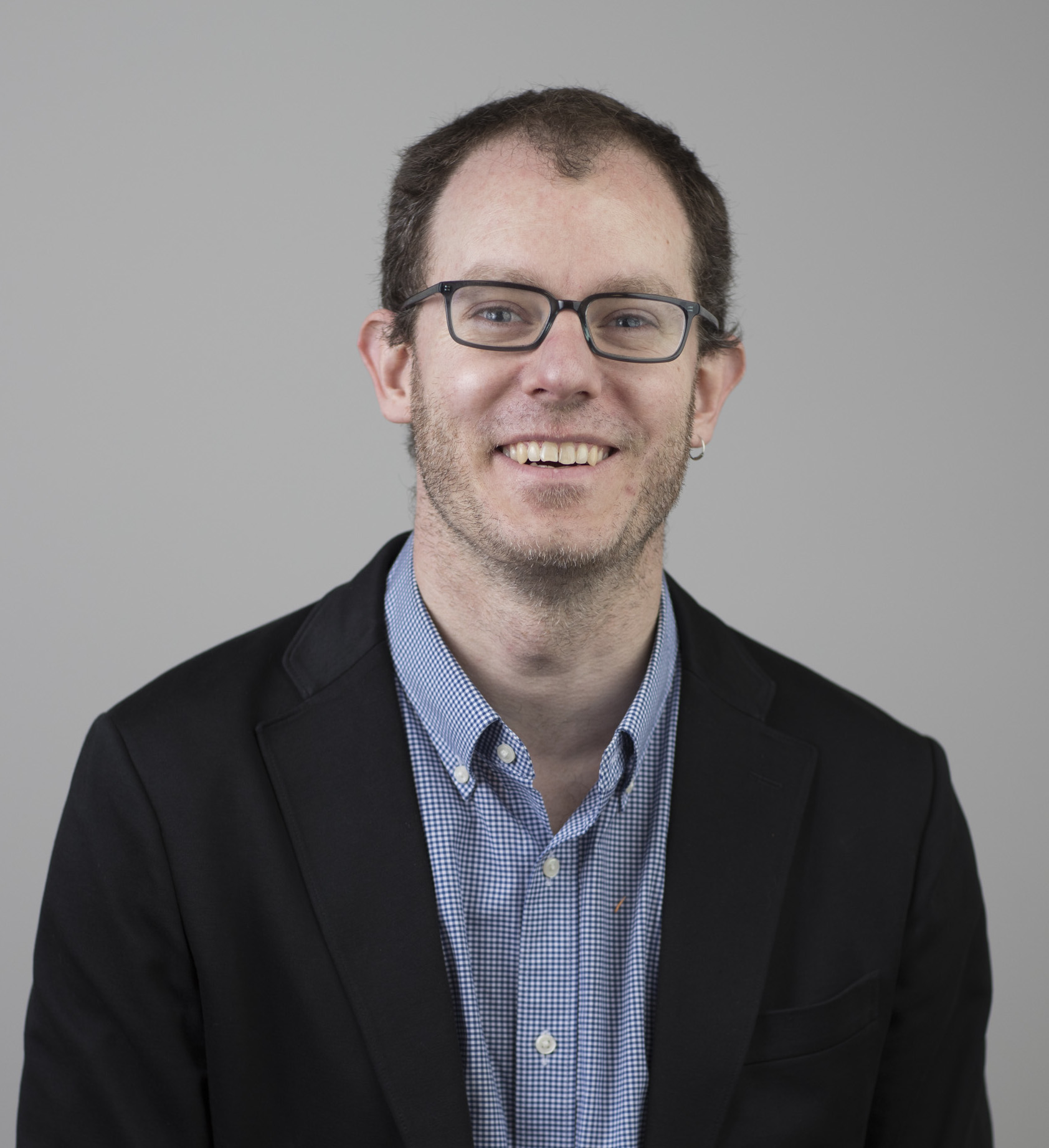

Benzon, Paul--HeadshotPaul Benzon (he/him/his) is an assistant professor in the English Department at Skidmore College, where he also teaches courses in the Media and Film Studies Program. He is the author of Archival Fictions: Materiality, Form, and Media History in Contemporary Literature (University of Massachusetts Press, 2021), and his writing has appeared in College Literature, electronic book review, Media-N, Narrative, and PMLA. His current project, from which this talk is drawn, considers how contemporary literary and artistic experimentations with print textuality, the book as an object, and textual and alphabetic design reckon with questions of historical trauma and social justice.
Fall 2022 Links

12.-JROME-7P9A8927-copy-1024x683

Nuclear and Environmental

Max Bearak, Raymond Zhong, and Ihsanullah Tipu Mehsud, “Deadly Floods Devastate an Already Fragile Pakistan.”

Katie Rogers and David E. Sanger, “Biden Calls the ‘Prospect of Armageddon’ the Highest since the Cuban Missile Crisis.”

David Wallace-Wells, “The World Took a Bold, Toothless Step Forward on Climate Justice” and “Beyond Catastrophe: A New Climate Reality Is Coming into View.”

Somini Sengupta, “‘A Reason to Act Faster’: World Leaders Meet on Climate Amid Other Crises.”

Max Bearak, “Climate Pledges Are Falling Short, and a Chaotic Future Looks More Like Reality.”

Brad Plumer, Max Bearak, Lisa Friedman, and Jenny Gross, “UN Climate Talks End with a Deal to Pay Poor Nations for Damage.”

Catrin Einhorn, “Researchers Report a Staggering Decline in Wildlife. Here’s How to Understand It.”

Continue reading

MLA 2023: Twenty-First-Century Forms

For this year’s Modern Language Association Convention, to be held January 5–8, 2023 in San Francisco, California, I organized and will be speaking on a roundtable on Twenty-First-Century Forms, along with Daniel Burns, Zoe Bursztajn-Illingworth, Kathryn Harlan-Gran, Kevin Pyon, and Elizabeth Sotelo. I have included the information about the panel and, below that, full abstracts from each speaker.

197. Twenty-First-Century Forms

Friday, January 6, 2023, 8:30–9:45 a.m. (PST)

If one might argue that the novel and lyric poem have become residual forms, what literary forms are emerging in contemporaneity? Panelists explore emergent literary forms of the twenty-first century and their relationship with, instantiation in, or remediation by other (digital) media: film, documentary, social media, publishing platforms, transmedia, autotheory, and other hybrid narrative and poetic forms.

Speakers
Dan Burns (Elon University)
Bradley J. Fest (Hartwick College)
Zoe Bursztajn-Illingworth (The University of Texas at Austin)
Kathryn Harlan-Gran (Cornell University)
Kevin Pyon (Pennsylvania State University, Harrisburg)
Elizabeth Sotelo (University of Oregon)

Presiding
Bradley Fest (Hartwick College)

Continue reading

The 2022–23 Visiting Writers Series at Hartwick College

This year, Hartwick College and the Department of Literature, Media, and Writing will present four readings in the 2022–23 Visiting Writers Series. Readings take place at 7:00 or 7:30 p.m. in Eaton Lounge, Bresee Hall at Hartwick College in Oneonta, New York.

All campus visitors, including attendees at campus-based public events, must have up to date vaccinations for COVID-19. The College reserves the right to require masks on an event-by-event basis.


Poet Raena Shirali will read on Thursday, October 27, 2022 at 7:30 p.m., including from her new book summonings (Black Lawrence, forthcoming 2022).

Fiction writer Tessa Yang will read from her brand new collection, The Runaway Restaurant (7.13, forthcoming October 2022) on Wednesday, November 16, 2022 at 7:00 p.m.

Fiction writer, poet, and game designer Julian K. Jarboe will read from their work on Wednesday, March 15, 2023 at 7:00 p.m.

And poet and nonfiction writer Sten Carlson will read from his work on Friday, April 28, 2023 at 7:00 p.m.

For more information, visit the Visiting Writers Series webpage.