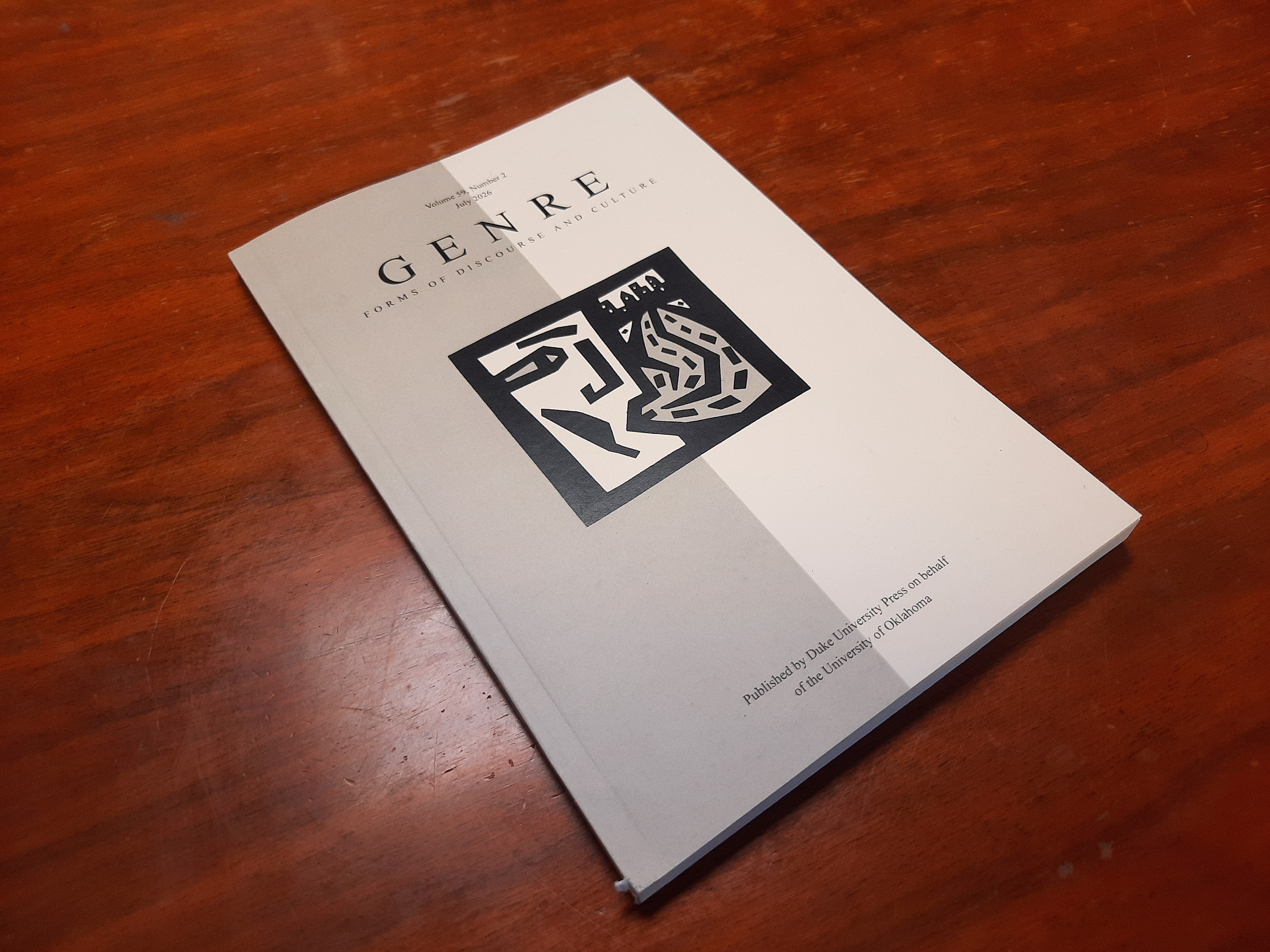
Reflections on Rachel Blau DuPlessis (1941–2026)

Other reflections on Rachel Blau DuPlessis are beginning to appear, so I’ll gather them here (and add more as I find them).

Gary Miles, “Rachel Blau DuPlessis, Experimental Poet, Literary Scholar, and Temple Professor Emerita, Has Died at 84.”

The Journal of Modern Literature, “A Tribute to Rachel Blau Duplessis (1941-2026).”

Christopher Breu on Rachel Blau DuPlessis.

Rachel Blau DuPlessis on People Forever.

Remembering Rachel Blau DuPlessis (1941–2026)

So this “now”
            now emerges, shadows be-fallen here,
                                               and we debate
                                                           how vast the eulogy we need.

                        —Rachel Blau DuPlessis, “The Entanglements: a representation”

The zone between the living voice
and the posthumous voice
is poetry.

                        —Rachel Blau DuPlessis, “The moon and modulations of lonely

I am so very deeply saddened by the passing of Rachel Blau DuPlessis on September 2, 2026.[1] After hearing from her partner, Robert DuPlessis, I found myself weeping in my office for nearly a half hour last week, staggered by the magnitude of losing her. And so I wanted to write a little about how I got to know Rachel and her work, hoping it might provide a small glimpse into just how incredible a person, artist, and scholar/critic she was and the kind of massive positive effect she had on the people around her, even to someone who was only lightly connected to her.

***

Continue reading

MLA 2027 Panels: “Teaching Literary Maximalism: Problems, Practices, Possibilities” and “Real Aesthetic Questions”

At this year’s Modern Language Association Convention in Los Angeles, California (January 7-10, 2027), I will be speaking on a roundtable Teaching Literary Maximalism: Problems, Practices, Possibilities, and a panel, Real Aesthetic Questions. I have included the information and tentative abstracts for each paper below.

23. Teaching Literary Maximalism: Problems, Practices, Possibilities

Thursday, January 7, 2027, 12:00-1:15 p.m.

Presiding: Benjamin Bergholtz (Louisiana Tech U) and Yonina Hoffman (US Merchant Marine Acad.)

Speakers:
Carole Carroll (Lubbock Christian U)
Srirupa Chatterjee (Indian Inst. of Tech., Hyderabad)
Bradley J. Fest (Hartwick C)
Alexander McKee (U of Delaware, Newark)
Stefan H. Uhlig (U of California, Davis)
Yanchang Zhu (Huzhou C)


Teaching Megatexts

In a monograph currently under peer review, Too Big to Read: The Megatext in the Twenty-First Century, I argue that the massive yet discrete textual objects that have appeared across media in the last thirty or so years should be considered a distinct, emergent form, what I call the megatext. From three-million-page conceptual works to massive cinematic universes and gigantic video games, the twenty-first century has seen megatexts appear across media. Megatexts are unreadably large yet concrete aesthetic and rhetorical objects that require incredibly nontrivial effort to completely traverse; they are produced and conceived as singular works and depend upon digital technology and collaborative authorship for their production. In my talk, I will focus on the specific challenges and possibilities presented by devoting an entire semester to studying a text that is “too big to read.”

I will be focusing on two classes of mine at Hartwick College, a small liberal arts college in upstate New York: a senior seminar for English majors in the fall of 2024, ENGL 470 Mark Z. Danielewski’s The Familiar; and an upper division course for English and game development majors I taught in the spring of 2026, ENGL 352 Critical Game Studies. ENGL 470 was devoted to studying Danielewski’s failed megatext, The Familiar (2015–17), and putting it in conversation with other relevant texts, including Lost (2004–10), Anna Kornbluh’s Immediacy (2024), criticism of the novel, and texts chosen by students. ENGL 352 is a course I have taught before, but instead of looking closely at six games over the course of the semester, this spring I will ask students to spend the entire semester playing Final Fantasy XIV (2010–) as a grounding touchstone for the class’s more general introduction to the field of game studies.

My main focus in “Teaching Megatexts” will be on the inherently and necessarily collaborative nature of teaching and learning that occurs between students and instructor when a megatext is brought into the classroom. As I argue in Too Big to Read, megatexts are collaborative both in terms of authorship (they cannot be made by a single person alone) and in terms of criticism and reception (they need to be read, played, and watched collectively; they require collective criticism). As such, the classroom is a perfect place to explore the limits and affordances of collaborative reading, playing, teaching, and learning. In ENGL 470, my class kept a collective blog that asked them to put their readings in conversation with one another and to give group presentations on relevant texts of their choosing that they also assigned to the class. In ENGL 352, students spent time each week teaming up to play Final Fantasy XIV. “Teaching Megatexts” will thus theorize how the classroom changes and what kinds of different pedagogy is necessary when the object of critical analysis grows beyond the ability of any single student (or instructor) to know it in its entirety.


490. Real Aesthetic Questions

Saturday, January 9, 2027, 10:15-11:30 a.m.

Presiding: Nan Z. Da (Johns Hopkins U, MD)

Presentations:

  1. “Acts of Critical Complicity,” Stephen Best (U of California, Berkeley)
  2. “Beauty, Inertia, and Being,” Eleanor Kaufman (U of California, Los Angeles)
  3. “Kafka’s Aesthetics; or, The Aesthetic Questions of the Yiddish Theater,” Matthew Johnson (U of Wisconsin, Madison)
  4. “Light’s Speech: Louise Glück’s The Wild Iris,” Bradley J. Fest (Hartwick C)


Light’s Speech: Louise Glück’s The Wild Iris

What does light sound like? How would it speak? What would it say? How might one bring its presence into language? How might language be luminous? These fundamentally aesthetic questions appear to motivate many of the poems in Nobel Laureate Louise Glück’s Pulitzer Prize–winning collection The Wild Iris (1992). Written at a moment when light speaking via optical pulses along fiberoptic communication cables was about to reconfigure global communication and archival memory, solidifying the formation of what Fest has elsewhere called the optical society, Glück’s poems must strike us, read from our moment of ubiquitous, enrapturing digital luminosity, as wonderfully, importantly aesthetic, as analog and nonarchival, providing moments of seeing, reading, hearing, representing, and imagining light outside and against the twenty-first-century optical regime and its hyperarchival fever. Perhaps even more importantly, light in The Wild Iris is not immaterial or ephemeral but wonderfully material, embodied in plants and soil, traced through earth and sky, while simultaneously still curiously transient in the way only something that is both particle and wave can be, “white light / no longer disguised as matter.”[1] Ultimately arguing that Glück inaugurates something like a luminous poetics or a luminous literary aesthetics that many other contemporary poets across traditions have taken up in The Wild Iris’s wake, this paper will also be the first foray into a larger new book project tentatively titled Literary Light.


For previous essays of mine on megatexts and unreadable texts, see:

“Toward a Theory of the Megatext: Speculative Criticism and Richard Grossman’s ‘Breeze Avenue Working Paper.’”

“‘Is an Archive Enough?’: Megatextual Debris in the Work of Rachel Blau DuPlessis.”

“Reading Now and Again: Hyperarchivalism and Democracy in Ranjan Ghosh and J. Hillis Miller’s Thinking Literature across Continents.”

“Writing Briefly about Really Big Things.”


Notes

[1] Louise Glück, “End of Summer,” in The Wild Iris (Ecco, 1992), 41.
“Teaching Without Computers” at SUNY Oneonta and Hartwick College

I will be giving a talk, “Teaching Without Computers,” twice over the next month at the State University of New York, Oneonta and at Hartwick College in Oneonta, New York. This talk grows out of my experience eliminating technology from my classroom and moving all writing to in-class assignments during the spring 2026 semester.

For the SUNY talk, I will be delivering a shortened version of it at the Regional Perspectives on AI cross-campus symposium this Friday, August 14, 2026 at 11:00 a.m. in Le Cafe in the Morris Conference Center as part of the panel Against AI: Approaches to Preserving Student Learning with my colleagues at SUNY Oneonta Racheal Fest and Alanna E. F. Rudzick. Here is a description of our panel:

In this session, faculty from the humanities and social sciences at SUNY Oneonta and Hartwick College will share approaches to preserving student learning in the age of AI. Strategies include developing in-class assessment practices, updating assignments to include critical AI literacy, creating an analog classroom to better foster discussion and knowledge co-construction, and inviting students to reflect on the nature and purpose of higher education and of writing as a practice. Presenters will share assignments from different disciplinary contexts and facilitate a conversation about recent challenges and successes.

And then I will be delivering a full version of “Teaching Without Computers” for a Teaching Table at Hartwick College on Friday, September 18, 2026. I hope to be publishing a version of this talk around this time as well. (I will update when I know more.)

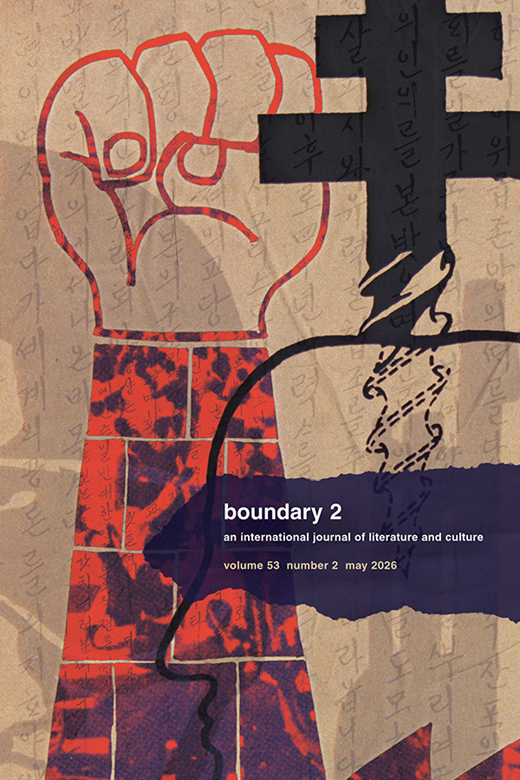
“Art Is for Everybody: An Interview with Anna Kornbluh” in boundary 2

I increasingly think that Anna Kornbluh is one of our most important critics, and so I was overwhelmingly delighted to be able to bring her to Hartwick College to deliver the 2024–25 Babcock Lecture during the 2024 Oneonta Literary Festival. I was also extremely honored that she agreed to sit down with me the next day to discuss her work and career. That interview has now been published as “Art Is for Everybody: An Interview with Anna Kornbluh” in boundary 2 (vol. 53, no. 2; the link to the interivew should work for three months.)


Here’s an abstract of the interview:

This interview with literary critic Anna Kornbluh was conducted on October 18, 2024, in conjunction with her delivery of the 2024–25 Babcock Lecture at Hartwick College. With her most recent book, Immediacy; or, The Style of Too Late Capitalism (2024), Kornbluh has established herself as one of the most insightful and important critics of contemporary culture. In this conversation, she reflects on how she came to literary studies, the strangeness of realism, dialectical reading, and the role of style in literary criticism. Kornbluh also discusses political formalism and the value of institutions, the term neoliberalism, social media, the relationship between organizing and literary study, recent projects on climate counteraesthetics and middlebrow aesthetics, and the political realities of late 2024.

In further interview news, I have conducted and am currently transcribing and editing an interview with Paul A. Bové.

And for previous interviews: “An Interview with Jonathan Arac,” “Grateful and Generous Reading: An Interview with Robert T. Tally Jr.,” “Something Worth Leaving in Shards: An Interview with Rachel Blau DuPlessis,” and “Isn’t It a Beautiful Day? An Interview with J. Hillis Miller.”

Spring Semester 2026: Syllabi and Teaching Without Computers


After a very productive and thoroughly refreshing sabbatical, I’m back at Hartwick College this spring teaching two courses (and two of my favorite to teach!). Here are the syllabi: ENGL 220 Introduction to Textual Analysis and ENGL 352 Critical Game Studies.

Most notably, after twenty years of teaching predominantly writing-intensive courses in which I assigned essays, poems, and stories to be composed outside of class, in response to the frustration the sheer amount of student work I have seen generated by artificial intelligence (AI) has caused me and the more general neofeudal edtechification of higher education, I made the decision this spring to make my courses (almost) completely analog in terms of assignments, materials, and expectations. Students write all their papers in class. Students are required to have print books, and I print out all PDFs for them to read and annotate. No one has a smart phone or a laptop anywhere in sight. It’s glorious, old school, amazingly analog. And it is working.[1]

I am calling this teaching without computers, and it has been revolutionary for my pedagogy and peace of mind, revitalizing the classroom as a space of human connection, energy, communication, thinking, and poiesis while also assuaging my own considerable frustrations with and despair about my job over the past few years, a job that at some point seemed destined to be little more than that of plagiarism detective. All my previous engagement with students’ ideas and their attempts to express those ideas were slowly and almost completely strained away over the past three-odd years with nothing left but policing, constantly on the lookout for evidence of now seemingly ubiquitous large-language model (LLM) use infecting and subverting the reading, writing, and thinking of our students, of an entire generation of young people, of, really, everyone, compromising our very humanity with its tepid, dumb slop. Though I am only six weeks into the semester, the transformation teaching without computers has wrought upon my classroom has been remarkable. My students have, to a large degree, embraced my new pedagogy, as I suspect it has given them back something that I perhaps only now realize had been lost in classrooms years before LLMs had emerged. I cannot recommend this (and other) kind(s) of AI-resistant pedagogy enough for other people teaching in the critical humanities. I am a convert. Fully. And I expect that, whatever comes next for me as a teacher, a big part of it will be proselytizing for the new good news: teaching and learning without computers.

For more resources on resisting AI in our teaching, see Anna Kornbluh, Eric Hayot, Krista Muratore, and Gina Stinnett’s Against AI.


[1] That said, there are still some digital elements in my classes. For example, obviously I still require that students play video games in ENGL 352 Critical Game Studies, and I do make available the online version of the Oxford English Dictionary and a thesaurus during in-class writing assignments. Of course, I also happily approve whatever digital accommodations students might need—they just need to ask (and regardless of whether or not they have any documented need for such accommodation).

“Grateful and Generous Reading: An Interview with Robert T. Tally Jr.” in boundary 2


I am really happy that my interview with Robert T. Tally Jr.—the first of two interviews I conducted in conjunction with The Babcock Lecture at Hartwick College, which I organized as Cora A. Babcock Chair in English from 2022–25—is now out in print. “Grateful and Generous Reading: An Interview with Robert T. Tally Jr.,” has just been published in the November 2025 issue of boundary 2 (vol. 52, no. 4).

It was a busy weekend—in the course of only a few days, Tally flew to Oneonta from Texas, delivered a lecture, sat down for an interview, and then moderated the final Zoom panel celebrating Fredric Jameson’s ninetieth birthday from my home office (all while he was in the middle of editing Verso’s “Jameson at 90” [2025] blog series)—and so I am deeply thankful to Tally for taking the time to come to Hartwick and chat.

Here’s an abstract of the interview:

This interview with literary critic Robert T. Tally Jr. was conducted on April 26, 2024, in conjunction with his delivery of the 2023–24 Babcock Lecture at Hartwick College. Tally is one of the premier critics presently working in the field of spatial literary studies and has published over a dozen books and over one hundred articles and book chapters on US and world literature, critical theory, and the history of criticism. Reflecting broadly on the trajectory of his career, Tally discusses the gratitude that has accompanied his scholarly writing, his interests in spatial literary studies, his relationship with the teaching and work of Jonathan Arac, Paul A. Bové, and Fredric Jameson, and the role of theory at the present time.

The second interview conducted in conjunction with the 2025 Babcock Lecture, my interview with Anna Kornbluh, will appear in the May 2026 issue of boundary 2.

And for previous interviews: “An Interview with Jonathan Arac,” “Something Worth Leaving in Shards: An Interview with Rachel Blau DuPlessis,” and “Isn’t It a Beautiful Day? An Interview with J. Hillis Miller.”