Ukraine, US Nuclear Policy, Etc.

With the incursion of Russia into the Ukraine, a lot of stuff is going on.

Peter Baker in The New York Times, “Pressure Rising as Obama Works to Rein in Russia.”

“Ukraine, Putin, and the West” at n+1.

Peter Beinart for The Atlantic: “The Ukraine: Is This How the War on Terror Ends?”

Dominic Tierney for The Atlantic: “Putin’s Improv Act.”

David Rhode for The Atlantic: “Crimea: The Greatest Challenge to Geopolitics Since the Cold War.”

“Kerry Condemns Russia’s ‘Incredible Act of Aggression’ in the Ukraine.”

And a critique of The New York Times‘ coverage of Kerry.


Nuclear

“Aim Points in the US Nuclear Arsenal.”

Hans M. Kristensen, Director of the Nuclear Information Project, has authored an article for the Federation of American Scientists, “Obama and the Nuclear War Plan.”


Other

Noam Chomsky, “America’s Apocalyptic Imperial Strategy.”

Noam Chomsky, “The Death of American Universities.”

On Fredric Jameson.

boundary 2‘s latest entry into its Great American Author Series, “A Political Companion to Walt Whitman” by Kerry Larson.

Ezra Klein, “The Real Reason Nobody Reads Academics.”

And Ian Bogost on Flappy Bird.

Russia Sends Troops into the Ukraine and Other Links

Things are happening very quickly in the Ukraine. David Remnick reports on the most recent events for The New Yorker in “Putin Goes to War.” He writes:

Vladimir Putin, the Russian President and autocrat, had a plan for the winter of 2014: to reassert his country’s power a generation after the collapse of the Soviet Union. He thought that he would achieve this by building an Olympic wonderland on the Black Sea for fifty-one billion dollars and putting on a dazzling television show. It turns out that he will finish the season in a more ruthless fashion, by invading a peninsula on the Black Sea and putting on quite a different show—a demonstration war that could splinter a sovereign country and turn very bloody, very quickly.

In other news, Luke O’Neil has a piece in Esquire: “The Year We Broke the Internet: An Explanation, an Apology, a Plea.”

From my old neck of the woods, “Say Goodbye to Phoenix–And the American West.”

And a blast from the past. A video for The Faint‘s new single, “Help in the Head,” from their forthcoming album Doom Abuse. I cannot help but see this video as a paranoid reflection on the total surveillance of contemporaneity.

Elaine Scarry Has a New Book on Nukes, and Other Links

The Chronicle of Higher Education has a discussion of Elaine Scarry‘s new book, Thermonuclear Monarchy: Choosing Between Democracy and Doom (2014). Nathan Schneider has written an extensive review of Thermonuclear Monarchy, “A Literary Scholar’s Voice in the Wilderness: Elaine Scarry Fights American Complacency About Nuclear Arms.” Scarry is also the author of the monumentally important, The Body in Pain: The Making and Unmaking of the World (1987).

“Melting Ice Makes the Arctic A Much Worse Heat-Magnet than Scientists Feared.”

January was actually one of the warmest months on record.

And more disastrous weather to come.

Lennard Davis and Walter Benn Michaels writing for Jacobin on the University Illinois-Chicago faculty strike.

Davis and Michaels explaining why they’re striking at The Chronicle of Higher Education.

“Noam Chomsky: Zombies are the New Indians and Slave in White America’s Collective Nightmare.”

“David Foster Wallace, Mathematician.”

Samuel Cohen on Wallace, “Future Tense.”

My friend David Letzler reviews Thomas Pynchon’s Bleeding Edge (2013).

On Dead Poets Society (1989) and the humanities.

“Feminism, Depravity, and Power in House of Cards.” I just finished watching the fairly incredible second season last night.

More Doomy Doom and Less Doomy Doom

More Doomy

Brad Plummer has an interview with author of The Sixth Extinction Event, Elizabeth Kolbert (who was also on The Daily Show the  other night) at The Washington Post.

“The NSA and Climate Change: What We Know So Far,” by Joshua Eaton.

“How Iowa Flattened Literature,” or rather, the CIA and the Writer’s Workshop.

NASA is going to turn the moon into computronium, ur, I mean give licenses to mine it.

Less Doomy

David Foster Wallace’s letter to his editor.

Dragonlance should be the next fantasy movie franchise. I agree, esp. if it means they make the Legends series into films.

A new anthology of post-apocalyptic fiction, Wastelands 2, edited by John Joseph Adams.

A pretty scathing review of Matthew Barney’s River of Fundament (2014) that actually makes me want to see it more.

And a book I had an essay appear in last year, The Silence of Fallout: Nuclear Criticism in a Post-Cold War World, was just selected as one of Zer0 Books‘ best books of 2013.

A Few Links (with some Rimbaud and Melville)

David Hancock Turner has an interesting reflection on Margaret Atwood’s MaddAddam trilogy for Jacobin, titled “After the Flood.” He writes:

Atwood seems to intuit this and her emphasis on prefigurative forms of resistance only seems like a natural response to an overweening corporate dystopia. When the dream of revolutionary transformations seems so distant, why not at least have a taste of utopia in this world rather than toil amidst a rotten society and its artificial politics? Or does the workplace nevertheless remain the fundamental space of struggle, although now too removed or amorphous for us to recognize and rejuvenate its logic?

And what does it mean if Atwood transforms revolutionary praxis from labor activism into sabotage from the elite workers coupled with a strategy of refusal by an eclectic grouping of transients — two tactics we have recently witnessed in our own American society? The apocalypse that inhabits so much of our contemporary imagination is a signifier that the revolution and its classical preconditions are perhaps too difficult to dream.

And here’s an older review by Ursula K. Le Guin of The Year of the Flood (2009) in The Guardian.

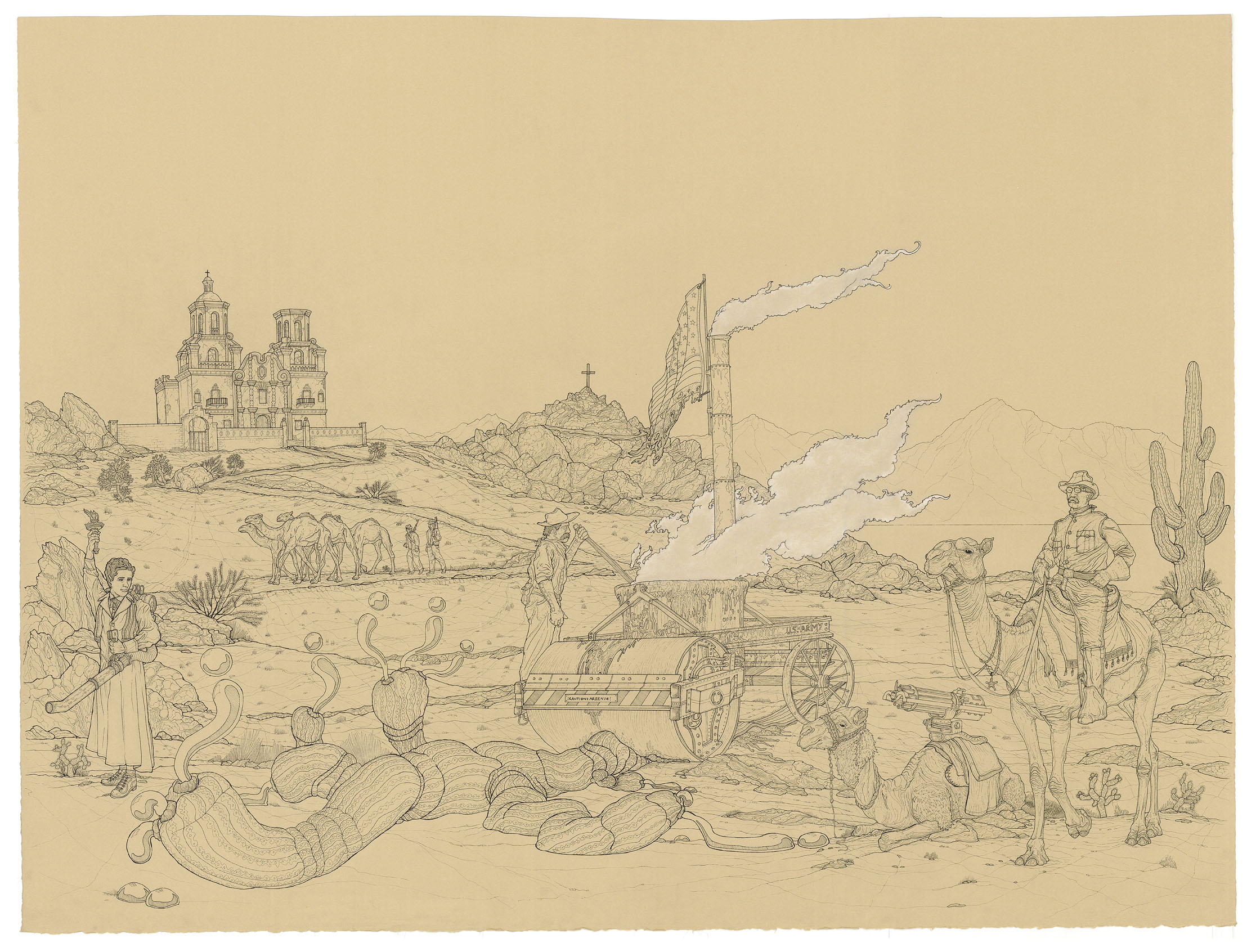
My good friend, sculptor Taylor Baldwin, has a great write-up in Beautiful Decay, “Taylor Baldwin’s Assembled Madness.” A sample of his work, a couple of my favorite pieces.[1] [2]

Taylor Baldwin, The Interpret (2010).

Taylor Baldwin, The Interpreter (2010).

US Infantry Camel Corps (Feat. Emma Lazarus) (2007)

Taylor Baldwin, US Infantry Camel Corps (Feat. Emma Lazarus) (2007)

The Atlantic reports that “LOL and/or Lol! The Internet Has Style Guide Now: Sort Of.” Here’s the style guide at BuzzFeed.

Recent reports on the mega-text: “What You Learn About Tech from Watching all 456 Law and Order Episodes,” by Rebecca J. Rosen for The Atlantic.

And my friend Carolyn Kellogg reports that “Younger Book Dealers are Diving into the Antiquarian Trade” for The Los Angeles Times.


[1] Whenever I see Baldwin’s Interpreter (2010), I am always reminded of a few different lines from things. First: “I have seen the low sun stained with mystic horror, / Lit with long violet weals like actors / In some ancient play, waves unrolling / Their shuddering paddles into the distance. [. . .] And I, a boat lost in inlets’ tangled hair, / Tossed by hurricanes into birdless air, I / Whose water-drunken carcass Coast-Guard / And Hanseatic ships could not have dredged; // Free, on fire, crowned by violet mist, / I dug a hole in a reddening sky like a wall / Smeared with solar lichen and gobs / Of azure snot, irresistible poetic treats. [. . .] Bathed in your weary waves, I can no longer ride / In the wake of cargo ships of cotton, / Nor cross the pride of flags and flames, / Nor swim beneath the killing stare of prison ships” (Arthur Rimbaud, from “The Drunken Boat” (1871), in Rimbaud Complete, trans. and ed. Wyatt Mason [New York: The Modern Library, 2002], 86-88, here’s a different translation).

[2] And second:

To a landsman a calm is no joke. It not only revolutionizes his abdomen, but unsettles his mind; tempts him to recant his belief in the eternal fitness of things; in short, almost makes an infidel of him.

At first he is taken by surprise, never having dreamt of a state of existence where existence itself seems suspended. He shakes himself in his coat, to see whether it be empty or no. He closes his eyes, to test the reality of the glassy expanse. He fetches a deep breath, by way of experiment, and for the sake of witnessing the effect. If a reader of books, Priestly on Necessity occurs to him; and he believes in that old Sir Anthony Absolute to the very last chapter. His faith in Malte Brun, however, begins to fail; for the geography, which from boyhood he had implicitly confided in, always assured him, that though expatiating all over the globe, the sea was at least margined by land. That over against America, for example, was Asia. But it is a calm, and he grows madly skeptical.

To his alarmed fancy, parallels and meridians become emphatically what they are merely designated as being: imaginary lines drawn round the earth’s surface.

The log assures him that he is in such a place; but the log is a liar; for no place, nor any thing possessed of a local angularity, is to be lighted upon in the watery waste.

At length horrible doubts overtake him as to the captain’s competency to navigate his ship. The ignoramus must have lost his way, and drifted into the outer confines of creation, the region of everlasting lull, introductory to positive vacuity.

Thoughts of eternity thicken. He begins to feel anxious concerning his soul.

The stillness of the calm is awful. His voice beings to grow strange and portentous. He feels it in him like something swallowed too big for the esophagus. It keeps up a sort of involuntary humming in him, like a live beetle. His cranium is a dome full of reverberations. The hollows of his very bones are as whispering galleries. He is afraid to speak loud, lest he be stunned; like the man in the bass drum.

But more than all else is the consciousness of his utter helplessness. Succor or sympathy there is none. Penitence for embarking avails not. The final satisfaction of despairing may not be his with a relish. Vain the idea of idling out the calm. He may sleep if he can, or purposely delude himself into a crazy fancy, that he is merely at leisure. All this he may compass; but he may not lounge; for to lounge is to be idle; to be idle implies an absence of any thing to do; whereas there is a calm to be endured: enough to attend to, Heaven knows.

His physical organization, obviously intended for locomotion, becomes a fixture; for where the calm leaves him, there he remains. Even his undoubted vested rights, comprised in his glorious liberty of volition, becomes as naught. For of what use? He wills to go: to get away from the calm: as ashore he would avoid the plague. But he can not; and how foolish to revolve expedients. It is more hopeless than a bad marriage in a land where there is no Doctors’ Commons. He has taken the ship to wife, for better or for worse, for calm or for gale; and she is not to be shuffled off. With yards akimbo, she says unto him scornfully, as the old beldam said to the little dwarf:—“Help yourself.”

And all this, and more than this, is a calm.

(Herman Melville, Mardi and a Voyage Thither [1849], in Herman Melville: Typee, Omoo, Mardi, ed. G. Thomas Tanselle [New York: The Library of America, 1982], 669-670.)

Super Bowl Sunday Links

Nuclear

Eric Schlosser, author of Fast Food Nation: The Dark Side of the All-American Meal (2000) and the recent Command and Control: Nuclear Weapons, the Damascus Incident, and the Illusion of Safety (2013, a book that is on my shortlist of things to read right now), has a couple of interesting things in The New Yorker on Dr. Strangelove: “Almost Everything in Dr. Strangelove Was True,”  “Deconstructing Dr. Strangelove,” and Kubrick’s alternative titles to the film.

In other hard-to-believe nuclear news, Josh Harkinson reports in Mother Jones that a “Nun Faces up to 30 Years for Breaking Into Weapons Complex, Embarrassing Feds.”

Torpedoes and the military industrial complex.


NSA

Angry Birds and ‘Leaky’ Phone Apps Targeted by NSA and GCHQ for User Data.”

The Blackphone. “A Phone for the Age of Snowden.”[1]

And an older op-ed piece from The New York Times on “Edward Snowden, Whistleblower.”


Environment and Disaster

Another disaster in the Gulf of Mexico.

The Atlanta snow “storm,” and the devastating effects of two inches of snow when coupled with suburban sprawl:

More than any event I’ve witnessed in two decades of living in and writing about this city, this snowstorm underscores the horrible history of suburban sprawl in the United States and the bad political decisions that drive it. It tells us something not just about what’s wrong with one city in America today but what can happen when disaster strikes many places across the country. As with famines in foreign lands, it’s important to understand: It’s not an act of nature or God—this fiasco is manmade from start to finish. But to truly get what’s wrong with Atlanta today, you have to look at these four factors, decades in the making.

“Climate Change is Already Causing Mass Human Migration.”

And an interview with Fredric Jameson on capitalism, the infernal machine.

And a journey to the end of a world that may have no end.


Humanities and Higher Ed

“What STEM Shortage? Electrical Engineering Lost 35,000 Jobs Last Year.”


[1] It’s also of note that we are in the “Age of Snowden” (rather than the age of the NSA, or control, or surveillance, or whatever).

January 2014 Links

It’s been a busy month, both in the news and in the world. Here’s a few things I’ve almost had time to read.


Nuclear and Disaster

“Almost Everything in Dr. Strangelove Was True,” Eric Schlosser, The New Yorker.

The DSM-5 is the worst.

So are polar vortexes.

The state of emergency in West Virginia and its long term effects.

Literary destruction.

XKCD on the weather.


The NSA

NSA has a backdoor into your computer and to your iPhone.

Everything we know the NSA can do.

Continue reading

End of the Year Links

As I have been lax in posting things, yesterday I posted a bunch of links on recent stories regarding the NSA. Today I’m posting links of more general interest. I’ve tried to organize them by category.


Iran

The biggest story I have not had time to address were the diplomatic talks regarding Iran’s nuclear program. So here are some links to that.

On 5 November 2013 Reuters reported that Iran, Israel, and Middle East countries “took part in a meeting two weeks ago about prospects for an international conference on banning nuclear weapons in the Middle East.”

Temporary nuclear pact.

UN nuclear inspectors in Iran.

“Iran, from Enemy to Ally.”

Right on the verge of a nuclear agreement, perhaps the biggest event in nuclear nonproliferation in my lifetime, Bob Mendez fights Obama on imposing new sanctions on Iran, as do fifteen other democrats. More here.

Though from today: progress in nuclear talks.

Continue reading

Link Dump: Nuclear, Archival, and Other

My apologies, it’s been a busy few weeks and I haven’t had time to add anything new. So here’s couple things I’ve stumbled across recently.

In nuclear news, Craig Whitlock reports for The Washington Post that “the Air Force on Friday fired the general in charge of all land-based nuclear missiles, the second time in a week that a senior commander of the country’s nuclear arsenal has been let go for allegations of personal misconduct.” (I wonder if his misconduct had anything to do with precious bodily fluids.)

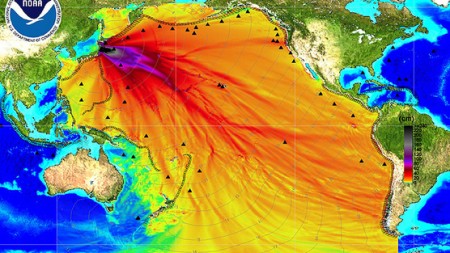
Three things from Fukushima: Mari Yamaguchi asks, “Japan’s Water Leaks: How Dangerous?” for the AP. The Sleuth Journal reports that “Radioactive Water From Fukushima Is Systematically Poisoning the Entire Pacific Ocean.”

radioactive-water

And if that weren’t bad enough, Andrew Breiner for Think Progress writes how a “Once-A-Decade Typhoon Threatens Already Leaking Fukushima Nuclear Plant.”

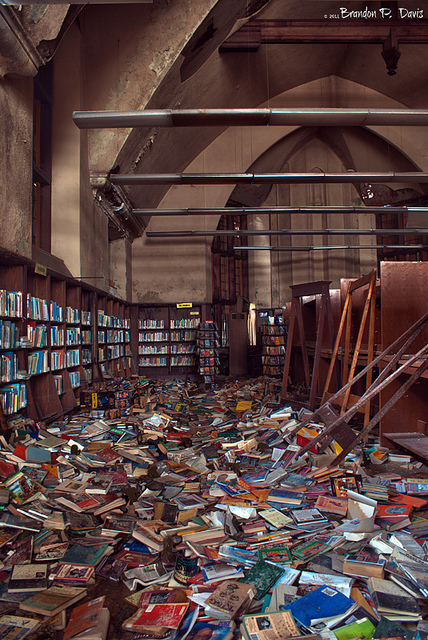
And though I think I’ve reported on this/posted a picture of this before, Flickr has an arresting series of images of archival decay from the abandoned Mark Twain Branch Library in Detroit.

SONY DSC

Continue reading