Yesterday Thom Shanker and Rick Gladstone reported in The New York Times that “Iran Fired on Military Drone in First Such Attack, U.S. Says.” This occurred five days before the election, and was only talked about by the Defense Department after news organizations had broken the story. Shanker and Gladstone write: “the failure to disclose a hostile encounter with Iran’s military at a time of increased international tensions over the disputed Iranian nuclear program — and five days before the American presidential election — raises questions for the Obama administration. Had the Iranian attack been disclosed before Election Day, it is likely to have been viewed in a political context — interpreted either as sign of the administration’s weakness or, conversely, as an opportunity for President Obama to demonstrate leadership.” Nuclear worries don’t cease just b/c the election is over. . . .
Author: Bradley J. Fest
D.T. Max on His DFW Biography
Just found this nice little clip today:
Watershed Moment for US Voting Blocs
Its amazing how quickly the conversation has turned toward the slowly shifting demographics in the US and the twilight of the GOP as we know it. Jonathan Chait’s “2012 or Never” in New York magazine is a great article that anticipated all this last February (citing those that anticipated this way back in 2002), and creator of The Wire (2002-2008) David Simon has a pretty nice, concise blog post re: the changing political landscape as well (and I love that Simon’s blog is called The Audacity of Despair). Are we really moving into a future that I and so many others desire? Probably not, but at least we’re not moving into the past.
Obama Elected to Second Term
Don’t have much more to say than that, but I thought it necessary to in some way mark the historic occasion of not only the nation’s first black President, but one elected to a second term amidst catastrophic economic conditions and the unprecedented natural disaster of merely a week ago. Sometimes we do pay attention to our better angels, and don’t only respond to things through fear and shame. The image is from The New York Times.

The Most Unsurprising Poll of this Election Cycle and other Stuff
If the election were held internationally, according the Huffington Post, Obama would win in a landslide.
Via The Atlantic, in Columbus, Ohio voters are waiting 7 hours to vote.

And The New York Times speculates on the impact Sandy had on the race, specifically “blowing Romney off course.” October surprise indeed.
Perpetual War
Aaron B. O’Connell, Professor of history at the US Naval Academy, has an op-ed in yesterday’s New York Times that is fairly interesting: “The Permanent Militarization of America.”
“Civilization Reboot Experiment”
From Businessweek, the title of Ashlee Vance’s article says it all: “The Post-Apocalypse Survival Machine Nerd Farm.” Wow. Risk projection. And here are a bunch of pictures of the farm. A sample:

Sandy
The Atlantic has some really unbelievable images from Sandy. My thoughts are w/ all those affected.
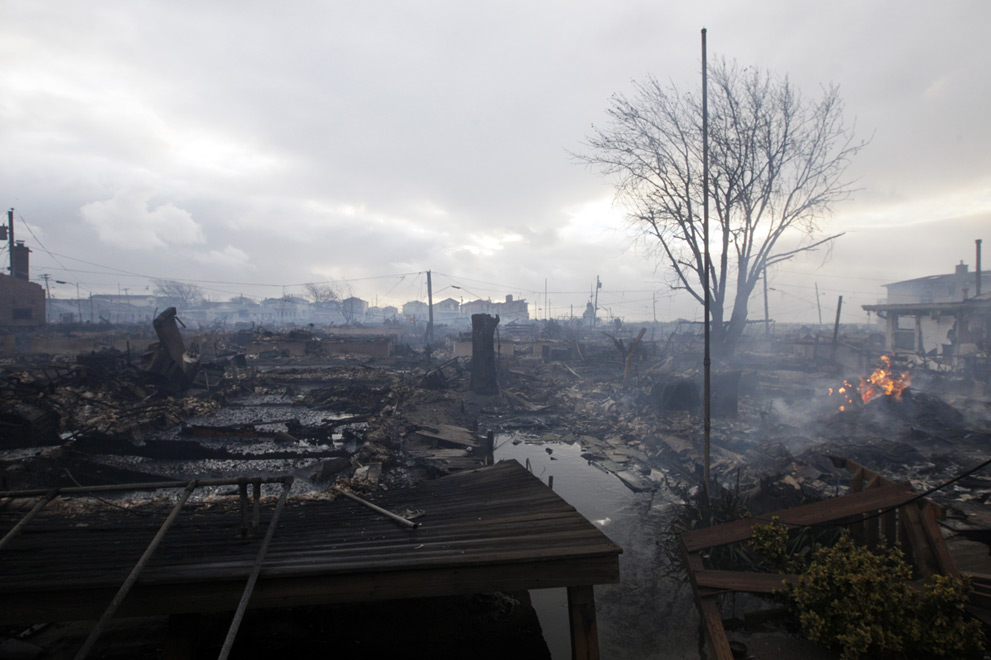
And Democracy Now reports on Sandy’s impact on Nuclear plants.
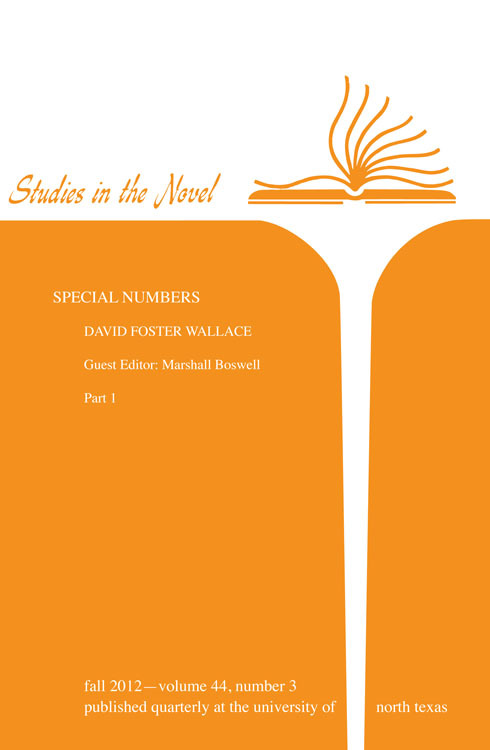
“Then Out of the Rubble”: The Apocalypse in David Foster Wallace’s Early Fiction
I just received in the mail today the first volume of the two-part special issue Studies of the Novel is devoting to the novels of David Foster Wallace, edited by Marshall Boswell, in which my essay, “‘Then Out of the Rubble’: The Apocalypse in David Foster Wallace’s Early Fiction,” appears. Check it out (esp. if you have Project Muse access). There are some excellent other essays from Allard den Dulk, David Letzler, Adam Kelly, and Philip Sayers as well.
Excerpt: Kim Stanley Robinson and Disaster Projection
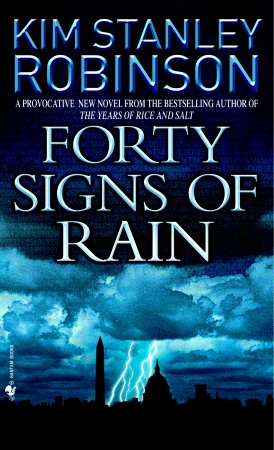
From Kim Stanley Robinson’s novel, Forty Signs of Rain (2004), from his Science in the Capital Trilogy:
The second day of the storm passed as a kind of suspended moment, everything continuing as it had the day before, everyone in the area living through it, enduring, waiting for conditions to change. The rain was not as torrential, but so much of it had fallen in the previous twenty-four hours that it was still sheeting off the land into the flooded areas and keeping them flooded. The clouds continued to crash together overhead, and the tides were still higher than normal, so that the whole Piedmont region surrounding Chesapeake Bay was inundated. Except for immediate acts of a lifesaving nature, nothing could be done except endure. All transport was drowned. The phones remained down, and power losses left hundreds of thousands without electricity. Escapes from drowning took precedence even over journalism (almost), and even though reporters from all over the world were converging on the capital to report on this most spectacular story–the capital of the hyperpower, drowned and smashed–most of them could only get as close as the edge of the storm, or the flood; inside that it was an ongoing state of emergency, and everyone involved with rescues, relocations, and escapes of various kinds. The National Guard was out, all helicopters were enlisted into the effort; the video and digital imagery generated for the world to see was still incidental to other things; that in itself meant ordinary law had been suspended, and there was pressure to bring things back to all-spectacle all-the-time. Part of the National Guard found itself posted on the roads outside the region, to keep people from flooding the area as the water had. (Kim Stanley Robinson, Forty Signs of Rain [New York: Bantam Books, 2004], 345-6.)
 The Hyperarchival Parallax