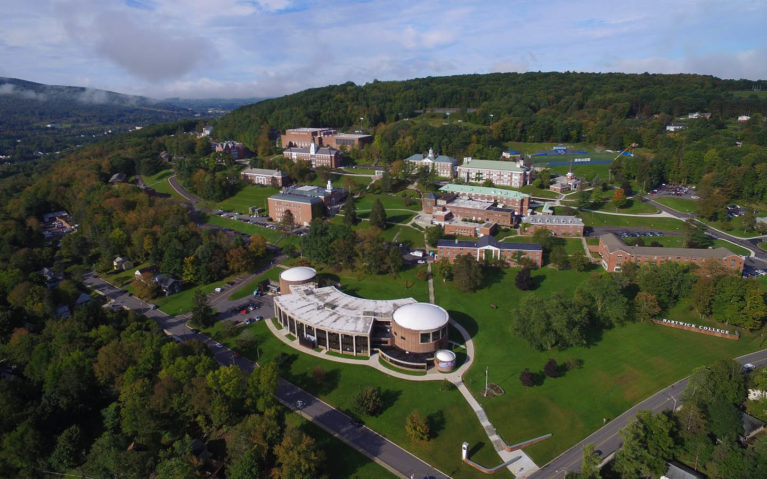
Because I am the 2022–25 Cora A. Babcock Chair in English, I again have a course release this spring. As such, I’ll only be teaching one class this semester, but I’m super excited to teach ENGL 352 Critical Game Studies again.
Because I am the 2022–25 Cora A. Babcock Chair in English, I again have a course release this spring. As such, I’ll only be teaching one class this semester, but I’m super excited to teach ENGL 352 Critical Game Studies again.
 I am absolutely thrilled to announce that 2013–2017: Sonnets, the first volume of my ongoing sonnet sequence, will be published by LJMcD Communications in July 2024. I’ll update this page with more information when I have it, but for now, here’s a description of the book:
2013–2017: Sonnets is the first volume in Bradley J. Fest’s ongoing sequence of American sonnets, a project concerned with how the distributed networks of the twenty-first century construct and filter time. Continuing the program of poetic assemblage explored in his first two books, these poems were composed consecutively as emergent temporal snapshots documenting certain experiences of what it was like to live precariously in the overdeveloped world between 2013 and 2017. Over the past decade, this ongoing experimental sonnet sequence has become: a complex encounter with time and its twenty-first-century rhythms; a document of artistic maturation; a personal archive of occasions, moments, days; a continually refreshed confrontation with the global computational hyperarchive; a discography of popular music; an extended reflection on contemporary literature, art, and culture; an increasingly multiplex meditation on the sonnet; an historical record of the troubling national situation in the United States; and a work of mourning for a world disappearing into climate emergency. The second volume, currently in progress, begins in 2018.
Also, thanks much to my very good friend Taylor Baldwin for the amazing cover image: The Interpreter (2010).
The final poem in my “Archives” series, “Archives of Spring,” is out in The Decadent Review. The whole series can be accessed here. Enormous thanks to Dimitri Kaufman, editor of The Decadent Review, for presenting these poems in such a wonderful fashion over the past year. And if you want links to each individual other poem, here they are: “Archives of Summer,” “Archives of Autumn,” and “Archives of Winter.”
As I mentioned in my last post, my work appeared in two different publications today. The second: More sonnets from my ongoing sequence, “2021.05,” “2022.03,” and “2022.04,” are in The Kitchen Sink, a brand-new publication based in Oneonta, New York (where I currently reside) run by recent graduates of the State University of New York at Oneonta. Thanks to Alexis Ochi and the other editors for accepting my work. I’m also thrilled to have these poems published alongside work from one of my students at Hartwick College.
The second poem in my “Archives” series, “Archives of Autumn,” is out in The Decadent Review. Winter and spring are forthcoming.
This year, Hartwick College and the Department of Literature, Media, and Writing will present four readings in the 2022–23 Visiting Writers Series. Readings take place at 7:00 or 7:30 p.m. in Eaton Lounge, Bresee Hall at Hartwick College in Oneonta, New York.
All campus visitors, including attendees at campus-based public events, must have up to date vaccinations for COVID-19. The College reserves the right to require masks on an event-by-event basis.
Poet Raena Shirali will read on Thursday, October 27, 2022 at 7:30 p.m., including from her new book summonings (Black Lawrence, forthcoming 2022).
Fiction writer Tessa Yang will read from her brand new collection, The Runaway Restaurant (7.13, forthcoming October 2022) on Wednesday, November 16, 2022 at 7:00 p.m.
Fiction writer, poet, and game designer Julian K. Jarboe will read from their work on Wednesday, March 15, 2023 at 7:00 p.m.
And poet and nonfiction writer Sten Carlson will read from his work on Friday, April 28, 2023 at 7:00 p.m.
For more information, visit the Visiting Writers Series webpage.
This fall, the Faculty Development Committee and the Office of Academic Affairs at Hartwick College will present three speakers in the annual Faculty Lecture Series.
All talks take place at during the common hour: 12:20–1:20 p.m. in Eaton Lounge, Bresee Hall at Hartwick College, Oneonta, New York.
Admission to the readings is free and the events are open to the public. Attendees and all campus visitors must be vaccinated for COVID-19 and will be required to provide either their vaccination card or the New York State Excelsior Pass. Any visitor requiring an exception to this requirement must complete this form and receive prior approval from the College.
Parker Troischt, “How Big Is Big? Using the Most Powerful Explosions in the Universe to
Improve Distance Determinations in Extragalactic Astronomy,” Friday, September 9, 2022.
Cheryl L. Johnson, “Third Culture and Identity: How Much Do I Need until I Am ‘Enough’?,” Friday, October 14, 2022.
Meghan Sheehy, “Investigating the Research-to-Practice Gap in Music Education: Results and Roadblocks,” Friday, November 11, 2022.
For more information, visit the Faculty Lecture Series webpage.
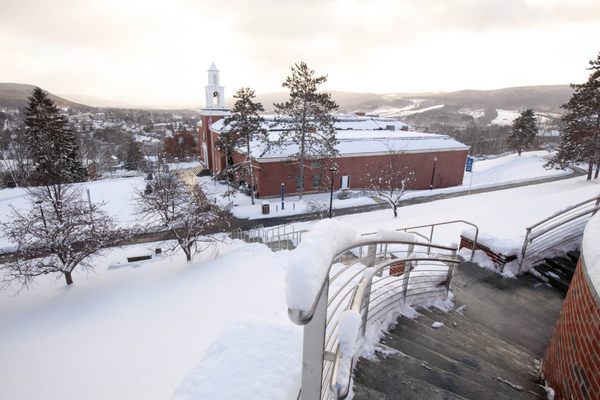 Hartwick College’s unique January Term (J-Term; my first!) is again starting off unconventionally, but I’m excited to be teaching an intensive month-long course on feminist poetry and poetics. The syllabus: ENGL 247 Four Modern American Poets: Adrienne Rich, Audre Lorde, Bernadette Mayer, and Rachel Blau DuPlessis.
This spring, Hartwick College and the Department of English will present the last two readings of the 2021-22 Visiting Writers Series. All readings take place at 7 p.m. in Eaton Lounge, Bresee Hall at Hartwick College in Oneonta, New York.
Admission to the readings is free and the events are open to the public. Attendees and all campus visitors must be vaccinated for COVID-19 and will be required to provide either their vaccination card or the New York State Excelsior Pass. Any visitor requiring an exception to this requirement must complete this form and receive prior approval from the College. Masks are required in all College buildings.
Krys Malcolm Belc will read on Wednesday, March 2, 2022.
Michael Peters will read on Wednesday, April 13, 2022.
For more information, visit the Visiting Writers Series webpage.
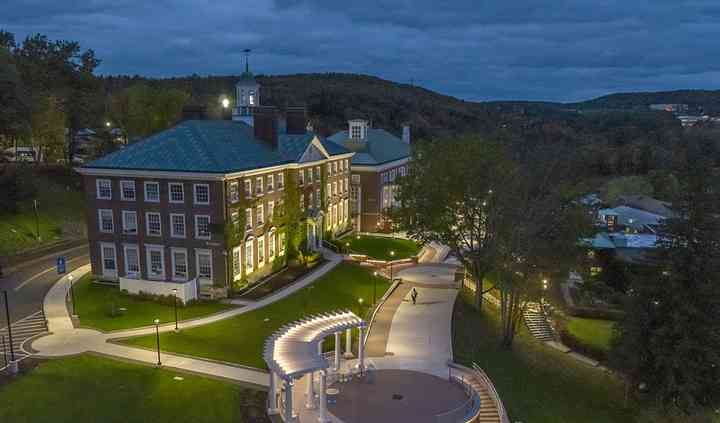
The start to this academic year is again unconventional, but feeling much closer to normal, especially owing to Hartwick College’s reopening plans. I’m again teaching two frequently taught creative writing courses and revisiting Poetry and Technology. The syllabi:
ENGL 213 Introduction to Creative Writing

