I am honored to have “2025.12” from my ongoing sonnet sequence in the new and excellent avant-garde journal bethh.
Oneonta
Spring Semester 2026: Syllabi and Teaching Without Computers
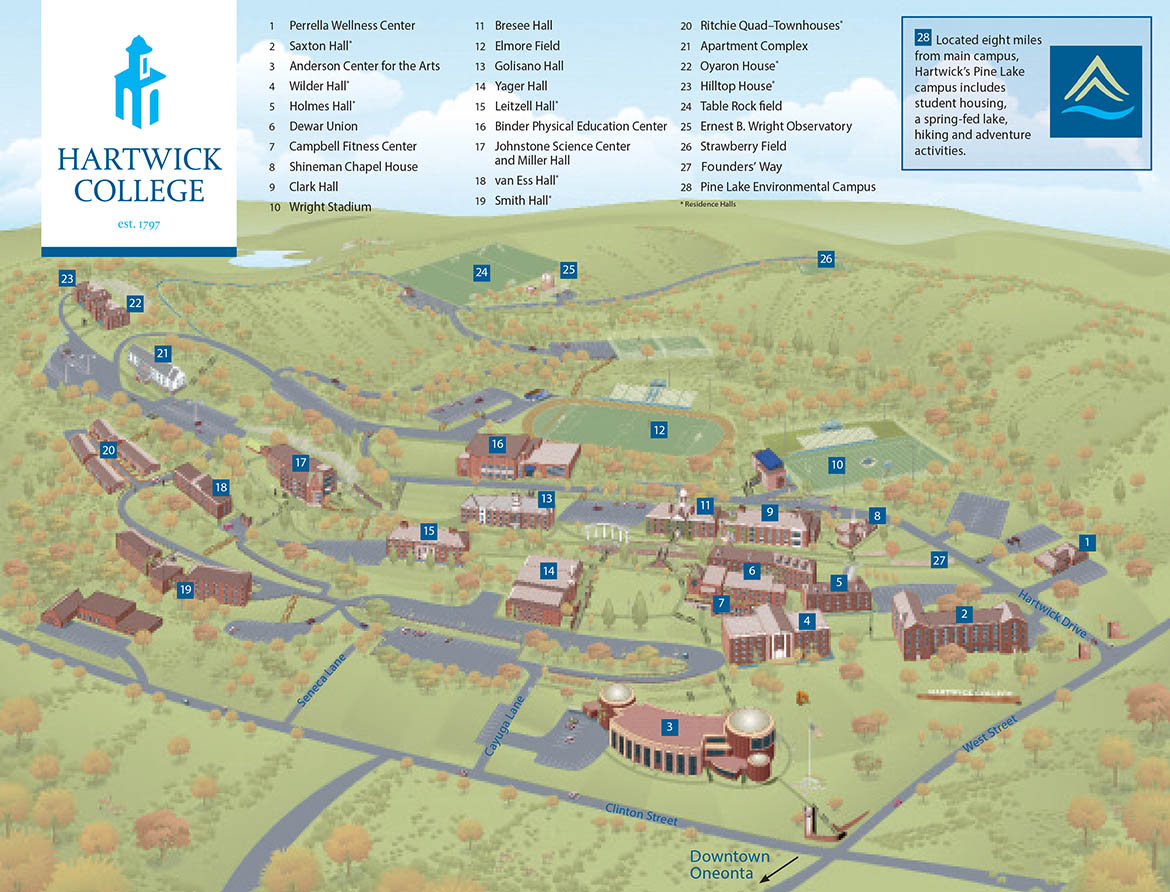
After a very productive and thoroughly refreshing sabbatical, I’m back at Hartwick College this spring teaching two courses (and two of my favorite to teach!). Here are the syllabi: ENGL 220 Introduction to Textual Analysis and ENGL 352 Critical Game Studies.
Most notably, after twenty years of teaching predominantly writing-intensive courses in which I assigned essays, poems, and stories to be composed outside of class, in response to the frustration the sheer amount of student work I have seen generated by artificial intelligence (AI) has caused me and the more general neofeudal edtechification of higher education, I made the decision this spring to make my courses (almost) completely analog in terms of assignments, materials, and expectations. Students write all their papers in class. Students are required to have print books, and I print out all PDFs for them to read and annotate. No one has a smart phone or a laptop anywhere in sight. It’s glorious, old school, amazingly analog. And it is working.[1]
I am calling this teaching without computers, and it has been revolutionary for my pedagogy and peace of mind, revitalizing the classroom as a space of human connection, energy, communication, thinking, and poiesis while also assuaging my own considerable frustrations with and despair about my job over the past few years, a job that at some point seemed destined to be little more than that of plagiarism detective. All my previous engagement with students’ ideas and their attempts to express those ideas were slowly and almost completely strained away over the past three-odd years with nothing left but policing, constantly on the lookout for evidence of now seemingly ubiquitous large-language model (LLM) use infecting and subverting the reading, writing, and thinking of our students, of an entire generation of young people, of, really, everyone, compromising our very humanity with its tepid, dumb slop. Though I am only six weeks into the semester, the transformation teaching without computers has wrought upon my classroom has been remarkable. My students have, to a large degree, embraced my new pedagogy, as I suspect it has given them back something that I perhaps only now realize had been lost in classrooms years before LLMs had emerged. I cannot recommend this (and other) kind(s) of AI-resistant pedagogy enough for other people teaching in the critical humanities. I am a convert. Fully. And I expect that, whatever comes next for me as a teacher, a big part of it will be proselytizing for the new good news: teaching and learning without computers.
For more resources on resisting AI in our teaching, see Anna Kornbluh, Eric Hayot, Krista Muratore, and Gina Stinnett’s Against AI.
[1] That said, there are still some digital elements in my classes. For example, obviously I still require that students play video games in ENGL 352 Critical Game Studies, and I do make available the online version of the Oxford English Dictionary and a thesaurus during in-class writing assignments. Of course, I also happily approve whatever digital accommodations students might need—they just need to ask (and regardless of whether or not they have any documented need for such accommodation).
Author Expo 2025 in Oneonta, New York
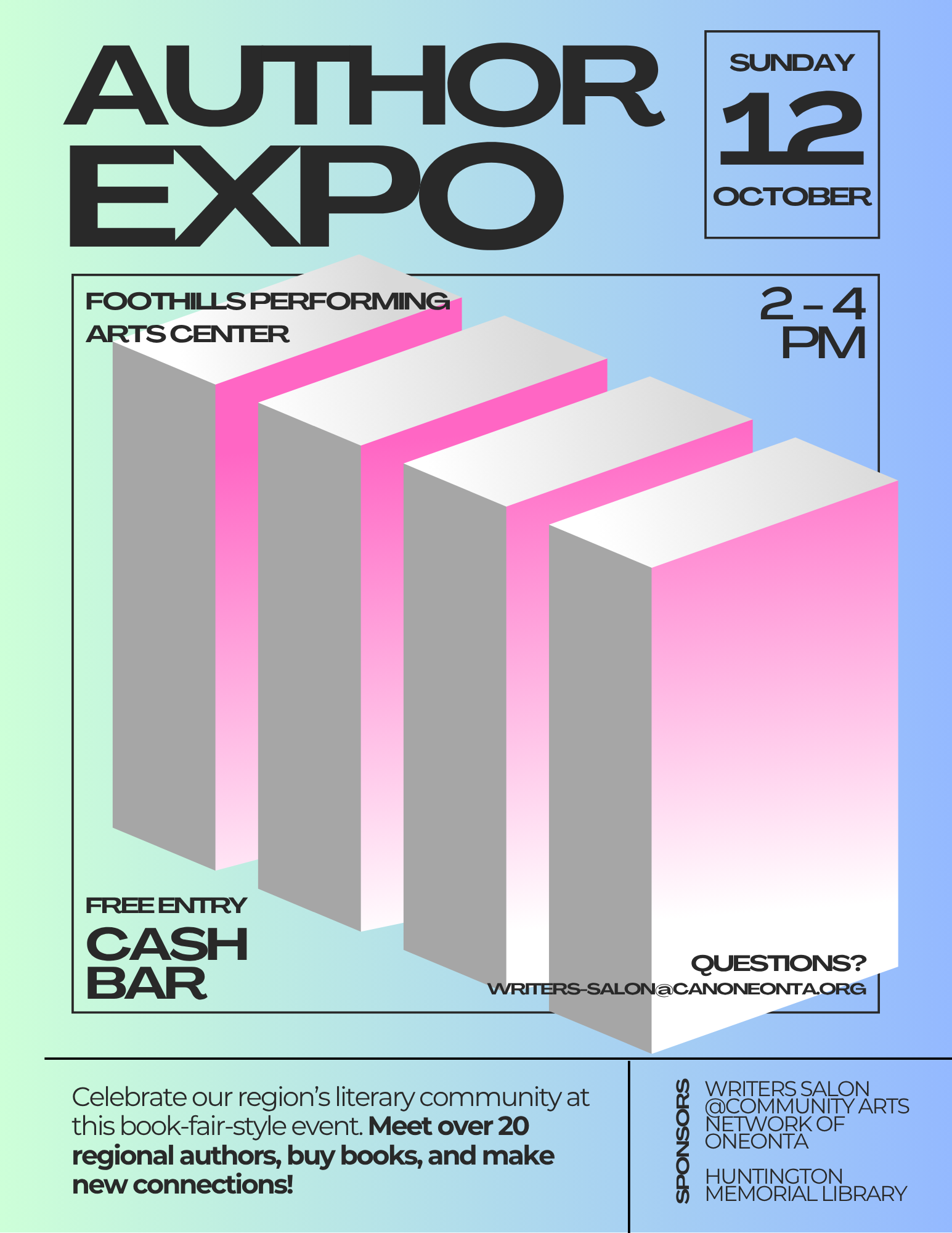
I will have a table with my books for sale—2013–2017: Sonnets (LJMcD Communications, 2024) and perhaps one copy of The Rocking Chair (Blue Sketch, 2015)—at Author Expo 2025 in Oneonta, New York on Sunday, October 12 from 2:00–4:00 p.m. at the Foothills Performing Arts Center (24 Market St, Oneonta, NY 13820).
Author Expo 2025 is put on by the Writers Salon at the Community Arts Network of Oneonta and the Huntington Memorial Library.
Spring Semester 2025: Syllabus

Because I am the 2022–25 Cora A. Babcock Chair in English, I again have a course release this spring. As such, I’ll only be teaching one class this semester, but I’m super excited to teach ENGL 412 Advanced Poetry Workshop again, one of my favorite classes to teach at Hartwick College.
Fall Semester 2024: Syllabi

I was so busy this fall semester that I forgot to post syllabi for my classes! Here they are. I’m particularly proud of the work my students did in my department’s senior seminar for this year: ENGL 470 Mark Z. Danielewski’s The Familiar.
ENGL 213 Introduction to Creative Writing
“2023.32” in Cleaver
Thanks so much to Cleaver for publishing another sonnet from my ongoing sequence, “2023.32,” in their forty-eighth issue.
Hartwick College’s Faculty Lecture Series, Spring 2025
This spring, the Faculty Development Committee and the Office of Academic Affairs at Hartwick College will present three speakers in the annual Faculty Lecture Series.
All talks take place at during the common hour: 12:20–1:20 p.m. in Eaton Lounge, Bresee Hall at Hartwick College, Oneonta, New York.
The lectures are free and open to the public.
Mark Wolff, “Did a Computer Write This? The Ethics of Reading in an Age of Artificial Intelligence,” Friday, February 7, 2025.
Karl Seeley, “Food First! Reconceptualizing Economic Growth in Light of Climate Change,” Friday, March 7, 2025.
Weiwei Zhang, “Harnessing Materiality: Building Cultural Resonance in the Digital Age,” Friday, April 11, 2025.
For more information, visit the Faculty Lecture Series webpage.
Reading at CANO’s Writers Salon

I recently published a book, 2013–2017: Sonnets (LJMcD Communications, 2024), the first in an ongoing sonnet sequence. I have written the next book in the sequence, 2018–2024: Sonnets, and I’ve started the third, 2024–20XX: Sonnets, and I will be reading poems from these two most recent projects at 7:30 p.m. on Thursday, November 21, 2024 at the Community Arts Network of Oneonta (CANO)’s Writers Salon at the Wilber Mansion on 11 Ford Ave. I promise a poem about the election (writing it right now).
“2023.21,” “2023.22/24,” and “2023.25” in Broken Lens Journal
Thanks so much to Broken Lens Journal for publishing some new sonnets in their ninth issue: “2023.21,” “2023.22/24,” and “2023.25.”
If you’re in Oneonta and want to hear some more poems from the manuscript these come from, stop by CANO’s Writers Salon on November 21.
“2022.11,” “2023.01,” “2023.11,” “2023.12,” “2023.13,” and “2023.14” in Pamenar Online Magazine
I am thrilled to have poems in Pamenar Online Magazine again! Check out: “2022.11,” “2023.01,” “2023.11,” “2023.12,” “2023.13,” and “2023.14.” Thanks to Ghazal Mosadeq for her support and the amazing journal and press she and her team have put together.
If you’re in Oneonta and want to hear some more poems from the manuscript these come from, stop by CANO’s Writers Salon on November 21. I’ll also be reading from 2013–2017: Sonnets on Wednesday, September 25 for Hartwick College’s Visiting Writers Series.
 The Hyperarchival Parallax