“Metaproceduralism: The Stanley Parable and the Legacies of Postmodern Metafiction” in Wide Screen

homepageimage_en_us

I am pleased to announce that another essay on videogames, “Metaproceduralism: The Stanley Parable and the Legacies of Postmodern Metafiction,” just appeared in Wide Screen. The essay is part of a special issue on videogame adaptation, edited by Kevin M. Flanagan, and includes articles by Jedd HakimiCameron KunzelmanKyle MeikleBobby Schweizer, and Kalervo Sinervo. It’s also open access, so anyone can read it.

Abstract: Most critics of contemporary literature have reached a consensus that what was once called “postmodernism” is over and that its signature modes—metafiction and irony—are on the wane. This is not the case, however, with videogames. In recent years, a number of self-reflexive games have appeared, exemplified by Davey Wreden’s The Stanley Parable(2013), an ironic game about games. When self-awareness migrates form print to screen, however, something happens. If metafiction can be characterized by how it draws attention to its materiality—the artificiality of language and the construction involved in acts of representation—The Stanley Parable draws attention to the digital, procedural materiality of videogames. Following the work of Alexander R. Galloway and Ian Bogost, I argue that the self-reflexivity of The Stanley Parable is best understood in terms of action and procedure, as metaproceduralism. This essay explores the legacies of United States metafiction in videogames, suggesting that though postmodernism might be over, its lessons are important to remember for confronting the complex digital realities of the twenty-first century. If irony may be ebbing in fiction, it has found a vital and necessary home in videogames and we underestimate its power to challenge the informatic, algorithmic logic of cultural production in the digital age to our detriment.

“The Function of Videogame Criticism” in the b2 Review

I have just published a review of Ian Bogost’s How to Talk about Videogames (2015),“The Function of Videogame Criticism,” in The b2 ReviewThe review signals a slightly new direction in my work–toward game studies–and will be the first of three pieces of videogame criticism that will appear in 2016. I have been teaching games for the past few years, so I am excited to be writing about them now.

End of the Semester Links, Spring 2016

Nuclear and Environmental

Justin Gillis, “Scientists Warn of Perilous Climate Shift Within Decades, Not Centuries.”

Ross Andersen, “We’re Underestimating the Risk of Human Extinction.”

Matthew Schneider-Mayerson, “On Extinction and Capitalism.”

Robert Macfarlane, “Generation Anthropocene.”

Will Worley, “Radioactive Wild Boar Rampaging around Fukushima Nuclear Site.”

Rebecca Evans, “Weather Permitting.”

Continue reading

Spring Break Links 2016

It has been a very busy past few months, and my links have suffered. But spring break has provided some lovely, unencumbered time, so here are many, many links (futilely) attempting to catch up with what’s been happening in the world. (In the interest of space, I’ve also passed over some of the more visible recent stories.)


Nuclear and Environmental

Paul Krugman, “Republicans’ Climate Change Denial Denial.”

Democracy Now, “Naomi Klein on Paris Summit: Leaders’ Inaction on Climate Crisis Is ‘Violence” Against the Planet.”

Adrienne LaFrance, “The Chilling Regularity of Mass Extinctions.”

Isabelle Stengers, In Catastrophic Times: Resisting the Coming Barbarism.

Sebastian Anthony, “Scientists Discover an Ocean 400 Miles Beneath Our Feet that Could Fill Our Oceans Three Times Over.”

Kylie Mohr, “Apocalypse Chow: We Tried Televangelist Jim Bakker’s ‘Survival Food.'”

Alex Trembath, “Are You and Upwinger or a Downwinger?”

Eric Bradner, “Newly Released Documents Reveal US Cold War Nuclear Target List.”

Continue reading

September 2015 Links

These links are coming a day late, but as anticipated, it has been a very busy semester.


Nuclear and Environmental

Lizzie Wade, “Earth in 10,000 Years.”

John Metcalfe, “Imagining the Most Catastrophic Climate Future Ever.”

Steven Vogel, “Environmental Ethics in a Postnatural World.”

Chris Mooney, “Why Some Scientists Are Worried About a Surprisingly Cold ‘Blob’ in the North Atlantic Ocean.”

Laurence Topham , Alok Jha and Will Franklin, “Building the Bomb.”

Ross Andersen, “Watching Nuclear War From Across the Galaxy.”

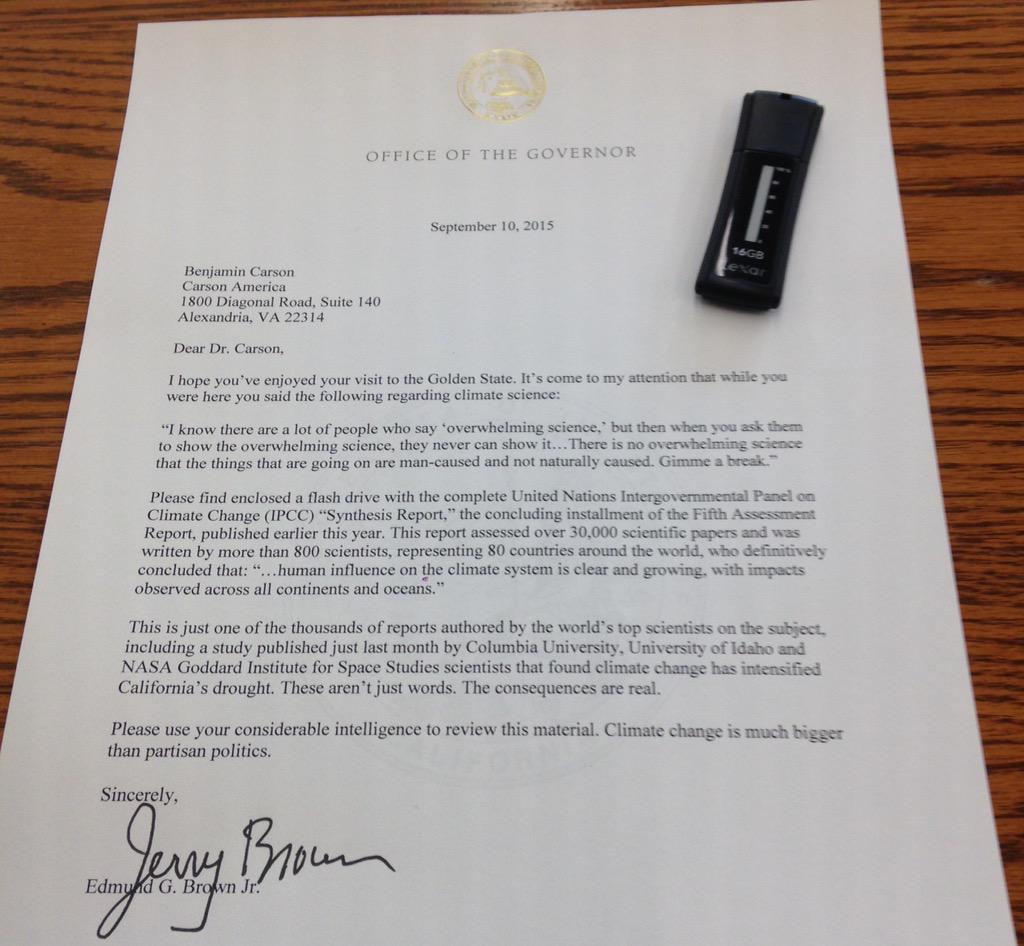
And a letter from Governor Jerry Brown.

Continue reading

The Seventieth Anniversary of the Bombings of Hiroshima and Nagasaki, and Other Links

Nuclear and Environmental

Thomas Powers, “Was It Right?”

Jonah Walters, “A Guide to the Hiroshima and Nagasaki Attacks.”

Colin Wilson, “The Slaughter of Hiroshima.”

The New York Times, “Anniversary of Hiroshima and Nagasaki Revives Debate Over the Atomic Bomb.”

Christian Appy, “The Indefensible Hiroshima Revisionism that Haunts America to This Day.”

Rebecca J. Rosen, “Rare Photo of the Mushroom Cloud Over Hiroshima Discovered in a Former Japanese Elementary School.”

Paul Ham, “The Bureaucrats Who Singled Out Hiroshima for Destruction.”

Continue reading

A Few More October Links

Hyperarchivalism

Jason Schreier, “It Took Two Years To Make Final Fantasy VII‘s Midgar in Minecraft.”

It Took Two Years To Make Final Fantasy VII's Midgar In Minecraft

And more in huge fantasy worlds created in Minecraft: Laura Hudson, “How Fans Created Game of Thrones in a Minecraft Map the Size of LA.”

And I think this may very well be the death-knell of the age of superhero blockbusters (but also a megatext I’ll be writing about in, say, 2022): Dee Lockett, “DC Announces 10 New Superhero Films in Next Six Years, Including Wonder Woman (and Suicide Squad [!?] and Shazam [!?] and Cyborg [!?] . . . this can’t go well).

Continue reading