At this year’s Modern Language Association Convention in Los Angeles, California (January 7-10, 2027), I will be speaking on a roundtable Teaching Literary Maximalism: Problems, Practices, Possibilities, and a panel, Real Aesthetic Questions. I have included the information and tentative abstracts for each paper below.
23. Teaching Literary Maximalism: Problems, Practices, Possibilities
Thursday, January 7, 2027, 12:00-1:15 p.m.
Presiding: Benjamin Bergholtz (Louisiana Tech U) and Yonina Hoffman (US Merchant Marine Acad.)
Speakers:
Carole Carroll (Lubbock Christian U)
Srirupa Chatterjee (Indian Inst. of Tech., Hyderabad)
Bradley J. Fest (Hartwick C)
Alexander McKee (U of Delaware, Newark)
Stefan H. Uhlig (U of California, Davis)
Yanchang Zhu (Huzhou C)
Teaching Megatexts
In a monograph currently under peer review, Too Big to Read: The Megatext in the Twenty-First Century, I argue that the massive yet discrete textual objects that have appeared across media in the last thirty or so years should be considered a distinct, emergent form, what I call the megatext. From three-million-page conceptual works to massive cinematic universes and gigantic video games, the twenty-first century has seen megatexts appear across media. Megatexts are unreadably large yet concrete aesthetic and rhetorical objects that require incredibly nontrivial effort to completely traverse; they are produced and conceived as singular works and depend upon digital technology and collaborative authorship for their production. In my talk, I will focus on the specific challenges and possibilities presented by devoting an entire semester to studying a text that is “too big to read.”
I will be focusing on two classes of mine at Hartwick College, a small liberal arts college in upstate New York: a senior seminar for English majors in the fall of 2024, ENGL 470 Mark Z. Danielewski’s The Familiar; and an upper division course for English and game development majors I taught in the spring of 2026, ENGL 352 Critical Game Studies. ENGL 470 was devoted to studying Danielewski’s failed megatext, The Familiar (2015–17), and putting it in conversation with other relevant texts, including Lost (2004–10), Anna Kornbluh’s Immediacy (2024), criticism of the novel, and texts chosen by students. ENGL 352 is a course I have taught before, but instead of looking closely at six games over the course of the semester, this spring I will ask students to spend the entire semester playing Final Fantasy XIV (2010–) as a grounding touchstone for the class’s more general introduction to the field of game studies.
My main focus in “Teaching Megatexts” will be on the inherently and necessarily collaborative nature of teaching and learning that occurs between students and instructor when a megatext is brought into the classroom. As I argue in Too Big to Read, megatexts are collaborative both in terms of authorship (they cannot be made by a single person alone) and in terms of criticism and reception (they need to be read, played, and watched collectively; they require collective criticism). As such, the classroom is a perfect place to explore the limits and affordances of collaborative reading, playing, teaching, and learning. In ENGL 470, my class kept a collective blog that asked them to put their readings in conversation with one another and to give group presentations on relevant texts of their choosing that they also assigned to the class. In ENGL 352, students spent time each week teaming up to play Final Fantasy XIV. “Teaching Megatexts” will thus theorize how the classroom changes and what kinds of different pedagogy is necessary when the object of critical analysis grows beyond the ability of any single student (or instructor) to know it in its entirety.
490. Real Aesthetic Questions
Saturday, January 9, 2027, 10:15-11:30 a.m.
Presiding: Nan Z. Da (Johns Hopkins U, MD)
Presentations:
- “Acts of Critical Complicity,” Stephen Best (U of California, Berkeley)
- “Beauty, Inertia, and Being,” Eleanor Kaufman (U of California, Los Angeles)
- “Kafka’s Aesthetics; or, The Aesthetic Questions of the Yiddish Theater,” Matthew Johnson (U of Wisconsin, Madison)
- “Light’s Speech: Louise Glück’s The Wild Iris,” Bradley J. Fest (Hartwick C)
Light’s Speech: Louise Glück’s The Wild Iris
What does light sound like? How would it speak? What would it say? How might one bring its presence into language? How might language be luminous? These fundamentally aesthetic questions appear to motivate many of the poems in Nobel Laureate Louise Glück’s Pulitzer Prize–winning collection The Wild Iris (1992). Written at a moment when light speaking via optical pulses along fiberoptic communication cables was about to reconfigure global communication and archival memory, solidifying the formation of what Fest has elsewhere called the optical society, Glück’s poems must strike us, read from our moment of ubiquitous, enrapturing digital luminosity, as wonderfully, importantly aesthetic, as analog and nonarchival, providing moments of seeing, reading, hearing, representing, and imagining light outside and against the twenty-first-century optical regime and its hyperarchival fever. Perhaps even more importantly, light in The Wild Iris is not immaterial or ephemeral but wonderfully material, embodied in plants and soil, traced through earth and sky, while simultaneously still curiously transient in the way only something that is both particle and wave can be, “white light / no longer disguised as matter.”[1] Ultimately arguing that Glück inaugurates something like a luminous poetics or a luminous literary aesthetics that many other contemporary poets across traditions have taken up in The Wild Iris’s wake, this paper will also be the first foray into a larger new book project tentatively titled Literary Light.
For previous essays of mine on megatexts and unreadable texts, see:
“‘Is an Archive Enough?’: Megatextual Debris in the Work of Rachel Blau DuPlessis.”
“Writing Briefly about Really Big Things.”
Notes
[1] Louise Glück, “End of Summer,” in The Wild Iris (Ecco, 1992), 41.


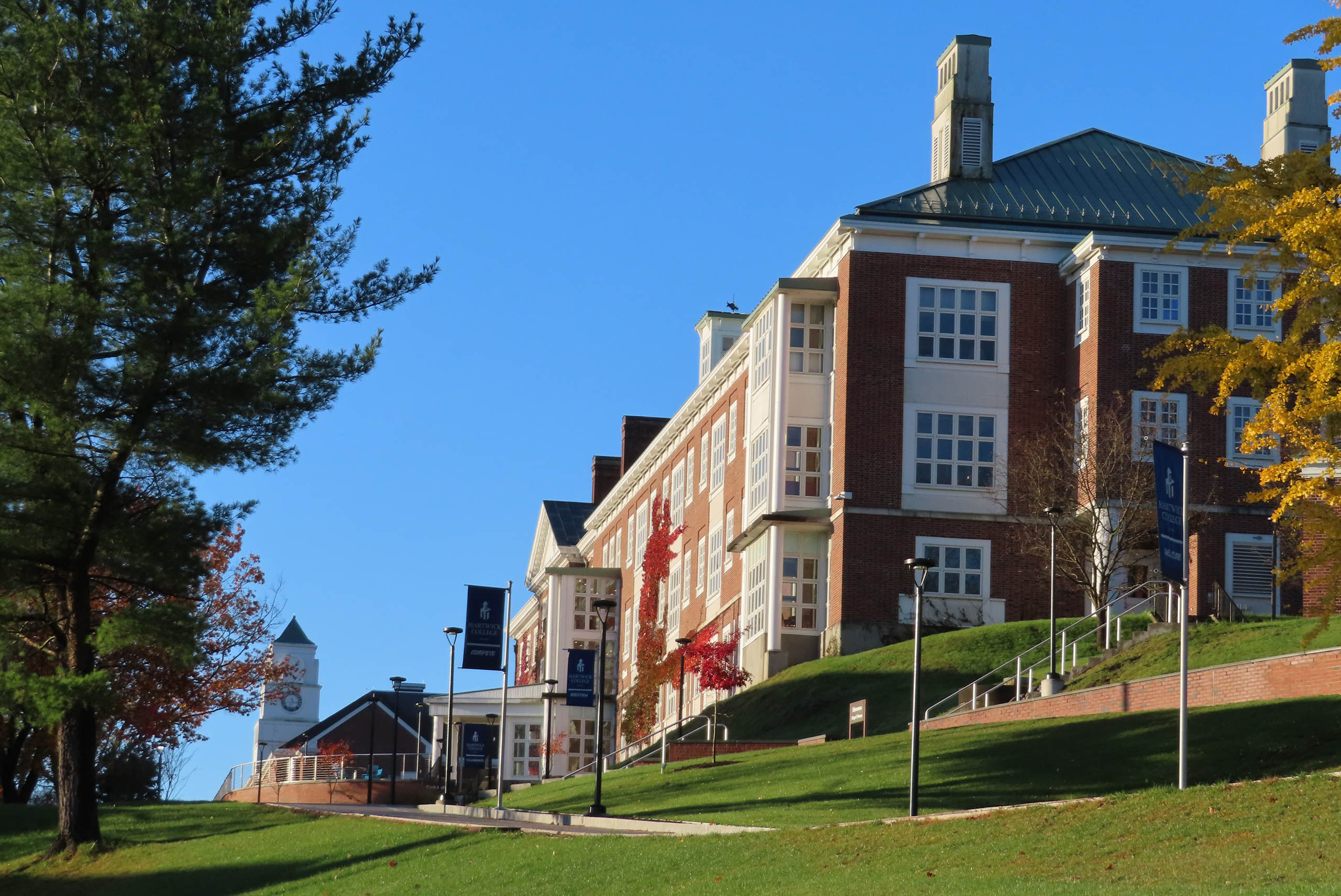 Because I am the 2022–25 Cora A. Babcock Chair in English, I have a course release each spring for the next three years. As such, I’ll only be teaching one class this semester, but I’m super excited about it:
  This coming fall semester looks like it will be as close to “normal” as it’s been in some time. I’m teaching some familiar creative writing classes that I usually teach in the fall (syllabi below), and filling in for the first half of the semester in our ENGL 101 Writing Tutorial class (syllabus not included). I will again also be teaching our methods course for senior theses in creative writing (ENGL 489).
