
Poetry, Metal, Irony, and Other Links

Converge

Michael Robbins has a great piece in this months Harper’s, “Destroy Your Safe and Happy Lives: A Poet’s Guide to Metal,” which, in the space of six pages, is able to reference John Milton, Rainer Maria Rilke, Black Sabbath, and Converge. I did not know that could be done. (Even R., who tends to abhor whenever anything loud and screamy even gets near our home’s turntable, enjoyed this piece.) Highlights of the short essay include: quoting a number of lines from William Blake’s “Proverbs of Hell” and commenting, “sounds pretty metal to me”; describing a Converge show where they “took over that space like a bellowing wooly rhino crashing into a Pleistocene clearing. . . . It’s war music” (a pretty accurate description); and some reflections on metal and capital: “Sometimes I wonder what metal would sound like after capitalism, or whether we would even need metal then. I wonder the same about poetry.”

More DFW stuff. Peter Finocchiaro, “What David Foster Wallace Got Wrong About Irony: Our Culture Doesn’t Have Nearly Enough of It,” which, strangely enough, is actually an interview with Jonathan Lear about irony (rather than an article specifically about DFW’s sense of irony). In my revised version of an essay that will appear in David Foster Wallace and “The Long Thing” (forthcoming July 2014), I make some similar points about the need for irony at the present time. That said, Lear seems to have a better handle on Wallace’s specific take on irony from the television essay than Finocchiaro, emphasizing that DFW was both a gifted ironist himself and that, in “E Unibus Pluram,” he is critiquing institutionalized irony, which I think all us post-ironists or new sincerity people would do well to heed, along with Lear’s acknowledgment that irony can actually be a from of earnestness: “There’s a very famous quote from Kierkegaard — or, I don’t know how famous it is, but it’s one of my favorites — where he said, it’s ‘only assistant professors’ who think irony can’t be a form of earnestness. Basically his claim is that irony when properly understood is a very high form of sincerity and earnestness, not its opposite. As he put it, it’s a real misunderstanding of what irony is to think it’s the opposite of earnestness toward commitment.” I feel the earnestness or “sincerity” of irony as it plays out in DFW’s work and thinking has been something that has been overlooked to the detriment of both our understanding of DFW and irony more generally.

Alex C. Madrigal and Adrienne LaFrance, “Net Neutrality: A Guide to (and History of) a Contested Idea.”

Dexter Filkins writes a letter from Iraq in The New Yorker, “What We Left Behind.”

And from the University of Pittsburgh’s great graduate student film blog, Kevin Flanagan on “Introduction to Applied Airport Studies.”
The Dark Side of the Digital Humanities and Other Links

This winter’s special issue of differences, “In the Shadows of the Digital Humanities,” is looking like a must read for anyone interested in the subject. A number of important essays appear in the journal by a group of notable scholars, including an introduction by Wendy Hui Kyong Chun and Lisa Marie Rhody, and articles by Matthew Kirschenbaum, Richard Grusin, Adeline Koh, Alexander R. Galloway, David Golumbia, Patrick Jagoda, and many others.

And more on “relatable”: a very interesting piece by Lucy Ferriss, “I’m Relatable, You’re Relatable,” and an older one by Kit Nicholls, “The ‘Relatable’ Fallacy.”

The 2014 Hugo Awards have been announced, and Robert Jordan’s (and Brandon Sanderson’s) Wheel of Time got the nod. (I have a few brief words on the end of the series.) Note the exception to the Hugo rules that allow The Wheel of Time‘s nomination. . . .

Chay Close on Jazzpunk (Necrophone Games, 2014), “All Videogames Are a Joke.” Looks like I have something else to add to my summer indie game program.

More from the DFW-industry: Thorin Klosowski, “David Foster Wallace’s Best Productivity Tips.” Really?

Paul Barnwell, “My Students Don’t Know How to Have a Conversation.”

Tim Wu, “Goodbye, Net Neutrality; Hello, Net Discrimination,” and Kevin Drum, “Net Neutrality Finally Dies at Ripe Old Age of 45.”

Rebecca Schuman on student evaluations.

End of the Semester Links Spring 2014

It’s been a busy end of the semester and I haven’t been able to post anything for a bit. So, now that I have a bit of time before the semester wraps up, here’s a bunch of stuff that has been happening the last few weeks. My apologies if I’m a bit late on some of these things.

Nuclear and Disaster

Laura Miller reviews Craig Nelson’s The Age of Radiance: The Epic Rise and the Dramatic Fall of the Atomic Age.

John Metcalfe, “What Famous Old Paintings Can Tell Us About Climate Change.”

Only .02% of published research rejects global warming.

Adam Weinstein, “Arrest Climate Change Deniers.”

Continue reading

Big News in Science and Other Links

Science

The first evidence for cosmic inflation–i.e., the Big Bang–was discovered this week.

Megan Garber at The Atlantic, “What It’s Like to be Right About the Big Bang?”

The search for Flight MH370 is revealing one thing: the ocean is filled with garbage.

Kim Stanley Robinson alert: Paul Rosenfeld, “Would You Take a One-Way Ticket to Mars?”

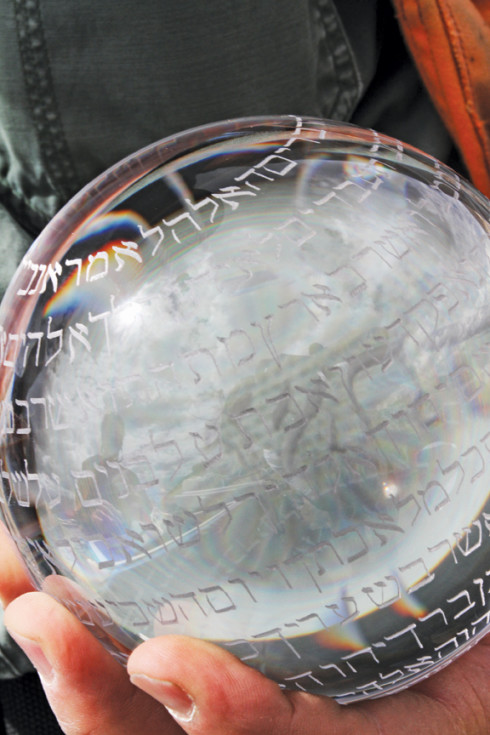
And as part of his forthcoming 3 million page novel, Breeze Avenue (2015), Richard Grossman has buried a crystal ball deep inside of Princeton Mountain in Colorado. The ball, “made of synthetic sapphire, which is almost as indestructible as diamond,” has the Ten Commandments inscribed on it in Hebrew, and in “20 million years, as a result of natural forces carefully calculated by the geologists, the Torah Ball will emerge from its eroded resting place and bear the Ten Commandments down the mountain.” Hyperarchivalists of the deep future rejoice!

Richard Grossman, The Torah Ball (Synthetic Sapphire, Princeton Mountain, 20 Million Years of Erosion, 2011).

Richard Grossman, The Torah Ball (Synthetic Sapphire, Princeton Mountain, 20 Million Years of Erosion, 2011).

Continue reading

A Miscellaneous Group of Not Very Doomy Links

Surveillance, consent, networks, numbers, the hyperarchival condition of the contemporary: Natasha Lennard writes “Of Being Numerous” for The New Inquiry.

This doesn’t seem like reading at all: the new “speed reading app.”

Rebecca Stoner in The Daily Sophist: “What’s Love Got to Do with Anything? DFW Biographer D.T. Max Speaks on Campus.”

“A Game is Being Beaten” by Leigh Alexander at The New Inquiry: “The trend in video game design is to comment on violence by asking players to perform violence. But could there be pleasure in performing consent?”

“How Benjamin Kunkel Went from Novelist to Marxist Public Intellectual” by David Wallace-Wells at Vulture.

Between Two Ferns: The Selling of the President, 2014.”

A very interesting forthcoming issue of Critical Inquiry.

A(nother) soundtrack for the apocalypse. Track 1 seems especially doomy. (Thanks Michael.)

My good friend Ryan Pierson on The Lego Movie: “On the Nonessential Beauty of Legos.”

And because I saw it yesterday and enjoyed it (though I am a bit confounded by this fact), another: Andrew O’hehir for Salon: The Lego Movie: Plastic Blocks Fight for Freedom!”

German philosophers play Monopoly. (I wonder what would happen if they got a game of Risk [The Game of Ruining Friendships] going.)

And sad news in hyperarchival realism. Google is redoing its Street View for many places in Pittsburgh, and thus Ben Kinsley and Robin Hewlett’s wonderful Street With a View is going away. (Right now it goes from a marching band in the rain to a deserted, sunny street. Uncanny.) Ah, the transitory internet–perhaps it isn’t an archive at all, for really, how do we archive the present in the present. . . .

A short film on Street With a View:

Elaine Scarry Has a New Book on Nukes, and Other Links

The Chronicle of Higher Education has a discussion of Elaine Scarry‘s new book, Thermonuclear Monarchy: Choosing Between Democracy and Doom (2014). Nathan Schneider has written an extensive review of Thermonuclear Monarchy, “A Literary Scholar’s Voice in the Wilderness: Elaine Scarry Fights American Complacency About Nuclear Arms.” Scarry is also the author of the monumentally important, The Body in Pain: The Making and Unmaking of the World (1987).

“Melting Ice Makes the Arctic A Much Worse Heat-Magnet than Scientists Feared.”

January was actually one of the warmest months on record.

And more disastrous weather to come.

Lennard Davis and Walter Benn Michaels writing for Jacobin on the University Illinois-Chicago faculty strike.

Davis and Michaels explaining why they’re striking at The Chronicle of Higher Education.

“Noam Chomsky: Zombies are the New Indians and Slave in White America’s Collective Nightmare.”

“David Foster Wallace, Mathematician.”

Samuel Cohen on Wallace, “Future Tense.”

My friend David Letzler reviews Thomas Pynchon’s Bleeding Edge (2013).

On Dead Poets Society (1989) and the humanities.

“Feminism, Depravity, and Power in House of Cards.” I just finished watching the fairly incredible second season last night.

More Doomy Doom and Less Doomy Doom

More Doomy

Brad Plummer has an interview with author of The Sixth Extinction Event, Elizabeth Kolbert (who was also on The Daily Show the  other night) at The Washington Post.

“The NSA and Climate Change: What We Know So Far,” by Joshua Eaton.

“How Iowa Flattened Literature,” or rather, the CIA and the Writer’s Workshop.

NASA is going to turn the moon into computronium, ur, I mean give licenses to mine it.

Less Doomy

David Foster Wallace’s letter to his editor.

Dragonlance should be the next fantasy movie franchise. I agree, esp. if it means they make the Legends series into films.

A new anthology of post-apocalyptic fiction, Wastelands 2, edited by John Joseph Adams.

A pretty scathing review of Matthew Barney’s River of Fundament (2014) that actually makes me want to see it more.

And a book I had an essay appear in last year, The Silence of Fallout: Nuclear Criticism in a Post-Cold War World, was just selected as one of Zer0 Books‘ best books of 2013.

Power, Privacy, and the Internet

The New York Review of Books just put up the audio for a conference it held on “Power, Privacy, and the Internet.” The conference was held 30-31 October 2013 in New York City, and there are some significant people that took part. (I also note that the image they used for the page is the same as the cover of Thomas Pynchon’s Bleeding Edge [2013].) Here is Simon Head addressing the themes of the conference:

The Internet is a transformative technology of our times and it is changing our lives as perhaps nothing else has done since the coming of the telephone, the telegraph, and the mass production automobile a century and more ago. Where the Internet surpasses these earlier technologies is in the speed with which its reach is expanding—in our contacts with one another through Twitter and Facebook, in what we read, hear, and buy; in our dealings with business, government, colleges and schools, and they in their dealings with us. Whether we like it or not we are caught up in these flows of technology and as we are carried along by the flows, some barely visible to us, it becomes increasingly difficult to stand back and distinguish between what is good about these innovations and what is not.

I am especially interested in listening to the panel on “The Internet, the Book, and the University Library,” with Robert Darnton and Anthony Grafton. (Among Grafton’s many other accomplishments, he is also the author of The Footnote: A Curious History [Cambridge, MA: Harvard University Press, 1997], a surprisingly fascinating history of the footnote that I read a few years ago to help me think about David Foster Wallace’s use of footnotes, something I never really ended up working on. . . .)

End of the Year Links

As I have been lax in posting things, yesterday I posted a bunch of links on recent stories regarding the NSA. Today I’m posting links of more general interest. I’ve tried to organize them by category.


Iran

The biggest story I have not had time to address were the diplomatic talks regarding Iran’s nuclear program. So here are some links to that.

On 5 November 2013 Reuters reported that Iran, Israel, and Middle East countries “took part in a meeting two weeks ago about prospects for an international conference on banning nuclear weapons in the Middle East.”

Temporary nuclear pact.

UN nuclear inspectors in Iran.

“Iran, from Enemy to Ally.”

Right on the verge of a nuclear agreement, perhaps the biggest event in nuclear nonproliferation in my lifetime, Bob Mendez fights Obama on imposing new sanctions on Iran, as do fifteen other democrats. More here.

Though from today: progress in nuclear talks.

Continue reading