The most recent sonnets in my ongoing sequence–“2020.12,” “2021.01,” “2021.02,” “2021.03,” and “2021.04”–are in the third issue of Version (9) Magazine.
Brad Fest
“Twenty-First-Century Forms” at MLA 2023

Given my ongoing interest in megatexts and other emerging hybrid and transmedia forms, I am organizing a second panel on emergent literary forms of the twenty-first-century for the 2023 Modern Language Association Convention in San Francisco, California (the first was at the 2021 MLA Convention). Please consider submitting an abstract to festb[at]hartwick[dot]edu by March 24, 2022. Here’s the CFP:
Twenty-First-Century Forms
If the novel and lyric poem might be considered residual forms, what literary forms are emerging in the twenty-first century? Panel on emergent literary forms: transmedia, digital, hybrid, remediated, megatexts, other. 250-word abstract, brief bio.
Spring Semester 2022: Syllabi
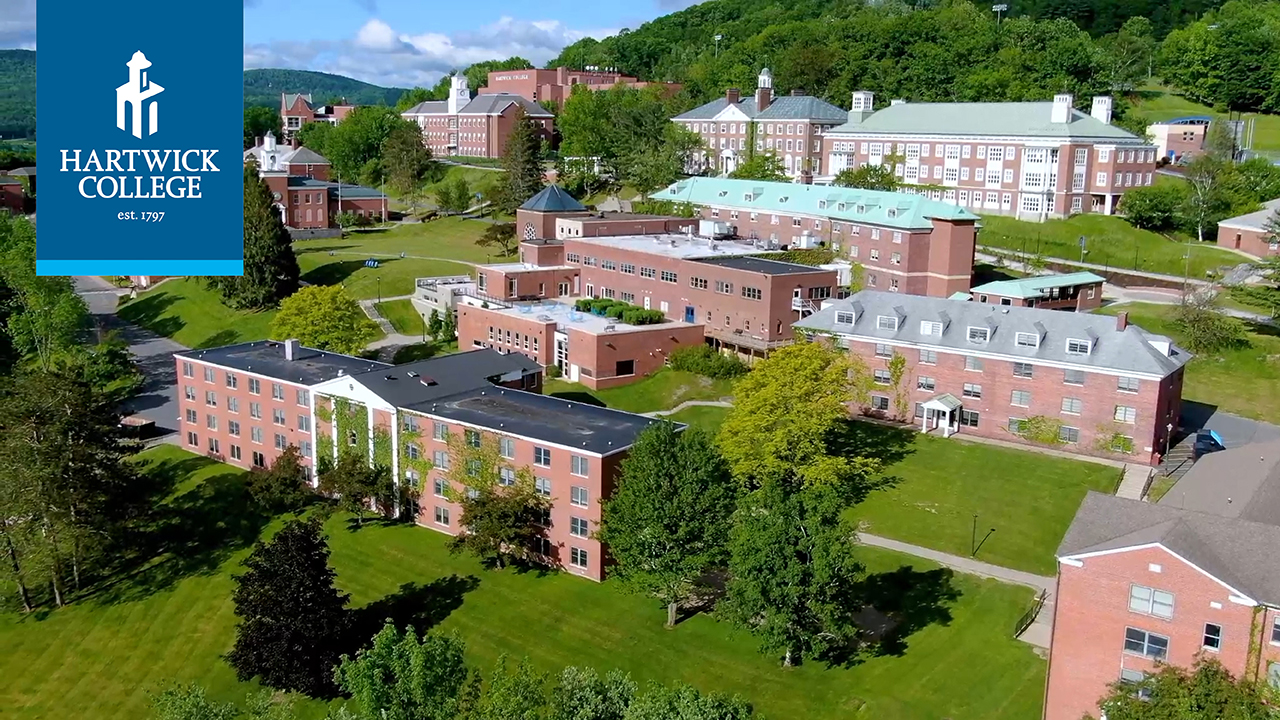 This spring semester at Hartwick College, I’m teaching two classes, ENGL 213 Introduction to Creative Writing, as usual, and a brand new course, ENGL 352 Critical Game Studies. I’m especially excited about the latter, as this was a course I developed at the University of Pittsburgh in AY 2015-16 with the aid of a course development grant but that I have not had a chance to teach until now.
The syllabi:
January Term 2022: Syllabus
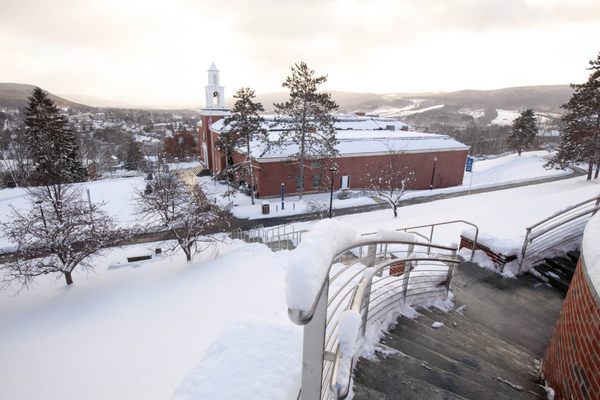 Hartwick College’s unique January Term (J-Term; my first!) is again starting off unconventionally, but I’m excited to be teaching an intensive month-long course on feminist poetry and poetics. The syllabus: ENGL 247 Four Modern American Poets: Adrienne Rich, Audre Lorde, Bernadette Mayer, and Rachel Blau DuPlessis.
“2020.07,” “2020.08,” “2020.09,” “2020.10,” and “2020.11” in Version (9) Magazine
The most recent sonnets in my ongoing sequence will appear across two issues of Version (9) Magazine, a journal “fostering . . . space for . . . texts that relate to the world of theory” (they previously published some other poems of mine).[1] “2020.07,” “2020.08,” “2020.09,” “2020.10,” and “2020.11” are in volume 1, issue 2. “2020.12,” “2021.01,” “2021.02,” “2021.03,” and “2021.04” will appear in early 2022 in the magazine’s third issue.
—
[1] Editors, foreword to Version (9) Magazine 1, no. 2 (Autumn 2021): 6, https://version9magazine.com/e-book-autumn-2021/.
“2020.01” Nominated for Best of the Net 2021

I have a huge amount of gratitude to Always Crashing for nominating my poem, “2020.01,” for Best of the Net 2021. It’s one of my favorite poems from my ongoing sequence: a system-wide volta.
“2015.04,” “2015.15,” “2015.18,” “2015.26,” “2016.02,” and “2016.28” in The Aesthetic Directory
I am incredibly indebted to Samuel Verdin, editor of The Aesthetic Directory, for publishing “2015.04,” “2015.15,” “2015.18,” “2015.26,” “2016.02,” and “2016.28,” the last unpublished sonnets from 2013–2017: Sonnets, the first volume of my ongoing sonnet sequence.
Promotion and Tenure at Hartwick College
Today, I was officially promoted to associate professor of English with tenure at Hartwick College.
This is the result of many years of hard work, but to a large degree, I owe this success to decades of support from friends, family, teachers, mentors, and colleagues. The people I would like to thank are too numerous to name individually, and I fear I would leave someone out if I attempted doing so, as so many have done so many things to help me achieve this lifelong goal.[1] But I would like to thank, first of all, my wonderful students and current and former colleagues in and out of the Department of English at Hartwick College, all those who took the time out of their day to visit my classes, all those who wrote letters of support, including my external reviewers and students, and all those who talked with me about the process, providing crucial advice. I would also like to thank my colleagues up the road at SUNY Oneonta, my amazing students, teachers, mentors, fellow graduate students, and other colleagues at the University of Pittsburgh, and my students and colleagues at Carnegie Mellon University. Thanks to all the anonymous reviewers over the years, the sometimes unseen/unheard but not unacknowledged people who have suggested my name for peer review or to contribute to a journal, and the many editors and publishers who have supported my work, with particular gratitude going to the editors and publishers of boundary 2, Blue Sketch Press, and Salò Press. And I have the deepest abiding gratitude and appreciation for my family and their endless patience listening to me talk about the job market and the tenure process. Most importantly, my partner and spouse: Racheal, I simply could not have done this without everything you bring to our family’s life and your oh-so-keen eye for errata. Your support has meant everything. And if I have somehow overlooked you amongst those mentioned above: thank you thank you thank you.
Thank you.
[1] For some of these individual thanks, see the acknowledgment pages of my dissertation, “The Apocalypse Archive: American Literature and the Nuclear Bomb” (2013), of my two books of poetry, The Rocking Chair (2015) and The Shape of Things (2017), in various articles (here, here, here, and elsewhere too) and interviews (also here), and in works in process and to come.
Review of Poetics for the More-Than-Human World
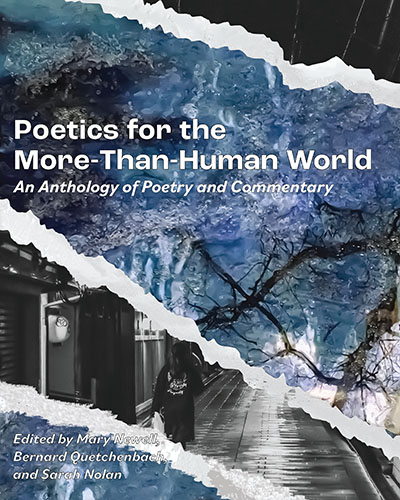
Camilla Nelson has written a thoughtful and incisive review of Poetics for the More-Than-Human World: An Anthology of Poetry and Commentary, edited by by Mary Newell, Bernard Quetchenbach, and Sarah Nolan, published last year by Spuyten Duyvil (and in which I have a couple poems). The review appeared in vol. 2, no. 1 of Ecocene: Cappadocia Journal of Environmental Humanities.
Fall Semester 2021: Syllabi
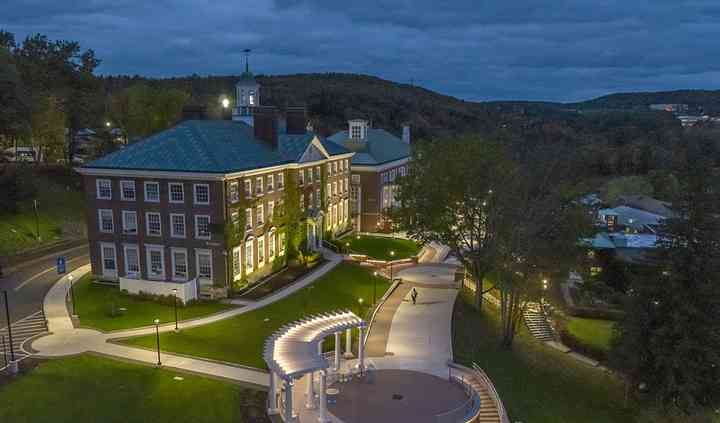
The start to this academic year is again unconventional, but feeling much closer to normal, especially owing to Hartwick College’s reopening plans. I’m again teaching two frequently taught creative writing courses and revisiting Poetry and Technology. The syllabi:
ENGL 213 Introduction to Creative Writing
 The Hyperarchival Parallax