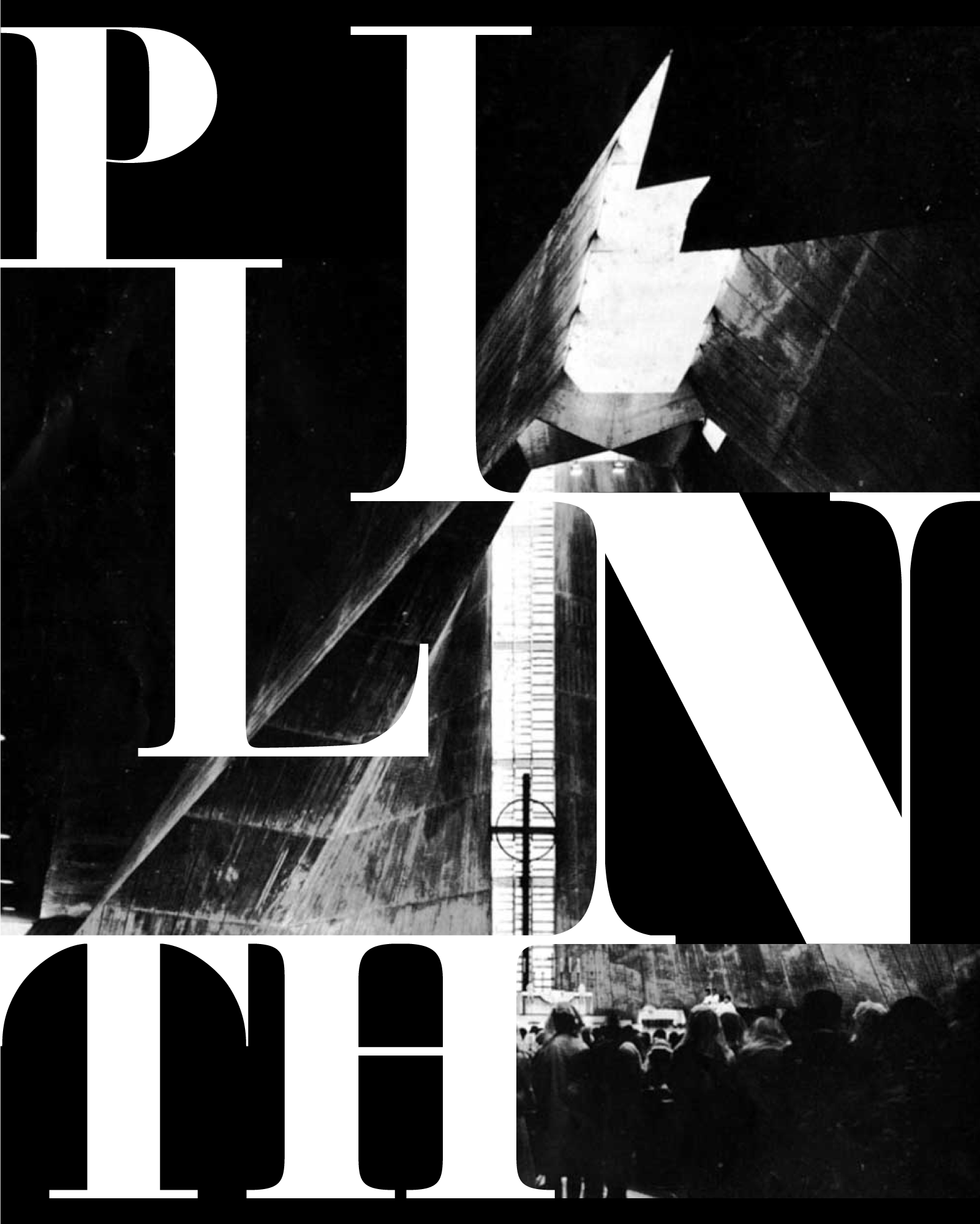
I am happy to report that three new poems, “The Shape of Things I,” “Winter, or, Some (Future) Ambiguities,” and “We’re Just Like Yesterday’s Headlines,” were just published in the third issue of PLINTH.
I am happy to report that three new poems, “The Shape of Things I,” “Winter, or, Some (Future) Ambiguities,” and “We’re Just Like Yesterday’s Headlines,” were just published in the third issue of PLINTH.
Below is an abstract for a paper I will be presenting at the Louisville Conference on Literature and Culture Since 1900, taking place February 26-28, 2015. I will be presenting this paper on a panel titled, “Postcolonial Finance and Disaster Capitalism in Twentieth and Twenty-First Century Fiction.” The panel will be taking place 2:45 – 4:15 Saturday, February 28th, in room 122 of the Humanities Building at the University of Louisville.
Geologies of Finitude: The Deep Time of Twenty-First Century Catastrophe in Don DeLillo’s Point Omega and Reza Negarestani’s Cyclonopedia
Abstract: The twenty-first century has seen a remarkable confluence and transformation of twentieth century narrative and historical discourse. On the one hand, the Cold War nuclear sense of an ending and US national fantasy of Mutually Assured Destruction has multiplied, producing a diverse array of eschatological imaginaries. Indeed, in the age of disaster capitalism, this multiplication has caused some to revise earlier concerns and to now suggest that we are “witnessing the attempt to imagine capitalism by way of imagining the end of the world.” On the other hand, there has been an increasing sobriety from a host of intellectuals and writers about human finitude, especially considered in light of the postnatural condition of the Anthropocene, with its present focus on deep ecological and cosmological futures. Human extinction is no longer shocking; it is a mute fact of geologic time. At the intersection of multiplying, immediate, and local disaster—both real and imagined—and a perspective on the deep history of human finitude, this paper will argue that Don DeLillo’s Point Omega (2010) and Iranian writer Reza Negarestani’s remarkable Cyclonopedia: Complicity with Anonymous Materials (2008) make strong cases for the novel’s continuing ability to complicate and illuminate human finitude and historical temporality in contemporaneity. Written in the midst of the long and disastrous US incursions in the Middle East from two distinct transnational, philosophical, and aesthetic standpoints, DeLillo and Negarestani raise important political questions about vital materiality in the age of hyperobjects and the ecological realities of the War on Terror. In decidedly different and complimentary ways, each novel acknowledges that though the twenty-first century has made it clear that the catastrophic present cannot be divorced from the inevitable doom at the end of the world, we still desperately need to imagine something else.

Studying with Tomaž Šalamun while he was a visiting professor at the University of Pittsburgh from 2005-2007 was one of the highlights of my life. I took four classes with him, he was on my MFA thesis committee, and when he left Pittsburgh, for what I believe was the last time, I drove him to the airport in what he called my “tank.” He was a remarkable human being. Generous, expansive, kind, and dynamic, Šalamun profoundly impacted everyone with whom he came in contact. On first reading his poems, they leapt at me, and have continued flying around my head for years. In my favorite of his books, Balada za Metko Krašovec (1981),[1] he declares: “I am the mouth of the Book.”[2] He ate voraciously of the world, of books, and sometimes spoke and wrote like the wellspring of literature itself.[3] He was a powerful poet who invited everyone to soar with him: “I like being in the air. I descend on the city, on / people.”[4] I am thrilled to be one of the people he descended upon.
Looking through my notebooks from the three consecutive spring semesters I studied with him (in 2006, two workshops at once), the vast majority of what I wrote down during class were the names and works of poets, artists, musicians, novelists, philosophers. Tomaž had an immense capacity for awe and appreciation, and he readily shared it with everyone around him. He read and absorbed culture to a remarkable degree, letting everything flicker through his being: from the work of his young students—he adored the work of Joshua Beckman and Matthew Zapruder, among many others—to his peers, modernist painters, and filmmakers—he argued vehemently that Pier Paolo Pasolini was a poet—and so much more. Every semester he would order roughly eight books from the bookstore, but he would not usually assign them or schedule days for us to discuss them. Instead, he would hand out what he was reading that week, what he was excited about. As a result, not only did my library of books and files of photocopied poems and essays grow considerably, but I perhaps caught some of Šalamun’s own catholicity and voracity, his passion for the contemporary, and his faith in poetry. It was hard not to.
Returning to my (seemingly) ancient notebooks this morning, I was initially struck by how little I wrote down of what Šalamun said in class. But then I remembered why. His voice was music. It didn’t always make sense and my pen could not keep up, but it was such a joy to hear him speak while occasionally capturing the gems of books he was reading or his reflections on the books his students were reading. I would spend much of class sunk in nothing but his voice. He would read poems in a way that transformed how I teach creative writing workshops. He would explore every nook and cranny of where a poem took his enthusiastic and often confounding readings, no matter who wrote it, and then he would go somewhere else. He would get up and spread imaginary wings or become, however briefly, a real dinosaur. How could I capture such performances in notes? What would be the point? I did not even try. But I hope his voice still resonates in Cathedral of Learning 512 and I know it will continue to do so with the many people who received the gift of being in that room.
Šalamun was above all a poet. Everything about him resonated with poetry. He would often end class early to have one-on-one conferences with students. Suffering from the normal “crisis of artistic faith during the first year of grad school”-syndrome, my first meeting with him, quite simply, totally renewed my ambitions and convinced me that poetry was something I should pursue. True or not, I return frequently to what he told me. He had that kind of power, that kind of poetic power: he could transform or refresh almost instantly. And he did so because he was a poet in the strongest sense of the word.
For one of the very few things he said that I did write down was: “The poet has to be totally a poet! We don’t need mediocre poets.” Tomaž Šalamun was totally a poet. He encouraged those around him to be total poets as well. (Whether any of us became such mythical beings or not is probably beside the point.) In an age when poetry seems low on the list of anyone’s priorities, even those of us who read, write, and teach poetry, when an MFA classroom can often resemble a seminar on professionalism and/or mediocrity, Šalamun subtly, warmly, and convincingly required the same total devotion to poetry of his students that was on display in his own work throughout his career. And once that easily fulfilled requirement was out of the way, we all then flew and will keep descending on the cities and the people with him.
———
[1] Tomaž Šalamun, Balada za Metko Krašovec (Ljubljana: Državna založba Slofenije, 1981).
[2] Tomaž Šalamun, “‘Within the mountain . . . ,’” in A Ballad for Metka Krašovec, trans. Michael Biggins (Prague, Czechoslovakia: Twisted Spoon Press, 2001), 49. I sadly have no capacity for Slovenian so will rely on English translations. That said, Šalamun was extensively involved in many of his English translations, and not everyone translating him knew Slovenian, so the English translations have their own particular authority and power.
[3] If this sounds hyperbolic, I invite the reader to relish in such hyperbole, as Šalamun would have certainly encouraged them to do so with his own remarkable, Whitmanian verbal hyperbole, for “Tomaž Šalamun is naked and a proletarian”(“His Favorite Ride,” in The Book for My Brother [New York: Harcourt, 2006], 13), “Tomaž Šalamun is a monster. / Tomaž Šalamun is a sphere rushing through the air” (“History,” trans. Bob Perelman and Šalamun, in The Four Questions of Melancholy: New and Selected Poems, ed. Christopher Merrill [1988; repr., Buffalo, NY: White Pine, 2002], 77).
[4] Šalamun, “West Broadway,” in A Ballad for Metka Krašovec, 43.
I am looking forward to a fun, productive, and challenging spring semester at the University of Pittsburgh. I’ll be teaching three classes: two sections of Narrative and Technology (ENGLIT 0399; class blog here) and a course that is being offered for the first time, Interactive Literature (ENGLIT 1001; class blog here). I owe Mark Best considerable credit for Interactive Literature as I drew many ideas about organizing the course from the design of his initial proposal.
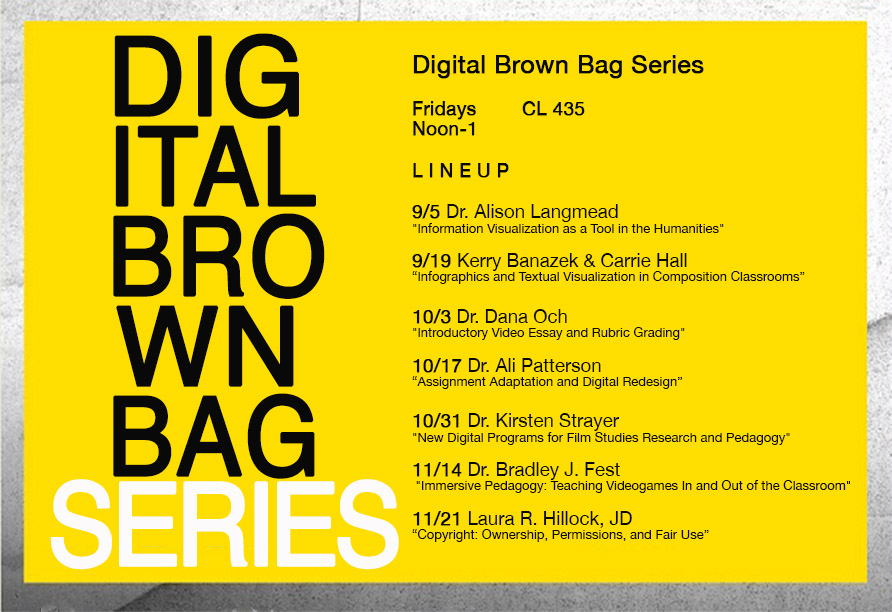
As part of the Digital Brown Bag Series, a series of talks on various ways one might incorporate digital tools into their teaching and scholarship, tomorrow, November 14, from 12:00 – 1:00, I am giving a presentation on “Immersive Pedagogy: Teaching Videogames In and Out of the Classroom” at the University of Pittsburgh in room 435 of the Cathedral of Learning. Here’s a brief description of what I will be addressing:
Teaching videogames present a number of pedagogical challenges and possibilities that are not involved with teaching more traditional media objects. Many things can go wrong when teaching videogames: they can (and do) frequently break down or are incompatible with certain machines; they are hardware dependent, thus limiting the games that can be included in a syllabus; they are actionable rather than passive—they need to be played—meaning that students with less familiarity or skill with videogames can struggle. But videogames also open up a number of pedagogical avenues that are unavailable to other media: they can be radically immersive, collective, and social, reconfiguring the classroom into a virtual space that can extend significantly beyond the physical boundaries of traditional instruction; they provide new ways of looking at and interacting with media objects in the classroom, promoting new pedagogical methods of critical engagement; and they are, inevitably, fun, inviting students to participate in what I call “critical play.” This presentation will discuss some of the logistical, critical, and theoretical challenges presented by teaching videogames, how these challenges might be addressed, and some exciting pedagogical possibilities that are opened up by bringing videogames into the classroom. The presentation will conclude with an interactive demonstration of how one particular videogame, The Stanley Parable (Galactic Café, 2013), might be taught. (This talk largely reflects my experiences teaching Narrative and Technology.)
“Isn’t It a Beautiful Day? An Interview with J. Hillis Miller” was just published in boundary 2. (An abstract is here.) I am thrilled and very proud to see this in print, and thank J. Hillis Miller for talking with me at such delightful length.
In a little over a week I start teaching three classes at the University of Pittsburgh that I am greatly looking forward to: two sections of Narrative and Technology (ENGLIT 0399; class blog here), and a brand new upper-division course that I designed for English Majors that fulfills an historical period requirement: Postmodern Literature (ENGLIT 1350). I am quite excited about both classes.
I’ve finally given in and created a Twitter account. You can follow me @BradleyFest.
In other news.
Nuclear
The diary of Mike Kirby, who worked with atomic weapons for years.
Iraq and International
“To the defense of Erbil: this was the main cause that drew President Obama back to combat in Iraq last week, two and a half years after he fulfilled a campaign pledge and pulled the last troops out” (Steve Coll, “Oil and Erbil”).
Rod Nordland and Helene Cooper, “Capitalizing on US Bombing, Kurds Retake Iraqi Towns.”
Conor Friedersdorf, “President Obama Risks Misleading Us Into War.”
Michael Tomasky, “Why Liberals Should Back Iraq Intervention.” Hmm.
On Putin’s current stance toward the US: David Remnick, “Watching the Eclipse.”
And boundary 2 has just made this fascinating article from their newest issue available: “Democracy: An Unfinished Project” by Susan Buck-Morss.
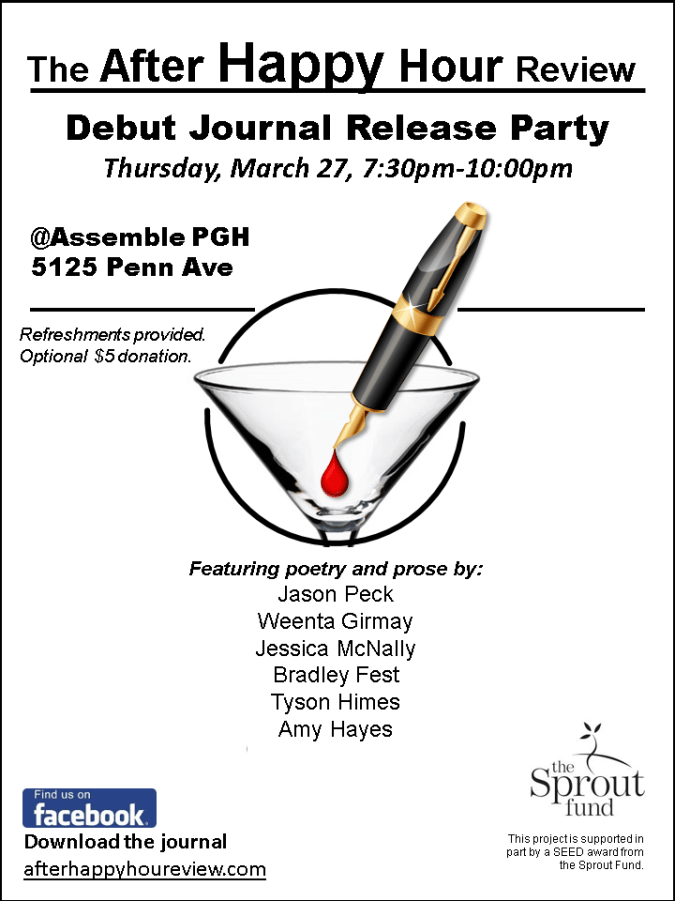
A poem of mine, “If the Marianas Trench Were a Gathering of Sound,” was just published in the very pretty first issue of The After Happy Hour Review, along with work from my friends Dean Matthews, Amy Hayes, and others.
Since this event is being sponsored by the Sprout Fund, I actually just heard a plug for it on Pittsburgh’s local NPR. So I thought it only appropriate to advertise here as well.
 The Hyperarchival Parallax