“Grateful and Generous Reading: An Interview with Robert T. Tally Jr.” in boundary 2


I am really happy that my interview with Robert T. Tally Jr.—the first of two interviews I conducted in conjunction with The Babcock Lecture at Hartwick College, which I organized as Cora A. Babcock Chair in English from 2022–25—is now out in print. “Grateful and Generous Reading: An Interview with Robert T. Tally Jr.,” has just been published in the November 2025 issue of boundary 2 (vol. 52, no. 4).

It was a busy weekend—in the course of only a few days, Tally flew to Oneonta from Texas, delivered a lecture, sat down for an interview, and then moderated the final Zoom panel celebrating Fredric Jameson’s ninetieth birthday from my home office (all while he was in the middle of editing Verso’s “Jameson at 90” [2025] blog series)—and so I am deeply thankful to Tally for taking the time to come to Hartwick and chat.

Here’s an abstract of the interview:

This interview with literary critic Robert T. Tally Jr. was conducted on April 26, 2024, in conjunction with his delivery of the 2023–24 Babcock Lecture at Hartwick College. Tally is one of the premier critics presently working in the field of spatial literary studies and has published over a dozen books and over one hundred articles and book chapters on US and world literature, critical theory, and the history of criticism. Reflecting broadly on the trajectory of his career, Tally discusses the gratitude that has accompanied his scholarly writing, his interests in spatial literary studies, his relationship with the teaching and work of Jonathan Arac, Paul A. Bové, and Fredric Jameson, and the role of theory at the present time.

The second interview conducted in conjunction with the 2025 Babcock Lecture, my interview with Anna Kornbluh, will appear in the May 2026 issue of boundary 2.

And for previous interviews: “An Interview with Jonathan Arac,” “Something Worth Leaving in Shards: An Interview with Rachel Blau DuPlessis,” and “Isn’t It a Beautiful Day? An Interview with J. Hillis Miller.”
The 2024–25 Babcock Lecture: Anna Kornbluh, “Historical Fictions, Heist Flicks, and other Climate Genres for a Burning World”

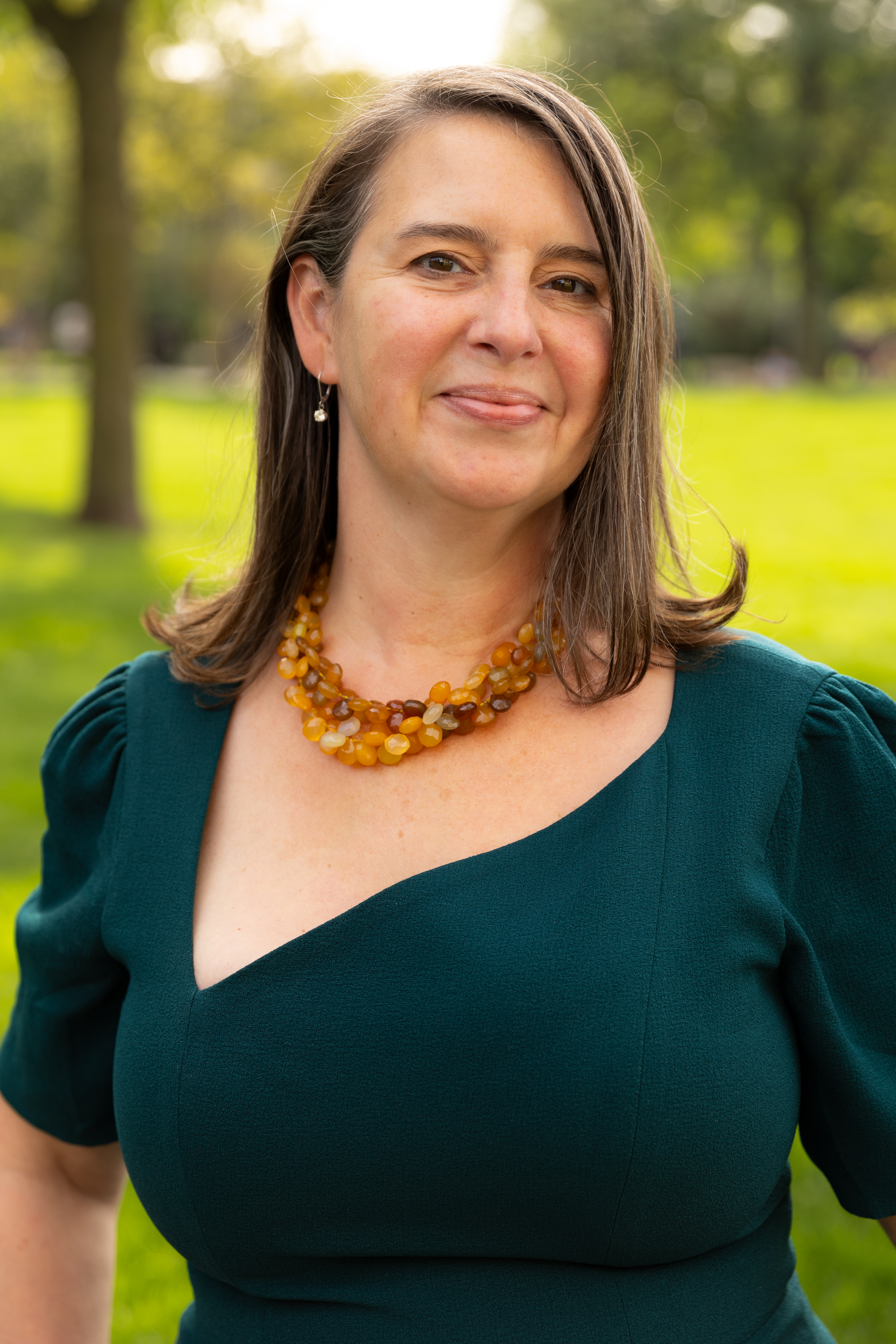
Kornbluh, Anna--HeadshotI am delighted to yet again announce that on Thursday, October 17 at 7:00 p.m. in Anderson Theater at Hartwick College, distinguished critic Anna Kornbluh will be delivering the 2024–25 Babcock Lecture at Hartwick College, which will be titled: “Historical Fictions, Heist Flicks, and other Climate Genres for a Burning World.” Kornbluh’s lecture will be followed by a reading by eminent poet and feminist critic Rachel Blau DuPlessis and is part of the Oneonta Literary Festival.


Historical Fictions, Heist Flicks, and other Climate Genres for a Burning World

In the urgent emergency of climate crisis, is there any time for art? This talk considers some of the pressures on literature and culture at present, exploring the prevailing ways that artists, authors, and critics are conceiving artistic ties to the environment, and proposing some alternative ties with the help of popular genres like historical fiction and heist films.


Anna Kornbluh
 is professor of English and a member of the United Faculty bargaining team at the University of Illinois, Chicago, where her research and teaching focus on the novel, film, and critical theory. She is the author of Realizing Capital: Financial and Psychic Economies in Victorian Realist Form (Fordham University Press, 2014), Marxist Film Theory and “Fight Club” (Bloomsbury, 2019), The Order of Forms: Realism, Formalism, and Social Space, and Immediacy, or, The Style of Too Late Capitalism, which was recently published by Verso. She has edited special issues for b2o: an online journalCriticismMediations, and Syndicate, and is a frequent guest on The American Vandal and other podcasts. She is the founder of the V21 Collective and InterCcECT (Inter Chicago Circle for Experimental Critical Theory) and is the Director of Graduate Studies at UIC.

Oneonta Literary Festival, October 17–21, 2024 and the 2024–25 Babcock Lecture.

onenta-new-york-Main-Sunset_f

In collaboration with SUNY Oneonta’s Department of English, the Community Arts Network of Oneonta (CANO), the Huntington Library, and Oneonta High School, my colleague Tessa Yang and I are co-organizing the Oneonta Literary Festival, which will take place October 17–21, 2024 at various places in and around Oneonta.

For our part, Hartwick College is bringing in Anna Kornbluh to deliver the 2024–25 Babcock Lecture, “Historical Fictions, Heist Flicks, and other Climate Genres for a Burning World,” as part of the festival, along with Rachel Blau DuPlessis, Ross Gay, and Willy Palomo. For more information, please visit the Oneonta Literary festival website at www.hartwick.edu/literaryfestival. (The festival also takes place throughout the year [more info about year-long events here].)

At Hartwick College, the festival is supported by the Arts and Humanities Division, the Babcock Chair in English, the Department of Literature, Media, and Writing, a grant from the National Endowment for the Humanities, the Office of Academic Affairs, and the Visiting Writers Series.

Robert T. Tally Jr. to Deliver the 2023–24 Babcock Lecture at Hartwick College: “Mapping and Monsters: Critical Theory in the Teratocene”

Robert T. Tally Jr. will deliver the 2023–24 Babcock Lecture at 7:00 p.m. on Thursday, April 25, 2024 in the Eaton Lounge of Bresee Hall at Hartwick College.


“Mapping and Monsters: Critical Theory in the Teratocene” Dystopian visions in our time are complemented by, and subsumed within, a broader sense of the monstrous world system, which increasingly seems to involve the presence of actual monsters. Indeed, ours is a veritable teratocene or “age of monsters.” As the processes of globalization become more starkly experienced, monsters are increasingly rendered invisible or unknowable, as we find ourselves subject to an immense array of forces beyond our control. In the 2023–24 Babcock Lecture, starting with an oft-quoted, if misquoted, observation by Antonio Gramsci—i.e., “[t]he old world is dying, and the new world struggles to be born: now is the time of monsters,” which has circulated in recent years as almost a truism regarding our own historical moment—Robert Tally will discuss the ways in which this misquote (e.g., the more literal translation: “in this interregnum a great variety of morbid symptoms appear”) stands as a motto for our era nonetheless. Monsters and monstrosity have developed into critical embodiments of unnamed terrors in postmodernity, symbolizing aspects of globalization, thus making them exemplary figures of late capitalist dread. Drawing upon recent critical theory, Tally examines the “dialectic of fear” in connection with ideologies of the undead, among other monstrosities of our time.


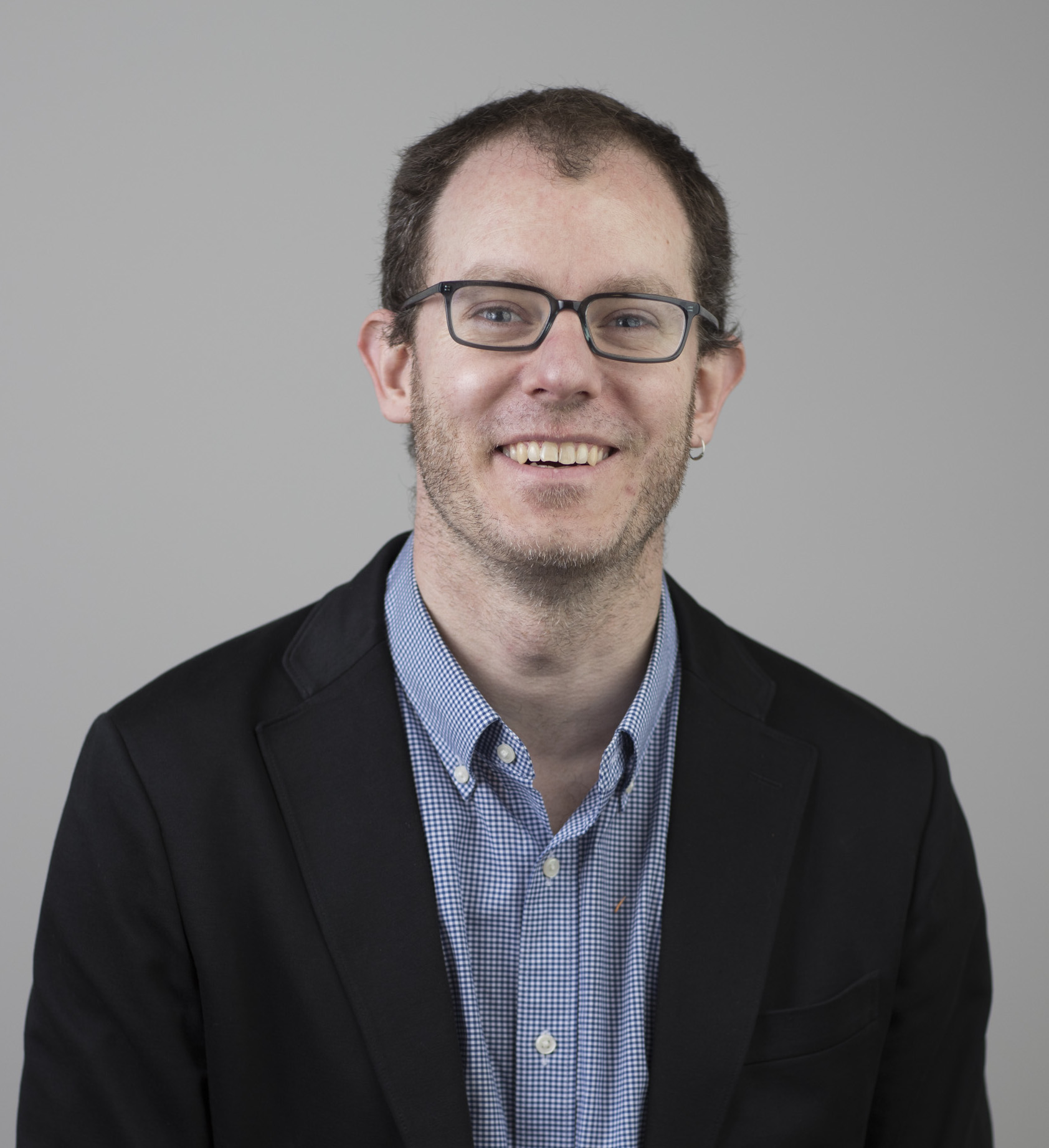
tally-robert-t-jr-author-photoRobert T. Tally Jr. is professor of English at Texas State University. He is the author of a dozen books, including The Fiction of Dread: Dystopia, Monstrosity, and Apocalypse (Bloomsbury, 2024), Representing Middle-earth: Tolkien, Form, and Ideology (McFarland, 2024), The Critical Situation: Vexed Perspectives in Postmodern Literary Studies (Anthem, 2023), For a Ruthless Critique of All That Exists: Literature in an Age of Capitalist Realism (Zer0, 2022), and Topophrenia: Place, Narrative, and the Spatial Imagination (Indiana University Press, 2019). He has also edited more than a dozen books and special issues, including Spatial Literary Studies (Routledge, 2020), Teaching Space, Place, and Literature (Routledge, 2018), and The Routledge Handbook of Literature and Space (Routledge, 2017).

Paul Benzon to Deliver the 2022–23 Babcock Lecture at Hartwick College: “The Poetics and Politics of the Paralegible”

Paul Benzon will deliver the 2022–23 Babcock Lecture at 7:00 p.m. on Wednesday, April 5, 2023 in the Eaton Lounge of Bresee Hall at Hartwick College.


“The Poetics and Politics of the Paralegible”

What are the politics of writing—not at the level of language and discourse, but rather at the level of materiality and of the inscriptive mark itself? What might approaching writing as a material, visual practice have to tell us about issues of cultural identity, history, and power.

In the 2022–23 Babcock Lecture, Paul Benzon will explore these questions through a discussion of a mode of experimental writing he calls the paralegible. As the term suggests, the paralegible exists in the liminal space between the legible and the illegible, troubling the relations between the mark and the letter, the visible and the invisible. Simultaneously conjuring the desire to read and refusing that desire, it foregrounds questions of writing, authorship, and the textual trace. Turning to recent work by three artists—Renee Gladman, Hương Ngô, and Shirin Salehi—Benzon will show how the paralegible activates the political potentialities of writing that is at odds with language.


Benzon, Paul--HeadshotPaul Benzon (he/him/his) is an assistant professor in the English Department at Skidmore College, where he also teaches courses in the Media and Film Studies Program. He is the author of Archival Fictions: Materiality, Form, and Media History in Contemporary Literature (University of Massachusetts Press, 2021), and his writing has appeared in College Literature, electronic book review, Media-N, Narrative, and PMLA. His current project, from which this talk is drawn, considers how contemporary literary and artistic experimentations with print textuality, the book as an object, and textual and alphabetic design reckon with questions of historical trauma and social justice.