io9 has another article on apocalypse art, this time its Vladimir Manyuhin’s apocalyptic photography, where he takes photos of real things and then manipulates them to be post-apocalyptic. Hyperarchival eschatology indeed. Some samples:
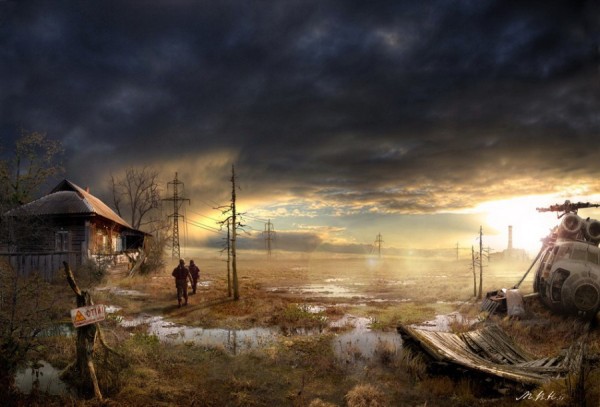
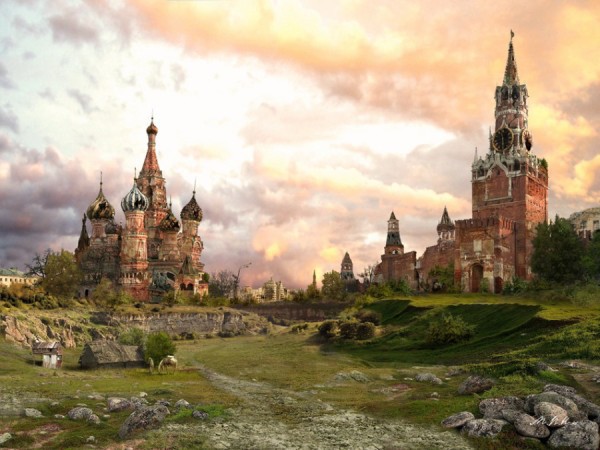
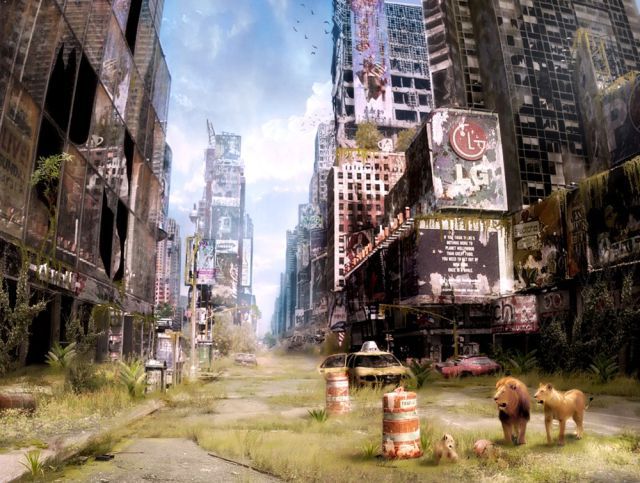
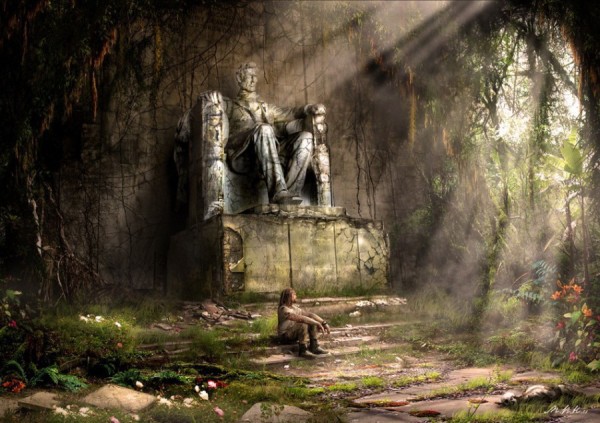
io9 has another article on apocalypse art, this time its Vladimir Manyuhin’s apocalyptic photography, where he takes photos of real things and then manipulates them to be post-apocalyptic. Hyperarchival eschatology indeed. Some samples:
Wow, a list of a ton of apocalyptic works (over 1700). Better start reading.
So, first my good friend Alexander Provan, editor of the excellent Triple Canopy, and accomplished writer in his own right (see him, for example, on our post-nuclear future and Yucca Mountain at The Believer), is interviewed in this fairly interesting article on the future of literacy, print culture, etc (“Post-Print: Digital Publishing Comes of Age”) written by Ian Erickson-Kery over at The Eye.
Uncylopedia: what happens when Wikipedia intentionally gets it wrong. I find this fascinating in the extreme, and pretty much what I (sometimes) mean by “hyperarchival.”
In commemoration of DFW’s 50th b-day, 46 things of his to look at on the internet.
Star Wars Uncut: mashing together homemade scenes of Star Wars into one, gigantic, hyperarchival gem.
(Since I’ve been playing quite a bit of Skyrim recently [and am actually currently planning on writing a bit for it here], “Fuck Forever, and Never Die.” Though I’m not sure really why sex is really part of this conversation, this is a fairly interesting article.)
And from io9: “Rock You Like an Apocalypse: Art that Destroys the World!” A whole smorgasbord of eschatological imagery. A couple examples:


Edward Docx (sounds like a pseudonym) just wrote a piece, “Postmodernism is Dead,” over at Prospect.
At Nature, Eugenie Samuel Reich reports on a major breakthrough in quantum physics. “But the new paper, by a trio of physicists led by Matthew Pusey at Imperial College London, presents a theorem showing that if a quantum wavefunction were purely a statistical tool, then even quantum states that are unconnected across space and time would be able to communicate with each other. As that seems very unlikely to be true, the researchers conclude that the wavefunction must be physically real after all.”
“Why are Apocalyptic Narratives So Popular?” Why, I don’t know. . . .
Occupy Wall Street Archival Destruction.
My colleague Adriana Ramirez is having her students blog for her class “Narrative and Technology: We Might Be Gadgets.” The class just got done playing World of Warcraft (Blizzard: 2004-2011), and I had the great privilege to deliver a guest lecture a few days ago. Check out the blog here.
America’s growing anti-intellectualism.
And a nice discussion of the archival “Etymology” and “Extracts” section of Moby-Dick (which I’m teaching right now).
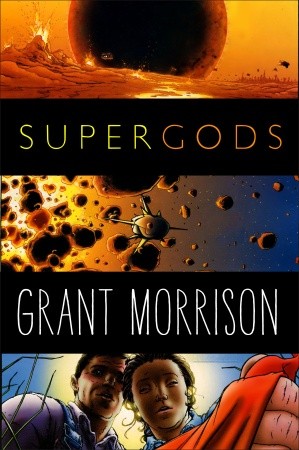
In his excellent new history/study/biography of comic book superheroes, I think Grant Morrison quite convincingly and significantly frames the horizon for understanding superheroes with the bomb. A lengthy excerpt.
Four miles across a placid stretch of water from where I live in Scotland is RNAD Coulport, home of UK’s Trident-missile-armed nuclear submarine force. Here, I’ve been told, enough firepower is stored in underground bunkers to annihilate the human population of our planet fifty times over. One day, when Earth is ambushed in Hyperspace by fifty Evil Duplicate Earths, this megadestructive capability may, ironically, save us all–but until then, it seems extravagant, somehow emblematic of the accelerated, digital hypersimulation we’ve all come to inhabit.
[. . . ]
And the Bomb, always the Bomb, a grim and looming, raincoated lodger, liable to go off at any minute, killing everybody and everything. His bastard minstrels were gloomy existentialist folkies whining hornrimmed dirges about the “Hard Rain” and the “All on That Day” while I trembled in the corner, awaiting bony-fingered judgment and the extinction of all terrestrial life. Accompanying imagery was provided by the radical antiwar samizdat zines my dad brought home from political bookstores on High Street. Typically, the passionate pacifist manifestos within were illustrated with gruesome hand-drawn images of how the world might look after a spirited thermonuclear missile exchange. The creators of these enthusiastically rendered carrion landscapes never overlooked any opportunity to depict shattered, obliterated skeletons contorted against blazing horizons of nuked and blackened urban devastation. If the artist could find space in his composition for a macabre, eight-hundred-foot-tall Grim Reaper astride a flayed horror horse, sowing missiles like grain across the snaggle-toothed, half-melted skyline, all the better.
Like visions of Heaven and Hell on a medieval triptych, the postatomic wastelands of my dad’s mags sat side by side with the exotic, tripple-sunned vistas that graced the covers of my mum’s beloved science fiction paperbacks. . . .
On television, images of pioneering astronauts vied with bleak scenes from Hiroshima and Vietnam: It was an all-or-nothing choice between the A-Bomb and the Spaceship. I had already picked sides, but the Cold War tension between Apocalypse and Utopia was becoming almost unbearable. And then the superheroes rained down across the Atlantic, in a dazzling prism-light of heraldic jumpsuits, bringing new ways to see and hear and think about everything. . . .
The superheroes laughed at the Atom Bomb. . . .
Before it was a Bomb, the Bomb was an Idea.
Superman, however, was a Faster, Stronger, Better Idea (Grant Morrison, Super Gods [New York: Spiegel & Grau, 2011], xiii-xv).
CBS recently reported that Van Nuys-based porn company Pink Visual is building a “luxury” fallout shelter for the “impending” 2012 global disaster. “Multiple fully stocked bars [and by “fully” I suppose this really means fully; the booze has gotta last for the rest of time. The production of Peppermint Schnapps I don’t think will be a priority in the post-apocalyptic wasteland], an enormous performing stage [cause clearly pole dancing will take your mind off your dead and dying friends and relatives], and a sophisticated content production studio [so that one of the major human endeavors of the early 21st c., according to any scan of the internet, will not cease: the production of pornography].” Orgy at the end of the world.
Would the advertisement go something like this?: Are you despairing that humanity is gone, and the reconstruction of the world is nigh impossible? Have you given up all hope? Can you see no way to go on, to make life meaningful again? Have you always wanted to live in a hedonistic lifestyle of non-stop orgiastic bliss? Do you care more about your own personal pleasure than about anyone else? Do you want to spend millions of dollars merely on the possibility that the world will end and you will somehow be able to make it to California (and survive), where clearly your now worthless money will grant you entrance to the VIP club of the party to end all parties!? Fear not, we have your answer! Spend the rest of your lifetime not trying to eke out a miserable existence among the dregs of an irradiated and potentially cannibalistic humanity, but rather cynically/naively forget the past and future by making, well, porn. Oh, and if the internet goes down, there will still plenty of porn on the networks in-house (or rather, in-fallout-shelter).
This is the worst. Weirdly, their design looks awfully panoptic. Read briefly about this absurdity here.

According to The Onion, the “Apocalypse Already Happened 3 Years Ago.” I knew it.
Over in Guernica, there are two recent articles. One is Alexis Madrigal’s “Nuclear Haze,” which discusses some of the historical markers of nuclear energy. The other is an excerpt from Slavoj Žižek’s Living in the End Times, titled (quite interestingly) “The Un-Shock Doctrine.”
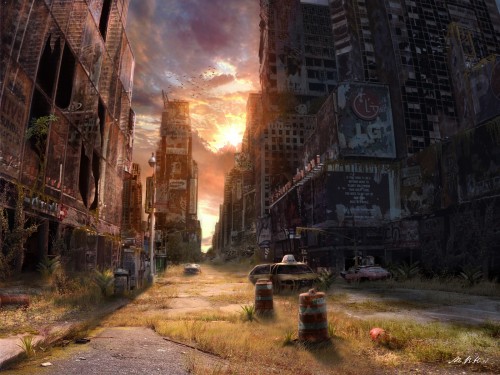
David James Keaton pointed me to these 51 post-apocalyptic images (though most of them look like they come from, or are art accompanying the Fallout games). Here’s a sample:
It turns out that Leó Szilárd , one of the father’s of the atomic bomb, wrote some posthuman sf.
Junot Díaz weighs in on the apocalypse, at the Boston Review.
And an excerpt from Evan Calder Williams’s quite fascinating Combined and Uneven Apocalypse (Winchester, UK: Zero Books, 2011):
“However, The Bed Sitting Room and the salvagepunk aesthetic more generally grasps that we’ve been living after the apocalypse for a while now, and that the problem is too much of the hidden has been revealed. Too much uncovered data, too many telling images, too many public secrets. It’s piling up everywhere and making it impossible to find the correct enemies, the right cracks to widen, the right ways to attack and build better. In this sense, salvagepunk post-apocalypticism is concerned with being more apocalyptic than the apocalypse: clearing away the clutter to reveal the true hidden-in-plain-view, namely, the deep, permanent antagonisms on which capitalism runs and the untenability of that system’s capacity to run” (56).
Check out my bud Taylor Baldwin talking about his studio practice as a kind of ethical pre-figuration of post-apocalyptic artistic production, and, of course, as an entry into the archive that can never be destroyed (i.e. biodegrade):
Whether historically the novel expires or persists as a major art form seems immaterial to me; if enough writers and critics feel apocalyptical about it, their feeling becomes a considerable cultural fact, like the feeling that Western civilization, or the world, is going to end rather soon. If you took a bunch of people out into the desert and the world didn’t end, you’d come home shamefaced, I imagine; but the persistence of an art form doesn’t invalidate work created in the apocalyptic ambience.
John Barth, “The Literature of Exhaustion”
 The Hyperarchival Parallax