I have published “Teaching Without Computers” in the “Interventions” section of the b2o review at b2o: “boundary 2” online. I delivered a short version of this paper at SUNY Oneonta in August and the full version I’ll be presenting for a Teaching Table at Hartwick College tomorrow.
Thanks to Arne De Boever of boundary 2 and to Racheal Fest and Alanna E. F. Rudzik for helping me work out some of the ideas in this essay. Thanks also to the Faculty Development Committee and the members of the ad-hoc human-centered learning group organized by Karl Seeley. And, of course, thanks to all my students for a great semester.
So this “now” now emerges, shadows be-fallen here, and we debate how vast the eulogy we need.
—Rachel Blau DuPlessis, “The Entanglements: a representation”
The zone between the living voice and the posthumous voice is poetry.
—Rachel Blau DuPlessis, “The moon and modulations of lonely”
I am so very deeply saddened by the passing of Rachel Blau DuPlessis on September 2, 2026.[1] After hearing from her partner, Robert DuPlessis, I found myself weeping in my office for nearly a half hour last week, staggered by the magnitude of losing her. And so I wanted to write a little about how I got to know Rachel and her work, hoping it might provide a small glimpse into just how incredible a person, artist, and scholar/critic she was and the kind of massive positive effect she had on the people around her, even to someone who was only lightly connected to her.
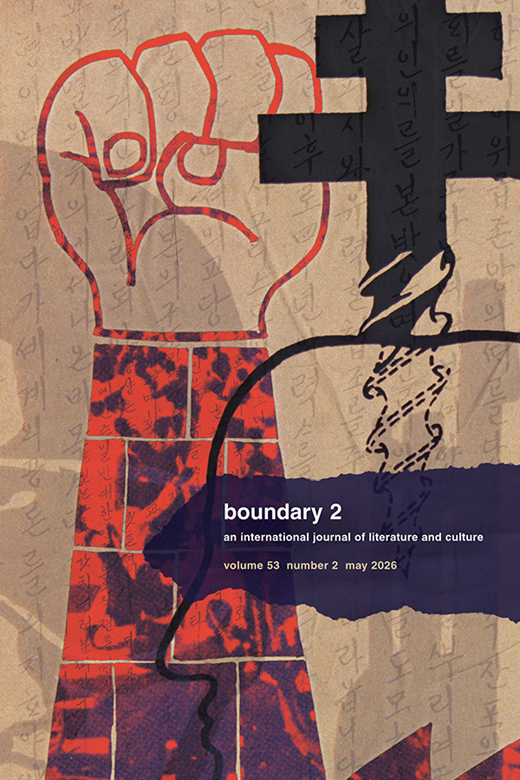
This interview with literary critic Anna Kornbluh was conducted on October 18, 2024, in conjunction with her delivery of the 2024–25 Babcock Lecture at Hartwick College. With her most recent book, Immediacy; or, The Style of Too Late Capitalism (2024), Kornbluh has established herself as one of the most insightful and important critics of contemporary culture. In this conversation, she reflects on how she came to literary studies, the strangeness of realism, dialectical reading, and the role of style in literary criticism. Kornbluh also discusses political formalism and the value of institutions, the term neoliberalism, social media, the relationship between organizing and literary study, recent projects on climate counteraesthetics and middlebrow aesthetics, and the political realities of late 2024.
In further interview news, I have conducted and am currently transcribing and editing an interview with Paul A. Bové.
It was a busy weekend—in the course of only a few days, Tally flew to Oneonta from Texas, delivered a lecture, sat down for an interview, and then moderated the final Zoom panel celebrating Fredric Jameson’s ninetieth birthday from my home office (all while he was in the middle of editing Verso’s “Jameson at 90” [2025] blog series)—and so I am deeply thankful to Tally for taking the time to come to Hartwick and chat.
Here’s an abstract of the interview:
This interview with literary critic Robert T. Tally Jr. was conducted on April 26, 2024, in conjunction with his delivery of the 2023–24 Babcock Lecture at Hartwick College. Tally is one of the premier critics presently working in the field of spatial literary studies and has published over a dozen books and over one hundred articles and book chapters on US and world literature, critical theory, and the history of criticism. Reflecting broadly on the trajectory of his career, Tally discusses the gratitude that has accompanied his scholarly writing, his interests in spatial literary studies, his relationship with the teaching and work of Jonathan Arac, Paul A. Bové, and Fredric Jameson, and the role of theory at the present time.
The second interview conducted in conjunction with the 2025 Babcock Lecture, my interview with Anna Kornbluh, will appear in the May 2026 issue of boundary 2.