The second poem in my “Archives” series, “Archives of Autumn,” is out in The Decadent Review. Winter and spring are forthcoming.
Publications
“Archives of Summer” in The Decadent Review
The first poem in a short series, “Archives of Summer,” is out today in The Decadent Review. Further poems—“Archives of Autumn,” “Archives of Spring,” and a reprint of “Archives of Winter”—will appear in The Decadent Review as the year progresses. The “archive” poems are some of the final unpublished poems from my recently completed manuscript, Postrock.
2022–25 Cora A. Babcock Chair in English at Hartwick College
I am thrilled and honored to announced that for the next three years (2022–25), I will be the Cora A. Babcock Chair in English at Hartwick College. This position will support continued work on my current scholarly book project, Too Big to Read: The Megatext in the Twenty-First Century, the publication of my just completed poetry manuscript, Postrock, and my next two books of poetry, 2018–202X: Sonnets and Synthwave.
For a glimpse into this work in progress, see my recent essay, “‘Is an Archive Enough?’: Megatextual Debris in the Work of Rachel Blau DuPlessis,” and some select poem(s) from Postrock and from 2018–202X: Sonnets.
I also get to host an annual Babcock Lecture for the duration of the appointment [stay tuned].
“Sestina I,” “Sestina II,” “Sestina III,” and “Aubade and After” in Always Crashing
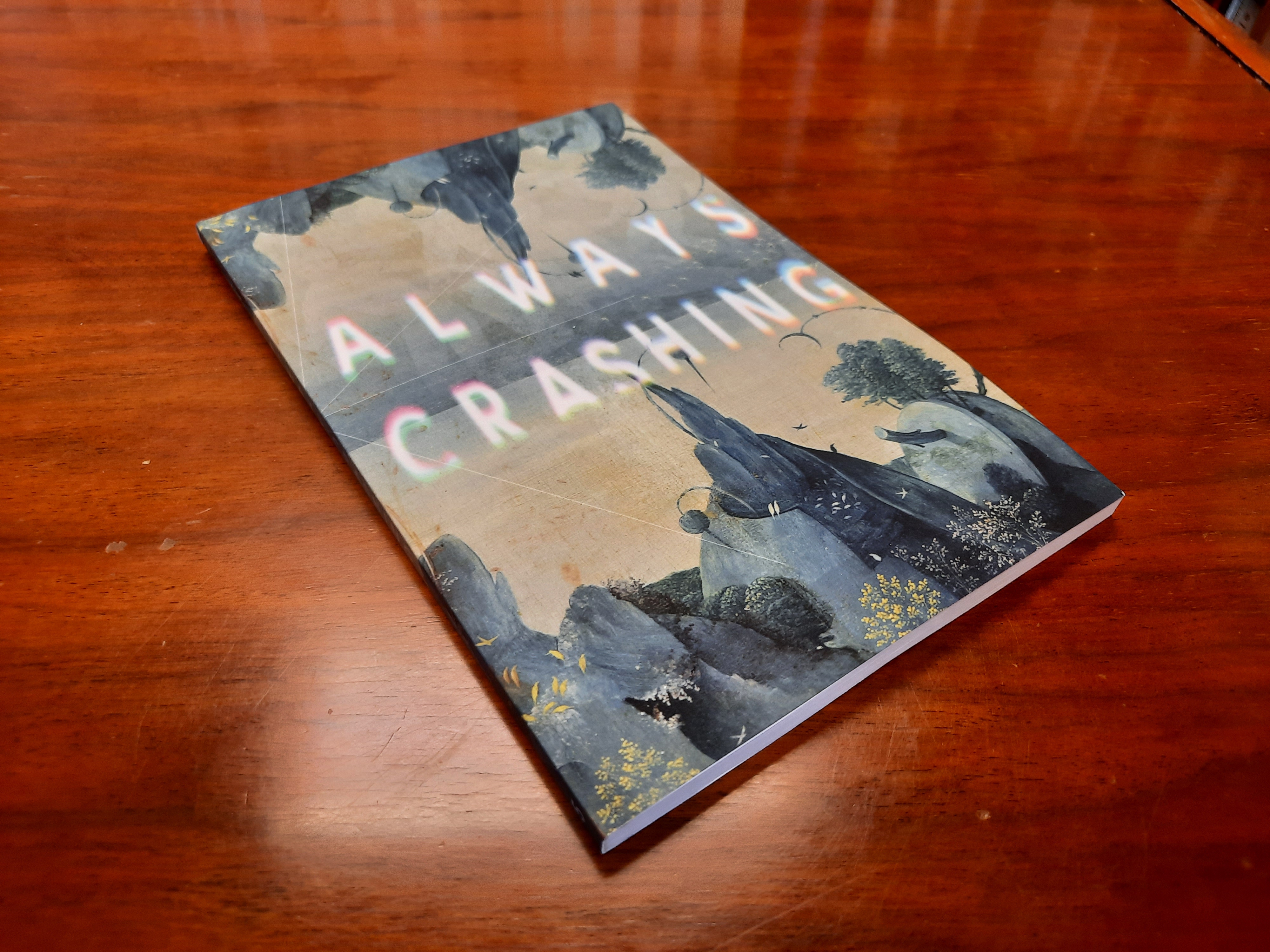
Some new poems are in the fifth issue of Always Crashing: “Sestina I,” “Sestina II,” “Sestina III,” and “Aubade and After,” all part of a project I’m in the process of finishing up this summer. I’m absolutely delighted and honored to again appear in the pages of this excellent journal.
“2020.12,” “2021.01,” “2021.02,” “2021.03,” and “2021.04” in Version (9) Magazine
The most recent sonnets in my ongoing sequence–“2020.12,” “2021.01,” “2021.02,” “2021.03,” and “2021.04”–are in the third issue of Version (9) Magazine.
“2020.07,” “2020.08,” “2020.09,” “2020.10,” and “2020.11” in Version (9) Magazine
The most recent sonnets in my ongoing sequence will appear across two issues of Version (9) Magazine, a journal “fostering . . . space for . . . texts that relate to the world of theory” (they previously published some other poems of mine).[1] “2020.07,” “2020.08,” “2020.09,” “2020.10,” and “2020.11” are in volume 1, issue 2. “2020.12,” “2021.01,” “2021.02,” “2021.03,” and “2021.04” will appear in early 2022 in the magazine’s third issue.
—
[1] Editors, foreword to Version (9) Magazine 1, no. 2 (Autumn 2021): 6, https://version9magazine.com/e-book-autumn-2021/.
“2020.01” Nominated for Best of the Net 2021

I have a huge amount of gratitude to Always Crashing for nominating my poem, “2020.01,” for Best of the Net 2021. It’s one of my favorite poems from my ongoing sequence: a system-wide volta.
“2015.04,” “2015.15,” “2015.18,” “2015.26,” “2016.02,” and “2016.28” in The Aesthetic Directory
I am incredibly indebted to Samuel Verdin, editor of The Aesthetic Directory, for publishing “2015.04,” “2015.15,” “2015.18,” “2015.26,” “2016.02,” and “2016.28,” the last unpublished sonnets from 2013–2017: Sonnets, the first volume of my ongoing sonnet sequence.
Review of Poetics for the More-Than-Human World
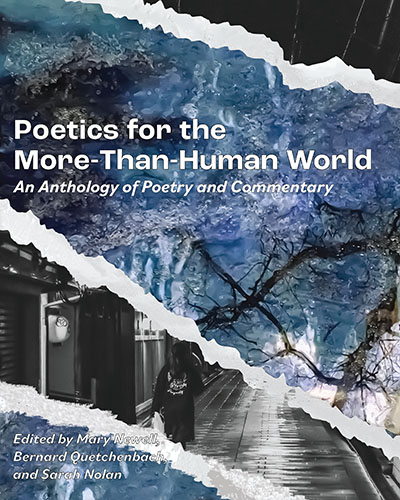
Camilla Nelson has written a thoughtful and incisive review of Poetics for the More-Than-Human World: An Anthology of Poetry and Commentary, edited by by Mary Newell, Bernard Quetchenbach, and Sarah Nolan, published last year by Spuyten Duyvil (and in which I have a couple poems). The review appeared in vol. 2, no. 1 of Ecocene: Cappadocia Journal of Environmental Humanities.
“c o n t e m p o r a n e i t y,” “Silence,” and “Blason IV” in Version (9) Magazine
I’m delighted to have “c o n t e m p o r a n e i t y,” “Silence,” and “Blason IV,” poems from my current project, Postrock, in the first issue of Version (9) (Summer 2021), a magazine exploring theory in contemporary poetry.

