A sonnet from an ongoing sequence just appeared in issue 5 of Small Po(r)tions magazine. Check out “2015.02.” More poems from this project are on their way in a couple weeks.
Poetry
2015 Tomaž Šalamun Prize
I am happy to announce that I was a finalist for the 2015 Tomaž Šalamun Prize and will be publishing a number of poems–including a twenty page long poem, “The Shape of Things II”–in Verse later this year. Congratulations to Felicia Zamora, whose portfolio, Of Unknowing, was selected as the winner of the prize. The contest was judged by Brian Henry.
The Rocking Chair Available for Pre-Order
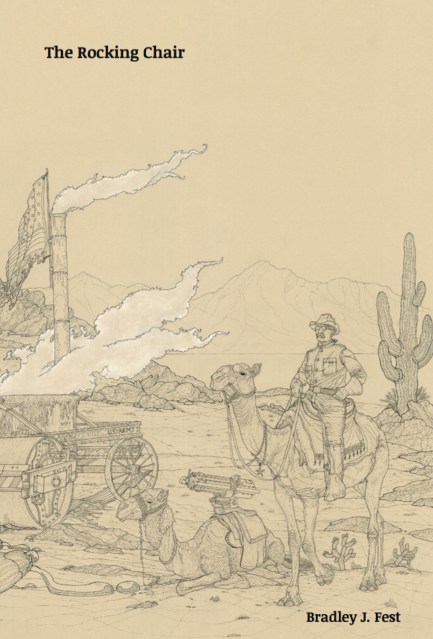
I am very happy to announce that my first volume of poetry, The Rocking Chair, can now be pre-ordered from Blue Sketch Press. (It is also available on Amazon.)
Three New Poems: “The Shape of Things I,” “Winter, or, Some (Future) Ambiguities,” and “We’re Just Like Yesterday’s Headlines”
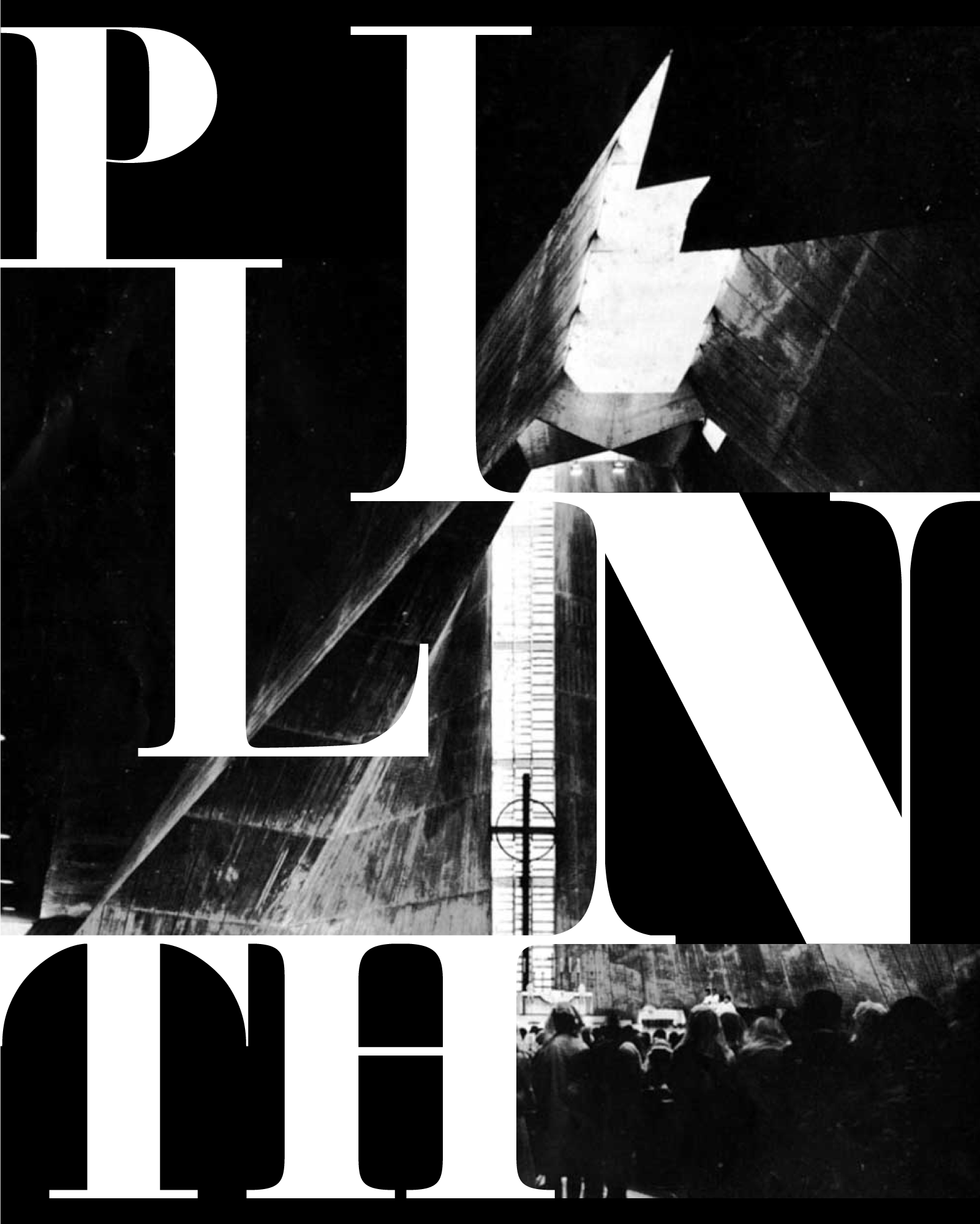
I am happy to report that three new poems, “The Shape of Things I,” “Winter, or, Some (Future) Ambiguities,” and “We’re Just Like Yesterday’s Headlines,” were just published in the third issue of PLINTH.
Remembering Tomaž Šalamun (1941-2014)

Studying with Tomaž Šalamun while he was a visiting professor at the University of Pittsburgh from 2005-2007 was one of the highlights of my life. I took four classes with him, he was on my MFA thesis committee, and when he left Pittsburgh, for what I believe was the last time, I drove him to the airport in what he called my “tank.” He was a remarkable human being. Generous, expansive, kind, and dynamic, Šalamun profoundly impacted everyone with whom he came in contact. On first reading his poems, they leapt at me, and have continued flying around my head for years. In my favorite of his books, Balada za Metko Krašovec (1981),[1] he declares: “I am the mouth of the Book.”[2] He ate voraciously of the world, of books, and sometimes spoke and wrote like the wellspring of literature itself.[3] He was a powerful poet who invited everyone to soar with him: “I like being in the air. I descend on the city, on / people.”[4] I am thrilled to be one of the people he descended upon.
Looking through my notebooks from the three consecutive spring semesters I studied with him (in 2006, two workshops at once), the vast majority of what I wrote down during class were the names and works of poets, artists, musicians, novelists, philosophers. Tomaž had an immense capacity for awe and appreciation, and he readily shared it with everyone around him. He read and absorbed culture to a remarkable degree, letting everything flicker through his being: from the work of his young students—he adored the work of Joshua Beckman and Matthew Zapruder, among many others—to his peers, modernist painters, and filmmakers—he argued vehemently that Pier Paolo Pasolini was a poet—and so much more. Every semester he would order roughly eight books from the bookstore, but he would not usually assign them or schedule days for us to discuss them. Instead, he would hand out what he was reading that week, what he was excited about. As a result, not only did my library of books and files of photocopied poems and essays grow considerably, but I perhaps caught some of Šalamun’s own catholicity and voracity, his passion for the contemporary, and his faith in poetry. It was hard not to.
Returning to my (seemingly) ancient notebooks this morning, I was initially struck by how little I wrote down of what Šalamun said in class. But then I remembered why. His voice was music. It didn’t always make sense and my pen could not keep up, but it was such a joy to hear him speak while occasionally capturing the gems of books he was reading or his reflections on the books his students were reading. I would spend much of class sunk in nothing but his voice. He would read poems in a way that transformed how I teach creative writing workshops. He would explore every nook and cranny of where a poem took his enthusiastic and often confounding readings, no matter who wrote it, and then he would go somewhere else. He would get up and spread imaginary wings or become, however briefly, a real dinosaur. How could I capture such performances in notes? What would be the point? I did not even try. But I hope his voice still resonates in Cathedral of Learning 512 and I know it will continue to do so with the many people who received the gift of being in that room.
Šalamun was above all a poet. Everything about him resonated with poetry. He would often end class early to have one-on-one conferences with students. Suffering from the normal “crisis of artistic faith during the first year of grad school”-syndrome, my first meeting with him, quite simply, totally renewed my ambitions and convinced me that poetry was something I should pursue. True or not, I return frequently to what he told me. He had that kind of power, that kind of poetic power: he could transform or refresh almost instantly. And he did so because he was a poet in the strongest sense of the word.
For one of the very few things he said that I did write down was: “The poet has to be totally a poet! We don’t need mediocre poets.” Tomaž Šalamun was totally a poet. He encouraged those around him to be total poets as well. (Whether any of us became such mythical beings or not is probably beside the point.) In an age when poetry seems low on the list of anyone’s priorities, even those of us who read, write, and teach poetry, when an MFA classroom can often resemble a seminar on professionalism and/or mediocrity, Šalamun subtly, warmly, and convincingly required the same total devotion to poetry of his students that was on display in his own work throughout his career. And once that easily fulfilled requirement was out of the way, we all then flew and will keep descending on the cities and the people with him.
———
[1] Tomaž Šalamun, Balada za Metko Krašovec (Ljubljana: Državna založba Slofenije, 1981).
[2] Tomaž Šalamun, “‘Within the mountain . . . ,’” in A Ballad for Metka Krašovec, trans. Michael Biggins (Prague, Czechoslovakia: Twisted Spoon Press, 2001), 49. I sadly have no capacity for Slovenian so will rely on English translations. That said, Šalamun was extensively involved in many of his English translations, and not everyone translating him knew Slovenian, so the English translations have their own particular authority and power.
[3] If this sounds hyperbolic, I invite the reader to relish in such hyperbole, as Šalamun would have certainly encouraged them to do so with his own remarkable, Whitmanian verbal hyperbole, for “Tomaž Šalamun is naked and a proletarian”(“His Favorite Ride,” in The Book for My Brother [New York: Harcourt, 2006], 13), “Tomaž Šalamun is a monster. / Tomaž Šalamun is a sphere rushing through the air” (“History,” trans. Bob Perelman and Šalamun, in The Four Questions of Melancholy: New and Selected Poems, ed. Christopher Merrill [1988; repr., Buffalo, NY: White Pine, 2002], 77).
[4] Šalamun, “West Broadway,” in A Ballad for Metka Krašovec, 43.
The Rocking Chair
I am happy to announce that my first volume of poetry, The Rocking Chair, is forthcoming from Blue Sketch Press in 2015. I have worked on this book for many years and am delighted that it is finally seeing the light of day. Here is a description. More info to come.
The Rocking Chair by Bradley J. Fest
Bradley J. Fest’s debut work, The Rocking Chair, is a long poem that emerges from the detritus of contemporaneity, absorbing and accumulating whatever it can from the networked chaos of the overmediated present. Assembled from science fiction and the western, critical theory and hardcore, videogames and phenomenology, footnotes and simulation, diabolism and hyperarchivalism (etc.), this work yawps through diverse material and discursive registers. Working from the footnote and endnote as primary formal constraints, Fest invents a poetry in conversation with the Man with No Name as much as John Ashbery, Alain Badiou, Stephen Hawking, or The Blood Brothers. The poems abuse textuality through misplaced rigor and confused genre archetypalism, across sections and subsections of lyric reflection and play, in order to discover vibrant and vital materialitites. As humorous as it is deeply serious—declaring the task of “making anxiety fun”—The Rocking Chair enacts a radical poetics of assemblage and emergence, seeking to articulate some way of being and an imaginary commensurate with life in the twenty-first century.
November Links
I have had a great couple days listening to the boundary 2 conference. And after a productive and interesting week teaching Dear Esther (2012), Gone Home (2013), and Jennifer Egan‘s Look at Me (2001), I’m going to take the day to deeply immerse myself in football. So, I have a bit of time for some links.
Science and Environment
Rob Nixon reviews Naomi Klein’s This Changes Everything.
Margalit Fox, “Jonathan Schell, 70, Author on War in Vietnam and Nuclear Age, Dies.”
Mark Landler, “US and China Reach Climate Accord After Months of Talks.”
Geoff Brumfiel, “New Clock May End Time as We Know It.”
Annalee Newitz, “It’s Looking More and More Likely That We Live in a Multiverse.”
Two New Poems: “Oceanic” and “Survival City”
I am delighted to say that two new poems of mine just went up at the Organism for Poetic Research‘s journal, PELT, in its third volume. The poems are “Oceanic” and “Survival City.”
Organism for Poetic Research Launches Volume 3 of PELT in NYC

For anyone in New York (I’m not, sadly), go check out the launch of volume 3 of PELT, a journal published by the Organism for Poetic Research, in which I have two poems. This volume of PELT is a special issue on “Sci-Pulp Poetics.” The launch will be accompanied by a reading at Wendy’s Subway this Friday, September 26th at 7:00 pm. Wendy’s Subway is at 722 Metropolitan Avenue, 2nd Floor, Brooklyn, New York 11206 and can be reached by taking the L train to Graham Ave.
There will be readings and performances by:
The Organism for Poetic Research
Anna Gurton-Wachter
Tiziana LaMelia
& Morgan Vo
Film Screenings by Amie Robinson (Nykur) and Sonia Levy (Pôle)
& more
The movie begins in this flat, journalistic style. A universe with a long natural history, spotted with strange and alluring artifacts of various ‘forerunner’ species. Plaster slides from the walls in the house it rains inside of; he feels for the tissue of sci-fi without the story. So, we invite the dystopian poetics of paranoia and ESP-powered feline-hybrids. “It is as if a cleavage, time, had opened in the floor.”
“One Summer Near Niagara” in The 2River View
A poem of mine, “One Summer Near Niagara,” was just published in the summer issue of The 2River View. This is an older poem and I’m delighted to finally see it in print. There is also an audio file on the page of me reading the poem, which will play automatically if you are using Chrome, has a button to play if you are using Internet Explorer, and won’t play at all if you’re using Firefox.
 The Hyperarchival Parallax