I caught the 1984 Reagan v. Mondale foreign policy debate on CSPAN tonight, and was floored by the nuke-speak. I was too young to see this originally, and it is quite interesting, esp. w/ the hindsight of 28 years. The 1988 debate is also pretty fascinating w/r/t nuclear policy.
Nuclear
Jimmy Carter’s Strategies for Nuclear War
At Foreign Policy, William Burr writes in “How to Fight a Nuclear War” about President Jimmy Carter’s plans for the apocalypse:
With other recently declassified material, PD-59 shows that the United States was indeed preparing to fight a nuclear war, with the hope of enduring. To do this, it sought a nuclear force posture that ensured a “high degree of flexibility, enduring survivability, and adequate performance in the face of enemy actions.” If deterrence failed, the United States “must be capable of fighting successfully so that the adversary would not achieve his war aims and would suffer costs that are unacceptable.”
Perhaps even more remarkable than this guidance is the fact that, although the Obama administration is conducting a review of U.S. nuclear targeting guidance, key concepts behind PD-59 still drive U.S. policy to this day.
Into Eternity
Danish filmmaker Michael Madsen’s new documentary, Into Eternity, looks like it might be pretty fascinating. The film follows the construction of the Onkalo Waste Repository at the Olkiluoto Nuclear Power Plant on the island of Olikiluoto, Finland. Probably gonna watch it this weekend. The trailer:
Why Yes! Of course we will Stand Under the Exploding Nuke!
On NPR‘s website, Robert Krulwich reports on this unearthed video of 5 men standing under a nuclear explosion.
There is a “Nuclear Vault” at the National Security Archive at George Washington University. (Archives and Nukes. . . .)

And I just found this excellent blog, Restricted Data: The Nuclear Secrecy Blog, run by Alex Wellerstein.
And on a Further Iranian Nuke Note. . .
Mark Halper has reported in The Guardian that American company Lawrenceville Plasma Physics Inc. and Tehran’s Islamic Azad University are banding together to pursue that nuclear holy grail: nuclear fusion power.
The New Proliferation: Cyber Weapons; or, the Internet is Tubes, its Tubes!
Thanks to Racheal for drawing my attention to the following things. The first is an article from yesterday’s New York Times about the US use of cyberweapons, the virus attacks on an Iranian nuclear facility, and the spiraling proliferation of the militarized internet. Misha Glenny writes in “A Weapon we Can’t Control,” in what sounds very much like digital-nuke-speak rhetoric and quickly maps onto digital destruction rhetoric:
During the cold war, countries’ chief assets were missiles with nuclear warheads. Generally their number and location was common knowledge, as was the damage they could inflict and how long it would take them to inflict it.
Advanced cyberwar is different: a country’s assets lie as much in the weaknesses of enemy computer defenses as in the power of the weapons it possesses. So in order to assess one’s own capability, there is a strong temptation to penetrate the enemy’s systems before a conflict erupts. It is no good trying to hit them once hostilities have broken out; they will be prepared and there’s a risk that they already will have infected your systems. Once the logic of cyberwarfare takes hold, it is worryingly pre-emptive and can lead to the uncontrolled spread of malware.
Hyperarchival parallax indeed.
And Dwight Garner has an interesting review, “He Has Seen the Internet, and it is Us,” of Tubes by Andrew Blum.
Repackaging the Archive (Part VII): CIV II and Nihilism
Only in extinction is the collector comprehended.
—Walter Benjamin, “Unpacking my Library: A Talk about Book Collecting”

So Jesse Miksic’s article and a recent account of a decade playing Sid Meier’s Civilization II (Microprose, 1996), Alexis Madrigal’s “Dystopia: What a Game of Civilization II Looks Like After 10 Years” in The Atlantic, have got me thinking about the profound melancholy one can access in video games, a melancholy that other forms of media simply cannot produce. As Miksic points out, part of this is simply a result of time and repetition, of the experience of continually dying, of the near-catastrophic levels of frustration produced by, say, getting to the end of Ninja Gaiden (Tecmo: 1988), and finally beating the boss only to learn there is another (and another) and immediately dying. Or, more recently, inspired by Madrigal’s article I spent some time playing Civilization II the past few days, and experienced something I perhaps never had when playing in my youth. If you actually put the game on an even relatively low difficult setting (“prince”),[1] one can access an acute and nearly overwhelming sense of their ultimate futility, like, to do anything.
Having guided my group of Spanish imperialists into a prominent global position (this isn’t the futile part, but the opposite. . .), every other nation in the game decided that I was the big, bad aggressor, and weren’t having it. Shortly, in the span of a few turns, I found myself at war with the entire planet. I was behind technologically, if ahead in other ways. Mine was a pre-nuclear military. And Greece, Japan, America, the Russians, and the Vikings all indiscriminately nuked me to an appropriate level of global obsolescence, whereby they proceeded to turn their attentions away from me and nuked each other. I had fought back only b/c there was no choice. A war on five fronts and a production line churning out tanks only to have them quickly destroyed. The scenario was beyond my abilities. After the dust had cleared, and I was in a state of détente with everyone but the Greeks, I found myself still a large civilization, but unable to do anything about the quickly heating planet. I finally launched some nukes at the Greeks, thereby ending my war w/ them, but it was more an act of revenge and frustration than strategic. (I have no trouble admitting such petty human emotions as jealousy, envy, and hatred. . . for a computer.) The Americans were quickly decimating them anyway. I could see that the game could very easily go toward the nightmare scenario described by Madrigal, or else my defeat and erasure from the planet. In another game, I hadn’t even attacked anyone when I got nuked.
The experience of getting nuked in Civilization II, esp. if you have not nuked anyone yet, can be deeply unsettling. There is a brutal game-theory logic to it: if someone doesn’t have nukes, nuke them, they can’t fire back. Last night, my Athens (I was playing the Greeks), a high seat of learning and culture—I had built many Wonders of the World There—got nuked out of the blue, decimating the city, raising the temperature of the globe, causing famine all over. I had it. I shut off the computer, sick of being so utterly destroyed, with so little agency over anything (I also could probably be a better player). No matter what I did, no matter my peaceful nature, utter destruction, or, what’s even worse, a very obvious continuing inability to do much of anything in the face of a thousand year war marked by broken treaties, collapsing governments, and untold (virtual) suffering, appeared to be the only world I could provide the denizens of my “civilization.” Sadly, this seems to be how best to describe reality.
Perhaps a better title for the game would be Endless Total War. It has obviously been critiqued, and rightly so, for its reinforcement of: a progressive, teleological sense of history and its implicit celebration of Western imperialism. But I feel like the deep logic revealed by playing the game, even for a little while, is the manner in which it continually emphasizes the utter depravity and violence implicit in the course of empire. The world and history, as it is “represented” by Civilization II, is simply horror-show. Any of the “higher” activities of humanity, especially “culture,” get subsumed into the universal violent antagonism the game never relents in emphasizing.[2] Constructing Michelangelo’s Sistine Chapel is just a means to further global domination. Da Vinci, a means of issuing new “versions” of troops: legionnaires 2.0, howitzer redux. Religion is represented as a tool of pacification. Shakespeare a means to an end. Abraham Lincoln a genocidal maniac. Eleanor Roosevelt a demagogue.
Civilization II is, quite literally, nihil unbound.
[1] I never did as a kid, preferring the hubristic grandiosity of conquering the world, building all the wonders, launching the space-ship, not using nukes for some sort of weird ethical reason (even though I slaughtered nations indiscriminately), and etc. winning. I was obviously more well-adjusted as a teenager.
[2] It must also be noted, I was playing the “bloodlust” setting, where you can’t win by going to the stars. We aren’t going to the stars.
Nuclear Reactions
From the blog Nuclear Reactor, someone has built a nuclear reactor in Minecraft and had it explode.
In real world nuke reactor news, Europe is set to dismantle 150 nuclear reactors over the next 20 years: for the Washington Post, Brad Plumer reports on the difficulties of decommissioning nuclear reactors, both financial (400 million — 1 billion dollars per plant) and logistical in “How Hard is it to Dismantle 150 Nuclear Reactors? Europe’s About to Find Out.”
And some nuke reactor pics:

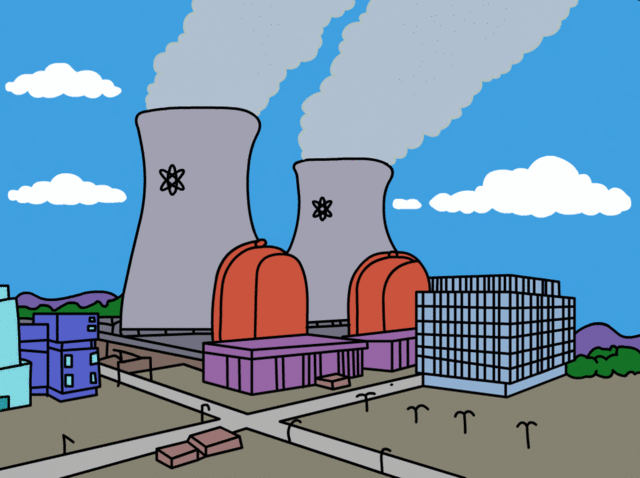
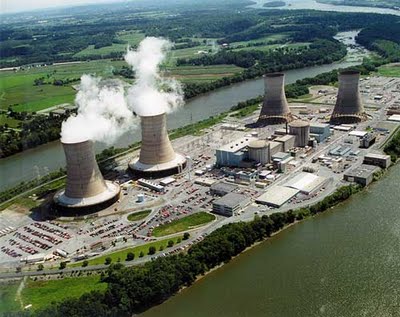
3 Mile Island

Post-Semester Links
Here’s a couple things I’ve found interesting recently that I forgot to post amidst the work of the semester.
From The Atlantic, Taylor Clark covers Braid designer Jonathan Blow in “The Most Dangerous Gamer.”
An excellent long review of DFW’s The Pale King that I missed from last year: John Jeremiah Sullivan’s “Too Much Information,” in GQ.
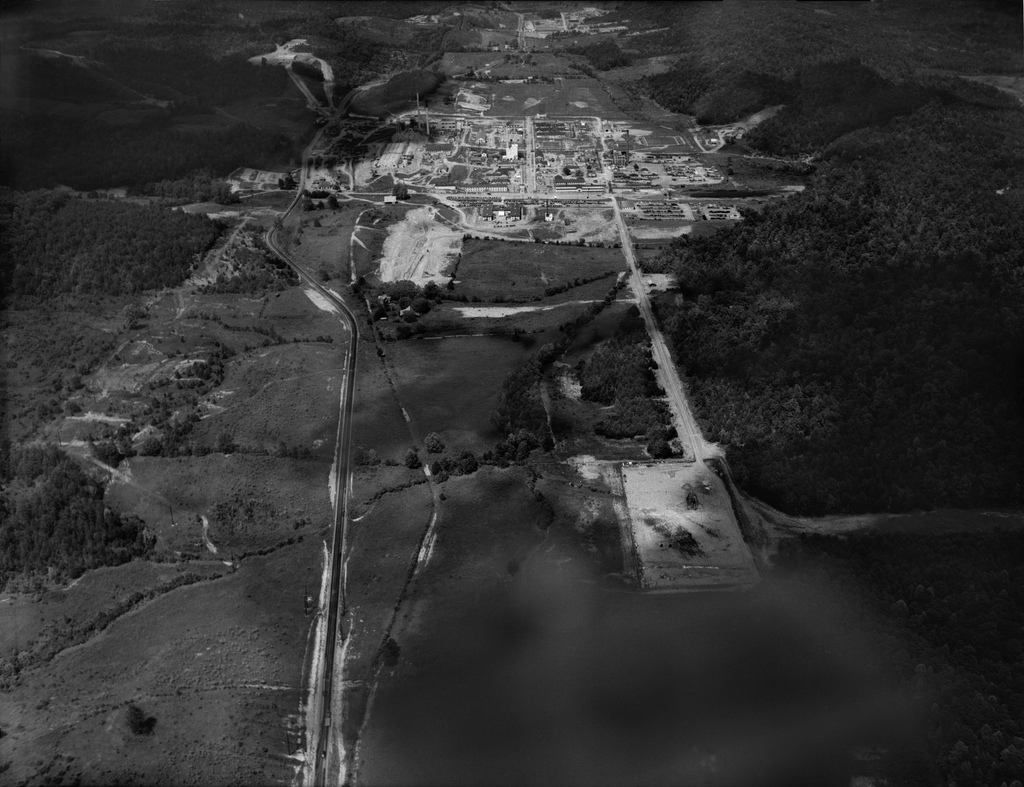
Pictures from the secret town of Oak Ridge.
15 writer’s bedrooms. This is Faulkner’s:

And Žižek on The Wire.
Post-ThxGiving Links: DFW Syllabi, Imminent Danielewski Hyperarchivalism, billions and billions of dollars, and the Bomb (as always)
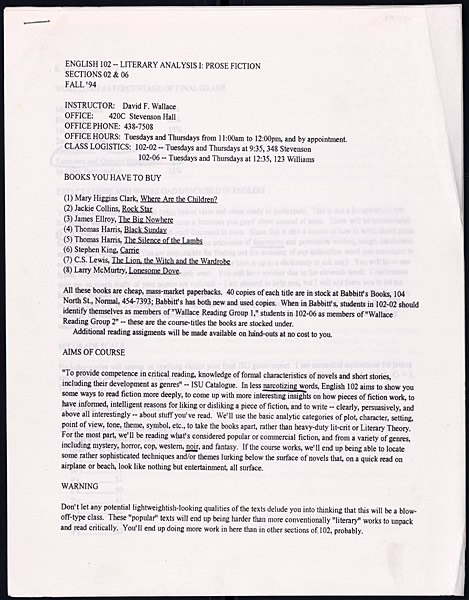
Katie Rophie over at Slate discusses David Foster Wallace’s syllabi: “The Extraordinary Syllabi of David Foster Wallace: What His Lesson Plans Teach us About How to Live.”

The New York Times‘ Julie Bosman informs us that Mark Z. Danielewksi is going to publish a 27 volume serialized novel, The Familiar, appearing every three months beginning in 2014. I wonder how long each volume will be. . . . Also, an interesting interview w/ Danielewski.
From Inside Higher Ed: report finds literary research an inefficient use of university money according to Marc Bousquet, in his article from The Minnesota Review, “We Work.”
George Orwell on the nuclear bomb.
And a pretty great nuclear bibliography.
 The Hyperarchival Parallax