Link Dump: Nuclear, Archival, and Other

My apologies, it’s been a busy few weeks and I haven’t had time to add anything new. So here’s couple things I’ve stumbled across recently.

In nuclear news, Craig Whitlock reports for The Washington Post that “the Air Force on Friday fired the general in charge of all land-based nuclear missiles, the second time in a week that a senior commander of the country’s nuclear arsenal has been let go for allegations of personal misconduct.” (I wonder if his misconduct had anything to do with precious bodily fluids.)

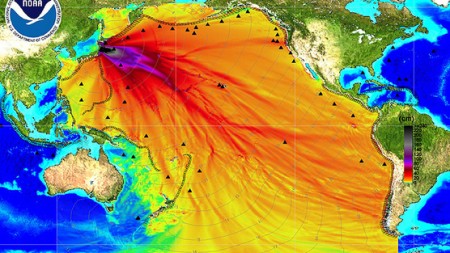
Three things from Fukushima: Mari Yamaguchi asks, “Japan’s Water Leaks: How Dangerous?” for the AP. The Sleuth Journal reports that “Radioactive Water From Fukushima Is Systematically Poisoning the Entire Pacific Ocean.”

radioactive-water

And if that weren’t bad enough, Andrew Breiner for Think Progress writes how a “Once-A-Decade Typhoon Threatens Already Leaking Fukushima Nuclear Plant.”

And though I think I’ve reported on this/posted a picture of this before, Flickr has an arresting series of images of archival decay from the abandoned Mark Twain Branch Library in Detroit.

SONY DSC

Continue reading

More Bleeding Edge Reviews and The Crisis in the Humanities

This month’s issue of Harper’s Magazine has a lengthy and interesting review of Thomas Pynchon’s Bleeding Edge by Joshua Cohen (article link requires subscription), and an interesting take on the crisis in the humanities (something this blog has posted frequently on this last summer) in Thomas Frank’s monthly column, “Easy Chair,” titled, “Course Corrections.” Frank nicely summarizes many of the issues facing humanists and the humanities today, and ends with a fairly bold call: “The world doesn’t need another self-hypnotizing report on why universities exist. What it needs is for universities to stop ruining the lives of their students [financially]. Don’t propagandize for your institutions, professors: Change them. Grab the levers of power and pull.” (On a semi-related note I’m happy to report that my own current department looks like it is doing just that.)

Labor Day Links

Lois Weiner has a very interesting piece in Jacobin, “This Labor Day, Thank a Teacher,” on how teacher’s unions are revitalizing the labor movement.

The levels of radiation leaking out of Fukushima are considerably higher than was previously reported.

And there may be a bigger surveillance system then PRISM, as reported on in The New York Times by Scott Shane and Colin Moynihan in “Drug Agents Use Vast Phone Trove, Eclipsing the N.S.A.’s.”

Humanities and Economics

Economist and former dean at Princeton Christina Paxson has written an interesting article for the New Republic, “The Economic Case for Saving the Humanities.” Therein she asks if the humanities are “worth it” economically and argues that

support for the humanities is more than worth it. It is essential. . . . It is really important we get this right. A mountain of empirical evidence indicates a growing inequality in our society. There is no better way to check this trend than to invest in education. And there is no better way to invest in education than to invest fairly, giving attention to all disciplines and short shrift to none.

Even though many of us may take Paxson’s argument wholly for granted already–that those of us who think about the issue a bit realize that of course the humanities have significant bearing on economics–the threats to the humanities largely boil down to their perceived lack of economic viability. If this perception can be combated, we may see other criticisms fall away.

The Zombification of Academia and Blowing Up the Sun

Serena Golden has an interview at The Chronicle of Higher Education with the authors of Zombies in the Academy: Living Death of Higher Education, Andrew Whelan, Ruth Walker, and Christopher Moore. She writes:

The book’s contributors find zombies lurking around every corner: students concerned solely with getting through and making the grade; faculty members deadened by the corporatization of the university and the erosion of traditional faculty jobs; systems and processes within the university that have long since outlived their original purpose but that endlessly perpetuate themselves. What does it mean, the editors wonder, if the zombie apocalypse has already taken place, and we are living — or undead — within it?

And in the latest in eschatology from the scientific front, Alexander Bolonkin and Joseph Friedlander have published a paper, “Explosion of the Sun,” which details how you could blow up the sun. A link to the abstract here and a link to the full paper here. Here is the abstract of the paper, which really needs to be quoted in full:

The Sun contains ~74% hydrogen by weight. The isotope hydrogen-1 (99.985% of hydrogen in nature) is a usable fuel for fusion thermonuclear reactions. This reaction runs slowly within the Sun because its temperature is low (relative to the needs of nuclear reactions). If we create higher temperature and density in a limited region of the solar interior, we may be able to produce self-supporting detonation thermonuclear reactions that spread to the full solar volume. This is analogous to the triggering mechanisms in a thermonuclear bomb. Conditions within the bomb can be optimized in a small area to initiate ignition, then spread to a larger area, allowing producing a hydrogen bomb of any power. In the case of the Sun certain targeting practices may greatly increase the chances of an artificial explosion of the Sun. This explosion would annihilate the Earth and the Solar System, as we know them today. The reader naturally asks: Why even contemplate such a horrible scenario? It is necessary because as thermonuclear and space technology spreads to even the least powerful nations in the centuries ahead, a dying dictator having thermonuclear missile weapons can pro[duce] (with some considerable mobilization of his military/industrial complex) an artificial explosion of the Sun and take into his grave the whole of humanity. It might take tens of thousands of people to make and launch the hardware, but only a very few need know the final targeting data of what might be otherwise a weapon purely thought of (within the dictator’s defense industry) as being built for peaceful, deterrent use. Those concerned about Man’s future must know about this possibility and create some protective system—or ascertain on theoretical grounds that it is entirely impossi[ble]. Humanity has fears, justified to greater or lesser degrees, about asteroids, warming of Earthly climate, extinctions, etc. which have very small probability. But all these would leave survivors—nobody thinks that the terrible annihilation of the Solar System would leave a single person alive. That explosion appears possible at the present time. In this paper is derived the “AB-Criterion” which shows conditions wherein the artificial explosion of Sun is possible. The author urges detailed investigation and proving or disproving of this rather horrifying possibility, so that it may be dismissed from mind—or defended against.[1]

The keywords for the paper also need to be quoted: Artificial Explosion of Sun; Annihilation of Solar System; Criterion of Nuclear Detonation; Nuclear Detonation Wave; Detonate Sun; Artificial Supernova.[2]

Didn’t we already think of such silly things like blowing up heavenly bodies? This is absurd.

[1] Alexander Bolonkin and Joseph Friedlander, “Explosion of the Sun,” Computational Water, Energy, and Environmental Engineering 2 (July 2013): 83, emphases mine. . . . The reader will also note the many typos even in the first paragraph.

[2] Ibid.

And in Other News of the Humanities Crisis

The University of Oregon has opened a mockery of disinterested academic pursuits in the form of a “football complex.” If it wasn’t clear that football is the primary interest of certain academic institutions, it should be now. Greg Bishop for The New York Times writes about it in “Oregon Embraces ‘University of Nike’ Image.” A brief excerpt:

The Football Performance Center, which was unveiled publicly this week, is as much country club as football facility, potentially mistaken for a day spa, or an art gallery, or a sports history museum, or a spaceship — and is luxurious enough to make N.F.L. teams jealous. It is, more than anything, a testament to college football’s arms race, to the billions of dollars at stake and to the lengths that universities will go to field elite football programs.

And just look at this place:

Oregon Football 3

Oregon Football 1

And in related news, Alissa Quart reports for The Nation about the “neurohumanities,” in “Adventures in Neurohumanities.” We’re done for.

The National Endowment for the Humanities is Facing Huge Budget Cuts and You Can Do Something About It Right Now

From the National Humanities Alliance website:

The House of Representatives Appropriations Committee released its FY 2014 Interior and Environment Appropriations bill this morning with a 49 percent ($71 million) cut for the National Endowment for the Humanities. If enacted, this funding level would devastate an agency that has already been reduced by 19 percent since 2010.

This drastic cut would end programs that provide critical support for humanities teaching, preservation, public programming, and research, and result in positive impacts on every community in the country. Programs supported by the NEH teach essential skills and habits including reading, writing, critical thinking, and effective communication that are crucial for ensuring that each individual has the opportunity to learn and become a productive member of society. Further, NEH’s programs strengthen communities by promoting understanding of our common ideals, enduring civic values, and shared cultural heritage.

Please send a message today!

Please follow this link to quickly fill out a petition to your local congressman to oppose these cuts.

Re-Re-Writing American History

It was reported yesterday by Tom LoBianco (via The Huffington Post) that while Governor of Indiana, “Mitch Daniels Sought to Censor Public Universities, Professors.” Daniels, now president of Purdue University, wanted to ban Howard Zinn‘s seminal A People’s History of the United States: 1492-Present (1980). In emails obtained by the Associated Press through the Freedom of Information Act, we know that Daniels wrote the following about Zinn and his classic study of US history:

This terrible anti-American academic has finally passed away,” Daniels wrote. “The obits and commentaries mentioned his book, `A People’s History of the United States,’ is the `textbook of choice in high schools and colleges around the country.’ It is a truly execrable, anti-factual piece of disinformation that misstates American history on every page. Can someone assure me that it is not in use anywhere in Indiana? If it is, how do we get rid of it before more young people are force-fed a totally false version of our history?

Wow.

More Links About the Decline of the Humanities

Max Nisen has written an article titled, “America Is Raising a Generation of Kids Who Can’t Think or Write Clearly,” for Business Insider. He writes:

De-emphasizing, de-funding, and demonizing the humanities means that students don’t get trained well in the things that are the hardest to teach once at a job: thinking and writing clearly. CEOs, including Jeff Bezos, Logitech’s Bracken Darrell, Aetna’s Mark Bertolini, and legendary Intel co-founder Andy Grove emphasize how essential clear writing and the liberal arts are. STEM alone isn’t enough. Even Federal Reserve chair Ben Bernanke recently gave English majors a shout-out. The point is that good writing isn’t just a “utilitarian skill” as Klinkenborg puts it but something that takes a great deal of practice, thought, and engagement with history and what other people have written.

I have to admit I find the argument about CEOs think the humanities are valuable to be missing the point and deeply suspicious. Nisen has followed this piece with a number of other related articles: “These Charts Prove that College is More Important Than Ever,” “11 Reasons to Ignore the Haters and Major in the Humanities,” and “Humanities Grade Inflation is Luring Away Millions of Potential Scientists” (which seems like the opposite of the point). To be honest, however, who is Nisen’s audience with these pieces? All those undergraduates and recent high school grads who read Business Week? I think there’s more going on here than meets the eye.