Two more sonnets from my ongoing sequence, “2015.05” and “2015.06,” were just published in no. 16 of Epigraph Magazine. A .pdf of the issue can be found here.
American Literature
The Shape of Things
The Shape of Things, my second book of poetry, is now available and shipping from Salò Press. Order it here if you’re in the UK and here if you are anywhere else. I am very proud of this book.
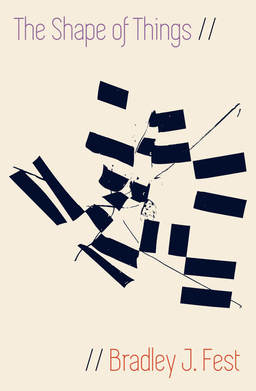 Bradley J. Fest’s second volume of poetry, The Shape of Things, continues his project of poetic assemblage. Written in an age of ubiquitous algorithmic surveillance and increasingly catastrophic climate change, these poems both describe the shape of things in the overdeveloped world and endeavor to challenge the widespread feeling that the imagination has been foreclosed in the twenty-first century. An ambivalent hyperarchive, the collection draws influence from a number of seemingly incompatible lyric registers, including the language of contemporary theory. The Shape of Things culminates in an eponymous long poem that asks if a poiesis of “network being” is possible and suggests that there might be some other way to dance to the sounds of our present.
If Whitman and Adorno had a knife fight on the ruins of the floor of the New York Stock Exchange, The Shape of Things would be the perfect voice over. Which is to say, though it’s not a pretty scene, there’s pleasure and beauty to be found in the action and music of the syntax and in following the wild movements of this poet’s mind. Truly original, dazzlingly smart and game for anything, Fest writes of lives and desires torn apart by the neoliberal security state. Jolting between paranoiac rage and orgasmic bliss, between all- out negation and Wordsworthian swoon, these poems describe the awful implications of a contemporary moment in which “we have made ourselves a gallows of a house.”
–Sten Carlson, author of Fur & After
To call The Shape of Things “post-apocalyptic” would be a mistake: its poignant present tense anxiety unfolds in the apocalypse now. Ataris and hunter-gatherers lean together over the edge of time, commingling in harrowing yet pleasurable ways. But this is no book of “detached mirth.” Hear in Fest’s singing the quiet pathos of humans and machines out of time. While Fest’s human creatures have lulled themselves into submission—”There may be something (virtually) / on fire. More likely our expectations are being met . . .”—his work nudges middle class late capitalist culture awake into the disturbing awareness that “a prolonged adolescence is the shape of things.”
–Robin Clark, author of Lines the Quarry
Summer 2017 Links
Nuclear and Environmental
Nearing midnight: “Military solutions are now fully in place,locked and loaded,should North Korea act unwisely. Hopefully Kim Jong Un will find another path!”
Mehdi Hasan, “The Madman with Nuclear Weapons Is Donald Trump, Not Kim Jong-un.”
David Wallace-Wells, “The Uninhabitable Earth.”
NUKEMAP by Alex Wellerstein, and “Global Hiroshima: Notes from a Bullet Train.”
Elizabeth Kolbert, “Au Revoir: Trump Exits the Paris Climate Agreement.”
Fiona Harvey, “World Has Three Years Left to Stop Dangerous Climate Change, Warn Experts.”
Damian Carrington, “Arctic Stronghold of World’s Seeds Floods after Permafrost Melts.”
Benjamin Powers, “An Abandoned US Nuclear Base in Greenland Could Start Leaking Toxic Waste Because of Global Warming.”
The Shape of Things Available for Pre-Order
 My second volume of poetry, The Shape of Things, is now available for pre-order from Salò Press. It will begin shipping September 1, 2017.
End of the Semester Links, Spring 2017
It’s been a long year, long for many reasons, but here’s a backlog of some links. (Some very good news is imminent. . . .)
Nuclear and Environmental
New York Times Editorial Board, “The Finger on the Nuclear Button.”
Rebecca Savranksy, “US May Launch Strike if North Korea Moves to Test Nuclear Weapon.”
Kaveh Waddell, “What Happens if a Nuclear Bomb Goes Off in Manhattan.”
Radiolab, “Nukes.”
Laurel Wamsley, “Digitization Unearths New Data From Cold War-Era Nuclear Test Films.”
Michael Biesecker and John Flesher, “President Trump Institutes Media Blackout at EPA.”
Brian Kahn, “The EPA Has Started to Remove Obama-Era Information.”
Zoë Schlanger, “Hackers Downloaded US Government Climate Data and Stored It on European Servers as Trump Was Being Inaugurated.”
Cass R. Sunstein, “Making Sense of Trump’s Order on Climate Change.”
Laurie Penny, “The Slow Confiscation of Everything.”
“2015.13,” “2015.16,” “2015.25,” and “2015.27” in Grain
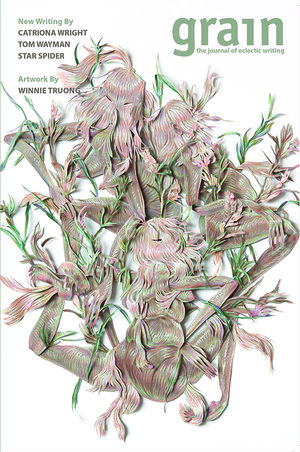
Four more sonnets from my ongoing sequence were just published in vol. 44, no. 3, of Grain: The Journal of Eclectic Writing. The issue is titled “Relativity of Zen,” is edited by Adam Pottle, and can be purchased here.
“Toward a Theory of the Megatext” Forthcoming in Scale in Literature and Culture
“Toward a Theory of the Megatext: Speculative Criticism and Richard Grossman’s ‘Breeze Avenue Working Paper,'” the first essay from a new project on what I have been calling megatexts, will appear in Scale in Literature and Culture, edited by Michael Tavel Clarke and David Wittenberg. The collection of essays will be published by Palgrave Macmillan and will hopefully come out later this year. More information to come.
The Shape of Things, Forthcoming from Salò Press
I am happy to announce that my second volume of poetry, The Shape of Things, will be published this summer by Salò Press. More details to come.
Beginning of the Semester Links, Spring 2017
Nuclear and Environment
Stephen Hawking, “This Is the Most Dangerous Time for Our Planet.”
Andrew Bast, “Unpredictable,” review of Nuclear Politics: The Strategic Causes of Nuclear Proliferation, by By Nuno P. Monteiro and Alexandre Debs.
Joe Romm, “Priebus Confirms That Climate Denial Will Be the Official Policy of Trump’s Administration.”
Natasha Geiling, “Wisconsin Department of Natural Resources Deletes Accurate Climate Science from Agency Webpage.”
Madeline Conway, “Trump Threatens to Upend US Nuclear Weapons Policy.”
Sam Stein, “Trump Releases Letter From Putin Amid Talk Of Nuclear Arms Race.”
Robinson Meyer, “Human Extinction Isn’t That Unlikely.”
Winter Links 2016
Nuclear and Environmental
Robin Bravender, “Trump Picks Top Climate Skeptic to Lead EPA Transition.”
Ian Johnston, “Climate Change May Be Escalating So Fast It Could Be ‘Game Over,’ Scientists Warn.”
Oliver Milman, “Donald Trump Presidency a ‘Disaster for the Planet,’ Warn Climate Scientists.”
Coral Davenport, “Donald Trump Could Put Climate Change on Course for ‘Danger Zone.'”
Noam Chomsky, “The Republican Party Has Become the Most Dangerous Organization in World History.”
Generation Anthropocene, “An Interview with Kim Stanley Robinson.”
xkcd, “A Timeline of Earth’s Average Temperature.”
Douglas Fox, “Scientists Are Watching in Horror as Ice Collapses.”
And Avery Thompson, “Scientists Accidentally Discover Efficient Process to Turn CO2 Into Ethanol.”
 The Hyperarchival Parallax