io9 has two new articles re: the beginning of the universe. The first is on the James Webb Telescope, to be completed by 2018. According to Michael Shara “[The James Webb Space Telescope] has, in many ways, 100 times the capabilities that the Hubble Space Telescope does. We’re actually going to be able to see the first stars forming, the first galaxies forming after the Big Bang. We’re also going to be able to — we think — directly image planets orbiting other stars.” The James Webb Telescope may allow astrophysicists to observe the very beginnings of the universe, something that (at least I) thought was as impossible as seeing the end of the universe. Perhaps Frank Kermode’s statement that humans live in “the middest,” w/o access to our beginnings or endings, will have to be revised if we actually can observe the origin of the universe. (And what if there’s a little dude wearing a fig leaf waving at us when we observe events shortly following the Big Bang?)
Author: Bradley J. Fest
Absent Archive: A David Lynch Return of the Jedi?
A list of the top 100 SF movies that never got made. How different might Lynch or Cronenberg’s careers have been if they had made Return of the Jedi (and how do I feel like each one would have totally screwed up?). But this has gotta be the best/worst.
Tweeting the New Sincerity
It is Really Hot
Long Interview w/ DFW
“I’ll stay out of politics. It’s too upsetting.” –DFW (2003)
An 83 minute interview w/ DFW on German TV:
The whole thing is linked at Open Culture.
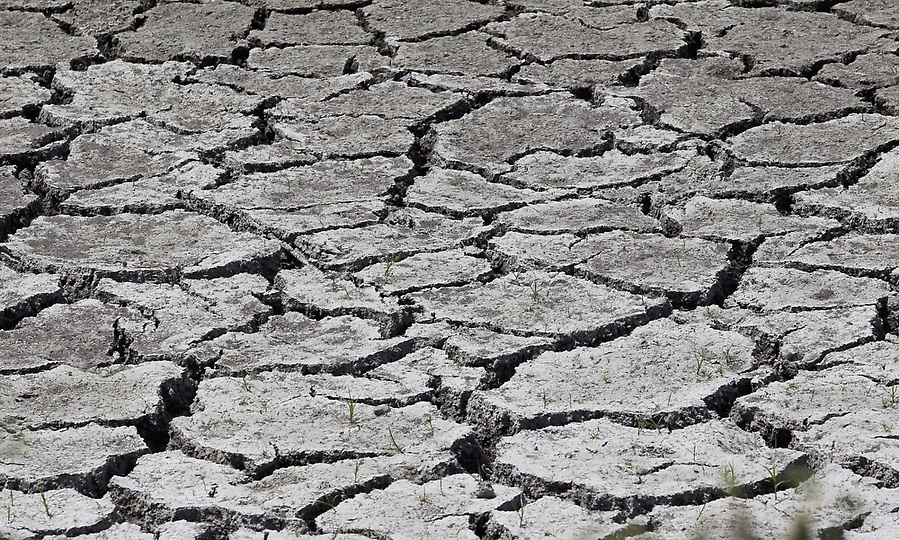
The Summer of Disaster; or, the New Dust Bowl
Stephanie Pappas for Discovery News reports that “More of America is a Disaster than Not”: “The Secretary of Agriculture has declared 218 more U.S. counties to be drought disaster areas, bringing the total number of American counties designated as disaster areas (mainly due to drought) to more than 50 percent.”

Archiving Every Bomb the United States Has EVER Dropped
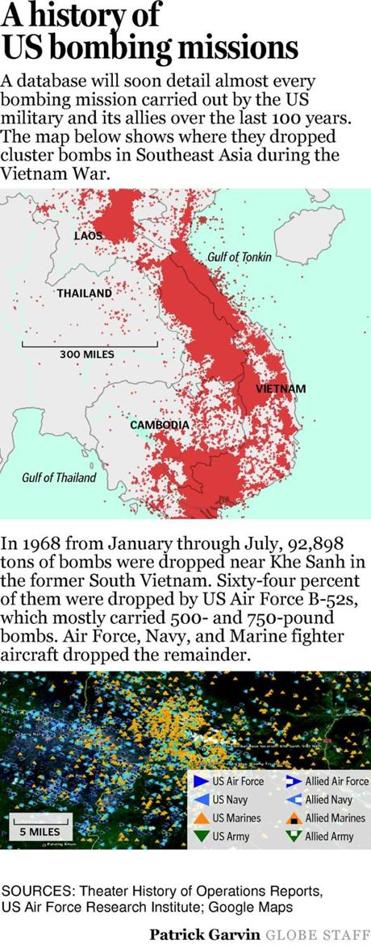
Bryan Bender at the Boston Globe reports how Lieutenant Colonel Jenns Robertson has assembled a report on every bomb the US has ever dropped since WWI(!!!), “a compilation that, at the click of a mouse and a few keystrokes, reveals for the first time the sheer magnitude of destruction inflicted by the US and its allies from the air in the last century.” Going by the name: Theater History of Operations Reports (or THOR), this hyperarchive of US military violence is truly staggering. “One particularly relevant example: From October 1965 to May 1975, at least 456,365 cluster bombs were dropped on Vietnam, Laos, and Cambodia, according to the records analyzed.”
Cloud Atlas
Via io9, this 6-minute trailer for Cloud Atlas looks pretty incredible.
Infinite Boston
William Beutler just informed me about a really interesting project he has recently begun. Infinite Boston is a tumblr blog that will present photographs from approximately 50 locations around Boston that are referred to in DFW’s Infinite Jest. Now, if someone could do that for Tucson . . . (where I grew up and went to school. . .). A couple samples:


The End May Be Sooner Than We Thought
In “The Universe Could Tear Itself Apart Sooner than Anyone Believed,” George Dvorsky looks at recent theories about the Big Rip and how the Universe may have a much shorter projected life-span than physicists originally imagined.


